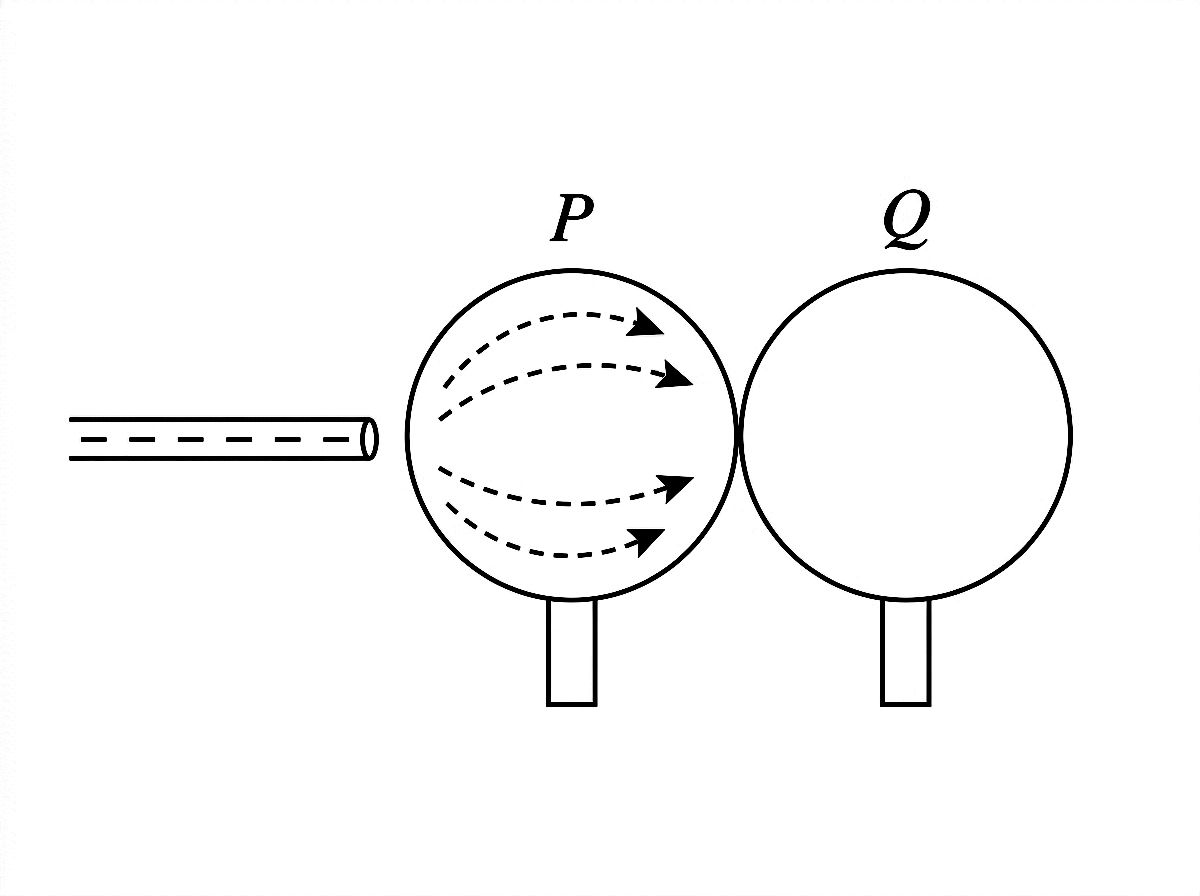
Step 1: Charge, force, and charging methods (Topics 10.1-10.2)Read the topic guides for 10.1 and 10.2. Practice applying Coulomb's law to two- and three-charge configurations, paying attention to direction. Then work through examples of charging by friction, contact, and induction, verifying charge conservation in each case. Use the electroscope as a concrete model for detecting charge redistribution.
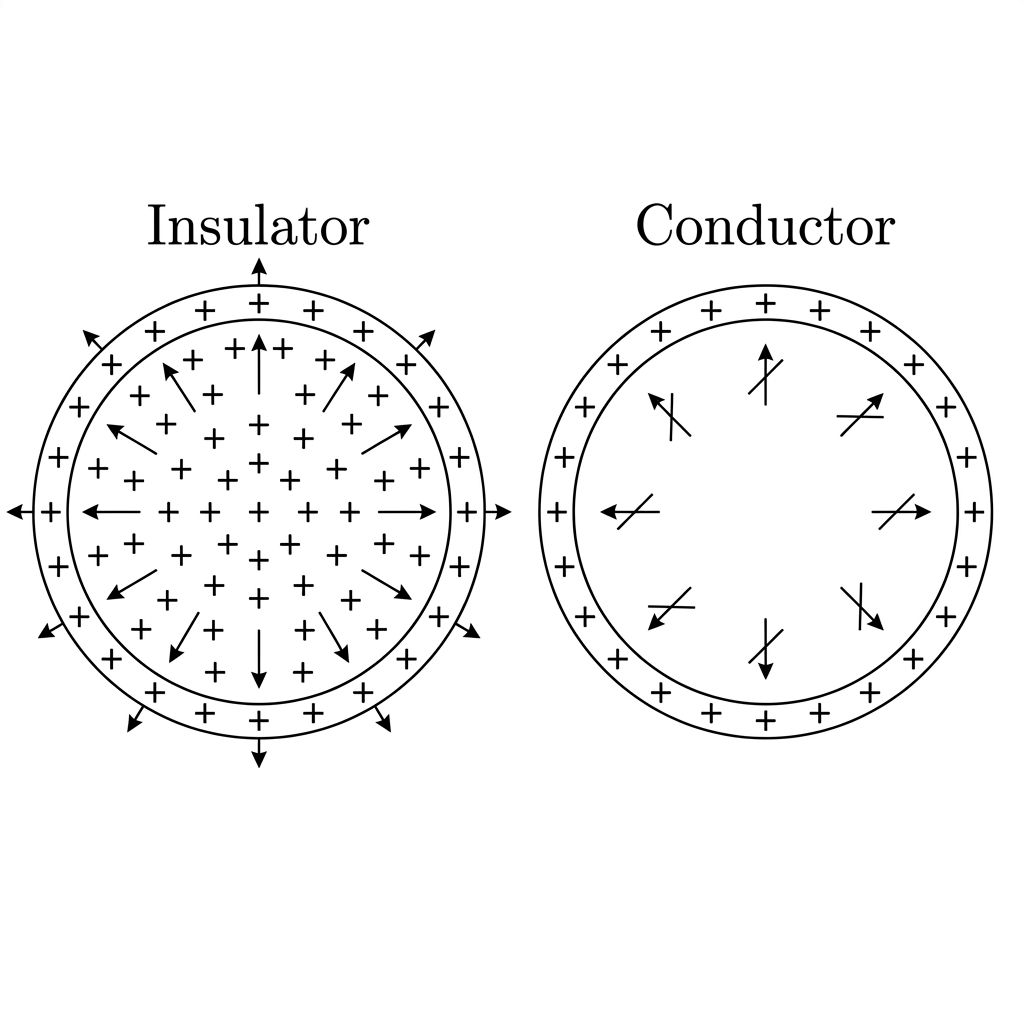
Step 2: Electric fields and field maps (Topic 10.3)Read the topic guide for 10.3. Practice sketching field vector maps and field line diagrams for single charges, dipoles, and parallel plates. Confirm you can apply vector superposition to find the net field at a point, and state the field rules for conductors and insulators in equilibrium.
Step 3: Potential energy and electric potential (Topics 10.4-10.5)Read the topic guides for 10.4 and 10.5. Work through pairwise U_E calculations for two- and three-charge systems, then practice scalar superposition for V. Draw equipotential maps from field maps and extract average field magnitudes using |E| = |delta V / delta r|. Focus on the sign conventions for both U_E and V.
Step 4: Capacitors (Topic 10.6)Read the topic guide for 10.6. Practice using C = Q/delta V and C = kappa epsilon_0 A/d to predict how changing plate area, gap, or dielectric affects C, Q, delta V, and stored energy. Work through at least one problem where the capacitor is disconnected from a battery before a change is made.
Step 5: Conservation of electric energy and full-unit review (Topic 10.7)Read the topic guide for 10.7. Practice delta U_E = q delta V and delta K = -delta U_E for both positive and negative charges moving through potential differences. Then use the available practice questions to work across all seven topics, and use the AP score calculator to estimate your estimated score range.