4.3 Political Power and Territoriality

🚜AP Human Geography Unit 4 Review
4.3 Political Power and Territoriality
🚜 AP Human Geography
4.1
Introduction to Political Geography
4.2
Political Processes
4.3
Political Power and Territoriality
4.4
Defining Political Boundaries
4.5
The Function of Political Boundaries
4.6
Internal Boundaries
4.7
Forms of Governance
4.8
Defining Devolutionary Factors
4.9
Challenges to Sovereignty
4.10
Consequences of Centrifugal and Centripetal Forces
TLDR
Political power in AP Human Geography means control over people, land, and resources, and geographers see it through three classic examples: neocolonialism (indirect economic and political control), shatterbelts (regions caught between competing outside powers), and choke points (narrow corridors that control trade). Territoriality is the connection between people, their culture, their economy, and the land they claim or control.
Territoriality Definition in AP Human Geography
In AP Human Geography, territoriality is the connection between people, culture, economic systems, and the land they claim or control. Geographers use territoriality to explain how groups organize space, defend boundaries, mark identity, and compete for resources.
Political power is related but broader. It is the ability to control people, land, and resources across space. Territoriality is one way political power becomes visible on the landscape through borders, land claims, sacred spaces, flags, monuments, and contested territories.
Why This Matters for the AP Human Geography Exam
This topic gives you the vocabulary to explain how states project power across space, which shows up in multiple-choice questions and in free-response prompts that ask you to describe or explain spatial relationships. The skill connected to this topic focuses on explaining spatial relationships across different scales using geographic concepts, so practice tying neocolonialism, shatterbelts, and choke points to specific places and to ideas about control. Expect map and image stimuli where you identify a choke point or a shatterbelt and explain why its location matters for political power.
Key Takeaways
- Political power is expressed geographically as control over people, land, and resources.
- Neocolonialism is indirect control through economic, political, or cultural pressure instead of direct rule.
- Shatterbelts are regions caught between stronger external powers, which produces instability and conflict.
- Choke points are narrow, strategic corridors, often maritime, where control gives leverage over trade and resource flows.
- Territoriality is the connection of people, their culture, and their economic systems to the land.
- Be ready to explain these concepts at different scales, from local control to global competition.
Core Concepts
Political Power as Spatial Control
Political power is the ability to influence or control the decisions, actions, and resources of others. Geographers focus on how that power plays out across space. Control of territory often brings economic, military, and symbolic advantages, so governments and other actors assert, defend, and negotiate control of areas to shape behavior, access resources, and project influence.
In this course, political power is expressed geographically through three classic illustrations: neocolonialism, shatterbelts, and choke points.
Territoriality
Territoriality is the connection of people, their culture, and their economic systems to the land. In practice, it is the effort by individuals and groups to control a geographic area in order to influence people and resources.
Territoriality shows up through boundaries, land-tenure systems, sacred spaces, and symbols like flags and monuments. It operates at many scales, from a household or neighborhood to an ethnic enclave or an entire state. Examples include indigenous land stewardship and treaty rights, agricultural land-tenure and pastoral migration routes, and national identity tied to a homeland.
Drawing lines on a map is easy, but territory is messier in real life. People may reject a boundary, or other states may refuse to recognize it, which is why control over space is often contested. AP Human Geography focuses on human territoriality and how it shapes political organization, not animal behavior.
How Political Power Is Expressed Geographically
Neocolonialism
Neocolonialism is indirect control of other countries or regions through economic, political, or cultural pressure rather than direct rule. A former colonial relationship is not required; the point is leverage without formal governance.
Examples that apply the concept:
- China's Belt and Road Initiative uses infrastructure loans and projects that can create dependency. Sri Lanka's long-term lease of Hambantota port shows how debt can turn into strategic control over a key maritime facility.
- French influence in West Africa through the CFA franc ties economies to France through monetary rules and reserve requirements, shaping their policy choices.
- Loan conditions from the IMF or World Bank, such as austerity or privatization requirements, can steer the economic priorities of borrowing states and limit their domestic decisions.
Shatterbelts
A shatterbelt is a region caught between stronger, colliding external powers whose competition produces instability, fragmentation, and frequent conflict.
Examples that apply the concept:
- Eastern Europe and the Balkans during the Cold War sat between NATO and the Soviet bloc and experienced interventions and shifting alliances as outside powers competed.
- The Caucasus, between Russia, Turkey, and Iran, mixes ethnic diversity with strategic corridors, contributing to separatist conflicts and contested borders.
- The Horn of Africa draws competition because of Red Sea routes and foreign military bases, which shapes its domestic politics and territorial disputes.
The takeaway is that outside power competition can destabilize governance, redraw boundaries, and affect control over people and resources.
Choke Points
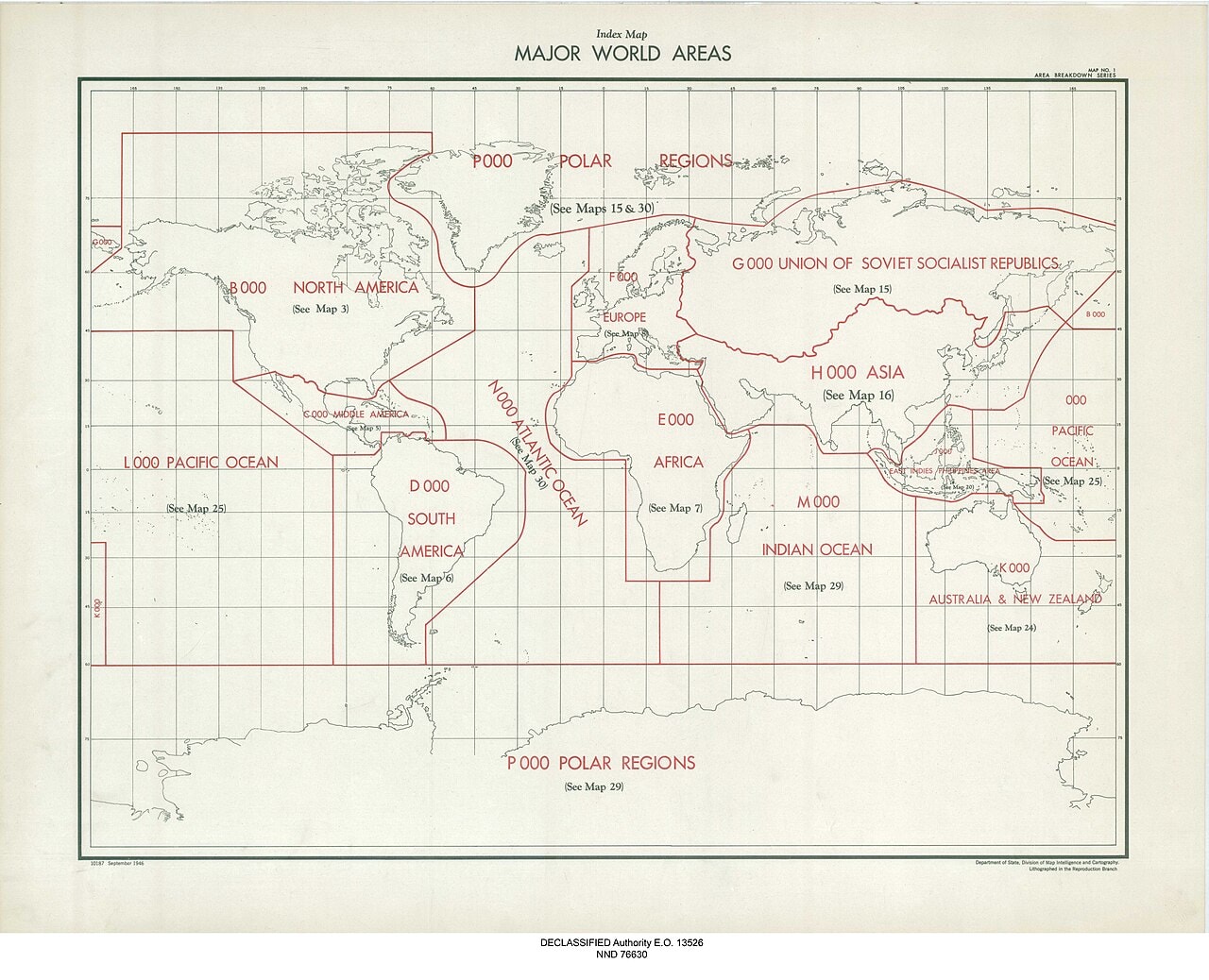
A choke point is a narrow, strategic transportation corridor, often maritime, where control gives leverage over the movement of goods and resources.
Examples that apply the concept:
- The Strait of Hormuz carries a large share of the world's oil exports, so control or disruption affects global energy prices and security.
- The Strait of Malacca links the Indian and Pacific Oceans and shapes Asian trade and energy access.
- The Suez Canal is a shortcut between Europe and Asia, so closure or congestion delays shipping worldwide.
- The Panama Canal connects the Atlantic and Pacific and affects Western Hemisphere trade and naval movement.
- The Bosporus and Dardanelles connect the Black Sea and the Mediterranean, so Turkey's control shapes access for Black Sea states.
Optional Context: Classical Geopolitical Theories
These theories are not part of the required content for this topic, but they can deepen your understanding of how thinkers have connected territory to power. Treat them as background, not as required terms for this topic.
- Organic Theory (Ratzel): States act like living organisms that seek living space by expanding territory to secure resources and population. It has historically been used to justify imperialism.
- Heartland Theory (Mackinder): Control of the Eurasian interior is seen as the key to powerful land-based control and global influence.
- Rimland Theory (Spykman): Control of the coastal fringes of Eurasia and nearby seas, including choke points, is seen as the path to global influence.
How to Use This on the AP Human Geography Exam
MCQ
- When a map or image shows a narrow strait or canal, think choke point and be ready to explain why its location gives leverage over trade or resources.
- If a question describes a region pulled between two outside powers with frequent conflict, that points to a shatterbelt.
- Watch for "indirect control" or "economic pressure" language, which signals neocolonialism rather than formal colonial rule.
Free Response
- Use the skill this topic builds: explain spatial relationships across scales. Connect a concept to a specific place and then explain how control over that space translates into power.
- If asked to describe territoriality, define it as the connection of people, their culture, and their economy to land, then give a concrete example at a stated scale.
- Practice explaining causation, such as how a choke point's location causes other states to depend on whoever controls it.
Common Trap
- Do not treat neocolonialism as the same thing as colonialism. Neocolonialism is influence and leverage without direct rule.
Common Misconceptions
- Misconception: Political power is only military force.Actually: Political power is not only military force. Economic and cultural leverage, like loan conditions or monetary ties, are central to how power works across space.
- Misconception: Neocolonialism requires a past colonial relationship.Actually: Neocolonialism does not require a past colonial relationship. Any state or organization can exert indirect control through economic or political pressure.
- Misconception: Choke points are only about oil.Actually: Choke points are not only about oil. They matter for any goods, shipping routes, and naval movement, not just energy.
- Misconception: Shatterbelts are defined by internal problems, not outside competition.Actually: Shatterbelts are defined by outside competition, not just internal problems. The instability comes from being caught between stronger powers.
- Misconception: Territoriality is just lines on a map.Actually: Territoriality is not just lines on a map. It includes the cultural and economic ties people have to land, and those claims are often contested or unrecognized.
Related AP Human Geography Guides
Practice Questions for 4.3
1 of 10
Shatterbelt theory explains regional instability and external rivalry in the Caucasus but not why ethnic groups sustain territorial claims. What factor best explains this difference in scale?
A.
Choke point control over regional trade routes drives specific territorial claims
B.
Neocolonial economic dependency on foreign powers drives specific territorial claims
C.
Great power competition over energy pipelines drives specific ethnic claims
D.
Local territoriality rooted in ethnic identity and land ties drives specific claims
E.
Shifting alliances among regional states drive specific territorial claims
Vocabulary
The following words are mentioned explicitly in the AP® course framework for this topic.Term | Definition |
|---|---|
choke points | Strategic geographic locations that control access to important resources, trade routes, or regions, giving political and economic power to those who control them. |
neocolonialism | The practice of using economic, political, or cultural pressure to control or influence other countries, rather than direct military force or political control. |
political power | The ability to exercise control over people, land, and resources in a geographic area. |
shatterbelts | Regions of geopolitical tension and conflict where the control and influence of major powers compete, often resulting in political fragmentation. |
territoriality | The connection of people, their culture, and their economic systems to a specific land or territory. |
Frequently Asked Questions
What is territoriality in AP Human Geography?
Territoriality is the connection between people, culture, economic systems, and the land they claim or control. In AP Human Geography, it helps explain boundaries, land claims, identity, and conflict over space.
How is political power different from territoriality?
Political power is the broader ability to control people, land, and resources across space. Territoriality is one way that power becomes visible, especially through borders, symbols, land claims, and efforts to control territory.
What is a choke point in AP Human Geography?
A choke point is a narrow strategic passage, often a strait or canal, where control can influence trade, resources, shipping, or military movement. Examples include the Strait of Hormuz, the Suez Canal, and the Panama Canal.
What is a shatterbelt?
A shatterbelt is a region caught between stronger outside powers whose competition creates instability, fragmentation, or conflict. The concept focuses on how external pressure affects political control in a region.
What is neocolonialism?
Neocolonialism is indirect control over another country or region through economic, political, or cultural pressure instead of formal colonial rule. Loan conditions, trade dependence, and strategic infrastructure projects can all create neocolonial influence.
Why does territoriality matter for political geography?
Territoriality matters because political geography studies how power is organized across space. Claims to land, boundaries, resources, and identity all shape how states and groups control territory.
See Fiveable more often in Google
Mark Fiveable as a preferred source and Google is more likely to show you our guides in Top Stories, with a "preferred" badge in AI Mode and AI Overviews.