AP Environmental Science Unit 1 Cheatsheet: The Living World: Ecosystems

AP Environmental Science Unit 1 Cheatsheet: The Living World: Ecosystems

Start with the first 3 sections of the Unit 1 one-page cheatsheet below. The full sheet is a PDF you can print.

Species Interactions & Resource Competition

Predation: Predator eats prey. Relationship drives population cycles.

Symbiosis (close, long-term interaction):

  • Mutualism: Both species benefit
  • Commensalism: One benefits, one unaffected
  • Parasitism: One benefits, one harmed

Competition: Occurs within or between species when resources are limited.

Resource Partitioning: Species use resources differently (by place, time, or method) to reduce competition impact on survival.
Phosphorus Cycle: Scarcity & Role

Definition: Movement of phosphorus atoms/molecules between sources and sinks.

Major reservoirs: Rock and ocean sediments (phosphorus-bearing minerals).

No significant atmospheric component.

Why scarce: Rocks weather slowly → phosphorus availability is limited.

Limiting nutrient: Often limits primary production in freshwater and some terrestrial ecosystems.

Biological role: Absorbed by plant roots → incorporated into DNA, RNA, ATP → consumed by animals.

Hydrologic Cycle & Primary Productivity

Hydrologic cycle: Sun-powered movement of water (solid, liquid, gas) between sources and sinks.

Primary reservoirs: Oceans (largest), ice caps, groundwater.

Primary Productivity: Rate solar energy converts to organic compounds via photosynthesis (energy/area/time).

Gross Primary Productivity (GPP): Total photosynthesis rate.

Net Primary Productivity (NPP): Energy stored after respiration losses (GPP − respiration).

Units: kcal/m²/yr (or similar energy/area/time).

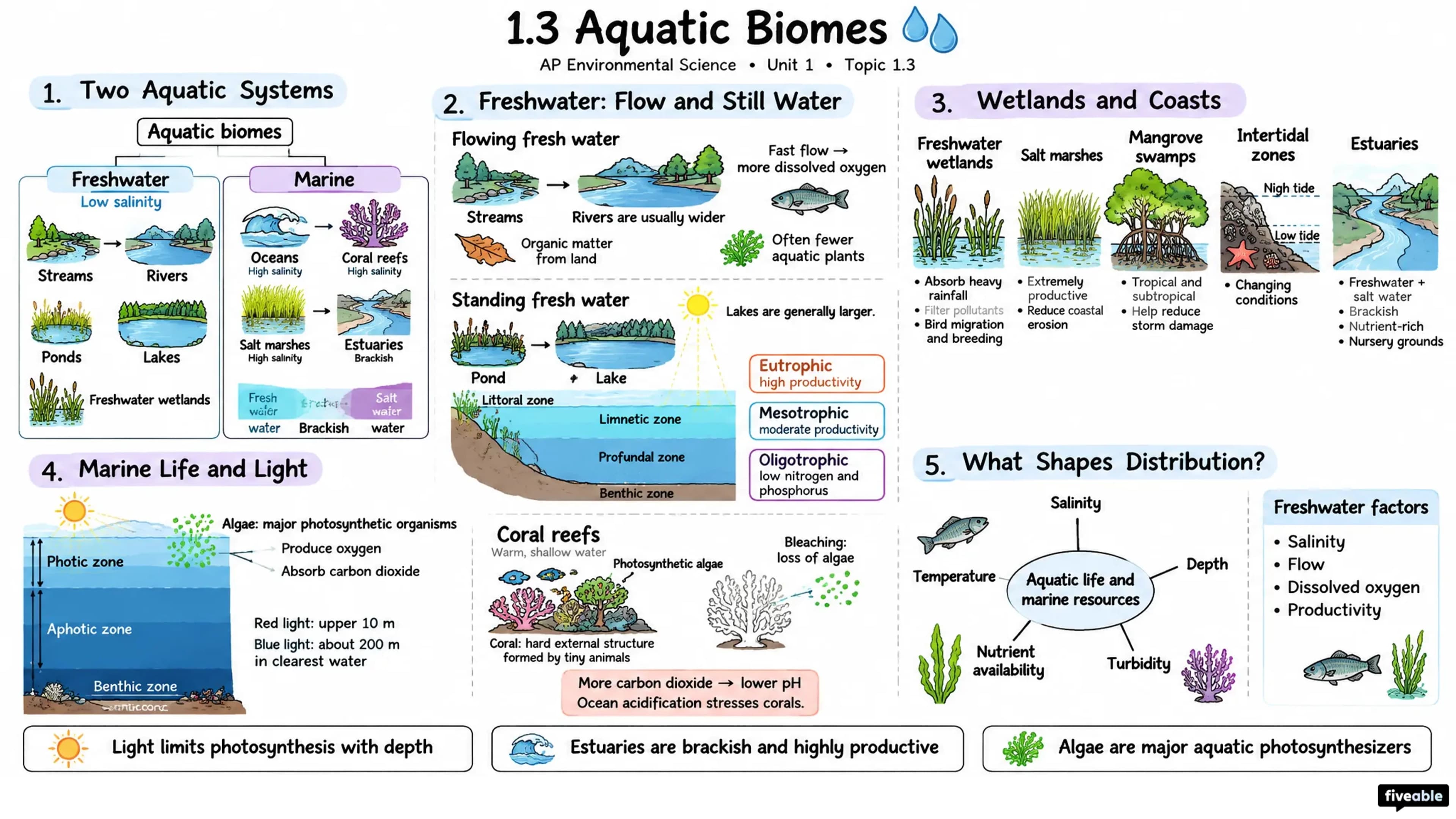
Light penetration in water: red wavelengths are absorbed rapidly within the first few meters, while blue/green light penetrates deepest (>100 m in very clear water) → limits photosynthesis to the shallow photic zone.

The rest of the Unit 1 sheet

6 more sections are on the one-page PDF:

  • Terrestrial Biomes: Distribution & Climate

  • Carbon Cycle: Reservoirs & Timescales

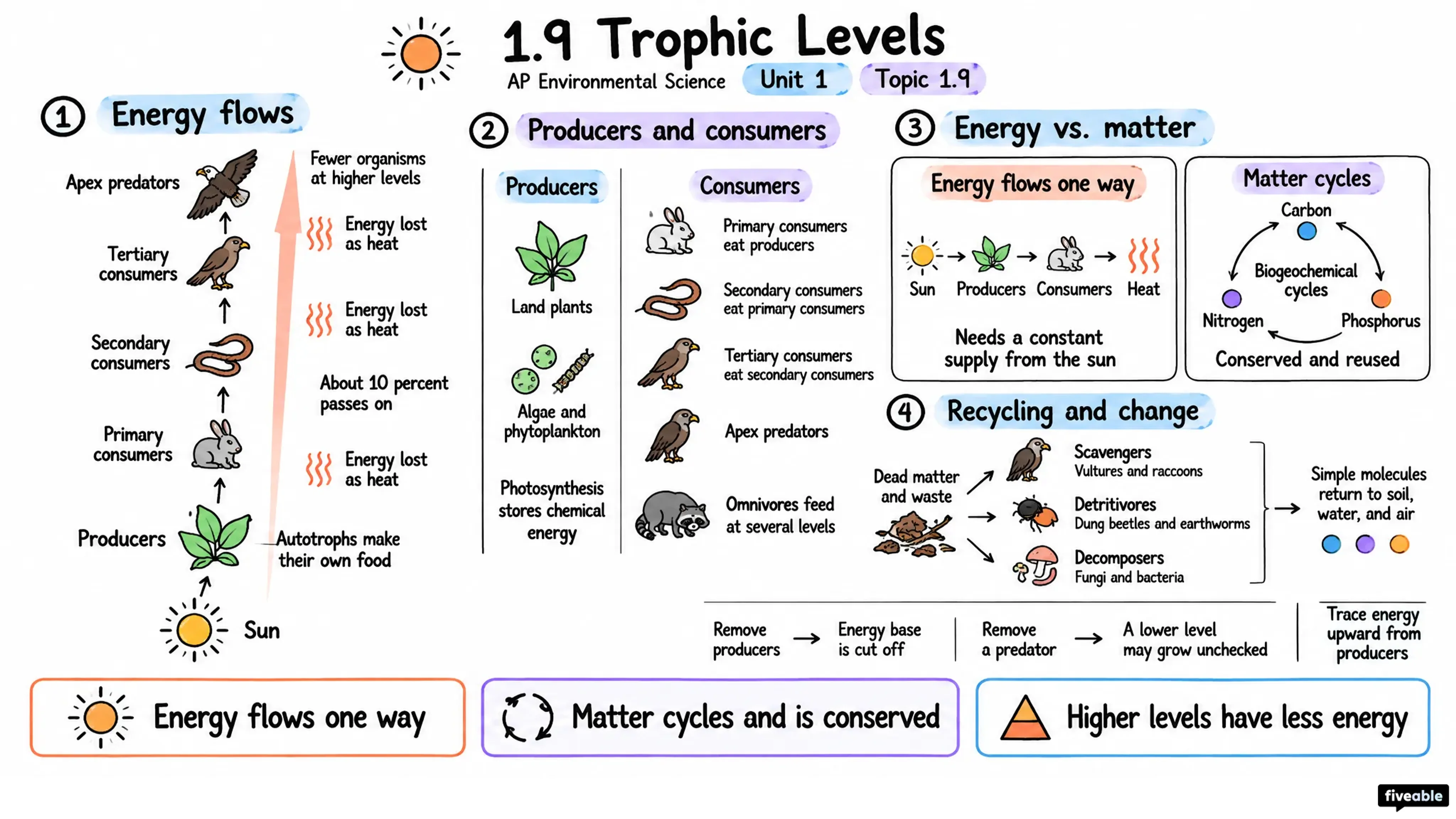
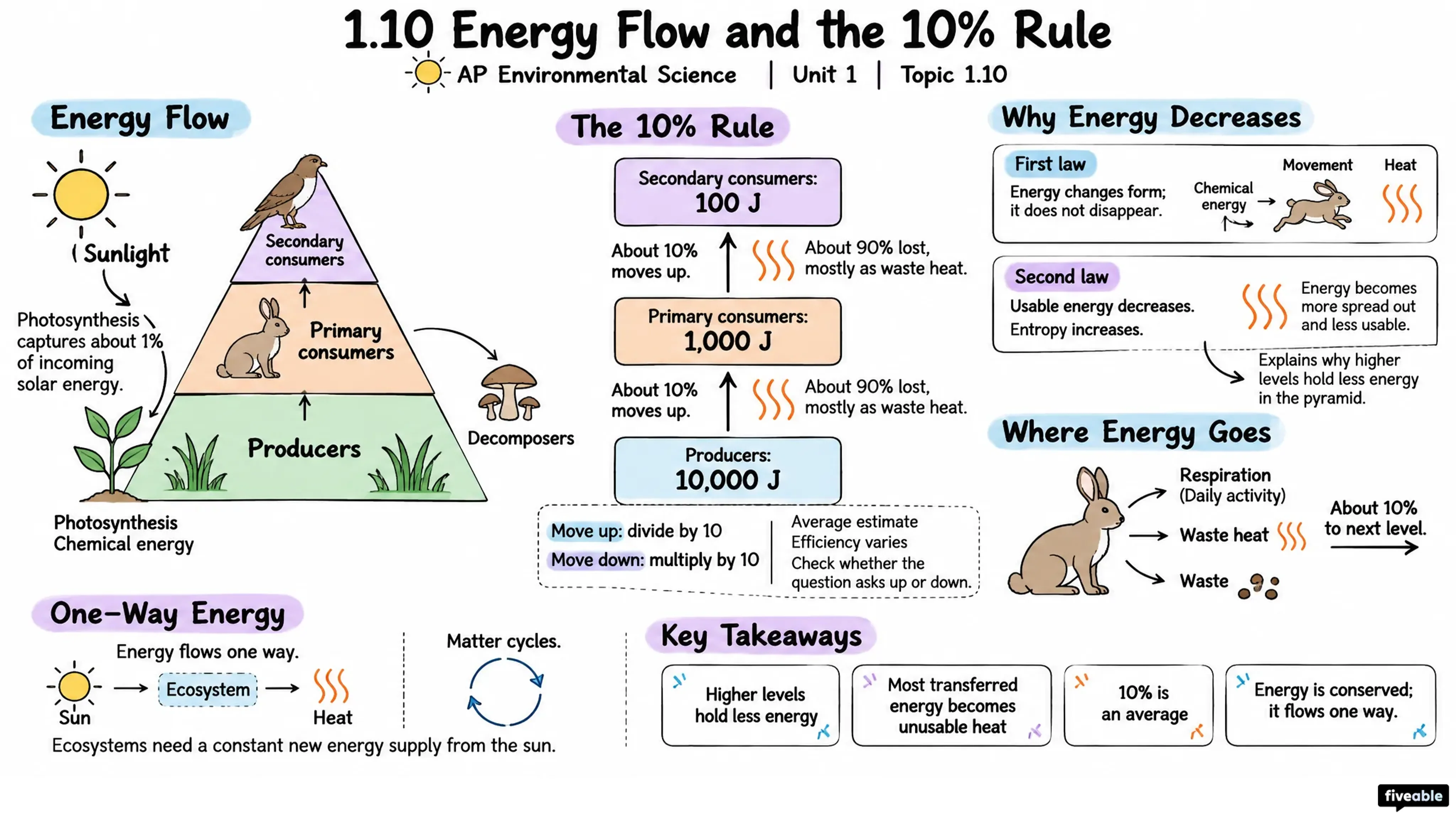
  • Energy Flow: Trophic Levels & the 10% Rule

  • Aquatic Biomes: Freshwater & Marine

  • Nitrogen Cycle: Steps & Limiting Factor

  • Food Chains, Food Webs & Feedback

Made by you

Visual Cheatsheets

Pick a Unit 1 topic and a format: flowchart, comparison chart, vocab sheet, Cornell notes and more. Ready in about a minute.

Printable PDF · from the Fiveable shop

AP Environmental Science Unit 1 Cheatsheet

1 page · The Living World: Ecosystems · PDF

Visual Cheatsheets

One topic, the format you pick, ready in about a minute

Format

Topic

Takes 30–60 seconds

Preview: Standard

Unit 1: The Living World: Ecosystems, topic by topic

Each topic has a full study guide. See the whole unit.