Made by Fiveable
Text-Based Cheatsheets
The whole AP Environmental Science course on one page, plus one page per unit, reviewed every year. Made and checked by the Fiveable Content Team.
Download the text-based cheatsheet we write and review every year, or make a visual cheatsheet for any topic in the format you study best with.
What each unit's one-page cheatsheet covers. Open a unit to read the start of its sheet.
Unit 1: The Living World: Ecosystems
Species Interactions & Resource Competition · Phosphorus Cycle: Scarcity & Role · Hydrologic Cycle & Primary Productivity · Terrestrial Biomes: Distribution & Climate · Carbon Cycle: Reservoirs & Timescales · Energy Flow: Trophic Levels & the 10% Rule · Aquatic Biomes: Freshwater & Marine · Nitrogen Cycle: Steps & Limiting Factor · Food Chains, Food Webs & Feedback
Unit 2: The Living World: Biodiversity
Three Levels of Biodiversity · Island Biogeography & Evolution · Test-Solving Priorities · Ecological Tolerance & Limits · Ecosystem Services & Human Disruption · Keystone & Indicator Species · Natural Disruptions: Scales & Types · Adaptation & Population Response · Ecological Succession: Types & Process
Generalist vs. Specialist Species · Survivorship Curves · Human Population Dynamics & Demographic Metrics · K-Selected vs. r-Selected Species · Age Structure & Population Growth · Total Fertility Rate (TFR) & Human Population · Invasive Species & Selection Strategy · Carrying Capacity (K) & Overshoot · Resource Availability & Population Growth · Demographic Transition Model (DTM)
Unit 4: Earth Systems and Resources
Plate Boundaries & Geological Events · Atmosphere: Layers & Composition · Common Confusions & Test Strategy · Soil Texture & Properties · Solar Radiation & Earth's Seasons · Global Wind Patterns & Watersheds · Geography, Climate & Rain Shadow · El Niño & La Niña (ENSO) · Interpreting Soil & Climate Data
Tragedy of the Commons & Resource Depletion · Urbanization & Impervious Surfaces · Sustainable Practices & Indicators · Clearcutting: Costs & Carbon · Irrigation Methods: Efficiency vs. Cost · Pest Control: Resistance & Genetic Engineering · Green Revolution: Methods & Trade-offs · Meat Production: CAFOs vs. Pasture Systems · Mining & Resource Extraction
Unit 6: Energy Resources and Consumption
Nonrenewable vs. Renewable Energy · Global Energy Consumption Patterns · Fossil Fuel Types & Properties · Fossil Fuel Power Generation & Combustion · Nuclear Power: Fission & Waste · Solar Energy Systems · Renewable Energy: Hydro, Geothermal, Wind · Biomass & Hydrogen Fuel Cells · Energy Conservation Methods · Natural Resource Distribution & Geologic Context
Primary & Secondary Pollutants from Fossil Fuels · Photochemical Smog Formation & Timing · Thermal Inversion & Pollution Trapping · Indoor Air Pollutants: Sources & Classification · Radon: Entry & Health Impact · Acid Deposition: Formation & Regional Impact · Pollution Control Devices & Methods · Reducing Photochemical Smog & Lead Regulation · Noise Pollution: Sources & Ecological Effects
Unit 8: Aquatic and Terrestrial Pollution
Point vs. Nonpoint Sources · Organism Tolerance & Aquatic Stress · Eutrophication & Oxygen Dynamics · POPs, Bioaccumulation & Biomagnification · Endocrine Disruptors & Wetlands · Solid Waste & Disposal Methods · Waste Reduction & Sewage Treatment · Toxicology & Human Health · Pathogens & Infectious Diseases
Stratospheric Ozone: Role & Depletion · Ocean Warming: Causes & Consequences · Biodiversity Loss: HIPPCO & Mitigation · Greenhouse Gases & Global Warming Potential · Ocean Acidification Chemistry & Impacts · Climate Change: Atmospheric & Oceanic Transport · Polar Regions & Positive Feedback Loops · Invasive Species: Definition & Control · Endangered Species: Causes & Protection
Made by Fiveable
The whole AP Environmental Science course on one page, plus one page per unit, reviewed every year. Made and checked by the Fiveable Content Team.
Made by you
Pick any topic and a format: flowchart, comparison chart, vocab sheet, Cornell notes and more. Ready in about a minute.
Made by Fiveable, one page per unit, aligned to the 2026-2027 course
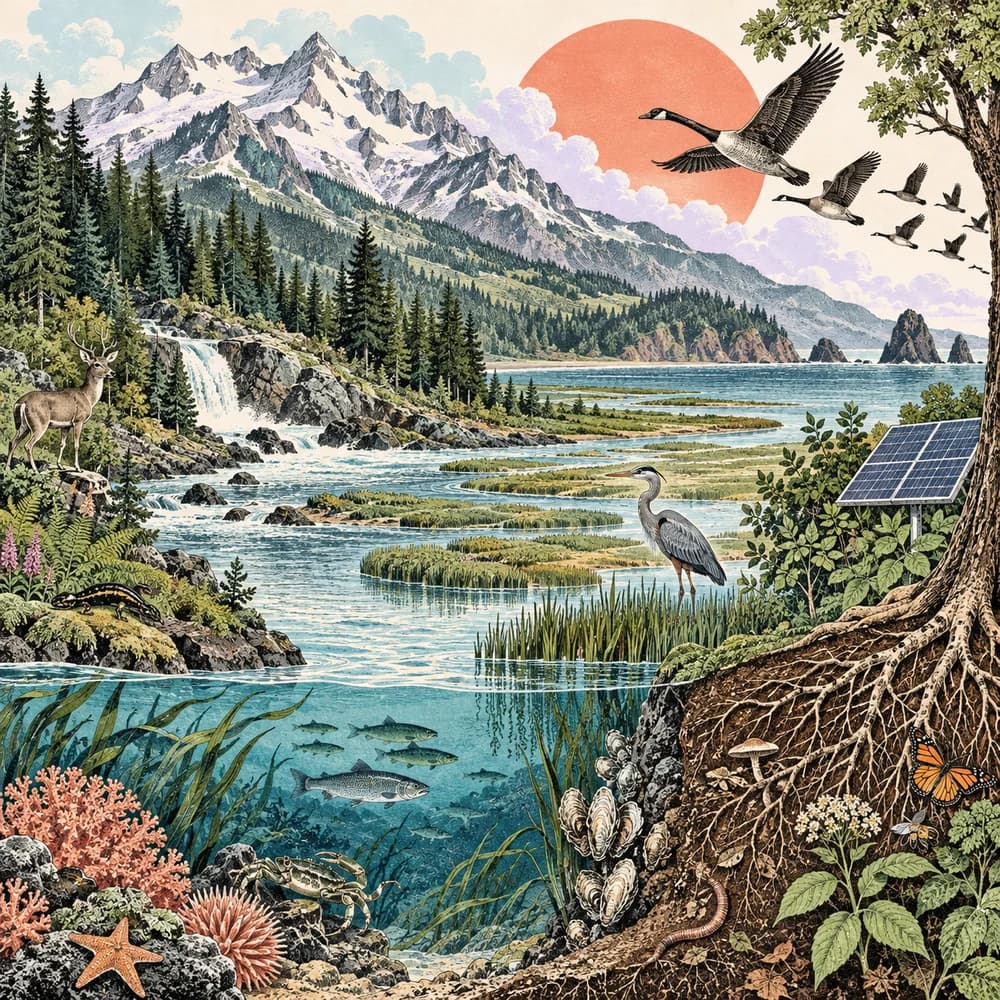
Printable PDF · from the Fiveable shop
11 pages · Subject + 9 unit cheatsheets · PDF
One topic, the format you pick, ready in about a minute
Format
Topic
Takes 30–60 seconds
Preview: Standard
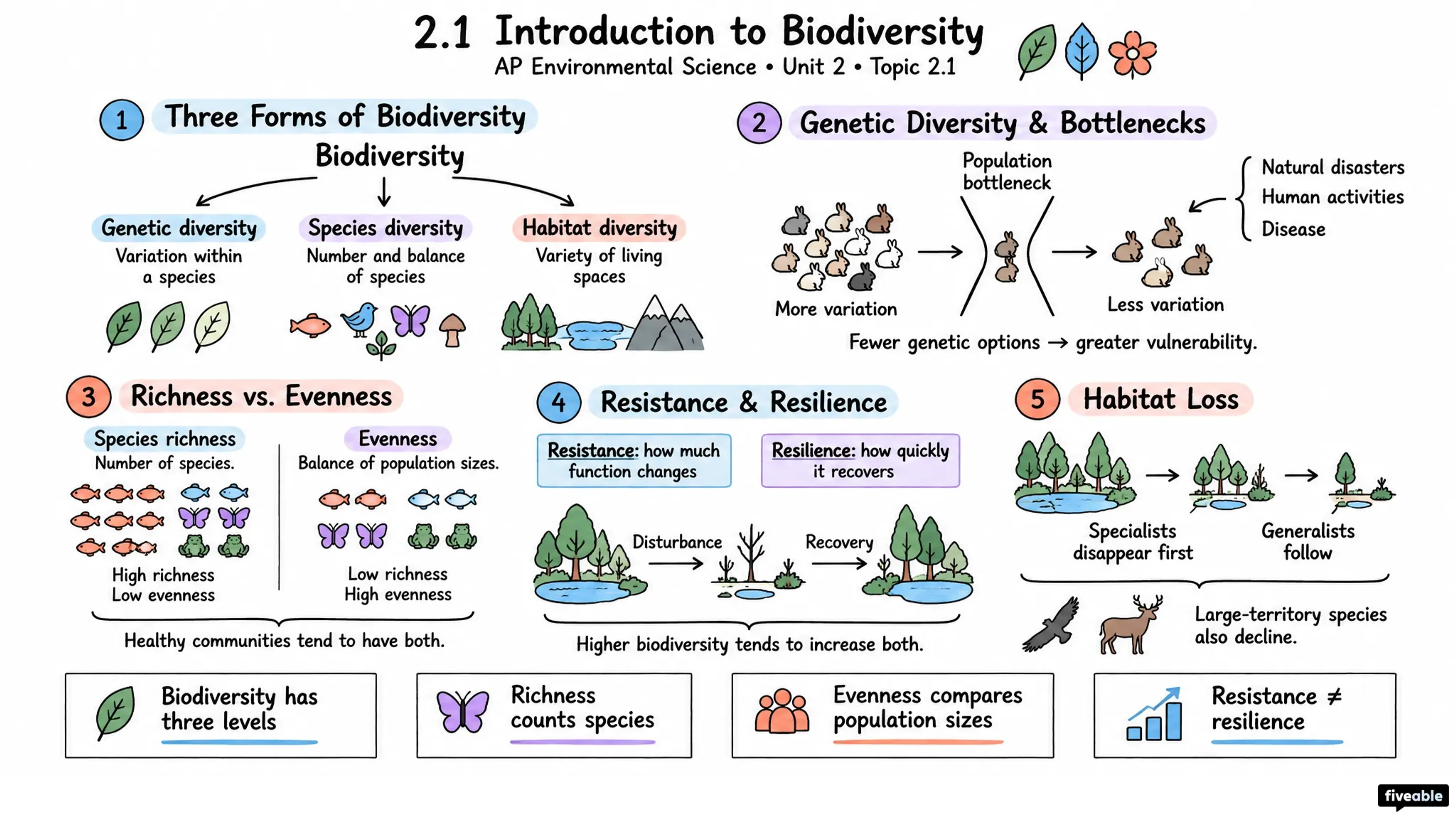
2.1 Introduction to Biodiversity
Standard
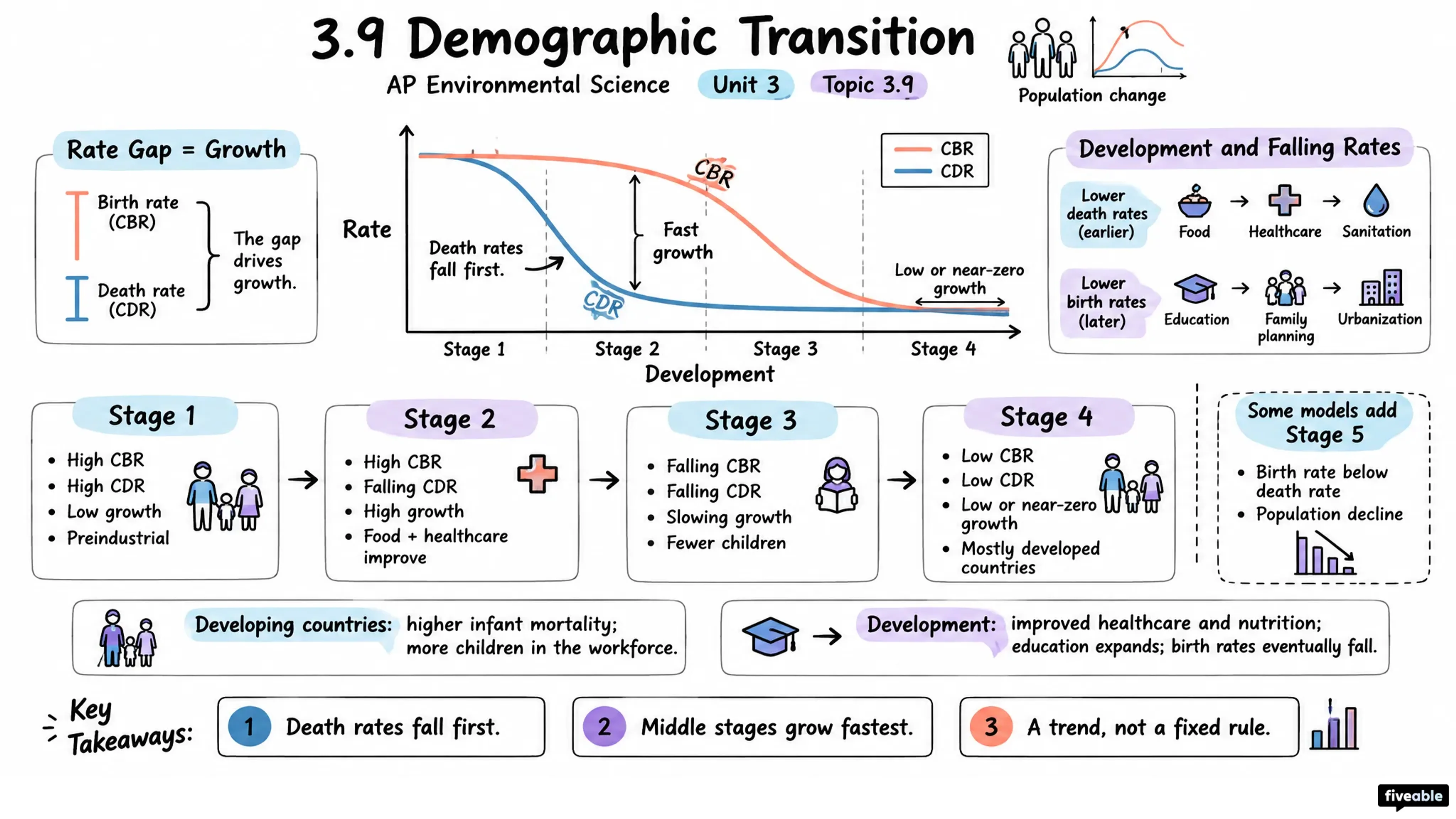
3.9 Demographic Transition
Standard
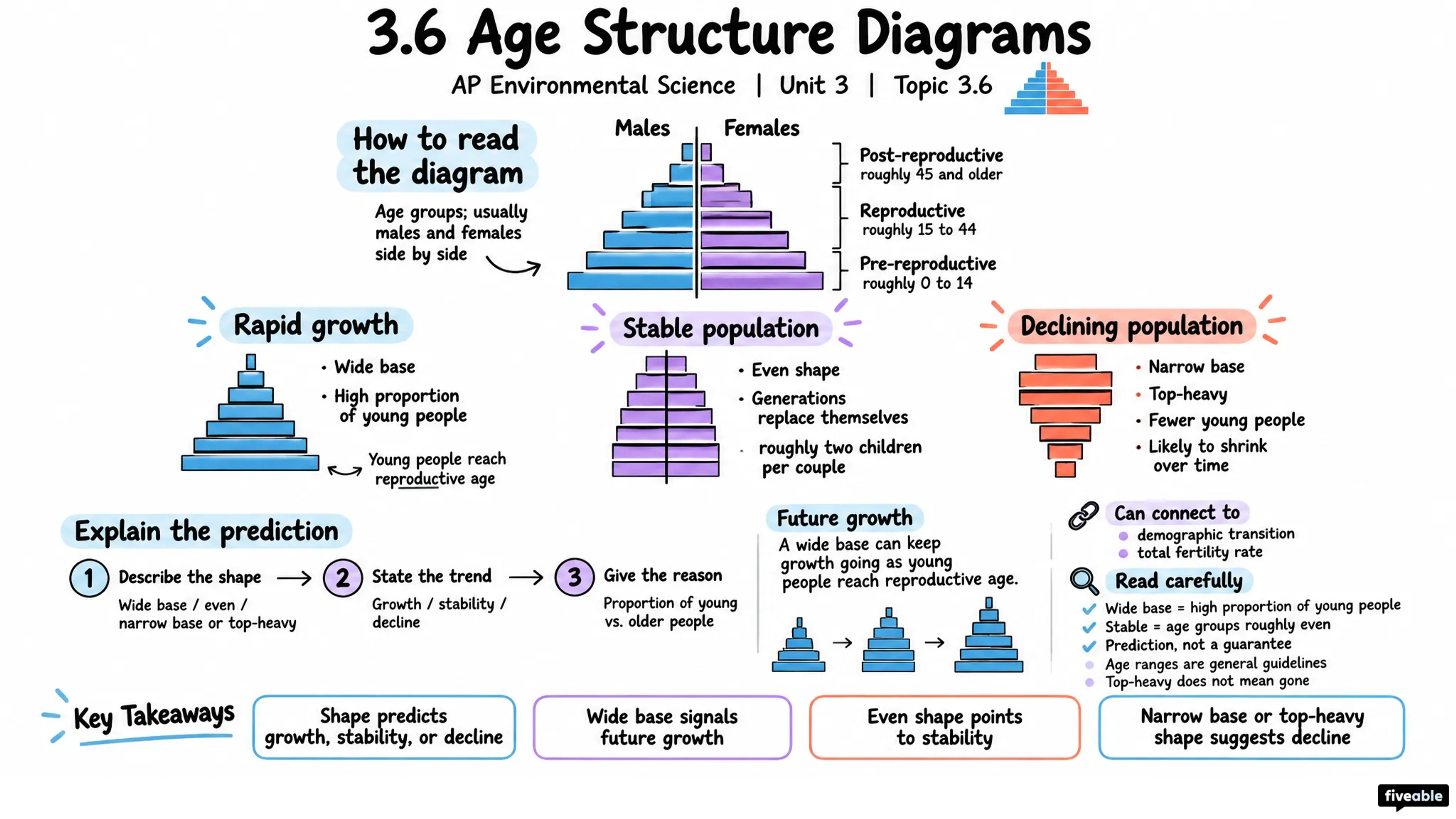
3.6 Age Structure Diagrams
Standard
A cheatsheet condenses a whole course into the facts you actually need on exam day. The AP Environmental Science cheatsheets on this page summarize the key formulas, concepts, and definitions from each unit so you can review the entire course at a glance.
They work best as a final review: skim the one-page summary, spot the units you want to strengthen, then go deeper with the AP Environmental Science study guides. The visual cheatsheets in the gallery are organized by unit, and you can generate your own for any topic you want a quick refresher on.