
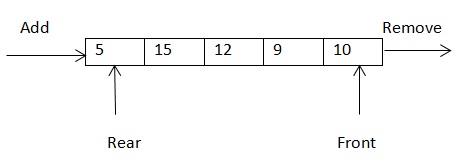
Queues and priority queues are essential data structures in computer science. They follow the First-In-First-Out principle, with elements added at the rear and removed from the front. This chapter explores different implementations and their efficiency.
Priority queues take it a step further by ordering elements based on priority. We'll dive into heap-based implementations, which offer optimal time complexity for operations like insert and extract-max, making them crucial for various algorithms and applications.
Queue Fundamentals
FIFO Principle and Basic Operations
- FIFO (First-In-First-Out) defines the order of element processing in queues
- Elements enter the queue at one end (rear) and exit from the other end (front)
- Enqueue operation adds an element to the rear of the queue
- Dequeue operation removes and returns the element from the front of the queue
- Peek function allows viewing the front element without removing it
- isEmpty() checks if the queue contains no elements
- isFull() determines if the queue has reached its maximum capacity (for fixed-size implementations)
Circular Queue Implementation
- Circular queue optimizes space utilization in array-based implementations
- Uses a fixed-size array and two pointers: front and rear
- When rear reaches the end of the array, it wraps around to the beginning
- Modulo arithmetic (
%) calculates the next position for enqueue and dequeue operations - Allows reuse of empty spaces at the beginning of the array
- Distinguishes between empty and full states using a size variable or special marker
Queue Implementations

Array-based Queue
- Uses a fixed-size array to store elements
- Maintains front and rear indices to track the queue boundaries
- Enqueue operation increments rear index and adds element at that position
- Dequeue operation removes element at front index and increments it
- Time complexity for enqueue and dequeue operations:
- Space complexity: , where n represents the maximum number of elements
- May lead to "false full" condition when rear reaches array end while front > 0
- Circular array implementation addresses the "false full" issue
Linked List-based Queue
- Utilizes a singly linked list to store queue elements
- Maintains head and tail pointers for efficient enqueue and dequeue operations
- Enqueue operation adds a new node to the tail of the linked list
- Dequeue operation removes the node at the head of the linked list
- Time complexity for enqueue and dequeue operations:
- Space complexity: , where n represents the number of elements in the queue
- Dynamic size allows the queue to grow and shrink as needed
- Eliminates the need for circular implementation or "false full" condition handling
Priority Queues and Heaps
Priority Queue Concepts
- Priority queue orders elements based on their priority rather than insertion order
- Supports operations like insert, delete, and extract-max (or extract-min)
- Can be implemented using various data structures (arrays, linked lists, heaps)
- Heap-based implementation provides optimal time complexity for operations
- Applications include task scheduling, Dijkstra's algorithm, and event-driven simulations
- Balances insertion and deletion operations efficiently
Heap Structure and Types
- Heap represents a complete binary tree with a specific ordering property
- Max-Heap maintains the property that each node is greater than or equal to its children
- Min-Heap ensures each node is less than or equal to its children
- Can be efficiently implemented using an array representation
- Parent of node at index i resides at index
- Left child of node at index i resides at index
- Right child of node at index i resides at index
- Heap property facilitates efficient access to the maximum (or minimum) element
Heap Operations and Applications
- Insert operation adds a new element to the heap and restores the heap property
- Delete operation removes a specific element from the heap and restructures it
- Extract-Max (or Extract-Min) removes and returns the root element of the heap
- Heapify process converts an arbitrary array into a valid heap structure
- Heap Sort algorithm uses a max-heap to sort elements in ascending order
- Time complexity for insert and extract operations:
- Heapify operation has a time complexity of for building the initial heap
- Heap Sort achieves time complexity for sorting n elements