
Object-oriented programming (OOP) is built on four key principles: abstraction, encapsulation, inheritance, and polymorphism. These concepts form the foundation for creating modular, reusable, and efficient code in modern software development.
Understanding these principles is crucial for mastering OOP. They enable developers to create flexible, maintainable systems by organizing code into objects, hiding implementation details, and promoting code reuse through inheritance and polymorphism.
Core Principles
Abstraction and Encapsulation
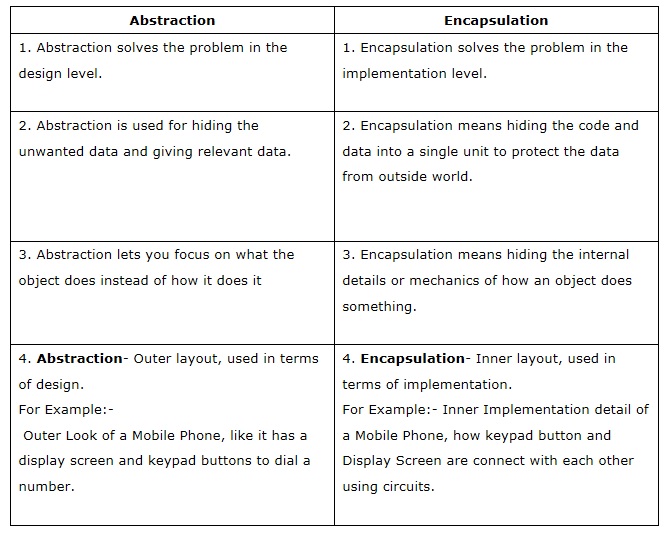
- Abstraction simplifies complex systems by focusing on essential features while hiding unnecessary details
- Involves creating abstract classes and interfaces to represent general concepts
- Allows developers to work with high-level ideas without worrying about implementation specifics
- Encapsulation bundles data and methods that operate on that data within a single unit or object
- Restricts direct access to some of an object's components, providing a protective barrier
- Implements data hiding by making certain data private and only accessible through public methods
- Enhances security and reduces system complexity by controlling access to internal object details
Inheritance and Polymorphism
- Inheritance enables new classes to receive or inherit properties and methods from existing classes
- Creates a parent-child relationship between classes, with the child class (subclass) inheriting from the parent (superclass)
- Promotes code reuse and establishes a hierarchical relationship between classes
- Supports the creation of more specialized classes based on general classes
- Polymorphism allows objects of different types to be treated as objects of a common base class
- Enables a single interface to represent different underlying forms (data types or classes)
- Implements method overriding, where a subclass provides a specific implementation for a method defined in its superclass
- Facilitates flexible and extensible code by allowing different objects to respond to the same method call in different ways

Modularity and Reusability
Information Hiding and Code Reusability
- Information hiding restricts access to certain details of an object's design and implementation
- Protects object integrity by preventing unauthorized access to internal data
- Reduces system complexity by limiting interdependencies between software components
- Implements access modifiers (public, private, protected) to control visibility of class members
- Code reusability allows developers to use existing code in new programs or applications
- Reduces redundancy and improves efficiency in software development
- Implements through inheritance, where subclasses reuse code from superclasses
- Utilizes libraries and frameworks to reuse pre-written, tested code across multiple projects
Interfaces and Abstract Classes
- Interface defines a contract specifying a set of abstract methods that a class must implement
- Supports multiple inheritance in languages that don't allow multiple class inheritance (Java)
- Enables loose coupling between classes by defining interactions through method signatures
- Facilitates the creation of plug-and-play components in software systems
- Abstract class serves as a base class for other classes, containing both abstract and concrete methods
- Cannot be instantiated directly but provides a common interface for its subclasses
- Implements partial abstraction, allowing some methods to have implementations while others remain abstract
- Supports the creation of class hierarchies and promotes code reuse through inheritance