12.2 Hinduism and Jainism: Shared history and concepts

🕉️Intro to Hinduism Unit 12 Review
12.2 Hinduism and Jainism: Shared history and concepts
Hinduism and Jainism share deep historical roots in ancient India. Despite developing distinct identities, they've influenced each other for centuries, especially in western and southern regions where Jain presence is strong.
Both religions emphasize non-violence, karma, and liberation from rebirth. However, they differ on key points like the nature of the soul and the divine. Jainism's strict practices have shaped Hindu traditions, particularly in areas of asceticism and vegetarianism.
Hinduism and Jainism: Historical Connections

Top images from around the web for Origins and Early Development
The Indus River Valley Civilizations | World Civilizations I (HIS101) – Biel View original
Is this image relevant?
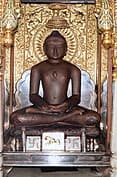
Jainism - Wikipedia View original
Is this image relevant?
Indus Valley Civilisation - Wikipedia View original
Is this image relevant?
The Indus River Valley Civilizations | World Civilizations I (HIS101) – Biel View original
Is this image relevant?
Jainism - Wikipedia View original
Is this image relevant?
Origins and Early Development
Hinduism and Jainism both originated in the broader cultural world of ancient India, sharing philosophical roots even as they developed into distinct traditions. The historical founder of Jainism, Mahavira, was born into a Hindu (specifically Kṣatriya) family in the 6th century BCE and was a contemporary of the Buddha. That timing matters: all three traditions were taking shape in the same intellectual environment.
Jainism arose as part of the śramaṇa movement, a wave of ascetic traditions (including Buddhism) that challenged the authority of the Vedas and the ritual role of Brahmin priests. These movements offered alternative paths to spiritual liberation that didn't depend on Vedic sacrifice or priestly mediation.
Geographical Proximity and Interaction
Despite their differences, Hinduism and Jainism have coexisted in close proximity throughout their histories, particularly in western and southern India. States like Gujarat and Karnataka have especially strong Jain communities, and centuries of shared geography have produced a complex relationship of mutual influence, dialogue, and debate.
Jain contributions to Indian art, architecture, and literature have enriched the broader culture that both traditions share. The temples at Mount Abu and Ranakpur in Rajasthan are striking examples of Jain architectural achievement that also influenced Hindu temple design in the region.
Shared Concepts: Non-violence, Karma, and Liberation
Ahiṃsā (Non-violence)
Ahiṃsā, or non-violence toward all living beings, is a central ethical principle in both traditions, but they apply it very differently.
- In Hinduism, ahiṃsā is an important virtue, but it allows for necessary violence in certain contexts. The Bhagavad Gītā, for instance, presents Arjuna's duty as a warrior as compatible with dharma.
- Jainism insists on absolute non-violence in all circumstances. Jain monks and nuns practice this to an extraordinary degree, following strict vegetarianism and even sweeping the ground before them to avoid stepping on insects.
Jain vegetarianism and concern for animal life have had a significant impact on Hindu dietary practices, particularly in regions with strong Jain influence. Many Hindu communities in Gujarat, for example, adopted stricter vegetarian norms partly through this cultural exchange.
.png)
Karma and Rebirth
Karma, the law of moral cause and effect, is foundational to both traditions' understanding of how the soul moves through the cycle of birth and death (saṃsāra). But the two religions picture karma quite differently.
- In Hinduism, karma determines your future rebirths and experiences based on the moral quality of your actions across lifetimes. It functions more like a moral law.
- In Jainism, karma is understood as a kind of material substance that literally sticks to the soul, weighing it down and obscuring its inherent purity and knowledge. This is a much more physical conception than what you find in most Hindu schools.
Both traditions affirm the existence of an eternal soul (ātman) that transmigrates through the cycle of rebirth, accumulating karma along the way.
Mokṣa (Liberation)
The ultimate goal in both traditions is mokṣa, liberation from the cycle of rebirth and the suffering of worldly existence. What liberation actually looks like, though, differs.
- In Hinduism, mokṣa is often conceived as union with or realization of Brahman, the ultimate reality underlying all things. The specifics vary by school: Advaita Vedānta sees it as recognizing your identity with Brahman, while devotional traditions see it as eternal communion with God.
- In Jainism, liberation means the soul's complete release from the bondage of karma, regaining its innate qualities of infinite knowledge, perception, power, and bliss. There's no merging with a divine absolute.
Both paths involve ethical conduct, spiritual discipline, and detachment from worldly affairs, but the specific practices and underlying philosophies differ considerably.
Soul and the Divine: Hindu vs Jain Perspectives
Nature of the Soul (Ātman)
Both traditions affirm an eternal soul that transmigrates through births and deaths, but they understand its nature differently.
- The Hindu concept of ātman, especially in Advaita Vedānta, is ultimately identified with Brahman, the divine absolute reality. This points toward an underlying monism: at the deepest level, your soul and the ultimate reality are one.
- In Jainism, each soul is a distinct, individual entity. It is inherently pure and possesses divine qualities, but it is not identical with any overarching divine principle. Jainism emphasizes the plurality and independence of individual souls.
This is one of the sharpest philosophical divides between the two traditions.

Views on the Divine
Jain philosophy is fundamentally non-theistic. It rejects the existence of a supreme creator God and views the universe as eternal and self-sustaining. Jainism does recognize spiritually perfected beings called tīrthaṅkaras ("ford-makers") who serve as teachers and exemplars, but they are not creator gods. They are venerated for having achieved liberation and shown the path, not for governing the cosmos.
Hindu traditions, by contrast, encompass a wide range of theological views:
- Theistic Hinduism affirms a supreme being who creates, sustains, and dissolves the universe, often conceived as Vishnu, Shiva, or Shakti (or as saguṇa Brahman / Īśvara).
- Non-dualistic Vedānta (Advaita) regards the divine as the ultimate reality beyond all attributes, with the soul and world being identical to this absolute principle (nirguṇa Brahman).
This theological range within Hinduism means that some Hindu schools are closer to Jain views than others, which has made dialogue between the traditions possible across centuries.
Jain Influence on Hindu Traditions
Asceticism and Renunciation
Jainism's rigorous emphasis on non-violence and asceticism influenced the development of similar ideals within Hinduism. Jain models of renunciation and detachment from worldly life helped inspire the formation of Hindu monastic orders and the lifestyle of sannyāsa (complete renunciation). The idea that the highest spiritual path involves radical self-discipline and withdrawal from material concerns gained strength partly through Jain example.
Philosophical and Cultural Exchange
- The Jain concept of anekāntavāda (the doctrine of multiple viewpoints) holds that truth is complex and can be understood from many angles. This idea has resonated with certain Hindu philosophical schools that also recognize the limits of any single perspective.
- The Jain tīrthaṅkara Ṛṣabha is recognized in some Hindu texts as an avatar of Vishnu. This is a clear example of mutual assimilation, where one tradition incorporates a revered figure from the other into its own framework.
- Ongoing Jain contributions to Indian art, architecture, and literature have continued to foster dialogue and cultural exchange between the two traditions, making their shared history one of the richest inter-religious relationships in South Asian history.
See Fiveable more often in Google
Mark Fiveable as a preferred source and Google is more likely to show you our guides in Top Stories, with a "preferred" badge in AI Mode and AI Overviews.