7.2 Water Use and Conservation

🌿Intro to Environmental Science Unit 7 Review
7.2 Water Use and Conservation
🌿 Intro to Environmental Science
Water Usage
Water touches every part of daily life, from the food on your plate to the electricity powering your home. Understanding where freshwater actually goes helps explain why conservation matters so much.

Top images from around the web for Understanding Water Footprint and Irrigation
Water footprint - Wikipedia View original
Is this image relevant?
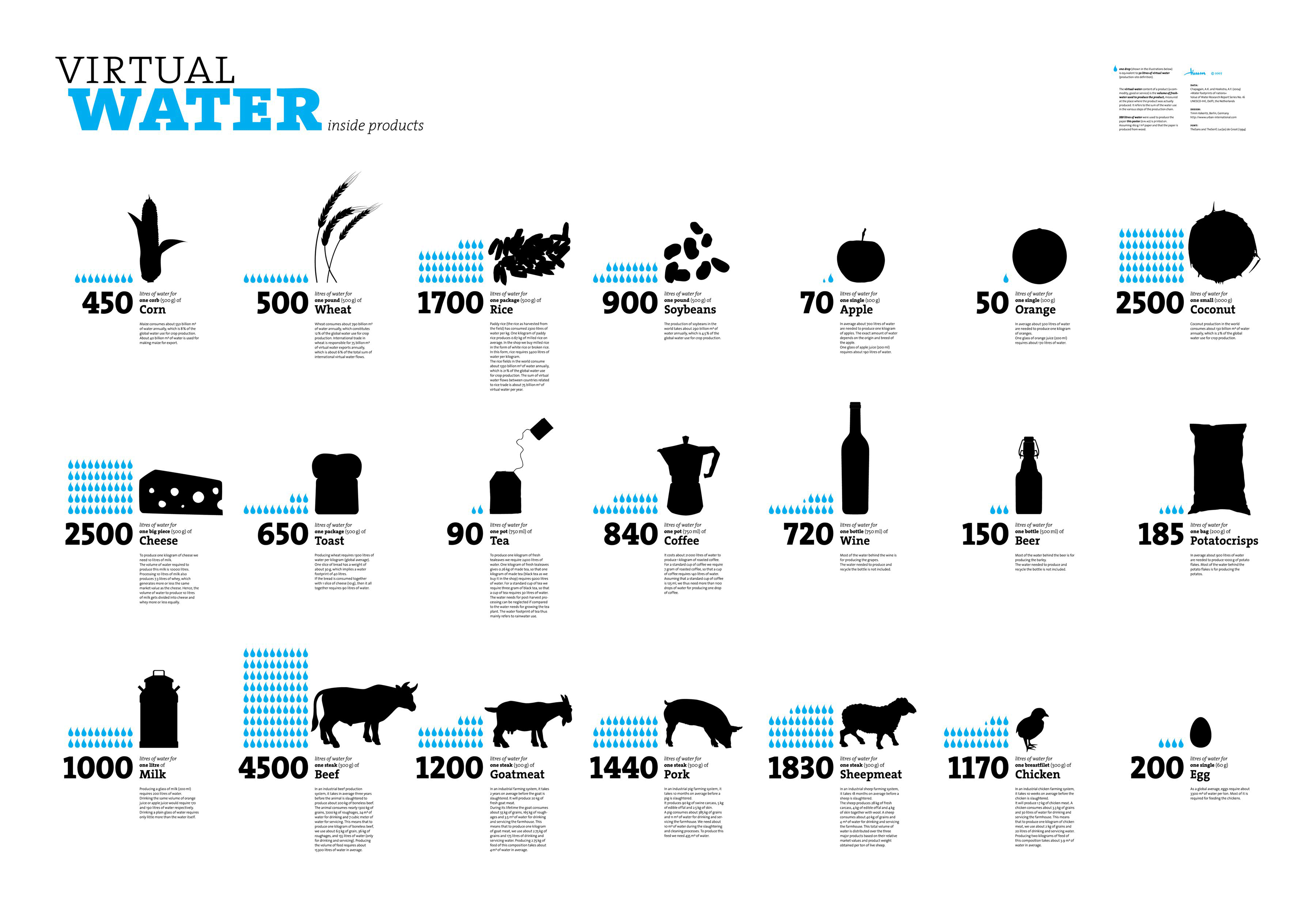
Every drop counts! | ecosistema urbano View original
Is this image relevant?
Footprinting: Carbon, Ecological and Water | Sustainability: A Comprehensive Foundation View original
Is this image relevant?
Water footprint - Wikipedia View original
Is this image relevant?
Every drop counts! | ecosistema urbano View original
Is this image relevant?
Understanding Water Footprint and Irrigation
Your water footprint is the total volume of freshwater used to produce the goods and services you consume. It includes both direct use (drinking, showering) and indirect use (the water needed to grow your food, manufacture your clothes, or generate your energy). Water footprints vary dramatically by country and lifestyle.
Irrigation is the single largest consumer of freshwater, accounting for roughly 70% of global freshwater withdrawals. Methods range from traditional flood irrigation, which is cheap but wasteful, to drip irrigation systems that deliver water directly to plant roots with far less loss.
- Improper irrigation can cause soil salinization, where salts accumulate in the soil as irrigation water evaporates, eventually making land unproductive
- Crop selection matters too. Water-intensive crops like rice and cotton demand heavy irrigation, while drought-resistant crop varieties can significantly cut water needs

Industrial and Domestic Water Use
Industry uses about 22% of global freshwater withdrawals, while domestic (household) use accounts for roughly 8%.
On the industrial side:
- Manufacturing processes like paper and chemical production require large volumes of water
- Cooling systems for power plants are among the biggest industrial water consumers
- Industrial discharge can seriously degrade water quality in nearby waterways
On the domestic side:
- Household water covers drinking, cooking, sanitation, and cleaning
- Usage patterns vary widely by region and income level. In developed countries, a significant share goes to non-essential uses like lawn watering and car washing
Urban water infrastructure also plays a major role. Aging pipe systems in many cities lose substantial amounts of treated water through leaks before it ever reaches a tap. Upgrading this infrastructure is one of the most straightforward ways to reduce waste at scale.

Water Conservation Strategies
Conservation doesn't mean using less water for everything. It means reducing waste while still meeting real needs. The strategies below work at different scales, from individual households to entire agricultural regions.
Improving Water Efficiency and Landscaping Practices
Water efficiency focuses on getting the same results with less water:
- Low-flow fixtures (showerheads, toilets, faucet aerators) can cut domestic water use significantly with minimal lifestyle change
- Industrial facilities can redesign processes to recycle water internally rather than drawing fresh supplies each time
- In agriculture, precision irrigation tools like soil moisture sensors help farmers apply water only when and where crops actually need it
Xeriscaping is a landscaping approach designed to reduce or eliminate the need for irrigation. Instead of water-hungry turf grass, xeriscaped yards use drought-tolerant native plants (like succulents and ornamental grasses), apply mulch to retain soil moisture and reduce evaporation, and minimize lawn areas. This is especially effective in arid and semi-arid regions.
Efficient irrigation scheduling also helps. By factoring in soil moisture levels, weather forecasts, and specific plant needs, smart irrigation controllers can automate watering so that landscapes and crops receive water only when they truly need it.
Innovative Water Management Systems
Greywater systems collect lightly used wastewater from sinks, showers, and laundry and redirect it for purposes like landscape irrigation or toilet flushing. This reduces demand on freshwater supplies and cuts down on wastewater volume. The trade-off is that greywater systems require separate plumbing and may face regulatory restrictions depending on your area.
Rainwater harvesting captures precipitation for later use. Systems range from a simple rain barrel under a downspout to large underground cisterns. The collected water works well for non-potable uses like irrigation and toilet flushing, and harvesting also reduces stormwater runoff, which helps limit water pollution.
Water metering tracks how much water a household or business actually uses. This matters because awareness alone changes behavior. Metering also enables tiered pricing structures, where the per-unit cost of water increases as you use more, giving people a financial incentive to conserve. Smart meters take this further by providing real-time data, making it easy to spot leaks or unusual spikes in usage quickly.
See Fiveable more often in Google
Mark Fiveable as a preferred source and Google is more likely to show you our guides in Top Stories, with a "preferred" badge in AI Mode and AI Overviews.