12.3 The Is-Ought Problem and Moral Motivation

🥸Ethics Unit 12 Review
12.3 The Is-Ought Problem and Moral Motivation
🥸 Ethics
Hume's Is-Ought Problem

Top images from around the web for The Logical Gap Between Descriptive and Prescriptive Claims
Frontiers | Moral judgment as information processing: an integrative review View original
Is this image relevant?
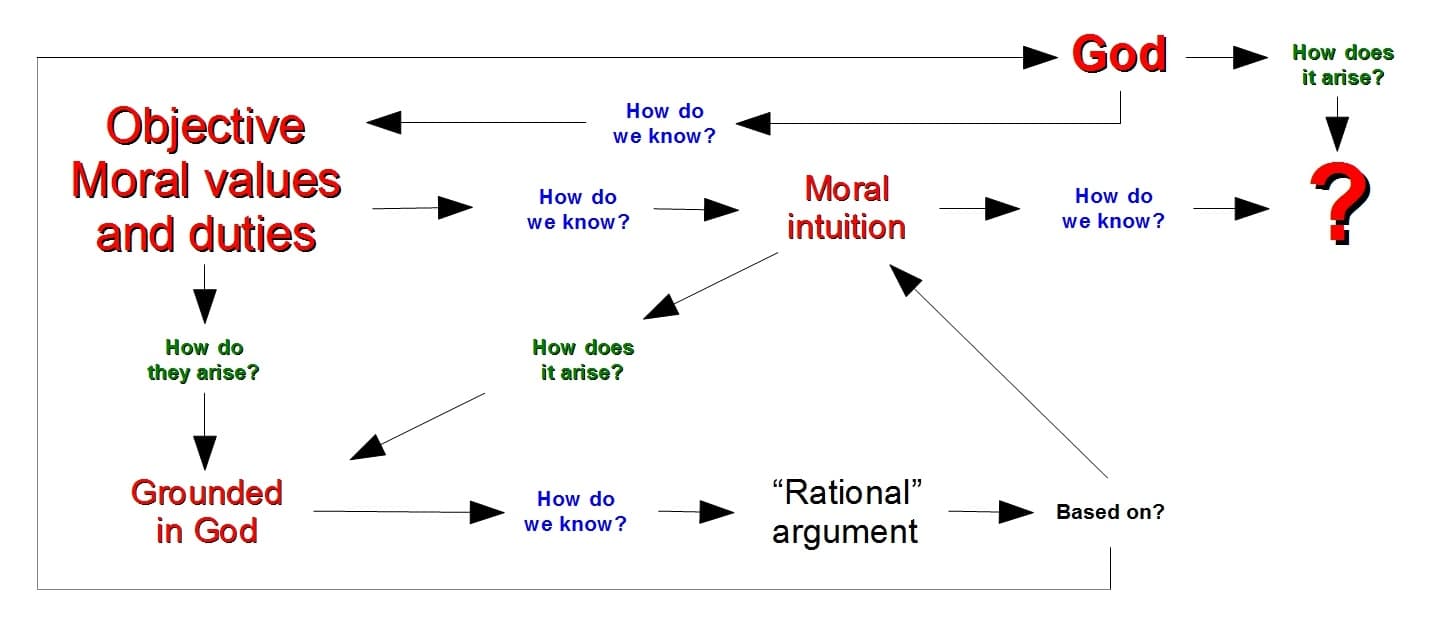
neopolitan's philosophical blog: The moral argument in graphical form View original
Is this image relevant?
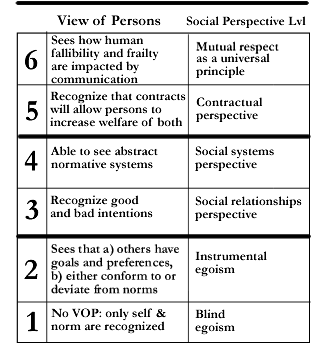
Lawrence Kohlberg's stages of moral development - Wikipedia View original
Is this image relevant?
Frontiers | Moral judgment as information processing: an integrative review View original
Is this image relevant?
neopolitan's philosophical blog: The moral argument in graphical form View original
Is this image relevant?
The Logical Gap Between Descriptive and Prescriptive Claims
David Hume noticed something that still shapes moral philosophy today: you can't logically get from statements about how the world is to statements about how it ought to be. This insight is called the is-ought problem, sometimes referred to as Hume's Guillotine.
Here's what the gap looks like in practice. You might observe that "lying causes emotional harm" (a descriptive fact). But you can't jump straight to "you ought not to lie" (a prescriptive claim) without adding some normative premise like "you ought not to cause emotional harm." The descriptive fact alone doesn't get you there.
This matters because it challenges any attempt to ground morality purely in empirical observations about the world. No matter how many facts you stack up, you still need at least one normative premise to reach a moral conclusion.
Implications for Moral Epistemology and Justification
If Hume is right, moral principles can never be justified solely by appealing to how the world is. You always need an additional normative premise to bridge the gap. This raises a hard question for moral epistemology: how can we have knowledge of moral truths if they can't be derived from empirical facts alone?
Hume's challenge has shaped much of the moral philosophy that followed. Many ethical theories can be understood as attempts to respond to this problem:
- Divine command theory grounds moral obligations in God's commands, sidestepping empirical derivation entirely
- Social contract theory tries to ground morality in agreements between people
- Other approaches argue the gap can be narrowed or that alternative foundations for ethics exist
Deriving Moral Obligations
Naturalistic Theories and Evolutionary Ethics
Naturalistic theories attempt to define moral properties in terms of natural, scientifically observable properties. Utilitarianism, for instance, defines "the good" in terms of pleasure or well-being, both of which can (in principle) be measured.
Evolutionary ethics takes a different angle, arguing that our moral intuitions and behaviors have an evolutionary origin. On this view, traits like empathy and cooperation were shaped by natural selection because they promoted survival and reproduction. But critics raise a pointed objection: explaining why we have certain moral intuitions doesn't tell us whether those intuitions are correct. Arguing otherwise risks committing the naturalistic fallacy, which conflates describing what is the case with prescribing what ought to be.
More broadly, attempts to naturalize ethics face a recurring challenge. Critics argue they inevitably smuggle in implicit normative assumptions at some point in their reasoning, meaning the is-ought gap hasn't truly been bridged.
Intrinsic Moral Facts and Social Contract Theory
Some philosophers argue that certain facts intrinsically entail moral obligations. For example, the fact that an animal can suffer arguably implies a prima facie duty (a duty that holds unless overridden by stronger considerations) not to cause it unnecessary harm. The idea here is that some facts are so closely tied to values that the gap between "is" and "ought" effectively collapses.
Social contract theory takes a different approach, grounding moral obligations in the descriptive fact of an agreement (actual or hypothetical) between members of a society. But this strategy faces its own version of the problem: why are agreements morally binding? Answering that question seems to require a normative premise that goes beyond the mere fact of the agreement itself.
The recurring theme across these attempts is that the gap between facts and values remains difficult to fully close. Hidden normative assumptions tend to surface whenever philosophers try to derive "ought" from "is."
Moral Judgments and Motivation

Internalism: A Necessary Connection
A separate but related question in metaethics concerns moral motivation: do moral judgments necessarily move us to act, or is the connection between belief and action something more fragile?
Internalism holds that there is a necessary or conceptual connection between sincere moral judgments and motivation. If you genuinely judge that donating to famine relief is the right thing to do, you must have some motivation to donate, even if that motivation can be overridden by other factors. On this view, a moral judgment that carries zero motivational pull isn't really a moral judgment at all.
This aligns with a common intuition: moral convictions feel like they push us toward action. When you believe something is wrong, that belief doesn't just sit there passively. It pulls at you.
Externalism: A Contingent Relationship
Externalism denies that moral judgments and motivation are necessarily linked. On this view, it's psychologically possible to sincerely believe an action is right without feeling any motivation to perform it.
Externalists often draw on the Humean theory of motivation, which states that beliefs alone cannot motivate action. Motivation always requires a desire. If moral judgments are a type of belief, then you'd need a separate desire (say, a desire to be a good person) to actually be moved to act on them.
This view seems to better account for the fact that moral motivation varies between people. Two individuals can agree that honesty is a virtue, yet one may be strongly motivated to tell the truth while the other isn't particularly moved by that judgment. Externalism explains this by saying moral judgments only contingently motivate, depending on a person's desires, attitudes, or sentiments.
Internalist vs. Externalist Theories
Assessing Internalism
Internalists argue that the connection between moral judgment and motivation is a conceptual truth: the very concept of a moral belief involves motivational force. You can't pry them apart without changing what "moral belief" means.
Two major challenges confront this position:
- The amoralist problem. Some people seem to make moral judgments without any corresponding motivation. Think of someone who says "yes, stealing is wrong" with complete indifference. Internalists typically respond that such people aren't making genuine moral judgments; they're just using moral language without real moral engagement.
- Weakness of will (akrasia). We sometimes judge an action as right yet fail to do it. You know you should study for the exam, but you watch another episode instead. Internalists need to explain how motivation can be present (as their theory requires) yet insufficient to produce action.
Assessing Externalism
Externalists handle amoralism and weakness of will more naturally. Since motivation isn't built into moral judgment on their account, there's no puzzle when someone judges an action right but doesn't feel moved to act.
However, externalism faces its own difficulties:
- The motivation gap. Many people feel a strong, seemingly intrinsic connection between their moral beliefs and their reasons for action. Externalists must explain this as a merely contingent psychological pattern rather than a conceptual truth, which can feel unsatisfying.
- The authority problem. If moral judgments only contingently motivate, morality's practical authority comes into question. Why should moral considerations reliably guide behavior if they don't necessarily move us to act? This raises concerns about whether morality can fulfill its action-guiding role on an externalist account.
See Fiveable more often in Google
Mark Fiveable as a preferred source and Google is more likely to show you our guides in Top Stories, with a "preferred" badge in AI Mode and AI Overviews.