8.4 Sequence of Tenses and Reported Speech

📏English Grammar and Usage Unit 8 Review
8.4 Sequence of Tenses and Reported Speech
📏 English Grammar and Usage
Reported Speech
Reported speech lets you share what someone else said without quoting them word for word. Instead of repeating their exact phrasing, you reshape the sentence to fit your own perspective and timeframe. This means adjusting verb tenses, pronouns, and time expressions so everything stays consistent.
Getting this right depends on a solid grasp of verb tenses, since the core mechanic is shifting tenses backward in time (called backshifting). You'll also need to know how different reporting verbs work and how to handle questions, commands, and conditionals.
Types of Speech Reporting
There are two main ways to report what someone said:
- Direct speech reproduces the exact words inside quotation marks: "I am going to the store," she said.
- Indirect (reported) speech conveys the meaning without using the speaker's exact words: She said she was going to the store.
To connect the reported words to the original speaker, you use a reporting verb (like say, tell, ask, explain). When the reporting verb is in the past tense, you typically backshift the verbs inside the reported clause, moving them one step further into the past.
Reporting Verb Usage
Different reporting verbs carry different meanings and follow different grammar patterns:
- Say is used for general statements and doesn't require you to name the listener: He said he was tired.
- Tell requires a direct object (the person being told): She told me she was excited. You can't write "She told that she was excited."
- Ask introduces reported questions: They asked where the meeting was.
- Explain signals that the speaker gave detailed information or a clarification: The teacher explained how photosynthesis works.
- Suggest implies a recommendation or proposal: My friend suggested we try the new restaurant.
- Claim signals that the statement might be disputed or unverified: The company claimed their product was revolutionary.
Choosing the right reporting verb changes the tone and meaning of your sentence, so pick the one that best matches what the original speaker was doing.

Changes in Reported Speech
Tense Transformations
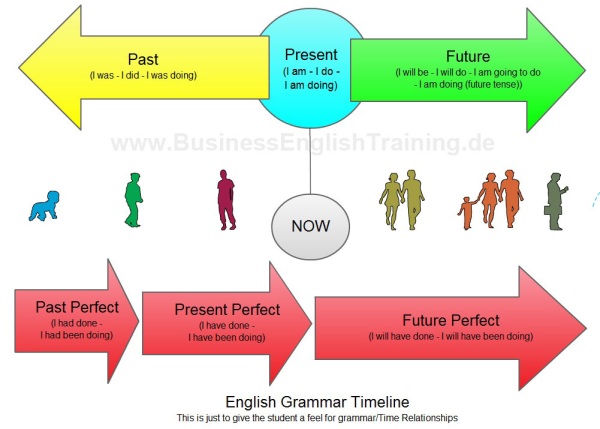
When the reporting verb is in the past tense, each tense shifts back by one step:
| Direct Speech | Reported Speech | Example |
|---|---|---|
| Present simple | Past simple | "I work here" → He said he worked there |
| Present continuous | Past continuous | "I am studying" → She said she was studying |
| Present perfect | Past perfect | "I have finished" → They said they had finished |
| Past simple | Past perfect | "I went there" → He said he had gone there |
| Future with will | would | "I will help" → She said she would help |
Note that past perfect and would don't shift any further back, since there's nowhere left to go. If the original sentence already uses past perfect, it stays as past perfect in reported speech.
Contextual Adjustments
Beyond tenses, you also need to update pronouns, time words, and place references so they make sense from the reporter's perspective:
- Pronouns change to match the new speaker: I → he/she, we → they, you → I/he/she/they (depending on context)
- Time expressions shift: today → that day, yesterday → the day before, tomorrow → the next day, last week → the week before, now → then
- Place references shift: here → there
- Demonstratives adjust for distance: this → that, these → those
For example: "I'll meet you here tomorrow" becomes She said she would meet me there the next day.
Advanced Reported Speech
Conditional and Complex Structures
How you handle conditionals in reported speech depends on which type you're dealing with:
- Zero conditional stays unchanged, since it expresses general truths: "If you heat water, it boils" → He said that if you heat water, it boils.
- First conditional backshifts normally. Will becomes would, and the present tense in the if-clause shifts to past: "If it rains, I will stay home" → She said that if it rained, she would stay home.
- Second conditional doesn't change, because it already uses past tense and would: "If I won the lottery, I would travel" → He said that if he won the lottery, he would travel.
- Third conditional also stays the same, since it's already in past perfect: "If I had studied, I would have passed" → She said that if she had studied, she would have passed.
The pattern to remember: if the verb forms are already as far back as they can go, no further backshifting is needed.
Reporting Various Speech Acts
Not everything people say is a simple statement. Here's how to handle other speech acts:
-
Yes/No questions drop the subject-verb inversion and add if or whether:
- "Did you enjoy the movie?" → He asked if I had enjoyed the movie.
-
Wh-questions keep the question word but switch to normal (non-inverted) word order:
- "Where do you live?" → She asked where I lived.
-
Commands use the infinitive form (to + verb):
- "Sit down!" → The teacher told us to sit down.
- For negative commands: "Don't touch that!" → She told me not to touch that.
-
Requests often use asked + to + infinitive, or asked if:
- "Can you help me?" → He asked me to help him or He asked if I could help him.
-
Exclamations convert to statements, often with an intensifier like very or such:
- "What a beautiful day!" → She exclaimed that it was a very beautiful day.
A common mistake with reported questions is keeping the inverted question order. Remember: She asked where did I live is incorrect. The correct form is She asked where I lived.
See Fiveable more often in Google
Mark Fiveable as a preferred source and Google is more likely to show you our guides in Top Stories, with a "preferred" badge in AI Mode and AI Overviews.