
Elliptic curves are fascinating mathematical objects with deep connections to number theory, algebraic geometry, and cryptography. They're defined by specific equations and have a unique group structure that makes them powerful tools in various fields.
The modular j-invariant is a crucial concept in elliptic curve theory. It helps classify curves, connects them to complex analysis, and plays a key role in understanding their properties over different number fields. This chapter explores these ideas in depth.
Definition of elliptic curves
- Elliptic curves are a fundamental object of study in number theory and algebraic geometry
- They have a rich structure and deep connections to various areas of mathematics, including complex analysis, modular forms, and cryptography
- Understanding the basic definitions and properties of elliptic curves is crucial for exploring their applications and advanced theory
Weierstrass equations
- Elliptic curves can be defined by Weierstrass equations of the form , where and are constants satisfying certain conditions
- The Weierstrass equation provides a convenient algebraic representation of elliptic curves
- The coefficients and determine the shape and properties of the curve
- The discriminant must be nonzero for the curve to be smooth
Smooth projective curves
- Elliptic curves are smooth projective curves of genus one with a distinguished point called the point at infinity
- Smoothness means that the curve has no singularities or self-intersections
- Projective curves are defined in projective space, which allows for the inclusion of points at infinity
- The genus of a curve is a measure of its complexity and determines many of its properties
Rational points on elliptic curves
- Rational points on an elliptic curve are points whose coordinates are rational numbers
- The set of rational points on an elliptic curve forms a group under a suitable addition law
- Studying the structure and properties of the group of rational points is a central problem in elliptic curve theory
- The Mordell-Weil theorem states that the group of rational points is finitely generated
Group law on elliptic curves
- The set of points on an elliptic curve, including the point at infinity, forms an abelian group under a well-defined addition operation called the group law
- The group law endows elliptic curves with a rich algebraic structure that is essential for their applications and theoretical study
- Understanding the geometric and algebraic properties of the group law is crucial for working with elliptic curves
Geometric definition of group law
- The group law on an elliptic curve can be defined geometrically using the chord-and-tangent process
- To add two points and on the curve, draw a line through and (or the tangent line if ) and find the third point of intersection with the curve, then reflect this point across the -axis to obtain the sum
- The point at infinity serves as the identity element of the group
- The geometric definition provides a visual and intuitive understanding of the group law
Algebraic formulas for group law
- The group law on an elliptic curve can also be expressed using algebraic formulas in terms of the coordinates of the points
- For points and , the sum is given by:
- where if , and if
- The algebraic formulas allow for efficient computation of the group law and are used in practical implementations
Associativity and identity element
- The group law on an elliptic curve satisfies the associativity property: for any points , , and on the curve
- The point at infinity, denoted by , serves as the identity element of the group: for any point on the curve
- The inverse of a point is given by , satisfying
Torsion points and subgroups
- Torsion points on an elliptic curve are points of finite order, meaning that repeated addition of the point to itself eventually yields the identity element
- The set of torsion points forms a subgroup of the group of rational points on the curve
- The structure of the torsion subgroup provides valuable information about the arithmetic properties of the elliptic curve
- The Nagell-Lutz theorem gives a criterion for determining the torsion points on an elliptic curve
Isomorphism classes of elliptic curves
- Elliptic curves can be classified up to isomorphism, which means identifying curves that have the same underlying structure and properties
- Isomorphism classes provide a way to study elliptic curves in a more abstract and unified manner
- Understanding isomorphisms and the properties that remain invariant under isomorphisms is important for the classification and study of elliptic curves
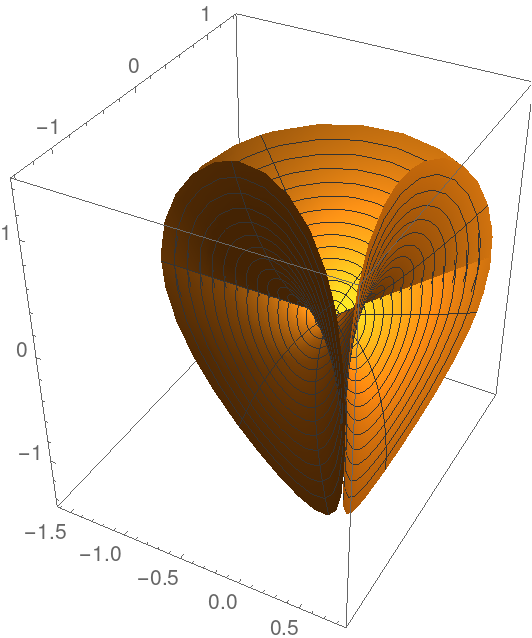
Isomorphisms of elliptic curves
- Two elliptic curves are said to be isomorphic if there exists a rational function (an algebraic map) that establishes a one-to-one correspondence between their points, preserving the group law
- Isomorphisms of elliptic curves are algebraic maps of the form , where are constants satisfying certain conditions
- Isomorphic curves have the same j-invariant and share many arithmetic and geometric properties
Short Weierstrass form
- Every elliptic curve is isomorphic to a curve in short Weierstrass form, given by the equation
- The short Weierstrass form provides a canonical representation of elliptic curves up to isomorphism
- Transforming an elliptic curve into short Weierstrass form simplifies its equation and facilitates the study of its properties
- The coefficients and in the short Weierstrass form are related to the invariants of the curve
j-invariant of elliptic curves
- The j-invariant is a fundamental invariant associated with an elliptic curve that characterizes its isomorphism class
- Two elliptic curves are isomorphic if and only if they have the same j-invariant
- The j-invariant is defined in terms of the coefficients of the elliptic curve and remains invariant under isomorphisms
- The j-invariant encodes important information about the structure and properties of the elliptic curve
Curves with same j-invariant
- Elliptic curves with the same j-invariant belong to the same isomorphism class and share many properties
- Curves with the same j-invariant have isomorphic torsion subgroups and similar Galois representations
- Studying families of elliptic curves with the same j-invariant can provide insights into their arithmetic and geometric behavior
- The moduli space of elliptic curves parameterizes isomorphism classes of elliptic curves and is closely related to the j-invariant
Modular j-invariant
- The modular j-invariant is a fundamental object in the theory of elliptic curves and modular forms
- It plays a central role in the study of elliptic curves over the complex numbers and their relationship to lattices and modular functions
- Understanding the properties and significance of the j-invariant is crucial for exploring the deep connections between elliptic curves, complex analysis, and number theory
Definition of j-invariant
- The j-invariant of an elliptic curve given by the Weierstrass equation is defined as:
- The j-invariant is a rational function of the coefficients and and remains invariant under isomorphisms of elliptic curves
- The j-invariant characterizes the isomorphism class of an elliptic curve: two curves are isomorphic if and only if they have the same j-invariant
j-invariant in terms of coefficients
- The j-invariant can be expressed in terms of the coefficients of the elliptic curve in various forms
- For a curve in short Weierstrass form , the j-invariant is given by:
- In terms of the discriminant and the invariants and , the j-invariant can be written as:
- These expressions highlight the relationship between the j-invariant and the fundamental invariants of the elliptic curve
Properties of j-invariant
- The j-invariant satisfies several important properties that make it a key object in the study of elliptic curves:
- It is invariant under isomorphisms of elliptic curves
- It characterizes the isomorphism class of an elliptic curve
- It is a modular function with respect to the action of the modular group on the upper half-plane
- The j-invariant has a pole at the cusp (i.e., at infinity) and takes on every complex value precisely once in the fundamental domain of the modular group
j-invariant as modular function
- The j-invariant can be viewed as a modular function, meaning that it is invariant under the action of the modular group on the upper half-plane
- As a modular function, the j-invariant satisfies certain transformation properties under the generators of the modular group
- The modular properties of the j-invariant are closely related to the theory of modular forms and elliptic modular curves
- The j-invariant provides a bridge between the arithmetic of elliptic curves and the analytic theory of modular forms
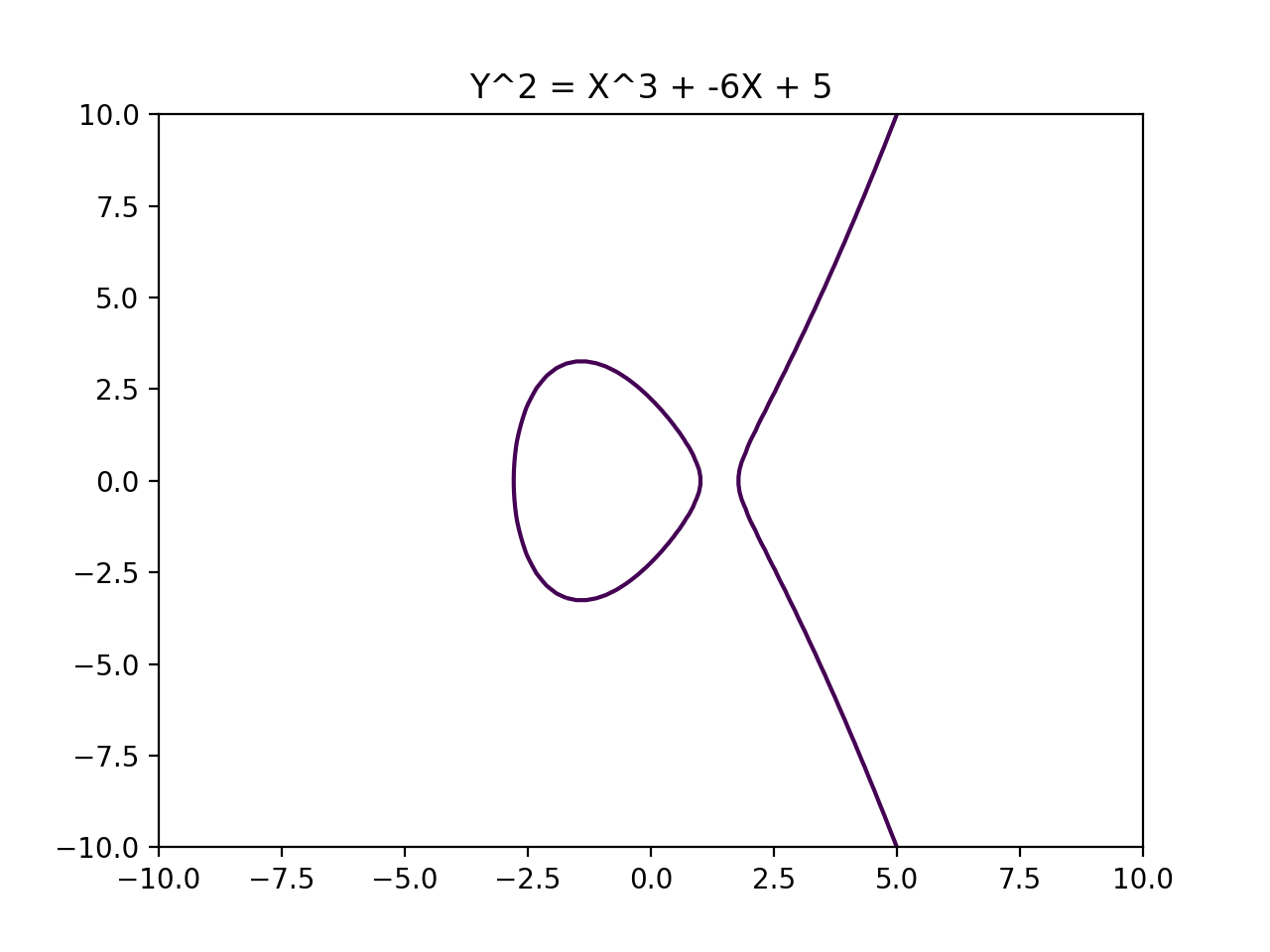
Elliptic curves over complex numbers
- Elliptic curves over the complex numbers have a rich structure and are closely connected to the theory of lattices and complex analysis
- Studying elliptic curves over provides insights into their geometric and analytic properties and reveals deep connections to modular forms and complex multiplication
- The complex case serves as a foundation for understanding elliptic curves over other fields and their arithmetic behavior
Lattices and elliptic curves
- Every elliptic curve over can be associated with a lattice in the complex plane, which is a discrete subgroup of of rank 2
- The lattice determines the elliptic curve up to isomorphism, and conversely, every lattice gives rise to an elliptic curve
- The Weierstrass -function associated with the lattice provides a parametrization of the elliptic curve and satisfies the differential equation , where and are invariants of the lattice
Periods and fundamental parallelogram
- The periods of an elliptic curve over are the generators and of the associated lattice
- The periods determine the shape and size of the fundamental parallelogram, which is a parallelogram in the complex plane with vertices , , , and
- The ratio is called the modular parameter and lies in the upper half-plane
- The modular parameter determines the isomorphism class of the elliptic curve and is related to the j-invariant by a modular function
Uniformization theorem
- The uniformization theorem states that every elliptic curve over is analytically isomorphic to a quotient of the complex plane by a lattice
- The isomorphism is given by the Weierstrass -function and its derivative, which provide a bijection between the complex plane modulo the lattice and the points on the elliptic curve
- The uniformization theorem establishes a deep connection between elliptic curves, complex analysis, and the geometry of lattices
- It allows for the study of elliptic curves using the tools and techniques of complex function theory
Complex multiplication
- Complex multiplication refers to the phenomenon where the endomorphism ring of an elliptic curve over is larger than the integers
- Elliptic curves with complex multiplication have additional symmetries and special arithmetic properties
- The complex multiplication points on the modular curve parametrize elliptic curves with complex multiplication
- The theory of complex multiplication plays a crucial role in the study of elliptic curves over number fields and their Galois representations
Elliptic curves over finite fields
- Elliptic curves over finite fields have important applications in cryptography and number theory
- The study of elliptic curves over finite fields involves understanding their reduction modulo primes, point counting, and the distinction between supersingular and ordinary curves
- The arithmetic and geometric properties of elliptic curves over finite fields are closely related to their j-invariants and endomorphism rings
Reduction of elliptic curves mod p
- Given an elliptic curve defined over the rational numbers (or a number field), its reduction modulo a prime is the curve obtained by reducing the coefficients of the Weierstrass equation modulo
- The reduction of an elliptic curve modulo can be smooth (if the discriminant is nonzero modulo ) or singular (if the discriminant is zero modulo )
- The type of reduction (good, bad, or additive) provides information about the structure of the group of points on the reduced curve
- Studying the reduction of elliptic curves modulo primes is important for understanding their arithmetic properties and Galois representations
Number of points on elliptic curves
- The number of points on an elliptic curve over a finite field (including the point at infinity) is denoted by
- The Hasse-Weil bound states that the number of points satisfies the inequality
- The number of points on an elliptic curve over is related to its trace of Frobenius, which is defined as
- Counting the number of points on elliptic curves over finite fields is a fundamental problem with applications in cryptography and coding theory
Hasse's theorem on point counts
- Hasse's theorem provides a precise characterization of the possible values for the number of points on an elliptic curve over a finite field
- It states that for an elliptic curve over , the trace of Frobenius satisfies
- Equivalently, the number of points satisfies the Hasse-Weil bound
- Hasse's theorem imposes strong constraints on the possible point counts of elliptic curves over finite fields and is a key result in the arithmetic theory of elliptic curves
Supersingular vs ordinary curves
- Elliptic curves over finite fields can be classified as either supersingular or ordinary based on their endomorphism rings and j-invariants
- A curve over is supersingular if its trace of Frobenius satisfies , where for some prime and integer
- Supersingular curves have a larger endomorphism ring than ordinary curves and have special properties that make them useful in certain cryptographic protocols
- Ordinary curves are those that are not supersingular and have endomorphism rings that are orders in imaginary quadratic fields
- The distinction between supersingular and ordinary curves is important for understanding their arithmetic and geometric properties
Applications of j-invariant
- The j-invariant of elliptic curves has numerous applications in various areas of mathematics, including complex analysis, algebraic geometry, and number theory
- It serves as a key tool for classifying elliptic curves, studying their moduli spaces, and investigating their connections