AP European History Unit 2 Cheatsheet: Age of Reformation

AP European History Unit 2 Cheatsheet: Age of Reformation

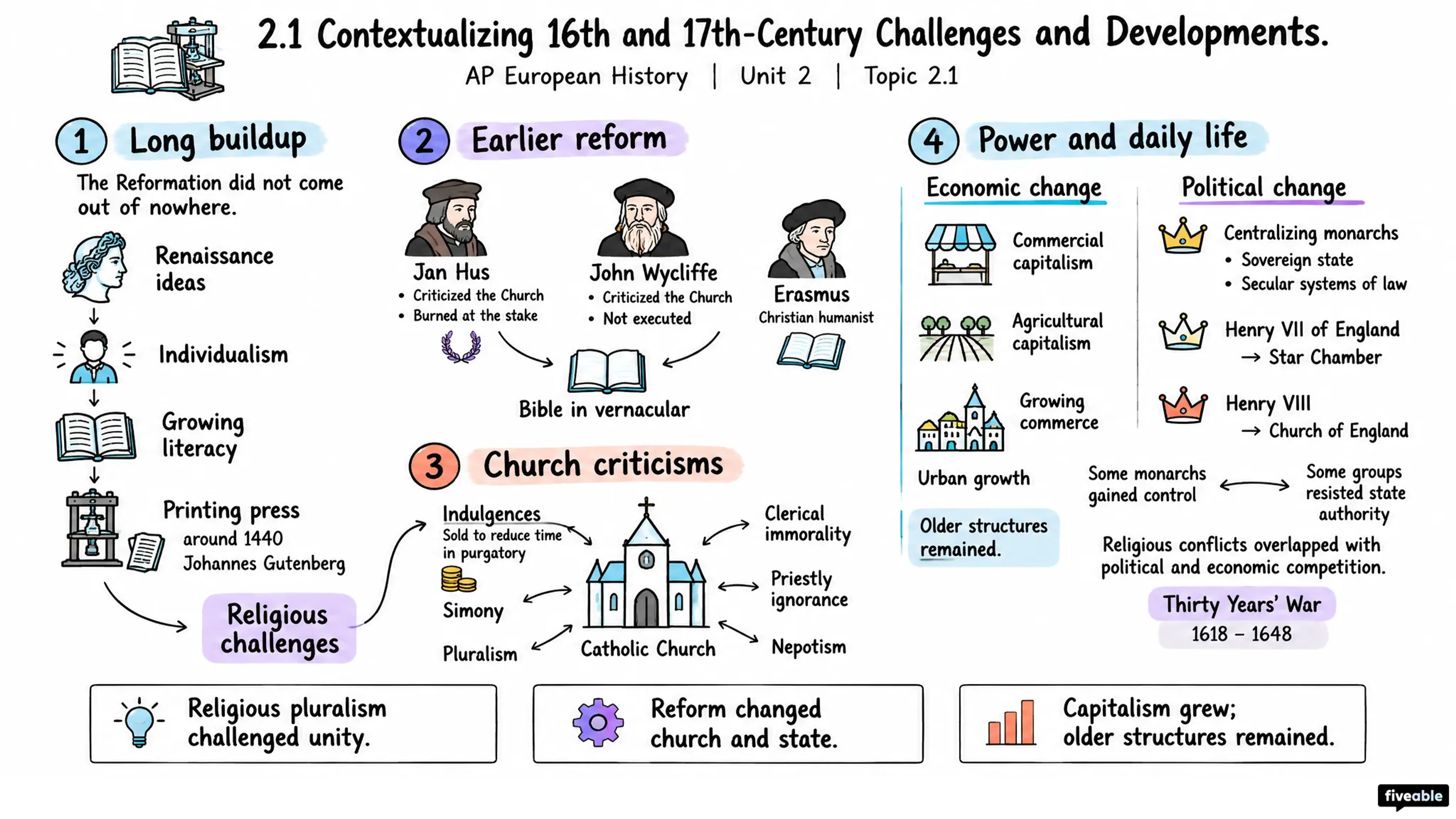
Start with the first 3 sections of the Unit 2 one-page cheatsheet below. The full sheet is a PDF you can print.

Luther & Core Protestant Doctrine

Martin Luther's Challenge (early 1500s)

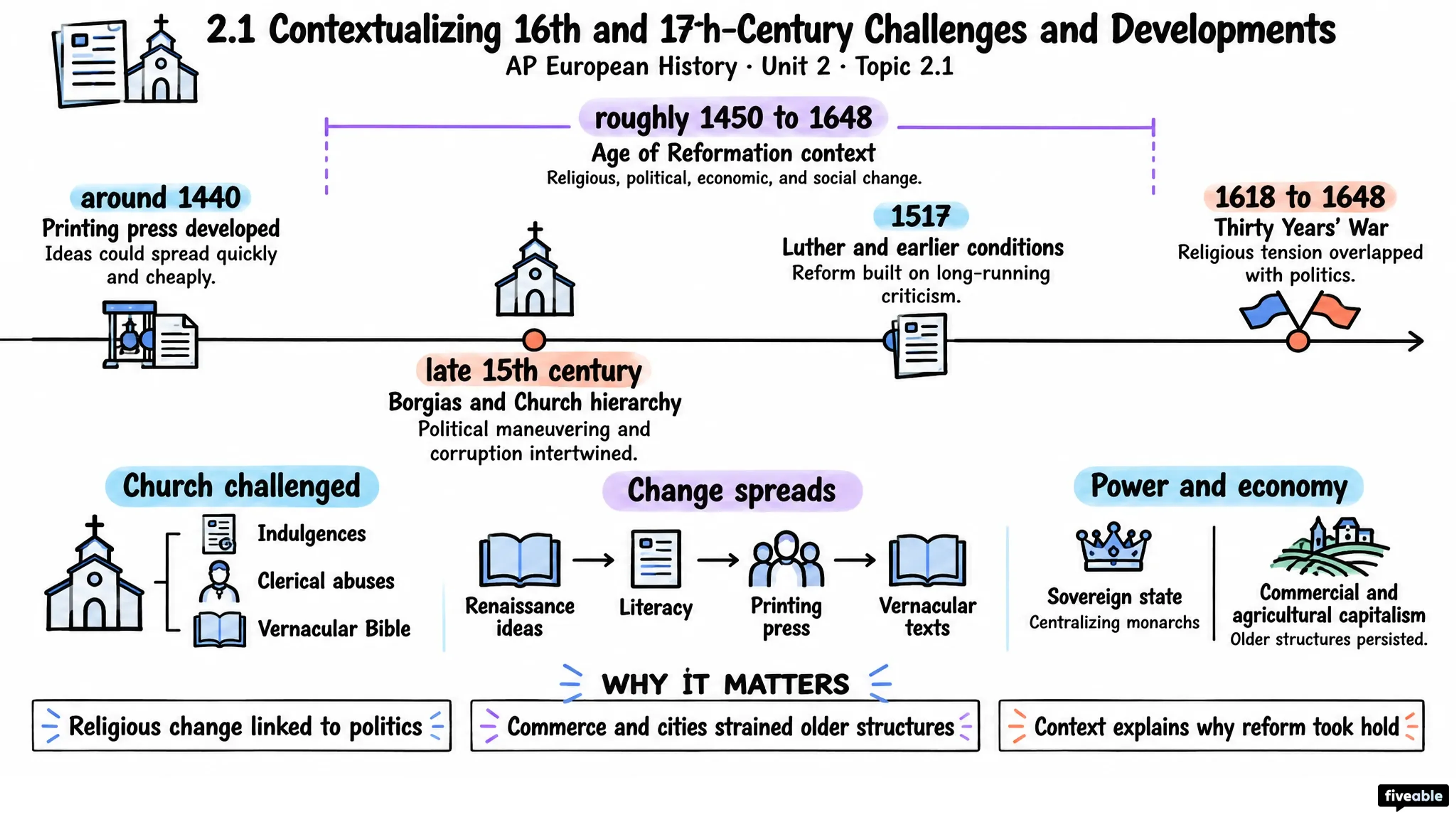
  • Criticized Catholic abuses: indulgences, clerical corruption, papal authority
  • Used printing press to spread ideas rapidly across Europe

New Protestant Interpretations

  • Priesthood of all believers: No clergy intermediaries needed
  • Primacy of scripture: Bible alone as authority, not church tradition
  • Salvation by faith alone: Works and sacraments insufficient
  • Predestination: God predetermined salvation

Wealth & Prosperity

  • Calvinists viewed wealth as sign of God's favor and hard work reward
  • Challenged medieval Catholic suspicion of profit
Religious Pluralism & State Control

Paradox of Reformation

  • Religious reform increased state control in some regions
  • Religious reform also justified challenging state authority

Examples of Resistance

  • Huguenots: French Protestants challenged royal monopoly
  • Puritans: English Protestants resisted Anglican establishment
  • Polish nobles: Resisted king's religious control

States Tolerating Pluralism

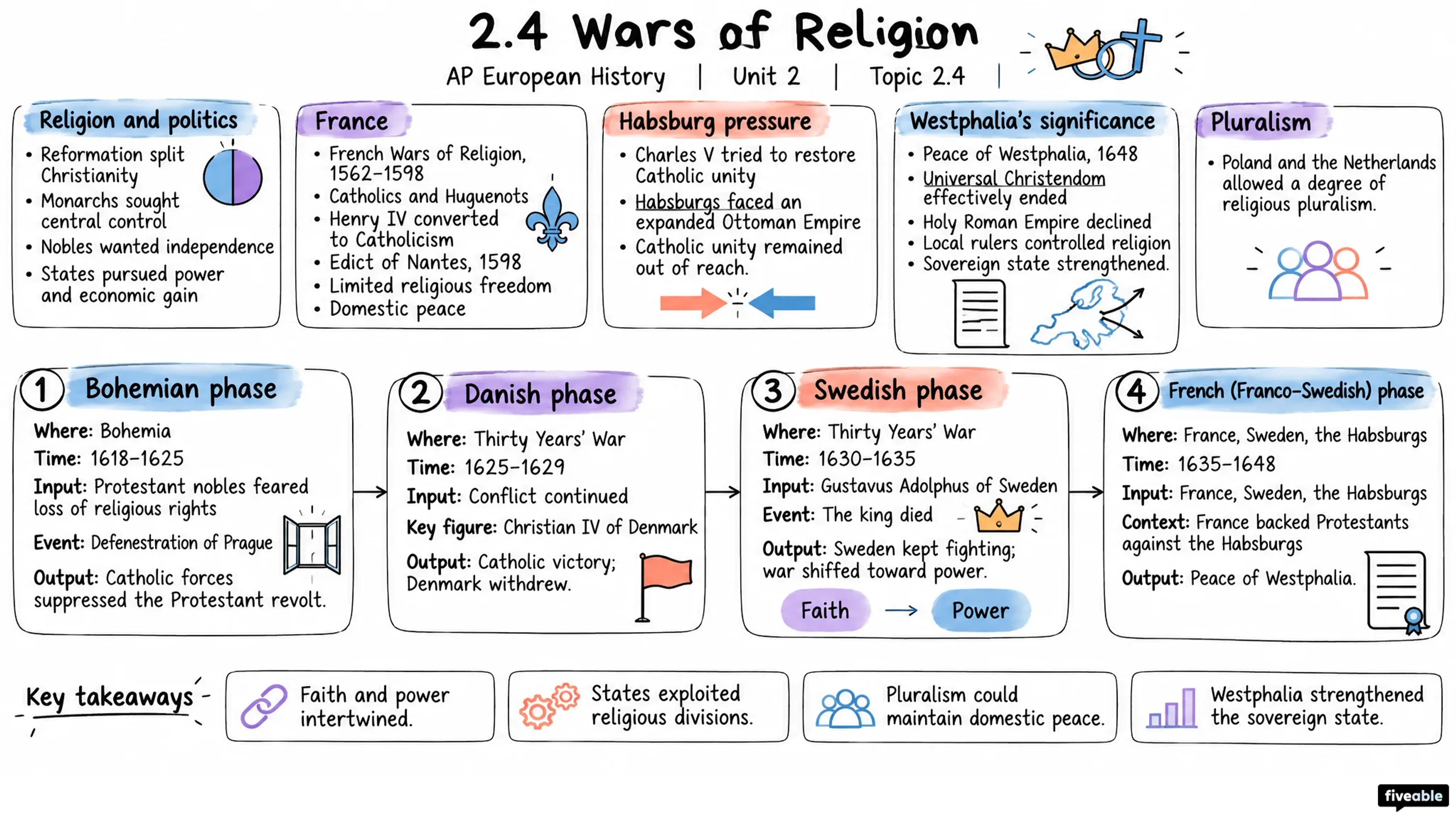
  • France (Edict of Nantes, 1598): Limited toleration for peace
  • Poland & Netherlands: Multiple faiths coexisted

Witchcraft, Art & Causation

Witchcraft Accusations (1580–1650 peak)

  • Reflected folk ideas about supernatural and social upheaval
  • Prominence of women as accused witches
  • Regional variation in intensity and targets
  • Social upheaval (religious conflict, economic stress) triggered accusations

Mannerism & Baroque Art

  • Artists employed distortion, drama, and illusion
  • Departed from Renaissance balance and harmony
  • Monarchies, city-states, and church commissioned works for power and prestige
  • Key artists: El Greco, Artemisia Gentileschi, Gian Lorenzo Bernini, Peter Paul Rubens

Reformation's Long-term Ripple Effects

  • Religious change → political centralization and sovereign state concept
  • Religious pluralism → economic transformation and urban growth
  • Printing press spread competing ideas; vernacular Bibles created multiple interpretations

Medieval Christendom replaced by pluralistic, sovereign-state system.

The rest of the Unit 2 sheet

6 more sections are on the one-page PDF:

  • Religious Radicals & Responses

  • Social Hierarchies & Gender Debates

  • Urban Stress, Morality & Folk Culture

  • Wars of Religion: Causes & Patterns

  • Peace of Westphalia & State Sovereignty

  • Catholic Reformation & Church Revival

Made by you

Visual Cheatsheets

Pick a Unit 2 topic and a format: flowchart, comparison chart, vocab sheet, Cornell notes and more. Ready in about a minute.

Printable PDF · from the Fiveable shop

AP European History Unit 2 Cheatsheet

1 page · Age of Reformation · PDF

Visual Cheatsheets

One topic, the format you pick, ready in about a minute

Format

Topic

Takes 30–60 seconds

Preview: Standard

Unit 2: Age of Reformation, topic by topic

Each topic has a full study guide. See the whole unit.