AP Environmental Science Unit 6 Cheatsheet: Energy Resources and Consumption

AP Environmental Science Unit 6 Cheatsheet: Energy Resources and Consumption

Start with the first 4 sections of the Unit 6 one-page cheatsheet below. The full sheet is a PDF you can print.

Nonrenewable vs. Renewable Energy

NonrenewableRenewable
Fixed amount; cannot be easily replacedReplenished naturally at or near consumption rate
Fossil fuels (coal, oil, gas), uranium, peatSolar, wind, hydroelectric, geothermal, biomass, hydrogen fuel cells
Depletion risk; long-term environmental damageSustainable if managed; lower emissions

Global Energy Consumption Patterns

  • Uneven distribution: Developed countries use far more energy per capita than developing countries
  • Fossil fuels dominate: Most widely used globally despite renewable alternatives
  • Development correlation: As countries industrialize, fossil fuel reliance increases
  • Demand drivers: Industrialization, population growth, economic activity
  • Choice factors: Availability, price, government regulations determine which sources are used

Fossil Fuel Types & Properties

Coal (by rank): Lignite → Bituminous → Anthracite. Heat, pressure, and burial depth determine type and energy content.

Natural gas: Cleanest fossil fuel; mostly methane.

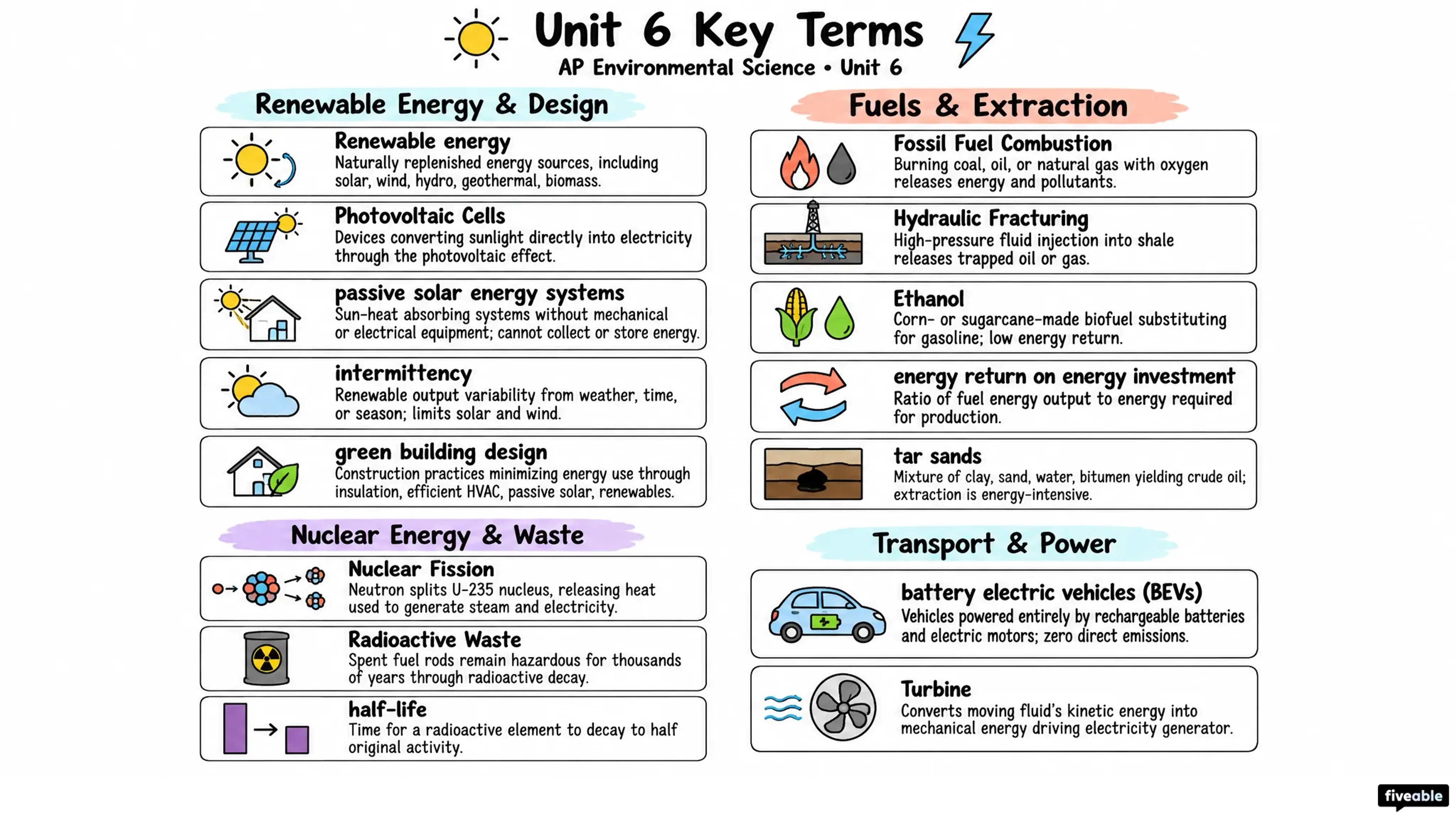
Crude oil: Usually extracted by drilling underground reservoirs; it can also be produced from tar sands, a mixture of clay, sand, water, and bitumen. Refined into specialized fuels.

Wood & peat: Wood (firewood, charcoal) common in developing countries; peat is partially decomposed organic material.

Fossil Fuel Power Generation & Combustion

Combustion reaction: Fuel + O₂ → CO₂ + H₂O + Energy

  1. Burn fuel to generate heat
  2. Heat turns water into steam
  3. Steam spins turbine
  4. Turbine spins (mechanical energy) and drives a generator, which converts that motion into electricity

Cogeneration: Single fuel source produces both useful heat and electricity simultaneously, improving efficiency.

Extraction methods: Mining, drilling, hydraulic fracturing (fracking). Fracking risks: groundwater contamination, volatile organic compound release.

The rest of the Unit 6 sheet

6 more sections are on the one-page PDF:

  • Nuclear Power: Fission & Waste

  • Solar Energy Systems

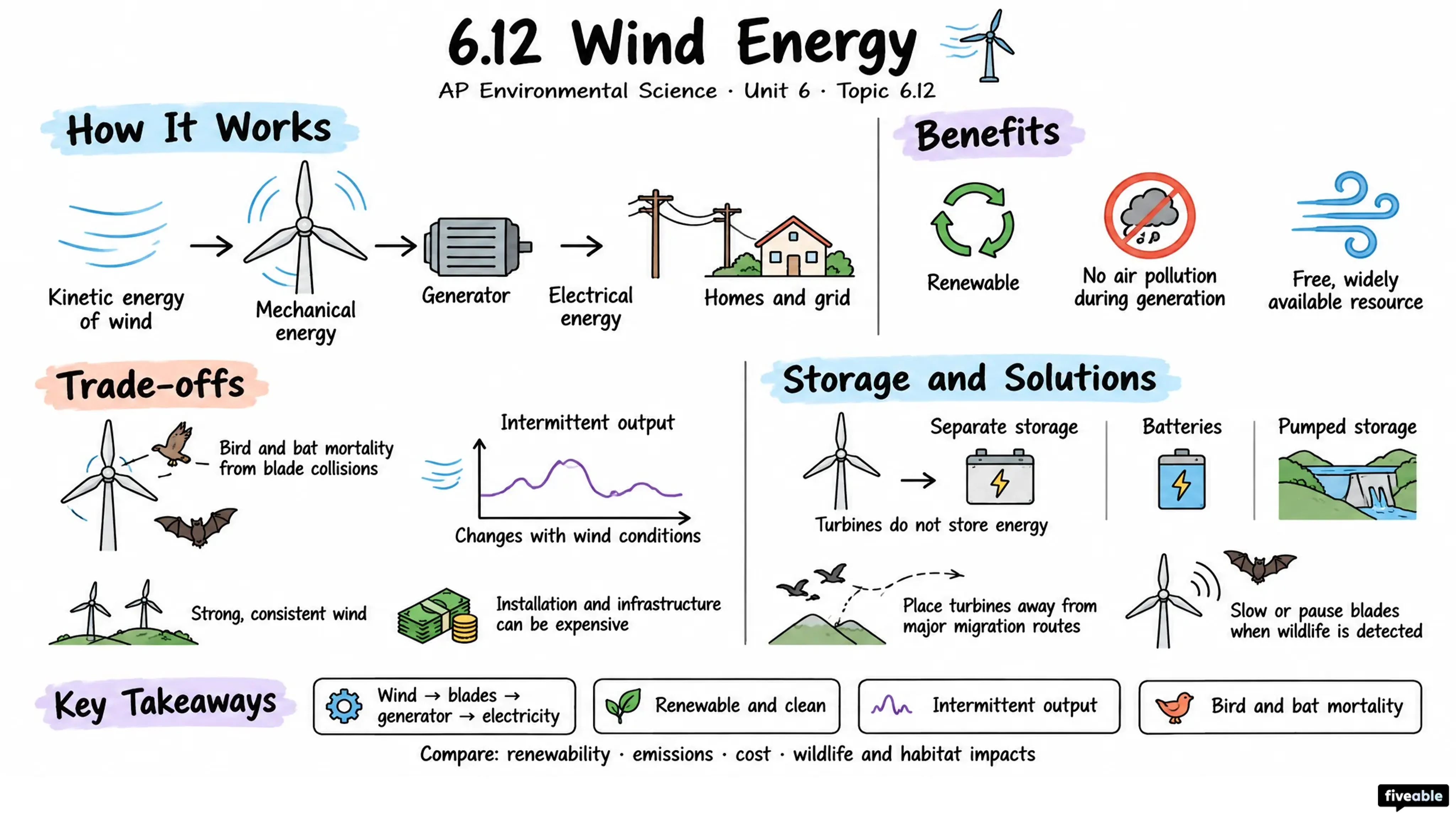
  • Renewable Energy: Hydro, Geothermal, Wind

  • Biomass & Hydrogen Fuel Cells

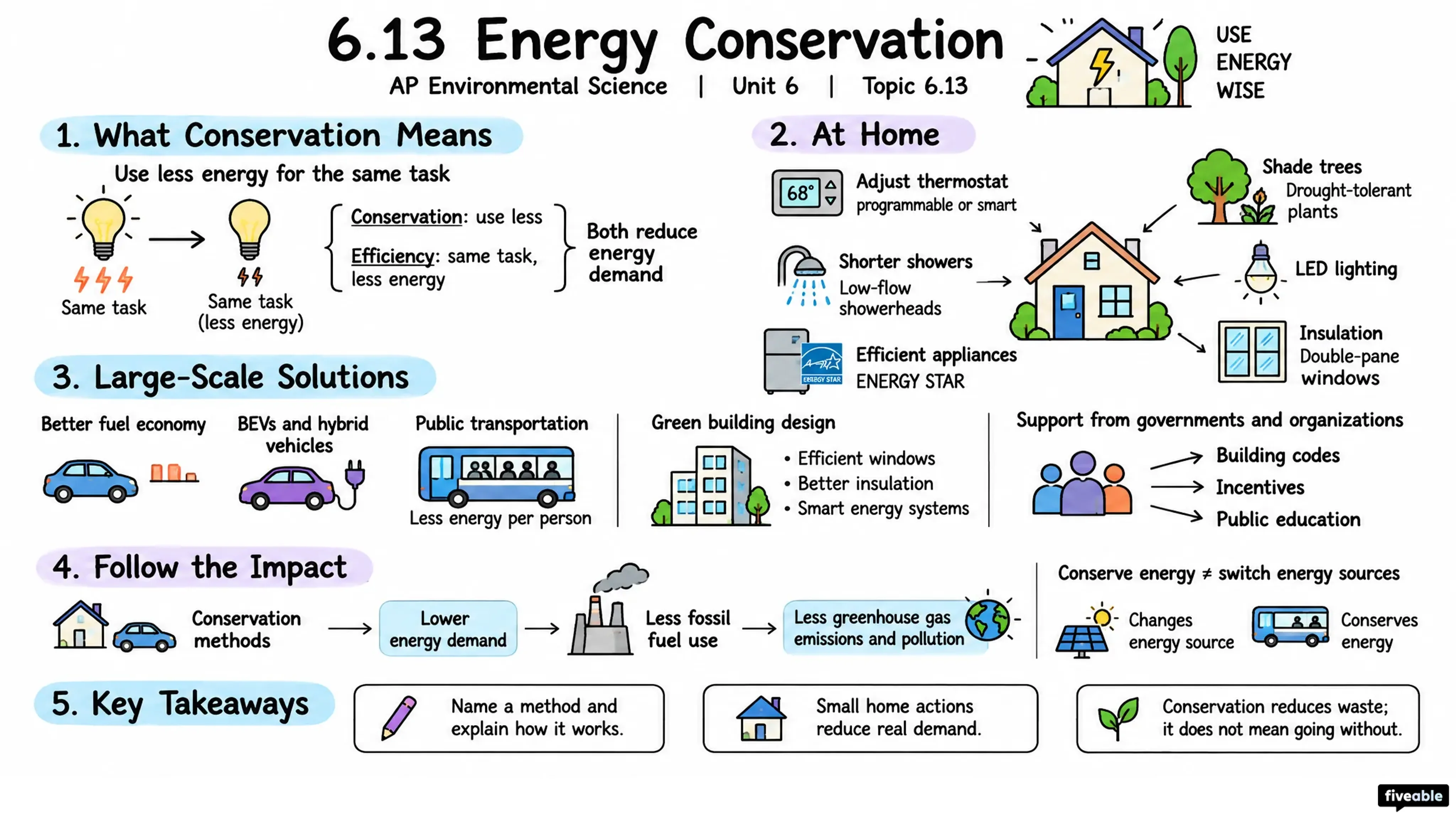
  • Energy Conservation Methods

  • Natural Resource Distribution & Geologic Context

Made by you

Visual Cheatsheets

Pick a Unit 6 topic and a format: flowchart, comparison chart, vocab sheet, Cornell notes and more. Ready in about a minute.

Printable PDF · from the Fiveable shop

AP Environmental Science Unit 6 Cheatsheet

1 page · Energy Resources and Consumption · PDF

Visual Cheatsheets

One topic, the format you pick, ready in about a minute

Format

Topic

Takes 30–60 seconds

Preview: Standard

Unit 6: Energy Resources & Consumption, topic by topic

Each topic has a full study guide. See the whole unit.