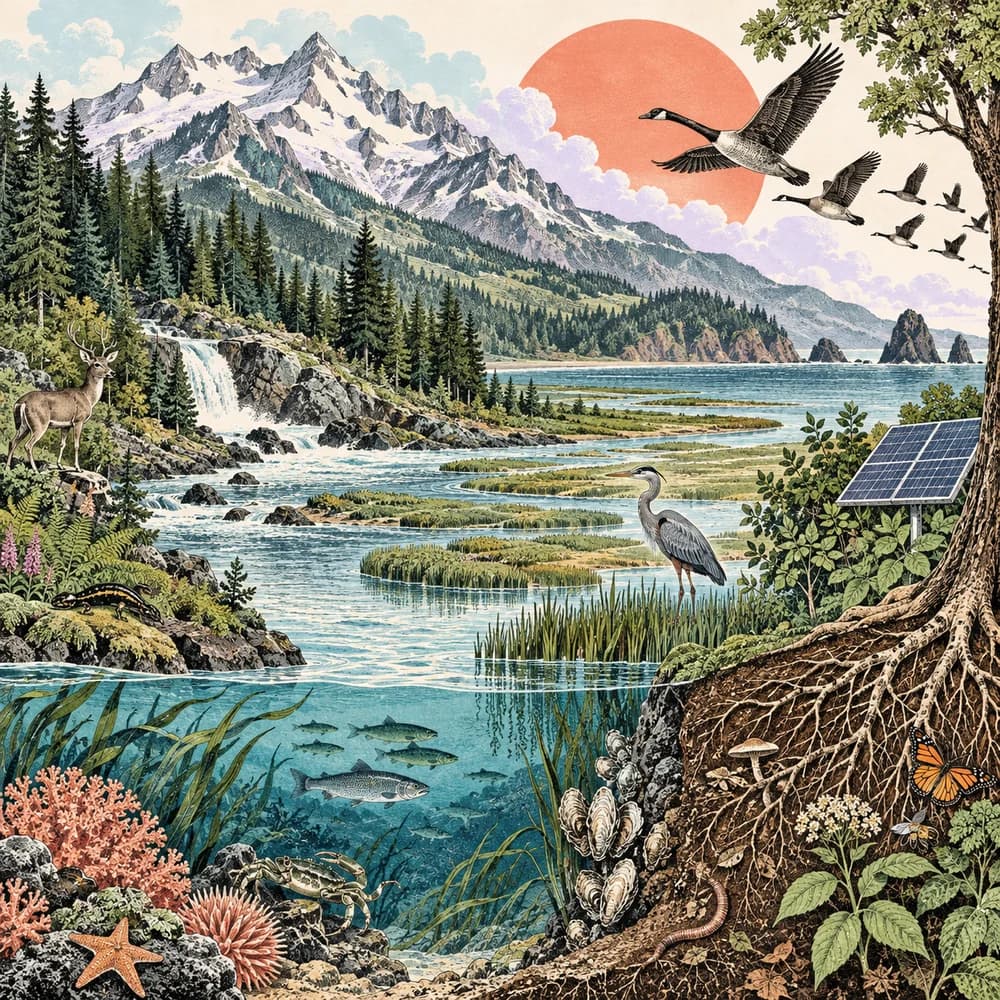
energy resources & consumption
Energy resources and consumption are critical aspects of environmental science, shaping our world's sustainability. This unit explores various energy sources, from fossil fuels to renewables, examining their production, use, and environmental impacts. The study delves into energy basics, consumption patterns, and future trends. It highlights the urgent need for a transition to cleaner energy sources and improved efficiency to address climate change and ensure global energy security.
What is Unit 6 in APES?
Unit 6 centers on Energy Resources and Consumption. See the College Board–based Fiveable study guide (https://library.fiveable.me/ap-enviro/unit-6). Expect this unit to take about 16–17 class periods and represent roughly 10–15% of the AP exam. Topics include renewable vs. nonrenewable resources, global energy consumption, fossil fuels, nuclear power, biomass, solar (photovoltaic, active, passive), hydroelectric, geothermal, wind, hydrogen fuel cells, energy distribution, and conservation. Key skills are comparing sources, mapping resource distribution, doing energy/efficiency calculations, and evaluating environmental impacts like emissions, habitat loss, and waste. You’ll see questions asking you to weigh trade-offs, calculate efficiency or energy values, and propose realistic conservation or policy solutions. For targeted review, Fiveable also offers cheatsheets, cram videos, and 1,000+ practice questions (https://library.fiveable.me/practice/enviro).
What topics are covered in APES Unit 6 (Energy Resources and Consumption)?
You’ll cover Topics 6.1–6.13: renewable vs. nonrenewable resources; global energy consumption; fuel types and uses; distribution of natural energy resources; fossil fuels; nuclear power; biomass energy; solar energy (photovoltaic, active, passive); hydroelectric and tidal power; geothermal energy; hydrogen fuel cells; wind energy; and energy conservation. The full unit is laid out in Fiveable’s guide (https://library.fiveable.me/ap-enviro/unit-6). This unit represents about 10–15% of the AP exam and usually takes roughly 16–17 class periods. Expect emphasis on comparing energy sources, environmental impacts (air, water, habitat, waste), and basic energy calculations. Key skills include mapping resource distribution, distinguishing fuel types, explaining energy conversion sequences (steam → turbine → electricity), and proposing conservation or management solutions. For focused review, Fiveable provides cheatsheets, cram videos, and extra practice questions (https://library.fiveable.me/practice/enviro).
How much of the APES exam is Unit 6 likely to appear on?
Expect Unit 6 (Energy Resources and Consumption) to make up about 10–15% of the AP Environmental Science exam — the College Board weighting is summarized in Fiveable’s unit guide (https://library.fiveable.me/ap-enviro/unit-6). That typically shows up as multiple-choice items and some free-response concepts linked to energy sources, consumption patterns, and renewable vs. nonrenewable technologies. Coverage can be integrated into real-world scenarios and across practice sets (especially Practice 3), so prioritize core topics like fossil fuels, nuclear, biomass, and solar/hydroelectric systems. For targeted review and drilling high-impact concepts, use Fiveable’s Unit 6 study guide, cheatsheets, and practice bank (https://library.fiveable.me/practice/enviro).
What's the hardest part of APES Unit 6?
Most students find the energy trade-offs and quantitative bits the hardest. That includes EROEI, energy conversion and efficiency calculations, and nuclear topics like radioactive decay/half‑life and waste disposal — Fiveable’s unit guide covers this (https://library.fiveable.me/ap-enviro/unit-6). People also stumble when comparing lifecycle impacts (extraction → generation → waste) and weighing pros and cons of renewables versus nonrenewables. Memorizing terms helps, but working through problem sets and FRQ-style comparisons builds real confidence. Practice timed calculations and scenario-based explanations. For focused drilling, Fiveable’s unit guide, cram videos, and question bank are clutch (https://library.fiveable.me/ap-enviro/unit-6) (https://library.fiveable.me/practice/enviro).
How should I study for APES Unit 6 — best study guides, notes, and strategies?
Start with Fiveable’s full Unit 6 study guide (https://library.fiveable.me/ap-enviro/unit-6). Focus on big topics: renewable vs. nonrenewable, fossil fuels, nuclear, biomass, solar, hydroelectric, global energy use, and fuel distribution. Make a one-page cheatsheet of key definitions, energy flow/efficiency formulas (percent efficiency = useful energy out / total energy in × 100), and pros/cons/EROI for each source. Drill with timed multiple-choice sets and FRQ-style explanations to sharpen wording and data interpretation. Use spaced review with short daily sessions and build concept maps linking sources to impacts and policies. For extra practice and quick cram videos, check Fiveable’s practice question bank and resources (https://library.fiveable.me/practice/enviro).
Where can I find APES Unit 6 PDF notes, vocab lists, or unit packets?
You can find APES Unit 6 PDF notes, vocab lists, and unit materials at Fiveable (https://library.fiveable.me/ap-enviro/unit-6). That page has a full Unit 6 study guide for Energy Resources and Consumption with topic summaries and vocabulary aligned to the APES exam framework, plus cheatsheets and cram videos linked from the unit. The College Board’s CED lists the official unit scope and typical vocab counts (40–70 terms) if you want the source of truth. For extra practice and applied questions tied to Unit 6 concepts, check Fiveable’s practice question bank (https://library.fiveable.me/practice/enviro).
Are there good APES Unit 6 FRQs and practice tests I can use for review?
Yes — the College Board’s released FRQs are your go-to for past Unit 6 free-response questions, scoring rubrics, sample responses, and score distributions. Use those for timed practice and to see how answers are graded. Fiveable also has Unit 6-aligned study materials and lots of practice questions at the Unit 6 page (https://library.fiveable.me/ap-enviro/unit-6) and a broader practice hub (https://library.fiveable.me/practice/enviro). Work on College Board FRQs for official formats and scoring practice, then drill with Fiveable’s explanations, cheatsheets, and cram videos to build speed and accuracy.
What vocabulary should I know for APES Unit 6?
A focused Unit 6 vocab set is available at Fiveable (https://library.fiveable.me/ap-enviro/unit-6). Key terms to master: renewable vs nonrenewable; fossil fuels (coal: lignite/bituminous/anthracite); crude oil; natural gas (methane); fracking; cogeneration; photovoltaic cell; active vs passive solar; biomass; ethanol; geothermal; hydroelectricity; tidal energy; wind turbine; nuclear fission; half-life; radioactive decay; uranium-235; thermal pollution; hydrogen fuel cell; energy return on energy invested (EROEI); and energy conservation (BEV, efficiency). Know definitions, examples, environmental impacts, and typical uses. For a quick review, Fiveable’s study guide, cheatsheets, and cram videos walk through these terms with explanations.
How long should I spend studying APES Unit 6 to be exam-ready?
Plan on roughly 12–18 hours total for Unit 6, spread over 1–2 weeks, then review again before the exam. Unit 6 is about 10–15% of the exam and represents roughly 16–17 class periods, so prioritize core concepts: renewable vs nonrenewable, fossil fuels, nuclear, solar, hydro, and biomass. A suggested breakdown: 4–6 hours reading notes and the CED topics; 4–6 hours doing multiple-choice and application problems; 2–4 hours on FRQ-style prompts and calculations (efficiency, energy conversions); and 1–2 hours of quick cheatsheet/cram review. Adjust upward if you’re weaker on energy calculations or missed class time. See the Unit 6 study guide (https://library.fiveable.me/ap-enviro/unit-6) and extra practice (https://library.fiveable.me/practice/enviro).