AP Environmental Science Unit 9 Cheatsheet: Global Change

AP Environmental Science Unit 9 Cheatsheet: Global Change

Start with the first 3 sections of the Unit 9 one-page cheatsheet below. The full sheet is a PDF you can print.

Stratospheric Ozone: Role & Depletion

Why ozone matters: Stratospheric ozone absorbs UV radiation, protecting life on Earth from skin cancer and cataracts.

Causes of depletion:

  • Anthropogenic: CFCs (chlorofluorocarbons) from refrigerants, aerosols
  • Facilitator (not a cause): polar stratospheric ice clouds form in the cold, dark Antarctic winter and provide surfaces that convert chlorine reservoir compounds from CFCs into reactive Cl, which destroys ozone when sunlight returns in spring

Effect of depletion: More UV rays reach Earth's surface → increased human health risks.

Mitigation: Replace CFCs with HFCs (hydrofluorocarbons), though some HFCs are potent greenhouse gases.
Ocean Warming: Causes & Consequences

Cause: Increased atmospheric greenhouse gases trap heat; oceans absorb ~90% of excess heat.

Effects on marine species:

  • Habitat loss (e.g., coral reefs, kelp forests)
  • Metabolic changes (altered growth, energy use)
  • Reproductive disruption (spawning timing, success)

Coral bleaching: Warming causes corals to expel symbiotic algae → white appearance. Some recover; many die.

Ocean warming and acidification often co-occur, creating compounded stress on calcifying organisms.

Biodiversity Loss: HIPPCO & Mitigation

HIPPCO—six main drivers:

  • Habitat destruction
  • Invasive species
  • Population growth
  • Pollution
  • Climate change
  • Over-exploitation

Habitat fragmentation: Large habitats broken into isolated patches (roads, agriculture, logging). Impact varies by species.

Climate-driven habitat loss: Temperature, precipitation, and sea level changes alter suitable ranges.

Domestication impact: Managed species (honeybees, livestock) can reduce wild biodiversity.

Mitigation: Protected areas, habitat corridors, sustainable land use, habitat restoration.

The rest of the Unit 9 sheet

6 more sections are on the one-page PDF:

  • Greenhouse Gases & Global Warming Potential

  • Ocean Acidification Chemistry & Impacts

  • Climate Change: Atmospheric & Oceanic Transport

  • Polar Regions & Positive Feedback Loops

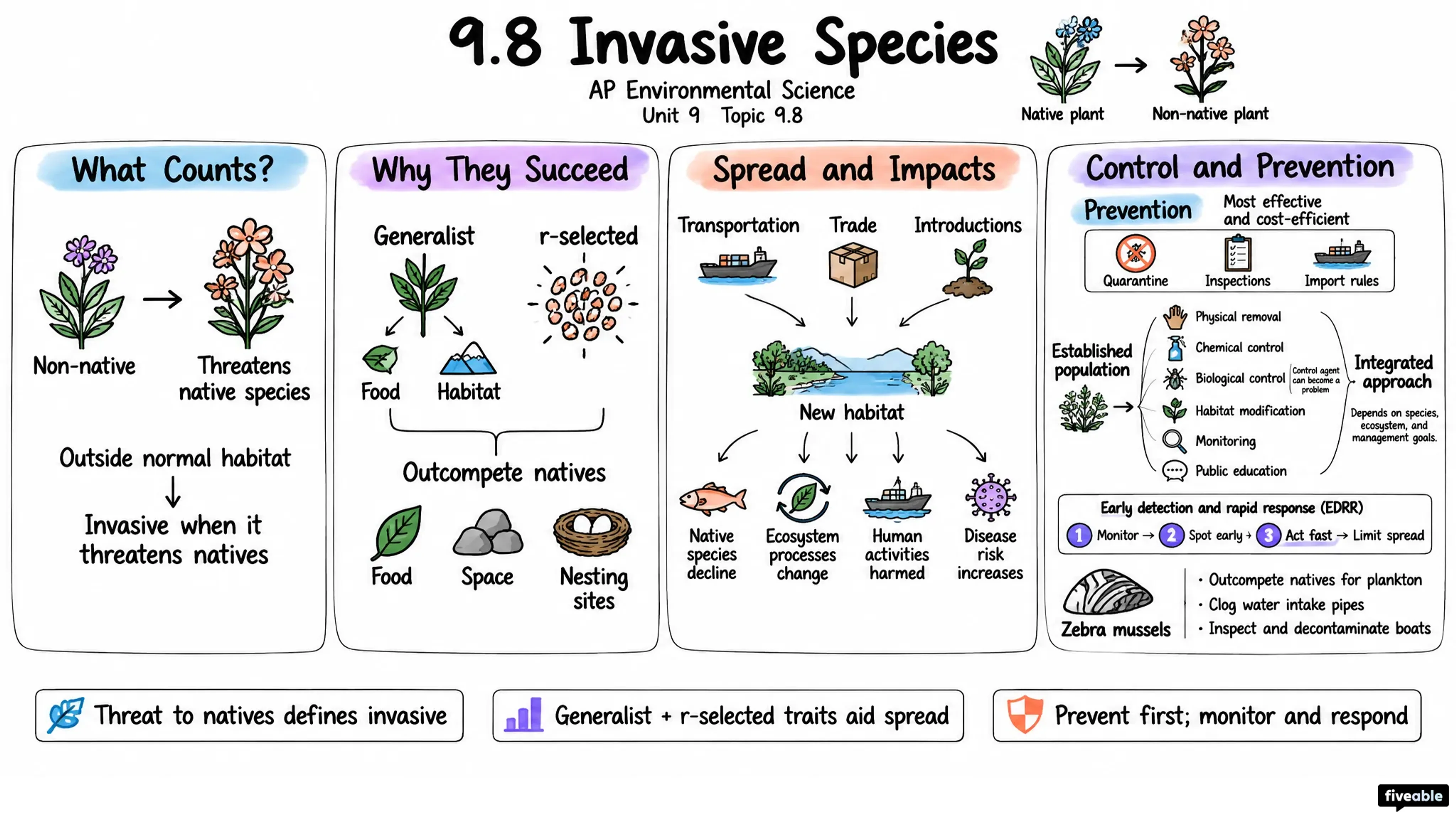
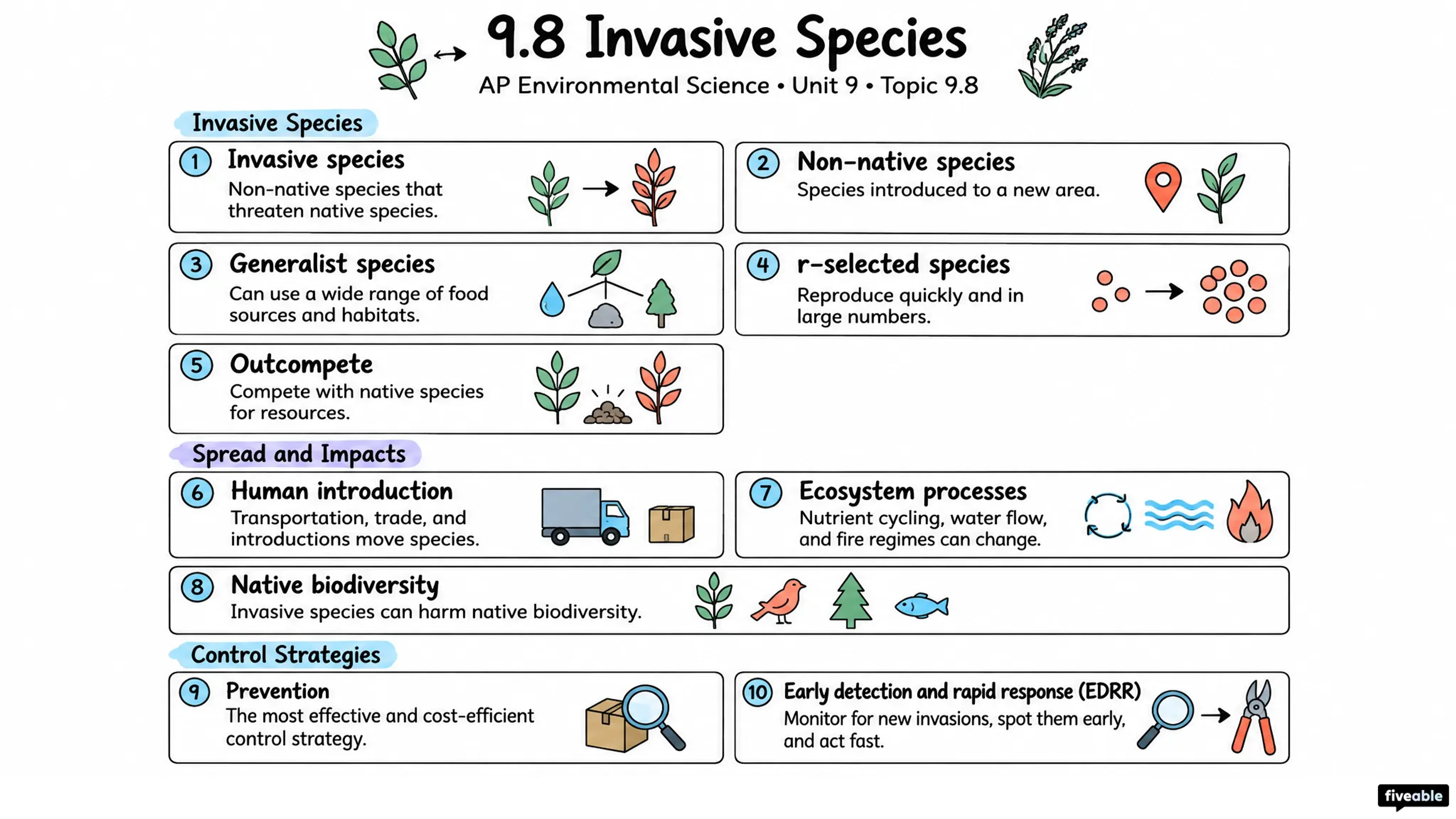
  • Invasive Species: Definition & Control

  • Endangered Species: Causes & Protection

Made by you

Visual Cheatsheets

Pick a Unit 9 topic and a format: flowchart, comparison chart, vocab sheet, Cornell notes and more. Ready in about a minute.

Printable PDF · from the Fiveable shop

AP Environmental Science Unit 9 Cheatsheet

1 page · Global Change · PDF

Visual Cheatsheets

One topic, the format you pick, ready in about a minute

Format

Topic

Takes 30–60 seconds

Preview: Standard

Unit 9: Global Change, topic by topic

Each topic has a full study guide. See the whole unit.