1.2 Defining Limits and Using Limit Notation

♾️AP Calculus AB/BC Unit 1 Review
1.2 Defining Limits and Using Limit Notation
♾️ AP Calculus AB/BC
1.1
Introducing Calculus: Can Change Occur at An Instant?
1.2
Defining Limits and Using Limit Notation
1.3
Estimating Limit Values from Graphs
1.4
Estimating Limit Values from Tables
1.5
Determining Limits Using Algebraic Properties of Limits
1.6
Determining Limits Using Algebraic Manipulation
1.7
Selecting Procedures for Determining Limits
1.8
Determining Limits Using the Squeeze Theorem
1.9
Connecting Multiple Representations of Limits
1.10
Exploring Types of Discontinuities
1.11
Defining Continuity at a Point
1.12
Confirming Continuity over an Interval
1.13
Removing Discontinuities
1.14
Connecting Infinite Limits and Vertical Asymptotes
1.15
Connecting Limits at Infinity and Horizontal Asymptotes
1.16
Working with the Intermediate Value Theorem (IVT Calc)
TLDR
A limit describes the value a function gets close to as approaches a number, even if the function never actually reaches that value there. In AP Calculus, you write this as , and you can express the same idea graphically, numerically, or analytically.
A limit is the value a function approaches as x approaches a number, and derivatives, integrals, and (for BC) infinite series all build on that idea. Limit questions can show up in sections that allow a calculator and in sections that do not.
Limits Describe Behavior Near a Point
- A limit is the single value approaches as gets arbitrarily close to , but not necessarily the value at itself.
- The standard notation is , read as "the limit of as approaches equals ."
- The same limit can be shown three ways: graphically, numerically (a table), and analytically (an expression).
- and are not always the same; a function can have a hole at but still have a limit there.
- When a function is continuous at , you can find the limit by direct substitution.
- One-sided notation, and , lets you describe behavior from each side separately.
Defining a Limit
A limit is the -value a function heads toward as approaches some number. You write it as:
This is read as "the limit of as approaches ." More precisely, the limit equals a real number if can be made arbitrarily close to by taking sufficiently close to , but not equal to .
That last part matters. The limit is about what happens near , not necessarily at . The function might not even be defined at , and the limit can still exist.
You do not need the epsilon-delta definition of a limit for the AP exam. The "arbitrarily close" idea above is the version you will use.
Representing Limits Numerically and Graphically
A limit can be expressed in multiple ways, including graphically, numerically, and analytically. Being able to move between these representations is a core Unit 1 skill.
Representing Limits Numerically
Consider this function:
We want the limit as approaches . Notice that plugging in gives , which is undefined, so we cannot just substitute. Instead, build a table of -values approaching from both sides:
| Approaching from the left () | Approaching from the right () |
|---|---|
| 0.9 | 1.1 |
| 0.99 | 1.01 |
| 0.999 | 1.001 |
| 0.9999 | 1.0001 |
Now calculate for each value.
Viewing the Limit from the Left Side
For :
As gets closer to from the left, approaches .
Viewing the Limit from the Right Side
For :
From the right side, also approaches . Since both sides head to the same value:
This is a good example of a limit existing even though itself is undefined. There is a hole in the graph at , but the function still approaches from both sides.
You can go deeper on estimating limit values from tables in Topic 1.4.
Representing Limits Graphically
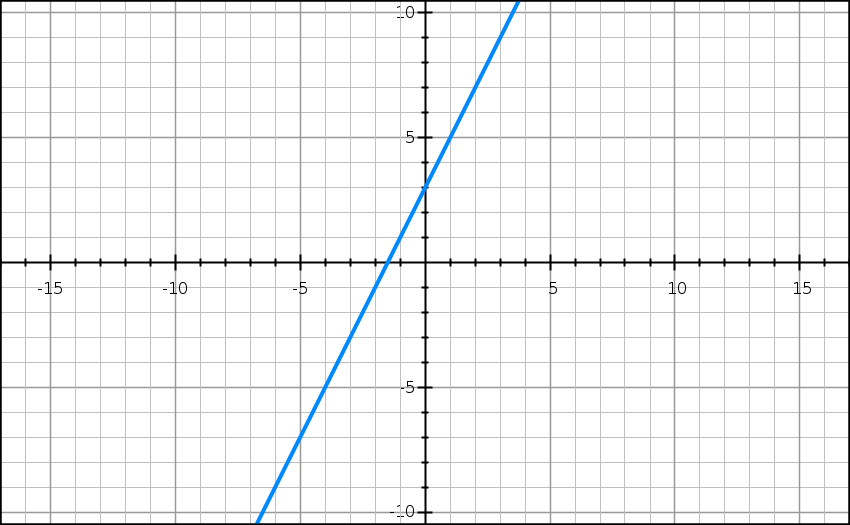
Now take the linear function and find .
As approaches from the left () and from the right (), the function values move smoothly along the line toward the same -value. Both sides converge, so:
Because this function is continuous everywhere, the graph has no break at , and the limit equals the function value there.
You can go deeper on estimating limits from graphs in Topic 1.3.
Limits are not just numbers; they describe how a function behaves near a point, not only at the point itself.
Using Direct Substitution and Clean Limit Notation
MCQ: Many limit questions can be answered by direct substitution when the function is continuous at the point. Plug in the value and evaluate. If substitution gives a real number, that is usually your answer.
Watch for forms like . That signals you cannot just substitute and need another approach, such as factoring or a table, which you will practice in later topics.
Problem Solving:
- Substitute the value into the limit.
- Evaluate. If the function is continuous at that point and you get a real number, that is the limit. If you get , the function may have a hole, so try a table or algebraic simplification.
Common Trap: Use correct notation throughout. Keep the written until you actually substitute the value. Writing clean notation helps graders follow your reasoning on free-response work.
Defining Limits: Practice Problems
When you work these, follow two steps:
-
Substitute the value into the limit.
-
Evaluate the limit.
-
Consider the function . What is the value of ?
A. 3
B. 5
C. 6
D. 7
-
Consider the function . What is the value of ?
A. -8
B. 8
C. 9
D. 1
Defining Limits: Solutions to Practice Problems
-
Both steps:
- Substitute:
- Evaluate:
The correct answer is B) 5. This works by direct substitution because is continuous everywhere.
-
Both steps:
- Substitute:
- Evaluate:
The correct answer is A) -8.
Common Misconceptions
- Misconception: A limit equals the function value at that point.Actually: Not always. The limit is what approaches near . The function might be undefined at or defined as a different value, and the limit can still exist.
- Misconception: If is undefined, the limit must not exist.Actually: False. The example above is undefined at , but the limit there is .
- Misconception: You can always find a limit by plugging in.Actually: Direct substitution only works when the function is continuous at that point. When you get , you need another method.
- Misconception: The notation and mean the same thing.Actually: They are different ideas. One is about approaching behavior; the other is the actual output at .
- Misconception: A two-sided limit exists no matter what the sides do.Actually: For a two-sided limit to exist, the left-hand and right-hand limits must approach the same value.
Related AP Calculus Guides
Practice Questions for 1.2
1 of 10
The graph of the function is shown above.
Which of the following scenarios describes a function that shares the same underlying limit structure at as the function exhibits at ?
A.
A function where and
B.
A function where but is undefined
C.
A function where and
D.
A function where and
Vocabulary
The following words are mentioned explicitly in the AP® course framework for this topic.Term | Definition |
|---|---|
analytic notation | The symbolic mathematical representation of a limit, typically written as lim(x→a) f(x) = L. |
approaches | In the context of limits, the behavior of a function's output as the input gets arbitrarily close to a specific value. |
function | A mathematical relationship that assigns exactly one output value to each input value of an independent variable. |
limit | The value that a function approaches as the input approaches some value, which may or may not equal the function's value at that point. |
limit notation | The symbolic representation of a limit, written as lim[x→c] f(x) = R, indicating that f(x) approaches R as x approaches c. |
See Fiveable more often in Google
Mark Fiveable as a preferred source and Google is more likely to show you our guides in Top Stories, with a "preferred" badge in AI Mode and AI Overviews.