12.3 Learning disabilities and interventions

🐣Adolescent Development Unit 12 Review
12.3 Learning disabilities and interventions
🐣 Adolescent Development
Understanding Learning Disabilities in Adolescents
Learning disabilities are neurological differences that affect how the brain processes information, and they show up in a significant number of adolescents. These aren't about intelligence. A teen with a learning disability can be just as smart as their peers but struggles with specific academic skills like reading, math, or writing. Understanding these disabilities matters because they don't just affect grades; they shape self-esteem, social life, and long-term opportunities during a critical developmental period.
Common Learning Disabilities in Adolescents
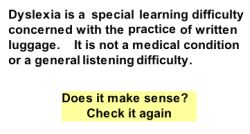
Dyslexia is the most well-known learning disability. It impairs reading fluency and accuracy by disrupting phonological processing, which is the brain's ability to connect letters with sounds. Teens with dyslexia may misread words (like seeing "was" as "saw"), struggle with spelling, and read much more slowly than their peers. The difficulty isn't with vision; it's with how the brain decodes written language.
Dyscalculia affects mathematical reasoning. Teens with dyscalculia have trouble grasping number relationships, performing calculations, and understanding concepts like place value or fractions. Something like memorizing multiplication tables can feel nearly impossible, not because of effort, but because the brain processes numerical information differently.
Dysgraphia shows up as difficulty with written expression. This can mean illegible handwriting, trouble organizing thoughts on paper, and poor spatial awareness when writing. A student might have great ideas verbally but struggle to get them down in writing.
Attention-Deficit/Hyperactivity Disorder (ADHD) involves patterns of inattention, hyperactivity, and/or impulsivity that interfere with daily functioning. In school, this often looks like forgetting homework, losing track of time, difficulty staying organized, or interrupting conversations. ADHD is technically classified as a neurodevelopmental disorder rather than a learning disability, but it frequently co-occurs with learning disabilities and creates similar academic challenges.
Auditory Processing Disorder makes it hard to process and interpret spoken information, even when hearing is normal. A teen might misunderstand verbal directions or struggle to follow along in a lecture-heavy class.
Visual Processing Disorder affects how the brain interprets what the eyes see. This can make reading comprehension difficult and create problems with maps, charts, graphs, and spatial relationships.

Diagnostic Criteria for Learning Disabilities
Identifying a learning disability involves multiple steps and multiple people. Here's how the process typically works:
- Initial screening begins with teacher observations, parent reports, and reviews of academic performance. A pattern of struggles in a specific area usually triggers further evaluation.
- Comprehensive evaluation follows, including cognitive assessments, academic achievement tests, and sometimes neuropsychological evaluations. Common standardized tools include intelligence tests like the WISC-V and achievement tests like the Woodcock-Johnson.
- A multidisciplinary team conducts the evaluation. This typically includes school psychologists, special education teachers, and sometimes speech-language pathologists, depending on the suspected disability.
For a formal diagnosis, several criteria must be met:
- Difficulties must be persistent in specific academic areas
- Skills must fall significantly below age-expected levels
- Onset must occur during school-age years
- The difficulties must not be better explained by other factors (such as inadequate instruction, intellectual disability, or sensory impairments)
Many schools also use a Response to Intervention (RTI) approach, which is a tiered system that identifies struggling students and provides increasingly intensive support:
- Tier 1: Universal screening of all students
- Tier 2: Targeted small-group interventions for students who fall behind
- Tier 3: Intensive, individualized interventions for students who don't respond to Tier 2
- Progress monitoring occurs at every tier to track whether the student is improving
If a student doesn't respond to these interventions, that itself becomes evidence supporting a learning disability diagnosis.
Interventions for Learning Disabilities
Once a learning disability is identified, a range of supports can be put in place. These fall into several categories:
Formal plans and accommodations:
- Individualized Education Programs (IEPs) are legally binding documents that establish tailored academic goals, specify accommodations (like extended time on tests), and outline any modifications to the curriculum.
- Extended time on tests and assignments reduces time pressure and anxiety, letting students demonstrate what they actually know.
- Preferential seating near the teacher or away from distractions helps improve focus.
Assistive technology:
- Text-to-speech software reads digital text aloud, which is especially helpful for students with dyslexia.
- Speech recognition programs (like Dragon NaturallySpeaking) allow students with dysgraphia to dictate rather than write.
- Graphic organizers and visual aids help students structure information and see relationships between concepts.
Specialized instructional methods:
- Multisensory instruction engages multiple senses at once. The Orton-Gillingham approach, for example, is a structured method for teaching reading to students with dyslexia that uses visual, auditory, and tactile cues simultaneously. Touch Math applies a similar multisensory principle to dyscalculia.
- Cognitive strategy instruction teaches students self-regulation techniques and metacognitive strategies, helping them monitor their own learning and problem-solving.
- Collaborative teaching models like co-teaching (where a general education teacher and a special education teacher work together in the same classroom) provide support without pulling students out of the regular classroom.
Skill-building supports:
- Specialized tutoring targets specific skill deficits with individualized attention.
- Study skills and organizational support teaches concrete techniques for time management, note-taking, and task planning.
- Social skills training helps teens who struggle with peer interactions and communication, which can be affected by some learning disabilities.
Impact of Learning Disabilities on Adolescents
Learning disabilities reach well beyond academics. During adolescence, when identity and social belonging are already front and center, these challenges can ripple into almost every part of a teen's life.
Self-esteem and identity. Repeated academic struggles can lead to negative self-perception and low academic self-efficacy (the belief that you can succeed in school). Teens may start to define themselves by their disability rather than their strengths, which can narrow their sense of what's possible for their future, including career aspirations.
Social and emotional effects. Adolescents with learning disabilities face higher rates of anxiety and depression compared to their peers. They may experience peer rejection or social isolation, especially if their disability affects communication or social skills. School-related frustration can build over years and become a significant source of stress.
Family dynamics. A learning disability often increases stress within the family. Parents may need to become strong advocates within the school system, and siblings may feel the shift in attention. Supportive family involvement, though, is one of the strongest protective factors.
Risk factors. Research shows that teens with learning disabilities are more vulnerable to substance use and negative peer influences, partly because of lower self-esteem and a desire to fit in.
Building resilience. The picture isn't all negative. Many teens develop strong compensatory skills and a growth mindset through the process of working with their disability. Two of the most important skills to cultivate are:
- Coping strategies: Finding alternative ways to learn and process information that play to individual strengths.
- Self-advocacy skills: Understanding your own rights (under laws like IDEA and Section 504), knowing what accommodations you need, and being able to communicate those needs effectively to teachers and others. These skills become especially critical during the transition to post-secondary education or employment, where support is less automatic and students must often request it themselves.
See Fiveable more often in Google
Mark Fiveable as a preferred source and Google is more likely to show you our guides in Top Stories, with a "preferred" badge in AI Mode and AI Overviews.