3.1 Jurisdiction

🦹Intro to Law and Legal Process Unit 3 Review
3.1 Jurisdiction
🦹 Intro to Law and Legal Process
Jurisdiction determines which court has the power to hear and decide a particular case. In a system built on federalism, where power is split between state and national governments, understanding jurisdiction is essential for figuring out where a lawsuit can (and can't) be brought. This topic covers the different types of jurisdiction, how courts in both state and federal systems establish authority over cases and parties, and what happens when jurisdiction is challenged.
Jurisdiction in State and Federal Courts
Jurisdiction is the power and authority of a court to hear and decide a case. It controls two things: which court system (state or federal) a case belongs in, and which specific court within that system can handle the dispute.
Because the U.S. operates under federalism, state and federal courts exist side by side, each with their own rules about what cases they can take. A court that lacks jurisdiction simply cannot decide a case, no matter how strong the claims are.

Top images from around the web for Subject matter vs personal jurisdiction
The Dual Court System | American Government View original
Is this image relevant?
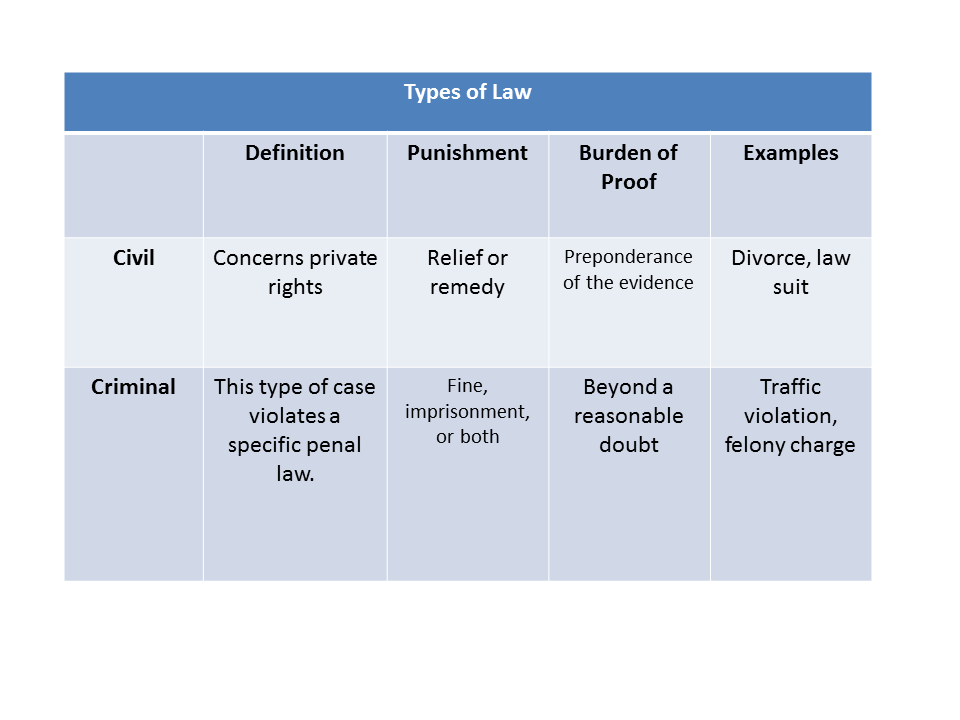
Jurisdiction, Types of Law, and the Selection of Judges | Texas Government View original
Is this image relevant?
U. S. Courts: How do courts interpret contracts and laws? | United States Government View original
Is this image relevant?
The Dual Court System | American Government View original
Is this image relevant?
Jurisdiction, Types of Law, and the Selection of Judges | Texas Government View original
Is this image relevant?
Types of Jurisdiction
Subject Matter vs. Personal Jurisdiction
Subject matter jurisdiction is a court's authority to hear a particular type of case. For example, a probate court can handle wills and estates but not personal injury claims. A federal court can hear cases involving federal law but not every state-law dispute.
Personal jurisdiction is a court's power over the specific parties in the case. Even if a court has subject matter jurisdiction, it can't bind a defendant who has no meaningful connection to that court's territory.
Both must be satisfied. If either one is missing, the court can't proceed.
General vs. Limited Jurisdiction
- Courts of general jurisdiction can hear a broad range of cases. State trial courts (often called superior courts or circuit courts) are the most common example.
- Courts of limited jurisdiction handle only specific types of cases defined by statute, such as family courts, probate courts, or small claims courts.
- Federal courts are courts of limited jurisdiction. They only have the authority granted to them by Article III of the U.S. Constitution and federal statutes. If a case doesn't fit within those grants, federal courts can't hear it.
Original vs. Appellate Jurisdiction
- Original jurisdiction means a court has authority to hear a case from the start, find facts, and issue a judgment. Trial courts have original jurisdiction.
- Appellate jurisdiction is the power to review decisions made by lower courts, typically focusing on whether errors of law occurred. Circuit courts of appeals and supreme courts exercise appellate jurisdiction.
- Some courts have both. The U.S. Supreme Court, for instance, has original jurisdiction over disputes between states but exercises appellate jurisdiction in most of its cases.
Constitutional Limits on Jurisdiction
Due Process Clause Requirements
The Due Process Clauses of the Fifth and Fourteenth Amendments set outer boundaries on jurisdiction. A court can't just claim power over any defendant it wants. The defendant must have certain minimum contacts with the forum state, and exercising jurisdiction must not offend "traditional notions of fair play and substantial justice." That phrase comes from the landmark case International Shoe Co. v. Washington (1945), and it remains the core test today.
Minimum Contacts for Personal Jurisdiction
The minimum contacts analysis looks at the defendant's connections to the state where the lawsuit was filed. There are two forms:
- Specific jurisdiction applies when the defendant's contacts with the forum state directly gave rise to the claim. For example, if a company ships a defective product into a state and someone there is injured, that state likely has specific jurisdiction over the product liability claim.
- General jurisdiction applies when the defendant's contacts with the state are so "continuous and systematic" that the defendant can be sued there for any claim, even one unrelated to those contacts. For individuals, this typically means their home state. For corporations, it means their state of incorporation and the state where they have their principal place of business.
Key factors courts consider include the defendant's physical presence, business activities, contracts with forum-state residents, and whether the defendant purposefully directed actions toward the state. The contacts must be purposeful, not random or accidental.
State Court Jurisdiction
Long-Arm Statutes for Out-of-State Defendants
When a defendant is located outside the state, the plaintiff needs a legal basis to haul them into that state's courts. Long-arm statutes provide that basis. Each state has one, and they define the circumstances under which the state's courts can reach out-of-state defendants.
Common grounds for long-arm jurisdiction include:
- Transacting business in the state
- Committing a tort (a wrongful act causing harm) within the state
- Owning property in the state
- Contracting to supply goods or services in the state
Many states extend their long-arm statutes to the fullest extent the Due Process Clause allows, meaning the constitutional minimum contacts test effectively becomes the only limit.

Domicile and Presence as Bases
Domicile and physical presence are traditional, well-established bases for personal jurisdiction:
- Domicile is your permanent home. You're subject to general jurisdiction in the state where you're domiciled, even for claims that have nothing to do with that state.
- Physical presence can also work. If a defendant is personally served with process while physically present in a state, even briefly, that state's courts can claim jurisdiction. This is sometimes called tag jurisdiction.
- Corporations are treated as domiciled in their state of incorporation and the state where their principal place of business is located.
Federal Court Jurisdiction
Federal courts need an independent basis for subject matter jurisdiction. The two main paths are federal question jurisdiction and diversity jurisdiction.
Federal Question Jurisdiction
Under 28 U.S.C. § 1331, federal courts can hear cases "arising under" the U.S. Constitution, federal statutes, or treaties. The federal issue must appear on the face of the plaintiff's well-pleaded complaint. This means you look only at what the plaintiff is claiming, not at the defendant's defenses. If the defendant raises a federal defense or counterclaim, that alone doesn't create federal question jurisdiction.
Diversity of Citizenship Jurisdiction
Under 28 U.S.C. § 1332, federal courts can hear cases between citizens of different states when the amount in controversy exceeds $75,000. Two important rules apply:
- Complete diversity is required. No plaintiff can share state citizenship with any defendant. If even one plaintiff and one defendant are from the same state, diversity jurisdiction fails.
- Citizenship for individuals is based on domicile. For corporations, citizenship includes both the state of incorporation and the state of the corporation's principal place of business.
Supplemental Jurisdiction over State Claims
Sometimes a case properly in federal court involves both federal and state law claims. Under 28 U.S.C. § 1367, the federal court can exercise supplemental jurisdiction over the state claims if they arise from a "common nucleus of operative fact" as the federal claim. This promotes efficiency by keeping related claims in one proceeding rather than forcing the plaintiff to litigate in two different courts.
Venue and Forum Non Conveniens
Proper Venue Requirements
Venue is different from jurisdiction. While jurisdiction asks which court system has authority, venue asks where geographically within that system the case should be heard.
Federal venue rules (28 U.S.C. § 1391) generally allow a case to be filed in:
- The district where any defendant resides (if all defendants reside in the same state)
- The district where a substantial part of the events giving rise to the claim occurred
- If neither of those works, the district where any defendant is subject to personal jurisdiction
State venue rules follow similar logic, typically focusing on where the defendant lives or where the events took place.
Transfer of Venue
If a case is filed in an inconvenient or improper venue, it can be transferred to a more appropriate district:
- Under 28 U.S.C. § 1404, a court can transfer a case for the convenience of parties and witnesses, or in the interest of justice. This is discretionary, and courts weigh factors like the availability of evidence, litigation costs, and ease of travel.
- Under 28 U.S.C. § 1406, transfer can cure a case filed in an improper venue, sending it to a district where it could have been brought.
Forum Non Conveniens Dismissals
Even when jurisdiction and venue are technically proper, a court can dismiss a case under forum non conveniens if another forum (often in a different country) would be substantially more convenient. This doctrine comes up most often in cases involving international parties or events.
Courts consider factors like access to evidence, availability of witnesses, cost, and public interest. Unlike a transfer, a forum non conveniens dismissal sends the case out of the court system entirely, with the expectation that the plaintiff will refile in the more appropriate forum.

Jurisdictional Challenges
Rule 12(b) Motions
Under Federal Rule of Civil Procedure 12(b), a defendant can challenge jurisdiction and other threshold issues by filing a motion before answering the complaint. The most relevant motions here are:
- 12(b)(1): Lack of subject matter jurisdiction
- 12(b)(2): Lack of personal jurisdiction
- 12(b)(3): Improper venue
- 12(b)(5): Insufficient service of process
If the challenge succeeds, the case is dismissed without prejudice, meaning the plaintiff can refile in a court that does have proper jurisdiction.
Waiver of Jurisdictional Defenses
Not all jurisdictional defenses last forever:
- Personal jurisdiction and venue are waivable. If the defendant doesn't raise them in their first responsive pleading (either an answer or a pre-answer motion), those defenses are forfeited for good.
- Subject matter jurisdiction is different. It can never be waived. Either party, or the court itself, can raise it at any point in the litigation, even on appeal.
This distinction matters. A defendant who forgets to challenge personal jurisdiction in their first filing is stuck in that court. But if the court lacks subject matter jurisdiction, the case can be thrown out years later.
Special Appearances to Contest Jurisdiction
In some state court systems, a defendant can make a special appearance solely to argue that the court lacks personal jurisdiction, without being treated as having submitted to the court's authority. If the challenge fails, the defendant then has to file an answer or face default judgment.
The Federal Rules have eliminated this distinction. In federal court, personal jurisdiction challenges are simply raised through a Rule 12(b)(2) motion, and filing that motion doesn't count as consenting to jurisdiction.
Concurrent and Exclusive Jurisdiction
State and Federal Court Concurrent Jurisdiction
Many cases qualify for both state and federal court. This is called concurrent jurisdiction. When it applies, the plaintiff gets to choose where to file. State courts are presumed to have concurrent jurisdiction over federal claims unless Congress has explicitly said otherwise.
Exclusive Federal Jurisdiction
For certain categories of cases, Congress has given federal courts exclusive jurisdiction, meaning state courts cannot hear them at all. Examples include:
- Bankruptcy cases
- Patent and copyright cases
- Antitrust claims
- Admiralty cases
Congress creates exclusive jurisdiction when it wants national uniformity or when there's a strong federal interest in having federal judges handle the subject matter.
Removal and Remand
Removal from State to Federal Court
If a plaintiff files in state court but the case could have been brought in federal court, the defendant can remove it to the federal district court covering that area (28 U.S.C. § 1441). Removal is available when there's federal question jurisdiction or diversity jurisdiction.
The defendant must file a notice of removal within 30 days of receiving the initial pleading or summons. All defendants generally must consent to removal.
Remand Back to State Court
If removal was improper or the federal court lacks subject matter jurisdiction, the plaintiff can move to remand the case back to state court. The federal court must remand if it finds that jurisdiction is lacking or that removal was procedurally defective.
One important rule: remand orders based on lack of subject matter jurisdiction are not reviewable on appeal. Once the federal court sends the case back on that basis, the decision is final.
See Fiveable more often in Google
Mark Fiveable as a preferred source and Google is more likely to show you our guides in Top Stories, with a "preferred" badge in AI Mode and AI Overviews.