14.3 Urban Planning and Sustainable Design

🥁Intro to Art Unit 14 Review
14.3 Urban Planning and Sustainable Design
🥁 Intro to Art
Urban planning determines how cities grow, function, and feel. It shapes everything from where buildings go to how people get around, and sustainable design pushes those decisions toward outcomes that protect the environment while serving residents well. For an art course, this matters because architecture and urban design are among the most visible, large-scale forms of design that affect daily life.
Urban Planning and Sustainable Design

Top images from around the web for Principles of urban planning
Potential components of a Green Infrastructure View original
Is this image relevant?
Theories of urban planning - Wikipedia View original
Is this image relevant?
Ecological Sustainable Development Design Tool Ethosolution : One Community View original
Is this image relevant?
Potential components of a Green Infrastructure View original
Is this image relevant?
Theories of urban planning - Wikipedia View original
Is this image relevant?
Principles of urban planning
Urban planning is the process of deciding how land, infrastructure, and resources in a city should be organized. At its core, it tries to balance competing needs: economic growth, environmental health, and quality of life for residents.
Several key principles guide this process:
- Efficient land use and zoning separates and organizes different activities (residential, commercial, industrial) so they don't conflict with each other while making the best use of available space.
- Accessibility and connectivity ensure people can move easily through the city via well-designed roads, transit systems, bike lanes, and public spaces.
- Livability focuses on resident well-being by providing access to parks, community centers, healthcare, and other essential services.
- Resilience and adaptability build flexibility into urban systems so cities can withstand natural disasters, economic downturns, or population shifts.
Beyond these principles, urban planning also pursues broader goals:
- Social equity and inclusivity means all residents, regardless of income, race, or ability, have fair access to opportunities and a voice in planning decisions.
- Economic vitality involves creating conditions where businesses can thrive and employment opportunities grow.
- Cultural preservation protects a city's unique character, history, and traditions even as new development occurs. Think of how cities like Paris or Kyoto maintain historic districts alongside modern construction.
The planning process itself requires coordinating infrastructure systems (water, energy, sanitation, transit), engaging the public in decision-making, and negotiating between groups with competing interests. Developers want to build, residents want quiet neighborhoods, and environmentalists want green space. Planners have to find workable compromises.
Sustainable design in urban development
Sustainable design applies environmental thinking to how cities are built and maintained. The goal is to reduce harm to ecosystems, conserve resources, and create places that support human health over the long term.
The core objectives are:
- Minimizing environmental impact through eco-friendly building practices and technologies
- Optimizing resource efficiency by conserving energy and water and reducing waste
- Promoting health and well-being through walkable neighborhoods, green spaces, and clean air
- Enhancing social and economic sustainability so development benefits all residents, not just the wealthy
These objectives translate into specific design strategies:
- Compact, mixed-use development combines housing, shops, and recreation in walkable neighborhoods, cutting down on long commutes and car dependency. A single block might have apartments above street-level cafés and retail.
- Transit-oriented development (TOD) clusters housing and services around public transit stations, making it easy for residents to rely on buses or trains instead of cars.
- Green spaces and urban biodiversity weave parks, gardens, and natural habitats into the city. These spaces filter air and water, reduce flooding, and give residents places to exercise and socialize.
- Sustainable transportation prioritizes public transit, cycling infrastructure, and pedestrian-friendly streets over car-centric design.
- Passive design strategies use natural elements to reduce energy consumption. For example, orienting a building to maximize sunlight in winter and cross-ventilation in summer means less reliance on heating and air conditioning.
- Renewable energy integration brings solar panels, wind turbines, or geothermal systems into buildings and infrastructure.
- Sustainable materials favor recycled, locally sourced, and low-impact building products to shrink the environmental footprint of construction.
- Biophilic design intentionally brings nature into built spaces through indoor plants, water features, natural light, and organic materials. Research consistently links biophilic elements to improved well-being and productivity.

Benefits of sustainable practices
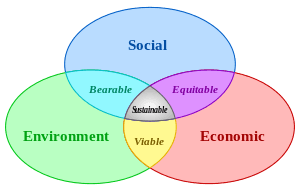
Sustainable urban design produces benefits across three categories: environmental, social, and economic.
Environmental benefits:
- Lower greenhouse gas emissions from reduced car use and energy-efficient buildings
- Improved air and water quality, which directly affects public health
- Preservation of natural habitats and the ecosystem services they provide (carbon storage, water filtration, flood control)
- Reduction of the urban heat island effect, where cities become significantly hotter than surrounding rural areas due to concrete, asphalt, and lack of vegetation
Social benefits:
- Better public health outcomes from access to green space, cleaner air, and active transportation options like walking and cycling
- Stronger community bonds, since walkable, mixed-use neighborhoods encourage social interaction
- Greater equity when planning ensures vulnerable communities aren't disproportionately exposed to pollution or excluded from new amenities
Economic benefits:
- Long-term savings on energy and resource costs for individuals, businesses, and governments
- Higher property values in well-designed sustainable neighborhoods
- Job creation in green industries such as renewable energy, green construction, and urban agriculture
Innovative Approaches and Challenges

Innovations in urban design
Cities around the world are experimenting with design strategies that make urban spaces greener, safer, and more people-centered.
Green infrastructure manages environmental challenges through natural systems rather than purely engineered solutions:
- Green roofs and walls insulate buildings, absorb stormwater, improve air quality, and create wildlife habitat. Chicago's City Hall green roof, for instance, was an early high-profile example in the U.S.
- Permeable pavements and bioswales let rainwater soak into the ground instead of overwhelming storm drains. This recharges groundwater, filters pollutants, and reduces flood risk.
- Urban agriculture and community gardens produce food locally, reduce transportation emissions, build community connections, and improve food security.
People-centered street design rethinks how streets are used:
- Pedestrian-friendly streets feature wider sidewalks, safe crossings, street trees, and seating, making walking comfortable and appealing.
- Complete streets allocate space for every user: pedestrians, cyclists, transit riders, and drivers. The idea is that no single mode of transportation dominates.
- Traffic calming measures like speed humps, raised crosswalks, and curb extensions slow vehicles and make streets safer and more pleasant.
Smart growth strategies direct development in ways that reduce sprawl:
- Infill development redevelops vacant or underused land within existing urban areas rather than expanding outward, making better use of infrastructure that's already in place.
- Transit-oriented development concentrates activity near transit hubs so residents can live, work, and shop without needing a car.
- Compact, clustered development creates denser, walkable neighborhoods that conserve land and foster social connection.
- Preservation of open spaces protects parks, wetlands, and natural areas that provide ecological value and recreation.
Challenges of sustainable cities
Sustainable urban development faces real obstacles, and many of them involve difficult trade-offs.
Structural challenges:
- Rapid urbanization strains infrastructure and services, especially in developing countries where cities are growing fastest. The UN estimates that by 2050, nearly 70% of the world's population will live in urban areas.
- Inadequate infrastructure in water, sanitation, and waste management creates health risks, particularly for low-income communities.
- Climate change brings rising sea levels, extreme heat, and more intense storms, all of which threaten urban infrastructure and public safety.
Key trade-offs planners must navigate:
- Density vs. green space: Compact development saves land but can reduce access to parks and nature if not carefully planned.
- Affordable housing vs. environmental goals: Sustainable building methods can raise construction costs, making housing less affordable without policy interventions like subsidies or inclusionary zoning.
- Social equity vs. gentrification: When neighborhoods become more sustainable and attractive, property values rise, sometimes displacing the lower-income residents the improvements were meant to help.
- Short-term costs vs. long-term benefits: Sustainable infrastructure often costs more upfront but saves money over decades. Convincing decision-makers to invest for the long term remains a persistent challenge.
Emerging responses to these challenges include participatory planning that involves communities in decisions, circular economy principles that minimize waste by reusing materials, smart city technologies that use data to optimize services, and international cooperation that lets cities learn from each other's successes and failures.
See Fiveable more often in Google
Mark Fiveable as a preferred source and Google is more likely to show you our guides in Top Stories, with a "preferred" badge in AI Mode and AI Overviews.