14.1 Architectural Styles Through History

🥁Intro to Art Unit 14 Review
14.1 Architectural Styles Through History
🥁 Intro to Art
Architecture has evolved through distinct styles, each reflecting its era's values and innovations. From the symmetry of Classical to the grandeur of Baroque, these styles showcase humanity's artistic and engineering achievements.
Understanding historical architectural styles matters because they still shape the built environment around you. They inspire modern designs, guide preservation efforts, and influence urban planning. Recognizing these styles helps you read a city's history just by looking at its buildings.
Historical Architectural Styles

Top images from around the web for Key characteristics of architectural styles
Gothic Art and Architecture – Introduction To Art View original
Is this image relevant?
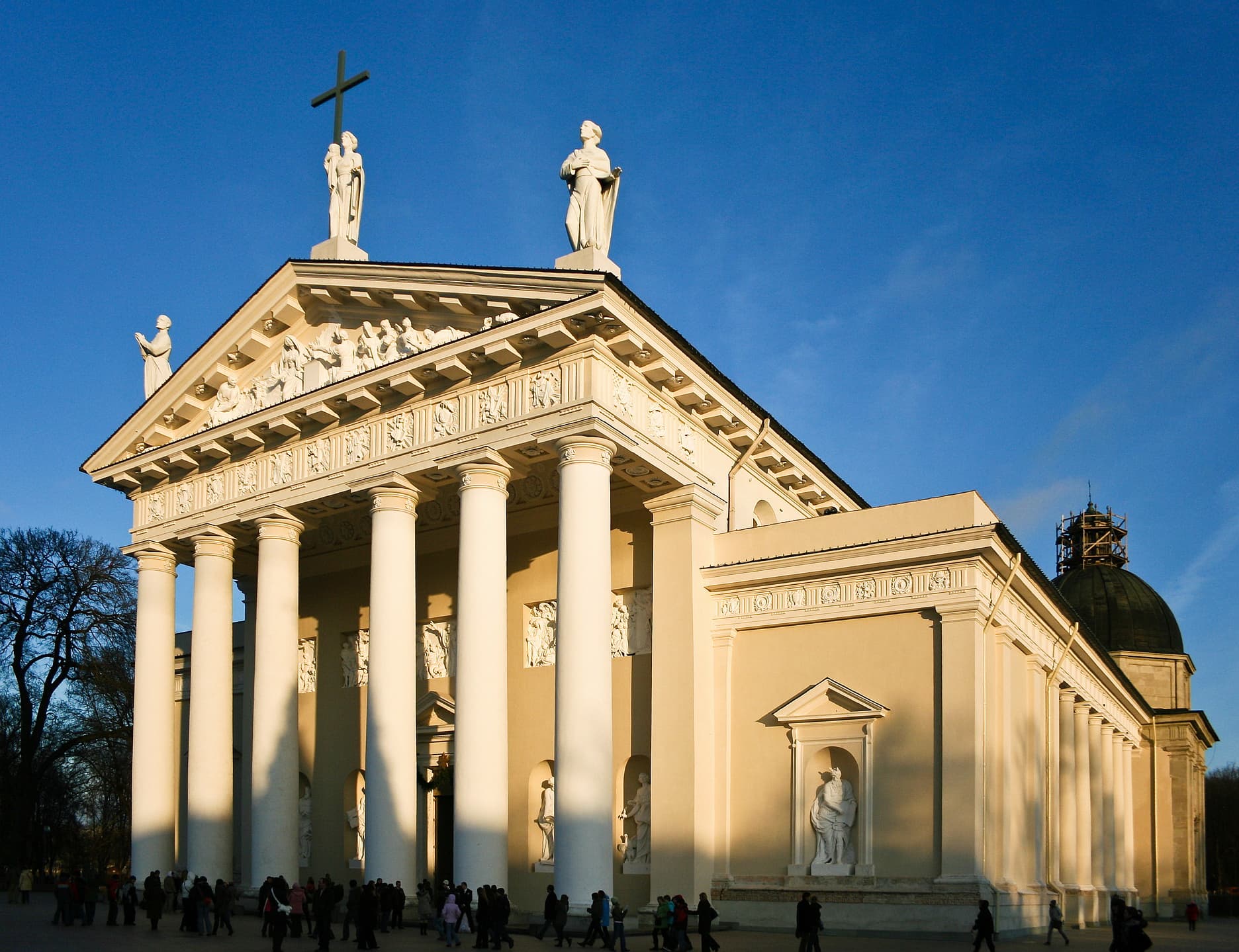
File:Vilnius Cathedral Facade.jpg - Wikimedia Commons View original
Is this image relevant?
Renaissance Architecture | Boundless Art History View original
Is this image relevant?
Gothic Art and Architecture – Introduction To Art View original
Is this image relevant?
File:Vilnius Cathedral Facade.jpg - Wikimedia Commons View original
Is this image relevant?
Key characteristics of architectural styles
Classical architecture originated in ancient Greece and Rome, emphasizing symmetry, proportion, and order. Its most recognizable features are columns, which come in three main styles: Doric (plain, sturdy capitals), Ionic (scroll-shaped capitals), and Corinthian (ornate, leaf-carved capitals). These columns support horizontal structures called entablatures and triangular pediments above entrances. The Parthenon in Athens and the Colosseum in Rome are the most famous examples.
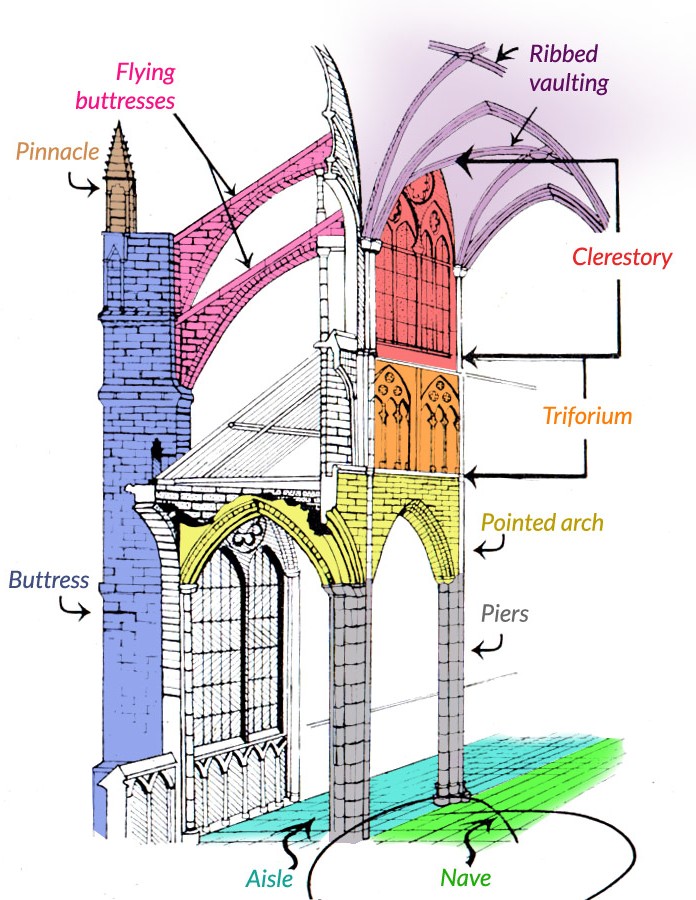
Gothic architecture flourished in medieval Europe from roughly the 12th to 16th centuries. Three structural innovations define the style: pointed arches that direct weight downward more efficiently, ribbed vaults that distribute ceiling loads across a skeleton of stone ribs, and flying buttresses that brace walls from the outside. Together, these features allowed builders to open up massive walls for large stained glass windows, flooding interiors with colored light. Notre-Dame Cathedral in Paris and Westminster Abbey in London are iconic examples.
Renaissance architecture emerged in the 15th to 17th centuries as architects looked back to Classical Greek and Roman principles. The focus was on geometry, harmony, and human-scale proportion. You'll notice rounded arches and domes instead of the pointed forms of Gothic. The Basilica of St. Peter in Vatican City (with its enormous dome designed by Michelangelo and others) and the Palazzo Medici Riccardi in Florence represent the style well.
Baroque architecture developed in Italy from the late 16th to 18th centuries as a dramatic reaction to Renaissance restraint. Everything gets bigger, bolder, and more theatrical. Curved walls, complex shapes, and lavish ornamentation define the style. Baroque architects also used visual tricks like trompe l'oeil (painted illusions that look three-dimensional) and strong contrasts of light and shadow. The Palace of Versailles in France and the Belvedere Palace in Vienna capture this sense of spectacle.
Neoclassical architecture revived Classical forms from the mid-18th to early 19th centuries, but with a cooler, more restrained tone than the original Greek and Roman buildings. Think clean lines, symmetrical facades, and Greek- or Roman-inspired columns, pediments, and domes. This style became popular for government buildings because it conveyed authority and democratic ideals. The United States Capitol Building in Washington, D.C. and the Panthéon in Paris are strong examples.
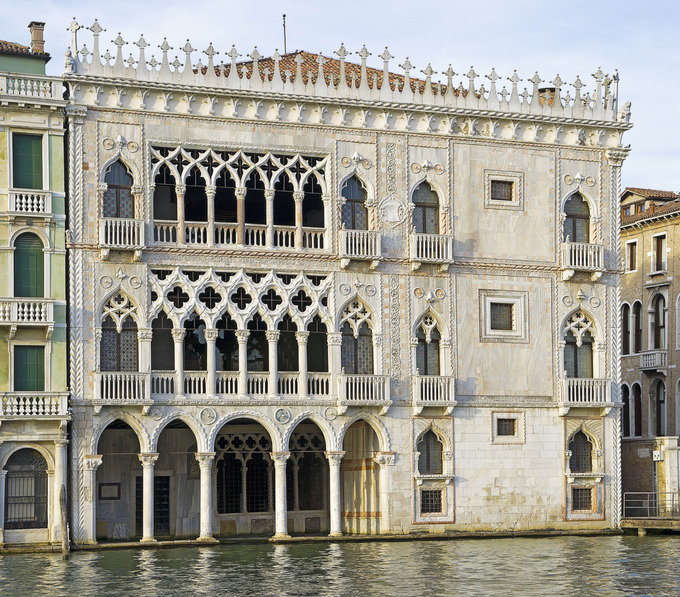
Influences on architectural development
Architecture doesn't evolve in a vacuum. Three broad categories of influence push styles to change over time.
Cultural factors play a major role. Religious beliefs shape sacred spaces (think of how Gothic cathedrals were designed to lift your eyes toward heaven). Political ideologies influence the scale and symbolism of public buildings, as when authoritarian regimes build massive monuments to project power. And broader artistic movements, like the shift from medieval to Renaissance thinking, drive the adoption of new aesthetic preferences.
Social factors also matter. Economic conditions determine how much money is available for construction and decoration. Population growth and urbanization push architects to design more efficient, functional buildings. Changing lifestyles reshape interior layouts too; for example, the shift toward private family life in the 17th and 18th centuries led to more separated, specialized rooms.
Technological factors are often the most direct drivers of change. New materials like concrete (used by the Romans) and later steel opened up possibilities for taller, more complex structures. New techniques like the arch, the vault, and the dome each expanded what builders could achieve. And improvements in tools and machinery made construction faster and more precise with each era.
Comparison of historical styles
Aesthetic elements
- Ornamentation ranges from the restrained elegance of Classical to the exuberant embellishments of Baroque
- Proportion and scale vary from the human-centric dimensions of Renaissance to the monumental grandeur of Neoclassical
- Light and shadow differ dramatically: Gothic interiors glow with diffused, colored light through stained glass, while Baroque spaces use sharp contrasts for theatrical effect
- Color and texture span from the natural stone tones of Classical buildings to the vibrant painted frescoes of Renaissance interiors
Functional elements
- Spatial organization evolves from the open, public gathering spaces of Classical architecture to the more intimate, layered rooms of Baroque palaces
- Structural systems progress from the simple post-and-lintel construction of Classical buildings (columns holding up horizontal beams) to the skeletal stone frameworks of Gothic cathedrals
- Circulation improves from the linear pathways of Classical layouts to the more fluid, interconnected spaces of Baroque design
- Climate adaptation varies from the sun-drenched open atriums of Classical Mediterranean buildings to the sheltered cloisters of Gothic monasteries in cooler northern Europe
Impact on contemporary design
Inspiration and influence. Historical styles continue to show up in modern architecture. Postmodern buildings often borrow Classical elements like columns and pediments, sometimes playfully exaggerating them. Art Nouveau designers drew on Gothic tracery patterns for their organic, flowing forms. Beaux-Arts architecture (popular in the late 1800s and early 1900s) blended references from multiple historical periods into grand, eclectic compositions.
Preservation and restoration. Maintaining historical buildings preserves cultural heritage and keeps architectural knowledge alive. Many older structures get adapted for modern use, such as converting industrial warehouses into residential lofts or repurposing churches as community centers. A key challenge in restoration work is balancing authenticity with functionality, making sure a building meets current safety and accessibility standards without losing its historical character.
Urban planning and development. Cities often integrate historical styles into new construction to create visual continuity. Contextual design is the practice of ensuring new buildings harmonize with the surrounding historical fabric rather than clashing with it. Drawing on a city's unique architectural character helps create a sense of place and identity, which is why cities like Paris, Rome, and Prague feel so distinct from one another.
See Fiveable more often in Google
Mark Fiveable as a preferred source and Google is more likely to show you our guides in Top Stories, with a "preferred" badge in AI Mode and AI Overviews.