8.1 Fossil fuels

🪺Environmental Biology Unit 8 Review
8.1 Fossil fuels
🪺 Environmental Biology
Fossil fuels are non-renewable energy sources formed from ancient organisms over millions of years. Understanding how they form, how we use them, and the consequences of that use is central to evaluating the global energy transition from non-renewable to renewable resources.
Types of Fossil Fuels
Fossil fuels fall into three main categories: coal, oil, and natural gas. Each forms through a different process and is extracted differently, but all share two defining traits: they store ancient solar energy in chemical bonds, and they exist in finite quantities that cannot be replenished on human timescales.
Coal Formation and Extraction
Coal forms from plant material that was buried in oxygen-poor (anaerobic) conditions millions of years ago. Over time, heat and pressure transform this material through a series of stages, each with higher carbon content and energy density:
- Peat forms first as plant matter partially decays in swampy environments
- Increasing burial pressure converts peat to lignite (brown coal), the lowest rank
- Further heat and pressure produce subbituminous, then bituminous coal
- Anthracite, the highest rank, forms under the most extreme conditions and burns the cleanest of all coal types
Coal is extracted in two main ways:
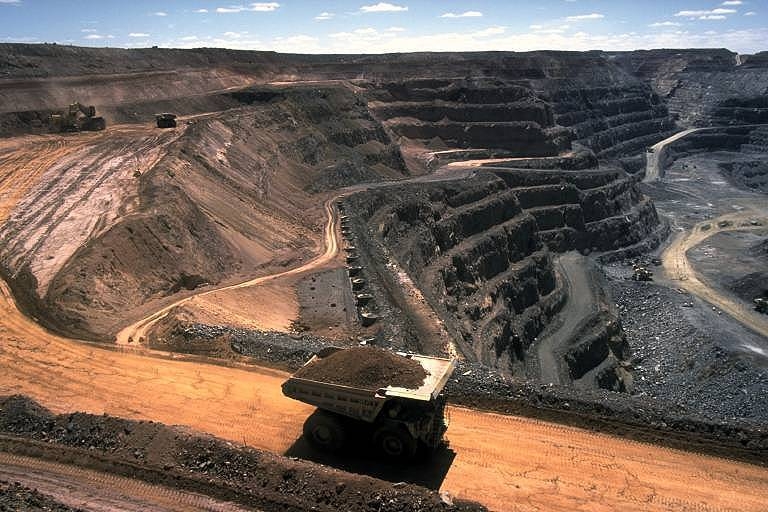
- Surface mining (strip mining, open-pit mining) is used when coal seams lie close to the surface. It's cheaper but causes major land disturbance.
- Underground mining (room-and-pillar, longwall methods) accesses deeper deposits but carries greater safety risks for workers.
Both methods cause environmental damage, including habitat destruction, water pollution from acid mine drainage, and methane emissions from exposed coal seams.
Oil and Gas Origins
Oil and natural gas form from marine microorganisms (like plankton and algae) that accumulated on ancient ocean floors. Their formation follows a general sequence:
- Organic matter settles in sedimentary basins and gets buried under layers of sediment
- Heat and pressure convert the organic material into kerogen, a waxy precursor
- At greater depths and higher temperatures, kerogen breaks down into liquid oil and gaseous hydrocarbons
These hydrocarbons migrate upward through permeable rock until they hit an impermeable layer that traps them. The permeable rock holding the fuel is called the reservoir (commonly sandstone or limestone), and the impermeable layer above is the trap (which can be structural, like folds and faults, or stratigraphic, like pinchouts).
Extraction involves drilling wells into the reservoir. In many modern operations, hydraulic fracturing (fracking) and horizontal drilling are used to increase the flow of oil and gas from tight formations.
Unconventional Fossil Fuel Sources
Unconventional fossil fuels require more complex and expensive extraction techniques. The most significant types include:
- Oil sands (tar sands): Mixtures of sand, clay, water, and bitumen (a very heavy, viscous oil). Extraction involves either surface mining or in-situ methods that heat the bitumen underground so it flows to the surface.
- Oil shale: Sedimentary rock containing kerogen that hasn't yet converted to oil. It must be mined and heated to release usable hydrocarbons.
- Shale gas and tight oil: Trapped in low-permeability shale formations, these require hydraulic fracturing and horizontal drilling.
- Coalbed methane: Natural gas trapped within coal seams, extracted by drilling into the coal and reducing water pressure.
Across the board, unconventional sources carry higher extraction costs and greater environmental impacts than their conventional counterparts.
Fossil Fuel Consumption Patterns
Since the Industrial Revolution, fossil fuels have been humanity's primary energy source. Understanding how consumption has shifted over time helps explain why transitioning away from them is so difficult.
Historical Usage Trends
Coal dominated the 1800s and early 1900s, powering steam engines, factories, and railroads. Oil consumption surged in the mid-20th century as automobiles became widespread and the petrochemical industry expanded. Natural gas has grown more recently because it produces roughly half the per unit of energy compared to coal, making it attractive for electricity generation and heating.
Current Global Consumption
As of 2021, fossil fuels accounted for roughly 84% of global primary energy consumption, broken down approximately as:
- Oil: 31%
- Coal: 27%
- Natural gas: 24%
The United States, China, and India are the largest consumers. Transportation depends heavily on oil, while coal and natural gas dominate electricity generation and industrial processes.
Projections for Future Demand
The International Energy Agency (IEA) has projected that global energy demand could increase by about 30% between 2020 and 2040. Fossil fuels are expected to remain dominant in the near term, though their share of the energy mix may shrink as renewables grow.
Developing countries in Asia and Africa will drive much of the demand increase as they industrialize and expand energy access. At the same time, climate mitigation efforts could lead to a peak in fossil fuel demand within the coming decades, depending on policy choices and technology development.

Environmental Impacts of Fossil Fuels
The environmental costs of fossil fuels span every stage of their life cycle, from extraction through combustion.
Greenhouse Gas Emissions
Burning fossil fuels releases carbon dioxide (), the most significant human-caused greenhouse gas. emissions from fossil fuel combustion and industrial processes account for approximately 78% of the increase in greenhouse gas emissions since 1970.
Methane () is another major concern. It's released during oil and gas extraction, processing, and distribution. While doesn't persist in the atmosphere as long as , it traps roughly 80 times more heat over a 20-year period, making even small leaks significant.
These gases accumulate in the atmosphere, trap heat, and drive global warming. The consequences include sea-level rise, more frequent extreme weather events, and widespread ecosystem disruption.
Air Pollution and Health Effects
Fossil fuel combustion releases a range of harmful air pollutants:
- Particulate matter (PM): Especially (fine particles under 2.5 micrometers), which penetrates deep into the lungs and causes respiratory and cardiovascular disease
- Nitrogen oxides (): Contribute to smog and acid rain
- Sulfur dioxide (): A major cause of acid rain and respiratory irritation
- Volatile organic compounds (VOCs): React with in sunlight to form ground-level ozone
Air pollution from fossil fuels is linked to millions of premature deaths worldwide each year. Coal-fired power plants are also a major source of mercury emissions, which bioaccumulate through aquatic food chains and pose serious health risks to humans and wildlife.
Land and Water Degradation
Fossil fuel extraction disrupts landscapes and water systems in several ways:
- Surface mining for coal and oil sands strips away vegetation and topsoil, destroying habitats and increasing erosion
- Oil spills from pipelines, tankers, and drilling operations contaminate soil, groundwater, and marine environments. The Deepwater Horizon spill (2010) in the Gulf of Mexico released an estimated 4.9 million barrels of oil, causing extensive damage to coastal ecosystems and local economies.
- Fracking can potentially contaminate groundwater with drilling chemicals and methane, and has been linked to induced seismic activity (small earthquakes) in some regions
Economic Aspects of Fossil Fuels
Fossil fuels have driven economic growth for over two centuries, but their true costs are more complex than market prices suggest.
Costs of Extraction and Processing
Extraction costs vary widely based on resource quality, location, and method. Conventional oil from Saudi Arabia is far cheaper to produce than oil from Canadian tar sands or deepwater drilling operations. Beyond extraction, costs include:
- Refining crude oil into usable products like gasoline, diesel, and jet fuel
- Processing natural gas to remove impurities like sulfur and water
- Transportation via pipelines, tankers, and rail
Unconventional resources like oil sands and shale oil consistently carry higher production costs than conventional sources.
Subsidies and Externalities
Governments worldwide subsidize fossil fuels through direct payments, tax breaks, and price controls. In 2020, global fossil fuel subsidies totaled approximately $$180 billion. These subsidies distort market prices and encourage overconsumption.
Externalities are costs that don't show up in the price you pay at the pump or on your electric bill. The health costs of air pollution, the economic damage from climate change, and the environmental cleanup from spills are all externalities of fossil fuel use. The social cost of carbon (SCC) attempts to quantify the economic damage caused by each additional ton of emitted, but this cost is rarely factored into fossil fuel prices.
Fossil Fuels vs. Renewable Energy
Renewable energy has become increasingly cost-competitive. Between 2010 and 2020, the levelized cost of energy (LCOE), which measures the average cost per unit of electricity over a project's lifetime, fell by approximately 85\% for utility-scale solar and 56\% for onshore wind.
Still, challenges remain. Solar and wind are intermittent, meaning they only generate power when the sun shines or wind blows. Grid-scale energy storage, grid modernization, and backup generation are needed to ensure reliability. The transition also requires massive investment in new infrastructure and supportive policy frameworks.
Sociopolitical Dimensions of Fossil Fuels
Fossil fuels don't just shape energy markets; they shape global politics.
Geopolitics of Oil and Gas
The Middle East holds roughly 48\% of the world's proven oil reserves and 38\% of natural gas reserves, making the region strategically critical. Conflicts and political instability there can disrupt global oil supply and trigger price spikes felt worldwide.
Russia is the world's second-largest natural gas producer and has historically used energy exports as a geopolitical tool. Europe's dependence on Russian natural gas has raised serious concerns about energy security and political leverage, a dynamic that became especially visible after Russia's invasion of Ukraine in 2022.
Energy Security Concerns
Energy security refers to a country's ability to maintain a reliable, affordable, and uninterrupted energy supply. Countries that depend heavily on imported fossil fuels are vulnerable to supply disruptions and price shocks.
The oil crises of the 1970s, when OPEC oil embargoes caused fuel shortages and economic recessions, demonstrated these risks clearly. Strategies to improve energy security include diversifying energy sources, increasing domestic production, and maintaining strategic petroleum reserves.
Fossil Fuel Industry Influence
The fossil fuel industry wields significant political influence. In the United States alone, the oil and gas industry spent over $$100 million on lobbying in 2020.
Fossil fuel companies have also been accused of spreading misinformation about climate change. Internal documents revealed that ExxonMobil's own scientists understood the risks of climate change as early as the 1970s, yet the company publicly downplayed the threat for decades. This kind of influence can slow the adoption of climate policies and the growth of cleaner energy alternatives.
Transitioning Away from Fossil Fuels
Moving away from fossil fuels is necessary for addressing climate change, but the transition involves real technological, economic, and social challenges.
Challenges in Reducing Dependence
- Infrastructure lock-in: Fossil fuel power plants, pipelines, and refineries represent enormous sunk costs and have lifespans of 30-50 years, delaying retirement of carbon-intensive assets
- Job displacement: Transitioning away from fossil fuels affects workers and communities that depend on the industry. The concept of a "just transition" emphasizes the need for equitable policies that support affected workers through retraining, economic diversification, and social safety nets.
- Political resistance: Opposition from the fossil fuel industry and allied political interests can slow or block climate legislation and clean energy deployment
Policies for Promoting Alternatives
Several policy tools can accelerate the shift:
- Carbon pricing (carbon taxes or cap-and-trade systems) puts a price on emissions, making fossil fuels more expensive relative to cleaner options. The EU Emissions Trading System (EU ETS) is the world's largest carbon market, covering about 40% of the EU's greenhouse gas emissions.
- Renewable energy mandates set targets for clean energy adoption. For example, California's Renewable Portfolio Standard requires 60% of the state's electricity to come from renewable sources by 2030.
- Financial incentives like tax credits and subsidies encourage private investment in renewable energy and energy efficiency projects.
Strategies for a Low-Carbon Future
The path forward involves multiple approaches working together:
- Energy efficiency: Tighter standards for appliances, vehicles, and buildings can significantly cut energy demand. Efficiency improvements are often the cheapest way to reduce emissions.
- Electrification of transportation: Shifting to electric vehicles reduces oil dependence and eliminates tailpipe emissions. Norway leads globally, with over 50% of new car sales being electric as of 2020.
- Carbon capture, utilization, and storage (CCUS): These technologies capture from industrial sources (like cement and steel plants) before it enters the atmosphere. CCUS is still expensive and not yet deployed at scale, but it may be essential for hard-to-decarbonize sectors.
- Natural carbon sinks: Reforestation, improved soil management, and wetland restoration can absorb from the atmosphere, supplementing emissions reductions from the energy sector.
See Fiveable more often in Google
Mark Fiveable as a preferred source and Google is more likely to show you our guides in Top Stories, with a "preferred" badge in AI Mode and AI Overviews.