
Maximum flow algorithms are crucial in network optimization, finding the most efficient way to send resources through capacity-constrained systems. These techniques solve problems in transportation, communication, and resource allocation by maximizing flow from a source to a sink node.
The chapter covers key algorithms like Ford-Fulkerson, Edmonds-Karp, and Push-Relabel, explaining their mechanics and time complexities. It also explores applications in bipartite matching, image segmentation, and discusses practical implementation considerations for real-world use.
Definition of maximum flow
- Foundational concept in network flow problems within Combinatorial Optimization
- Addresses the challenge of maximizing flow through a network with capacity constraints
- Crucial for understanding and solving various optimization problems in transportation, communication, and resource allocation
Network flow terminology
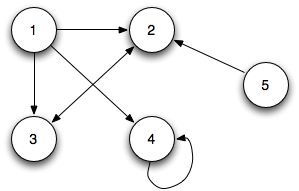
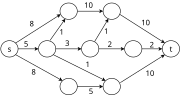
- Directed graph G = (V, E) represents the network structure
- Source node s initiates flow, sink node t receives flow
- Edge capacities c(u, v) limit flow between connected nodes
- Flow f(u, v) represents amount of flow on each edge
- Flow conservation ensures incoming flow equals outgoing flow at each node (except s and t)
Maximum flow problem statement
- Objective maximizes total flow from source s to sink t
- Subject to capacity constraints: for all edges (u, v)
- Flow conservation constraint: for all nodes u except s and t
- Value of flow defined as , total flow leaving source
Ford-Fulkerson method
- Iterative algorithm for solving maximum flow problems
- Fundamental approach that forms the basis for more advanced algorithms
- Introduces key concepts like augmenting paths and residual graphs
Residual graph concept
- Represents remaining capacity in the network after each iteration
- Constructed by adding reverse edges with capacity equal to current flow
- Forward edges in residual graph have capacity c(u, v) - f(u, v)
- Allows for flow cancellation and rerouting during algorithm execution
Augmenting path algorithm
- Finds path from source to sink in residual graph with available capacity
- Augments flow along the path by the minimum residual capacity
- Updates residual graph after each augmentation
- Continues until no more augmenting paths exist
Analysis of Ford-Fulkerson
- Correctness proven by max-flow min-cut theorem
- Time complexity depends on choice of augmenting path selection method
- Worst-case running time can be poor for arbitrary capacities
- Guaranteed to terminate for integer capacities
- Forms basis for more efficient algorithms like Edmonds-Karp
Edmonds-Karp algorithm
- Specific implementation of Ford-Fulkerson method
- Guarantees polynomial-time complexity for all inputs
- Widely used in practice due to its simplicity and efficiency
Breadth-first search implementation
- Uses BFS to find shortest augmenting path in residual graph
- Ensures path length increases monotonically with each iteration
- Prevents pathological cases that can occur in basic Ford-Fulkerson
- Leads to faster convergence and improved worst-case time complexity
Time complexity analysis
- Overall time complexity: for a graph with V vertices and E edges
- Number of augmentations bounded by
- Each BFS takes time
- Significant improvement over Ford-Fulkerson for dense graphs or large capacities
Push-relabel algorithm
- Different approach to maximum flow problem compared to augmenting path methods
- Maintains a preflow instead of a valid flow during execution
- Generally faster in practice, especially for dense graphs
Push and relabel operations
- Push operation moves excess flow from a node to its neighbor
- Relabel operation increases the height of a node to enable more pushes
- Height function h(v) maintains a valid labeling throughout the algorithm
- Excess e(v) tracks the difference between incoming and outgoing flow at each node
Generic push-relabel algorithm
- Initializes preflow by saturating all edges leaving the source
- Repeatedly applies push and relabel operations to nodes with excess
- Terminates when all excess flow reaches the sink or returns to the source
- Maintains invariants to ensure correctness and progress
FIFO push-relabel variant
- Uses a first-in-first-out queue to manage active nodes
- Improves practical performance over generic algorithm
- Achieves time complexity, independent of edge count
- Performs well on a wide range of problem instances
Dinic's algorithm
- Combines ideas from Ford-Fulkerson and shortest path algorithms
- Achieves better time complexity than Edmonds-Karp
- Particularly efficient for unit capacity networks
Blocking flow concept
- Maximal flow where every path from source to sink contains a saturated edge
- Computed efficiently using depth-first search in level graph
- Each blocking flow computation makes significant progress towards maximum flow
Level graph construction
- Assigns levels to nodes based on their distance from the source
- Only includes edges that lead to nodes at the next level
- Rebuilt after each blocking flow computation
- Ensures augmenting paths have strictly increasing length
Time complexity of Dinic's
- Overall time complexity: for general networks
- Improves to for unit capacity networks
- Number of phases (level graph constructions) bounded by
- Each phase takes time to compute blocking flow
Applications of maximum flow
- Demonstrates versatility of network flow techniques in Combinatorial Optimization
- Solves diverse problems by modeling them as flow networks
- Often provides efficient solutions to seemingly unrelated optimization tasks
Bipartite matching problems
- Models matching problems as flow networks with unit capacities
- Maximum flow corresponds to maximum cardinality matching
- Solves assignment problems (job assignments)
- Extends to weighted bipartite matching using min-cost flow
Minimum cut applications
- Finds minimal set of edges whose removal disconnects source from sink
- Used in network reliability analysis (identifying critical links)
- Applies to image segmentation for object recognition
- Solves certain types of clustering problems
Image segmentation
- Constructs flow network from image pixels
- Edge capacities based on similarity between neighboring pixels
- Source and sink represent foreground and background
- Minimum cut provides optimal segmentation of image into regions
Capacity scaling technique
- Improves time complexity of augmenting path algorithms
- Particularly effective for networks with large capacity values
- Gradually refines the solution by considering increasingly finer capacity granularity
Scaling factor introduction
- Starts with large scaling factor Δ, initially the largest power of 2 ≤ maximum capacity
- Only considers edges with residual capacity ≥ Δ in each phase
- Halves Δ after each phase until Δ < 1
- Limits number of augmenting paths found in each phase
Improved time complexity
- Achieves time complexity, where U is the maximum edge capacity
- Significantly better than Edmonds-Karp for networks with large capacities
- Each scaling phase runs in time
- Number of scaling phases limited to
Maximum flow in practice
- Bridges theoretical algorithms with real-world implementation considerations
- Highlights importance of choosing appropriate algorithm for specific problem instances
- Discusses practical aspects of deploying maximum flow solutions
Implementation considerations
- Data structures choice impacts performance (adjacency lists vs. matrices)
- Heuristics can improve average-case running time (e.g., gap heuristic in push-relabel)
- Parallelization opportunities exist for certain algorithms
- Memory usage becomes critical for very large networks
Comparison of algorithms
- Edmonds-Karp performs well for sparse graphs with small capacities
- Push-relabel often outperforms augmenting path methods on dense graphs
- Dinic's algorithm excels on unit capacity networks (bipartite matching)
- Hybrid approaches combine strengths of multiple algorithms
Extensions and variations
- Expands the scope of maximum flow problems to handle more complex scenarios
- Demonstrates how basic flow concepts generalize to solve broader optimization challenges
- Connects maximum flow to other areas of Combinatorial Optimization
Minimum cost flow problem
- Incorporates edge costs in addition to capacities
- Seeks to minimize total cost while satisfying flow demands
- Solved using techniques like successive shortest path or cycle canceling
- Applications include transportation and logistics optimization
Multi-commodity flow
- Extends flow problem to multiple commodities with separate sources and sinks
- Commodities compete for shared edge capacities
- Generally NP-hard, but approximation algorithms exist
- Models complex network routing scenarios (internet traffic)
Maximum flow with vertex capacities
- Adds capacity constraints to nodes in addition to edges
- Can be transformed to standard maximum flow by node splitting
- Useful for modeling problems with processing limitations at network points
- Applications include task scheduling with resource constraints
Duality and max-flow min-cut theorem
- Establishes fundamental relationship between maximum flow and minimum cut
- Connects flow problems to linear programming duality
- Provides powerful theoretical tools for analyzing network flow problems
Theorem statement and proof
- Maximum flow value equals capacity of minimum s-t cut in any flow network
- Proof uses augmenting path method and properties of residual graphs
- Shows equivalence between primal (max flow) and dual (min cut) problems
- Demonstrates strong duality in network flow linear programs
Implications for network design
- Identifies bottlenecks in network capacity (minimum cut)
- Guides network expansion decisions to increase overall flow
- Provides certificates of optimality for maximum flow solutions
- Enables efficient algorithms for related problems (global min cut)