11.3 Post-Minimalism

🎭Art History II – Renaissance to Modern Era Unit 11 Review
11.3 Post-Minimalism
🎭 Art History II – Renaissance to Modern Era
Post-Minimalism emerged in the late 1960s as a reaction to Minimalism's rigid formalism. It introduced more expressive elements, embracing organic forms, unconventional materials, and process-oriented approaches. This movement challenged the idea of autonomous art objects.
Post-Minimalism expanded on Minimalism by incorporating chance, improvisation, and emphasizing the creative process. It reintroduced subjective elements, bodily references, and explored site-specificity beyond physical space. This shift paved the way for diverse contemporary art practices.
Minimalism vs Post-Minimalism
Emergence and Philosophical Differences
- Post-Minimalism emerged in late 1960s as reaction to Minimalism's rigid formalism
- Introduced more expressive and subjective elements into art
- Minimalism focused on geometric abstraction and industrial materials
- Post-Minimalism embraced organic forms, unconventional materials, and process-oriented approaches
- Post-Minimalist artists incorporated performance, installation, and site-specificity elements
- Moved beyond Minimalism's object-based focus
- Minimalism emphasized impersonal and detached aesthetics
- Post-Minimalism allowed for personal, emotional, and political content in artworks
Artistic Approach and Content
- Post-Minimalism challenged idea of autonomous art object
- Explored complex relationships between art, viewer, and environment
- Minimalism sought to eliminate references to outside world
- Post-Minimalism incorporated allusions to nature, body, and cultural contexts (human form, natural landscapes)
- Post-Minimalist works invited viewer interaction and participation
- Moved beyond passive contemplation encouraged by Minimalist art
- Post-Minimalism embraced imperfection, irregularity, and decay
- Challenged Minimalism's pursuit of ideal geometric forms and pristine surfaces
Post-Minimalism's Expansion on Minimalism
Process and Materials
- Post-Minimalist artists introduced elements of chance, improvisation, and process
- Contrasted with Minimalism's predetermined and controlled approach
- Used soft, pliable, or ephemeral materials (fabric, latex, ice)
- Challenged Minimalism's preference for hard-edged, industrial materials and permanent forms
- Emphasized physical act of creating art
- Made process as important as final product, unlike Minimalism's focus on finished object
- Employed everyday, found, or industrial materials in unexpected ways
- Eva Hesse's use of latex, fiberglass, and plastic
- Explored inherent properties and behaviors of materials
- Allowed materials to dictate final form through natural processes (melting, sagging, decay)

Artistic Expression and Context
- Reintroduced subjective and expressive elements Minimalism sought to eliminate
- Incorporated bodily and organic references (human silhouettes, organic shapes)
- Expanded concept of site-specificity beyond physical space
- Included social, political, and cultural contexts in artworks
- Practices involved repetitive, labor-intensive processes
- Left visible traces of artist's hand, contrasting with Minimalism's machine-like precision
- Combined diverse materials in single works
- Created hybrid forms defying easy categorization
- Challenged traditional notions of medium specificity
Unconventional Materials in Post-Minimalism
Soft and Flexible Materials
- Prevalent use of fabric, rubber, and rope in Post-Minimalist sculpture
- Allowed for forms that could change shape or respond to gravity
- Contrasted with Minimalism's rigid, static forms
- Examples include Lynda Benglis' poured latex sculptures
- Robert Morris' felt pieces that draped and folded organically
Environmental and Ephemeral Materials
- Incorporated earth, plants, and water into artworks
- Expanded boundaries of traditional sculptural media
- Used time-based and ephemeral materials (ice, steam, sound)
- Created temporary or constantly changing artworks
- Examples include Andy Goldsworthy's nature-based installations
- Robert Smithson's "Spiral Jetty" made from rocks and salt crystals in Great Salt Lake
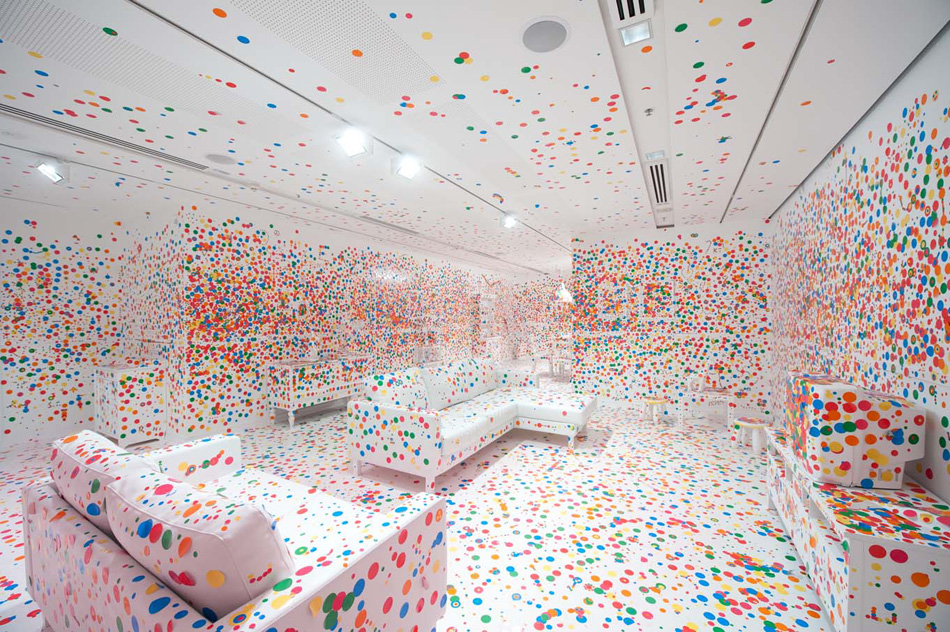
Industrial and Found Objects
- Repurposed everyday items as art materials
- Challenged traditional notions of artistic media
- Examples include Richard Serra's use of industrial materials like steel and lead
- Tony Cragg's sculptures made from found plastic objects
Post-Minimalism's Influence on Contemporary Art
Impact on Sculptural and Installation Practices
- Emphasis on process and materiality influenced contemporary sculpture
- Shaped development of installation and performance art
- Encouraged experimentation with new media and technologies
- Influenced evolution of land art, eco-art, and public art interventions
- Examples include Olafur Eliasson's immersive installations
- Ai Weiwei's large-scale sculptural works using unconventional materials
Conceptual and Theoretical Influences
- Exploration of body and its traces influenced feminist art practices
- Contributed to development of body art and performance (Carolee Schneemann, Marina Abramović)
- Challenge to autonomy of art object led to rise of relational aesthetics
- Inspired participatory art forms in contemporary practice (Rirkrit Tiravanija's interactive installations)
- Embrace of imperfection and chance influenced contemporary approaches to abstraction
- Shaped process-based art practices (Julie Mehretu's layered abstract paintings)
Interdisciplinary Approaches
- Expansion of artistic boundaries paved way for interdisciplinary art forms
- Encouraged hybrid practices characteristic of contemporary art
- Influenced development of new media art and digital installations
- Examples include Doug Aitken's multi-media installations
- Janet Cardiff and George Bures Miller's immersive sound works
See Fiveable more often in Google
Mark Fiveable as a preferred source and Google is more likely to show you our guides in Top Stories, with a "preferred" badge in AI Mode and AI Overviews.