generate your own visual cheatsheets
📊 AP Statistics Cheatsheets
Download the one-page AP Statistics cheatsheet PDF or browse AI-generated visual study aids with key formulas, concepts, and definitions for your exam review.
Text cheatsheets made by Fiveable, in print-ready PDF.

Compiled by students and teachers, then reviewed and updated every year.
1 page · PDF · updated every year
Same format, one unit at a time, aligned to the 2026-2027 course.


Printable PDF · from the Fiveable shop
7 pages · Subject + 5 unit cheatsheets · PDF
AI-generated one-pagers for a single topic. Make your own, or browse what other students have made.
choose a topic in AP Statistics
add custom requests (optional)

Unit 1 - Unit 1 Overview: Exploring One-Variable Data and Collecting Data

Unit 1 - 1.1 Introducing Statistics: What Can We Learn from Data?

Unit 1 - 1.1 Introducing Statistics: What Can We Learn from Data?

Unit 1 - 1.1 Introducing Statistics: What Can We Learn from Data?

Unit 1 - 1.2 Variables

Unit 1 - 1.2 Variables

Unit 1 - 1.3 Tabular Representation and Summary Statistics for One Categorical Variable

Unit 1 - 1.6 Descriptions for One Quantitative Variable Distributions

Unit 1 - 1.7 Summary Statistics for One Quantitative Variable

Unit 1 - 1.10 The Investigative Question Revisited and Data Collection

Unit 1 - 1.10 The Investigative Question Revisited and Data Collection

Unit 1 - 1.11 Random Sampling

Unit 1 - 1.12 Potential Problems with Sampling

Unit 1 - 1.13 Experimental Design

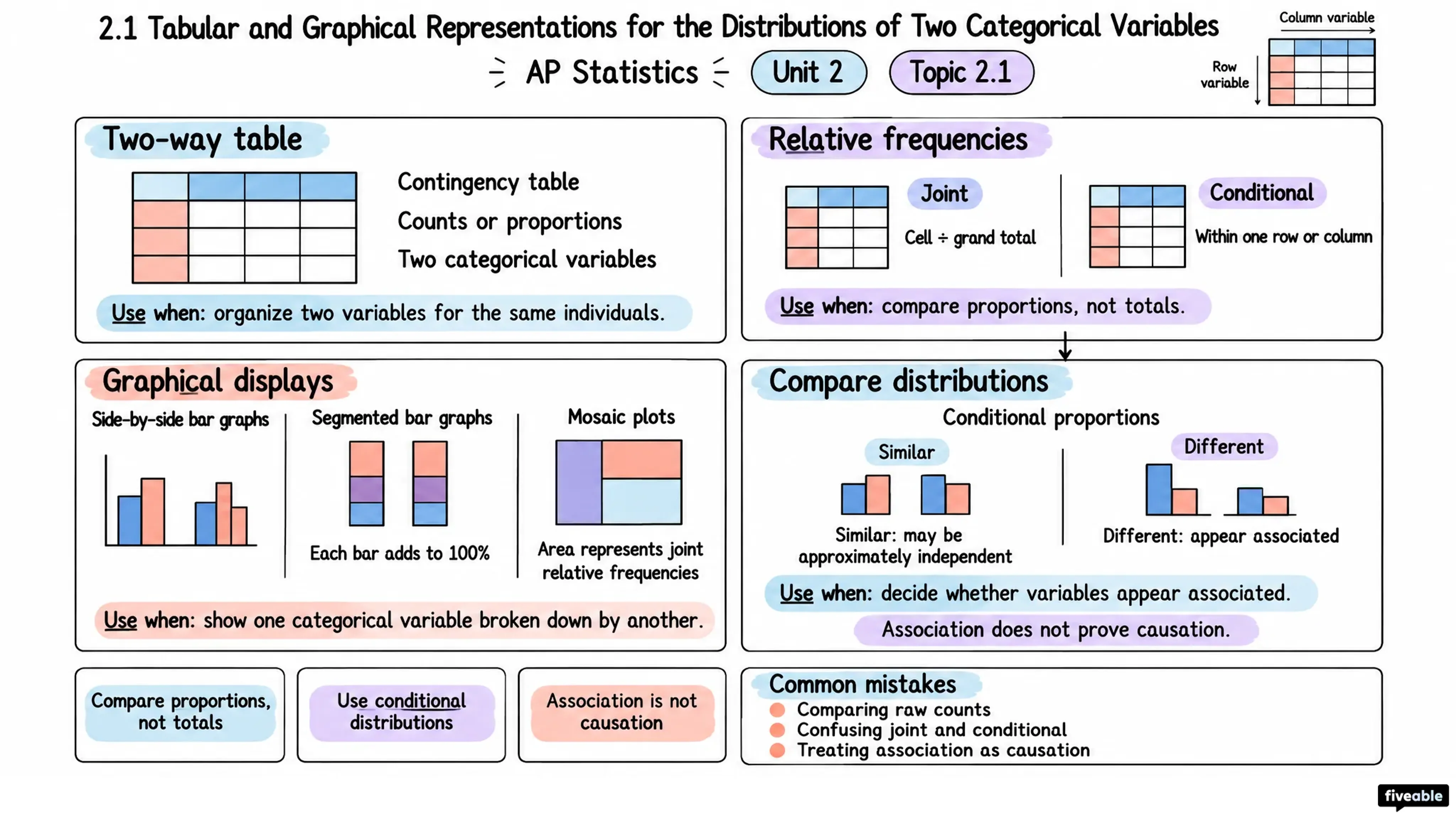
Unit 2 - 2.1 Tabular and Graphical Representations for the Distributions of Two Categorical Variables

Unit 3 - 3.1 Introducing Statistics: Do the Data We Collected Tell the Truth?

Unit 3 - 3.2 Introduction to Planning a Study

Unit 3 - 3.6 Selecting an Experimental Design

Unit 3 - 3.7 Inference and Experiments

Unit 4 - 4.1 Introducing Statistics: Random and Non-Random Patterns?

Unit 4 - 4.2 Estimating Probabilities Using Simulation

Unit 4 - 4.3 Introduction to Probability

Unit 4 - 4.4 Mutually Exclusive Events

Unit 4 - 4.5 Conditional Probability

Unit 4 - 4.6 Independent Events and Unions of Events

Unit 4 - 4.7 Introduction to Random Variables and Probability Distributions

Unit 4 - 4.8 Mean and Standard Deviation of Random Variables

Unit 4 - 4.9 Combining Random Variables

Unit 4 - 4.10 Introduction to the Binomial Distribution

Unit 4 - 4.11 Parameters for a Binomial Distribution

Unit 4 - 4.12 The Geometric Distribution

Unit 5 - 5.1 Introducing Statistics: Why Is My Sample Not Like Yours?

Unit 5 - 5.2 The Normal Distribution, Revisited

Unit 5 - 5.3 The Central Limit Theorem

Unit 5 - 5.4 Biased and Unbiased Point Estimates

Unit 5 - 5.5 Sampling Distributions for Sample Proportions

Unit 5 - 5.6 Sampling Distributions for Differences in Sample Proportions

Unit 5 - 5.7 Sampling Distributions for Sample Means

Unit 5 - 5.8 Sampling Distributions for Differences in Sample Means

Unit 6 - 6.1 Introducing Statistics: Why Be Normal?

Unit 6 - 6.2 Constructing a Confidence Interval for a Population Proportion

Unit 6 - 6.3 Justifying a Claim Based on a Confidence Interval for a Population Proportion

Unit 6 - 6.4 Setting Up a Test for a Population Proportion

Unit 6 - 6.5 Interpreting p-Values

Unit 6 - 6.6 Concluding a Test for a Population Proportion

Unit 6 - 6.7 Potential Errors When Performing Tests

Unit 6 - 6.8 Confidence Intervals for the Difference of Two Proportions

Unit 6 - 6.9 Justifying a Claim Based on a Confidence Interval for a Difference of Population Proportions

Unit 6 - 6.10 Setting Up a Test for the Difference of Two Population Proportions

Unit 6 - 6.11 Carrying Out a Test for the Difference of Two Population Proportions

Unit 7 - 7.1 Introducing Statistics: Should I Worry About Error?

Unit 7 - 7.2 Constructing a Confidence Interval for a Population Mean

Unit 7 - 7.3 Justifying a Claim About a Population Mean Based on a Confidence Interval

Unit 7 - 7.4 Setting Up a Test for a Population Mean

Unit 7 - 7.5 Carrying Out a Test for a Population Mean

Unit 7 - 7.6 Confidence Intervals for the Difference of Two Means

Unit 7 - 7.7 Justifying a Claim About the Difference of Two Means Based on a Confidence Interval

Unit 7 - 7.8 Setting Up a Test for the Difference of Two Population Means

Unit 7 - 7.9 Carrying Out a Test for the Difference of Two Population Means

Unit 7 - 7.10 Skills Focus: Selecting, Implementing, and Communicating Inference Procedures

Unit 8 - 8.1 Introducing Statistics: Are My Results Unexpected?

Unit 8 - 8.2 Setting Up a Chi Square Goodness of Fit Test

Unit 8 - 8.3 Carrying Out a Chi Square Goodness of Fit Test

Unit 8 - 8.4 Expected Counts in Two Way Tables

Unit 8 - 8.5 Setting Up a Chi-Square Test for Homogeneity or Independence

Unit 8 - 8.6 Carrying Out a Chi-Square Test for Homogeneity or Independence

Unit 8 - 8.7 Skills Focus: Selecting an Appropriate Inference Procedure for Categorical Data

Unit 9 - 9.1 Introducing Statistics: Do Those Points Align?

Unit 9 - 9.2 Confidence Intervals for the Slope of a Regression Model

Unit 9 - 9.3 Justifying a Claim About the Slope of a Regression Model Based on a Confidence Interval

Unit 9 - 9.4 Setting Up a Test for the Slope of a Regression Model

Unit 9 - 9.5 Carrying Out a Test for the Slope of a Regression Model

Unit 9 - 9.6 Skills Focus: Selecting an Appropriate Inference Procedure

AP Statistics Exam - Free-Response Questions (FRQ)

AP Statistics Exam - Multiple-Choice Questions (MCQ)

AP Statistics Exam - Question 4 – Multi-Focus FRQ
A cheatsheet condenses a whole course into the facts you actually need on exam day. The AP Statistics cheatsheets on this page summarize the key formulas, concepts, and definitions from each unit so you can review the entire course at a glance.
They work best as a final review: skim the one-page summary, spot the units you want to strengthen, then go deeper with the AP Statistics study guides. The visual cheatsheets in the gallery are organized by unit, and you can generate your own for any topic you want a quick refresher on.