AP Microeconomics Unit 2 Cheatsheet: Supply and Demand

AP Microeconomics Unit 2 Cheatsheet: Supply and Demand

Start with the first 3 sections of the Unit 2 one-page cheatsheet below. The full sheet is a PDF you can print.

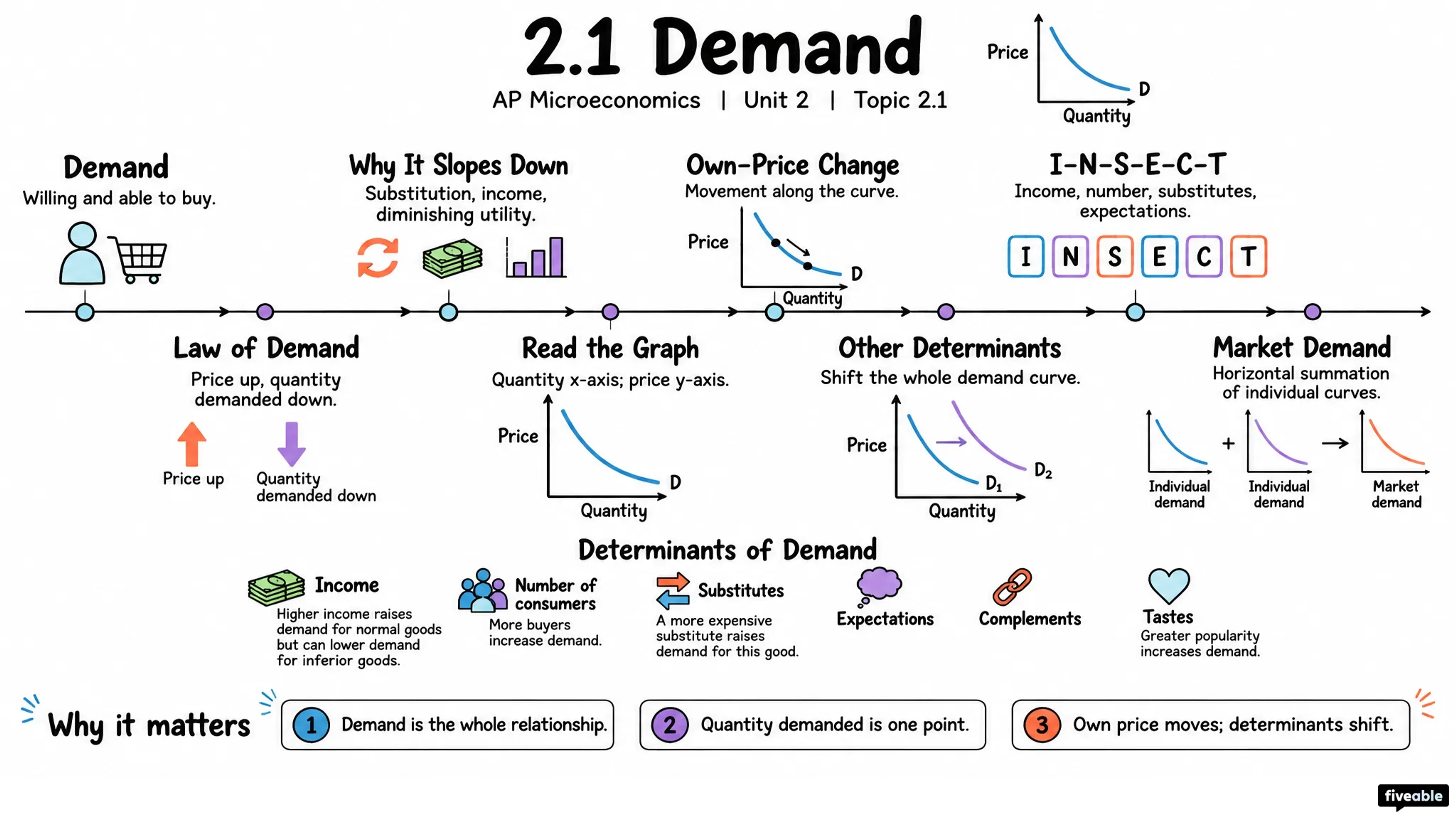
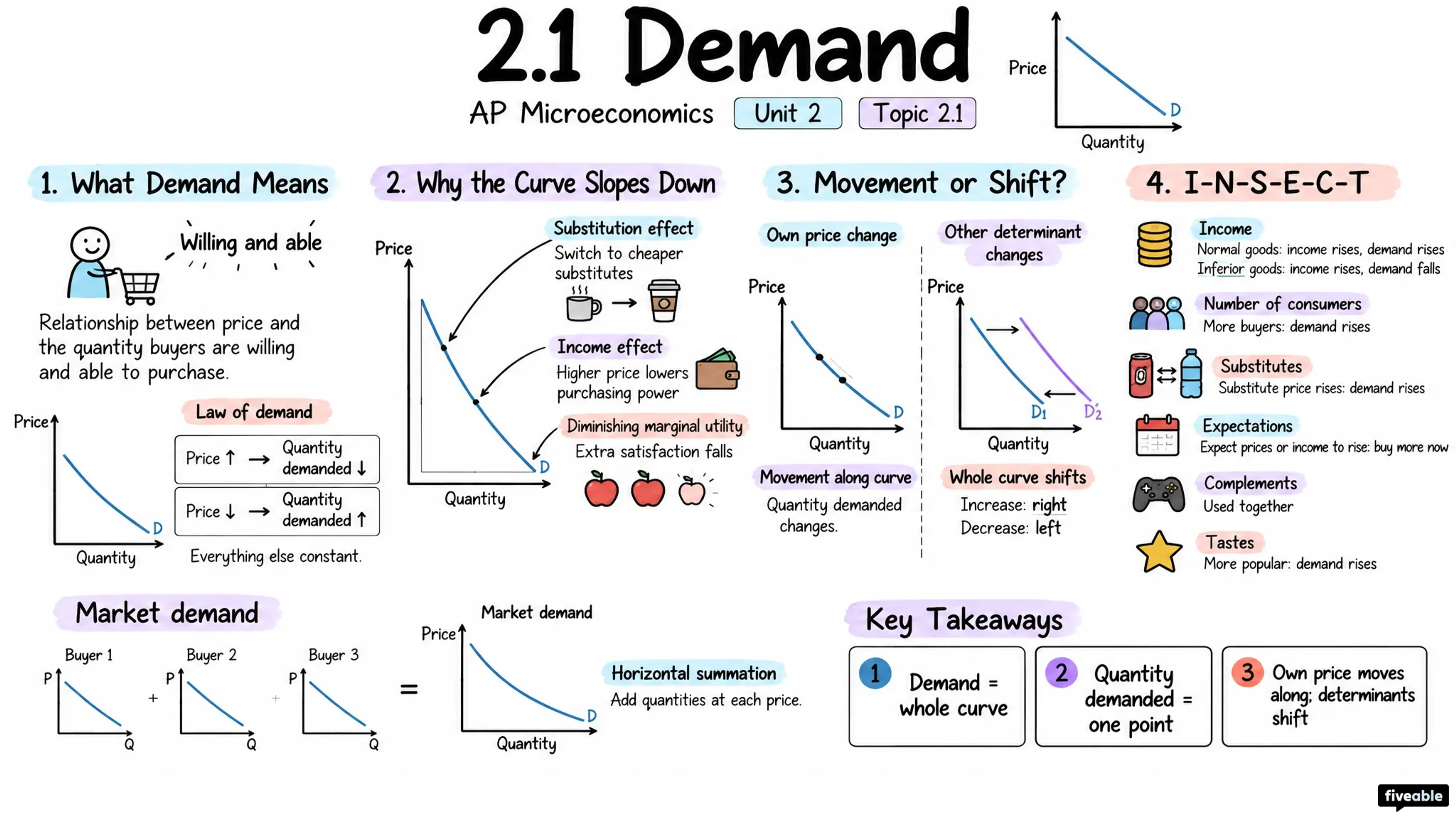
Law of Demand & Movements vs. Shifts

Law of Demand: Price ↑ → Quantity Demanded ↓ (inverse relationship)

Movement along curve: Own-price change only

Demand curve shift: Change in determinants (income, preferences, prices of related goods, number of buyers, expectations)

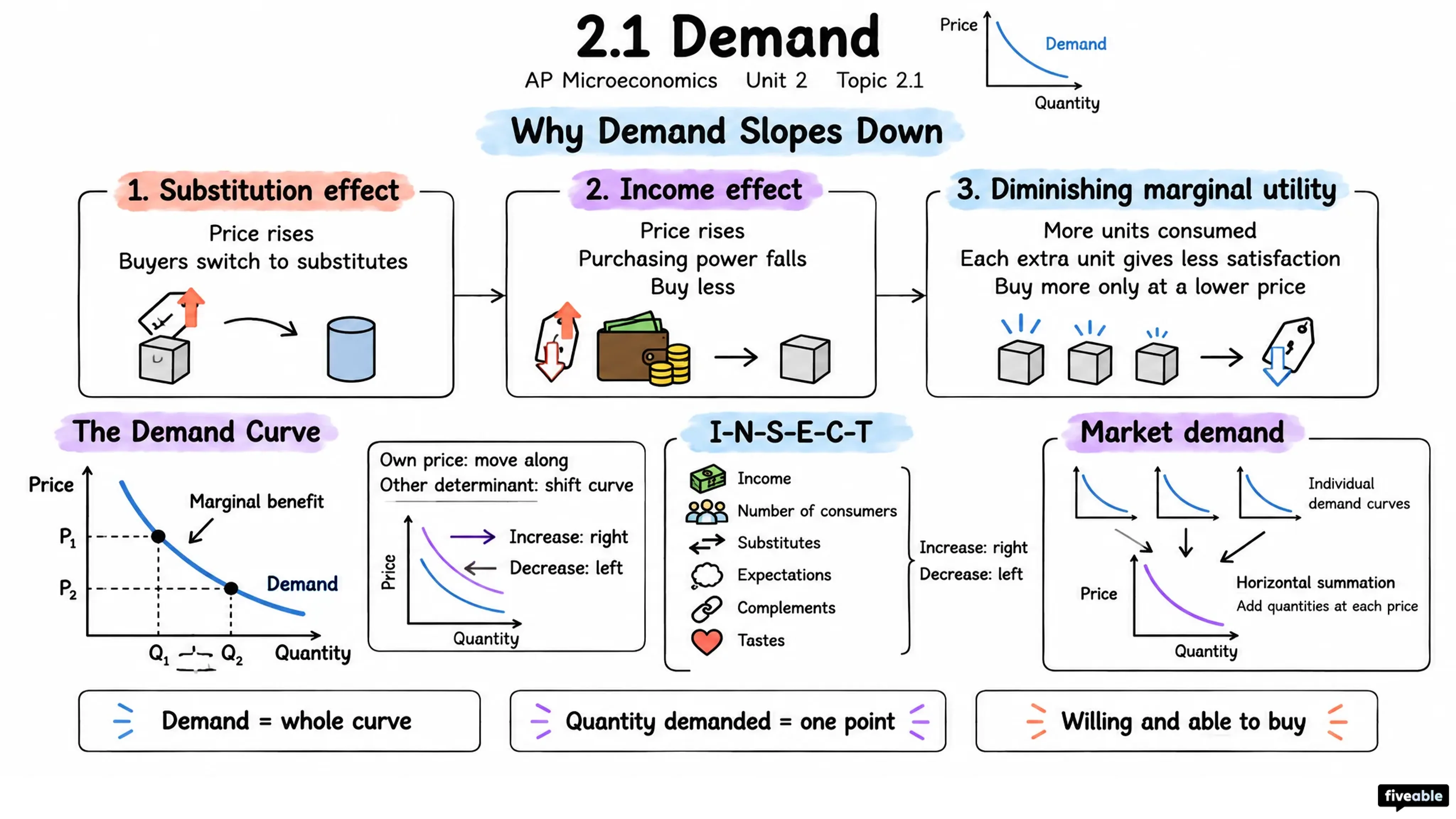
Why downward slope?

  • Substitution effect: higher price → buy cheaper alternatives
  • Income effect: higher price → less purchasing power
  • Diminishing marginal utility: each unit worth less

Market demand: Sum of all individual demand curves at each price
Disequilibrium, Shortage & Surplus

Shortage: Qty Demanded > Qty Supplied (price below equilibrium) → upward pressure on price

Surplus: Qty Supplied > Qty Demanded (price above equilibrium) → downward pressure on price

Market forces: Drive price and quantity back toward equilibrium

Shifts in D or S: Change equilibrium price and quantity; impact on consumer/producer surplus and total surplus depends on elasticities

Taxes, Subsidies & International Trade

Taxes: Shift supply or demand; reduce quantity traded; create deadweight loss; incidence (burden on buyers vs. sellers) depends on elasticity

Subsidies: Shift supply or demand; increase quantity; reduce price; create deadweight loss; affect government costs

Autarky: No international trade; domestic equilibrium price may differ from world price

Trade opening: Equilibrium price moves toward world price; affects consumer/producer surplus and total surplus

Tariff: Tax on imports → raises domestic price, reduces imports, generates government revenue, reduces total surplus

Quota: Limit on imports → raises domestic price, reduces imports, creates deadweight loss

The rest of the Unit 2 sheet

6 more sections are on the one-page PDF:

  • Law of Supply & Market Supply

  • Price Elasticity of Demand (PED)

  • Market Equilibrium & Surplus

  • Incentives & Constraints

  • Price Elasticity of Supply (PES) & Other Elasticities

  • Government Intervention: Price Controls & Quantity Regulation

Made by you

Visual Cheatsheets

Pick a Unit 2 topic and a format: flowchart, comparison chart, vocab sheet, Cornell notes and more. Ready in about a minute.

Printable PDF · from the Fiveable shop

AP Microeconomics Unit 2 Cheatsheet

1 page · Supply and Demand · PDF

Visual Cheatsheets

One topic, the format you pick, ready in about a minute

Format

Topic

Takes 30–60 seconds

Preview: Standard

Unit 2: Supply and Demand, topic by topic

Each topic has a full study guide. See the whole unit.