Made by Fiveable
Text-Based Cheatsheets
The whole AP English Language course on one page, plus one page per unit, reviewed every year. Made and checked by the Fiveable Content Team.
Download the text-based cheatsheet we write and review every year, or make a visual cheatsheet for any topic in the format you study best with.
What each unit's one-page cheatsheet covers. Open a unit to read the start of its sheet.
Unit 1: Rhetorical Situation and Claims
The Rhetorical Situation: Six Components · Claims: What Makes One Effective? · Evidence: Types and Selection · Embedding Evidence: Syntax and Integration · Building an Effective Paragraph · Audience Analysis: Beliefs, Values, Needs
Unit 2: Audience and Thesis Development
Rhetorical Situation & Audience Analysis · Appeals & Persuasion · Building & Analyzing Arguments · Thesis: Definition & Identification · Thesis & Line of Reasoning · Test-Taking Decisions · Evidence: Strategic Selection & Sufficiency · Audience Understanding in Arguments · Qualifying Claims
Unit 3: Evidence and Line of Reasoning
Evidence + Commentary = Logical Connection · Methods of Development: Organizing Your Reasoning · Commentary: The Bridge Between Evidence and Claim · Spotting Flawed Lines of Reasoning · Narration: Experience + Reflection · Cause-Effect: Tracing Consequences · Synthesis: Integrating Others' Ideas · Sufficient Evidence: Quantity + Quality · Attribution & Citation: Intellectual Honesty
Unit 5: Organization and Style
Paragraph Structure: Claims, Evidence, Commentary · Coherence Across Levels · Word Choice and Perspective · Modifiers: Denotation vs. Connotation · Organization Creates Unity and Coherence · Test-Taking Strategy: Analyzing Arguments · Transitional Elements: Types and Functions · Coherence Devices: Repetition, Synonyms, Pronouns, Parallel Structure · Line of Reasoning: Claim → Evidence → Commentary → Thesis
Position vs. Perspective: Know the Difference · Bias and Source Credibility · Strategic Synthesis: Selecting and Combining Sources · Tone: Definition and Detection · Tone Shifts and What They Signal · Adjusting Arguments to New Evidence · Word Choice and Connotation · Syntax and Style · Comparisons and Figurative Language
Unit 7: Qualification and Complexity
Complexity vs. Oversimplification · Sentence Structure: Coordination & Subordination · Grammar & Mechanics in Service of Argument · Modifiers: Words, Phrases, Clauses · Introductions: Purpose & Techniques · Conclusions: Purpose & Techniques · Counterargument & Alternative Perspectives · Punctuation as Argument Tool · Arrangement & Emphasis in Sentences
Unit 9: Advanced Argumentation
Concede, Rebut, Refute: Core Definitions · Transitions for Counterarguments · Common Patterns in Arguments · Entering the Conversation · Counterarguments & Alternative Perspectives · When to Use Each Strategy · Qualifying Claims with Modifiers · Stylistic Choices & Credibility · Test-Taking Strategy
Made by Fiveable
The whole AP English Language course on one page, plus one page per unit, reviewed every year. Made and checked by the Fiveable Content Team.
Made by you
Pick any topic and a format: flowchart, comparison chart, vocab sheet, Cornell notes and more. Ready in about a minute.
Made by Fiveable, one page per unit, aligned to the 2026-2027 course

Printable PDF · from the Fiveable shop
11 pages · Subject + 9 unit cheatsheets · PDF
One topic, the format you pick, ready in about a minute
Format
Topic
Takes 30–60 seconds
Preview: Standard
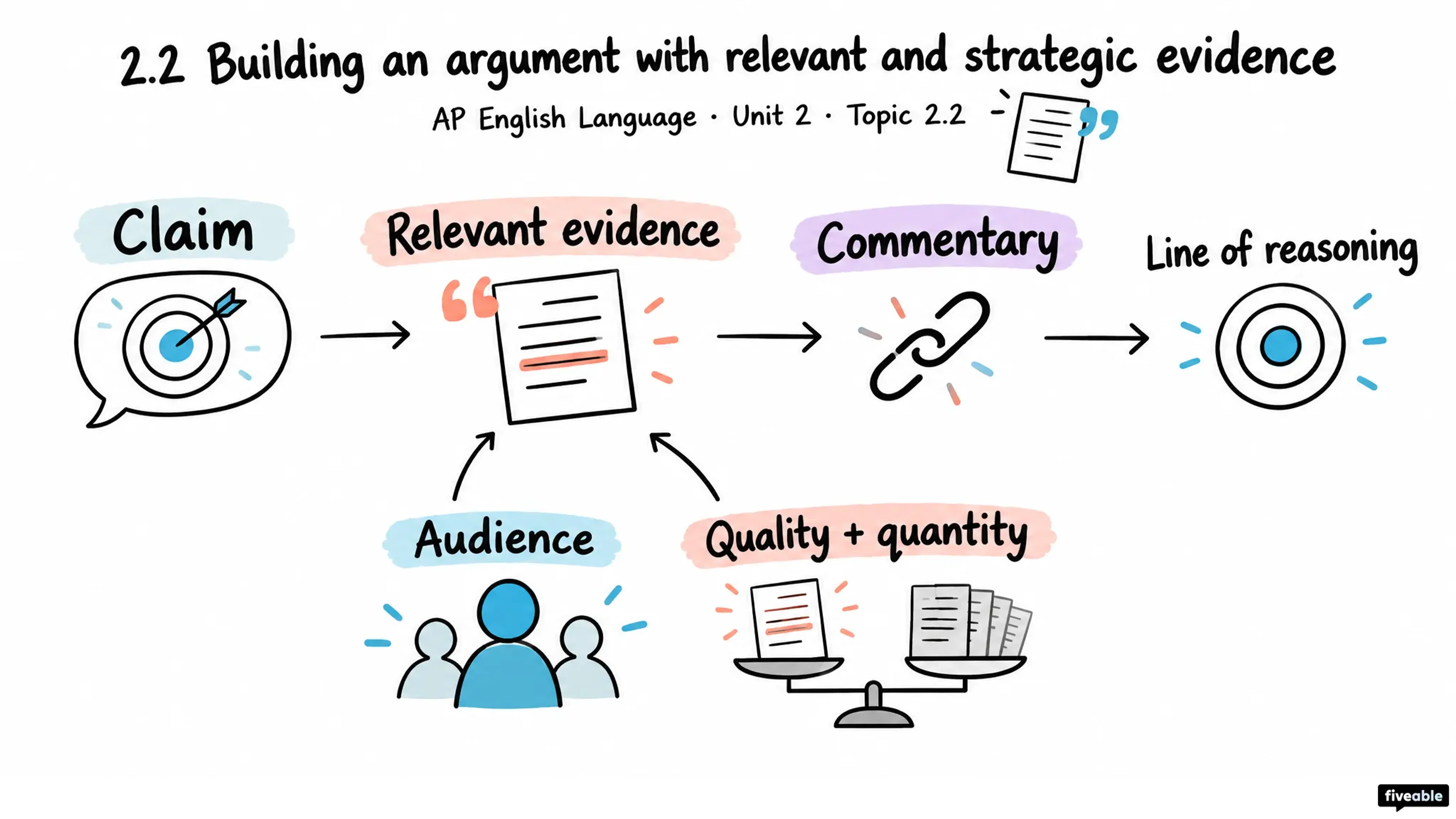
2.2 Building an argument with relevant and strategic evidence
Quick glance
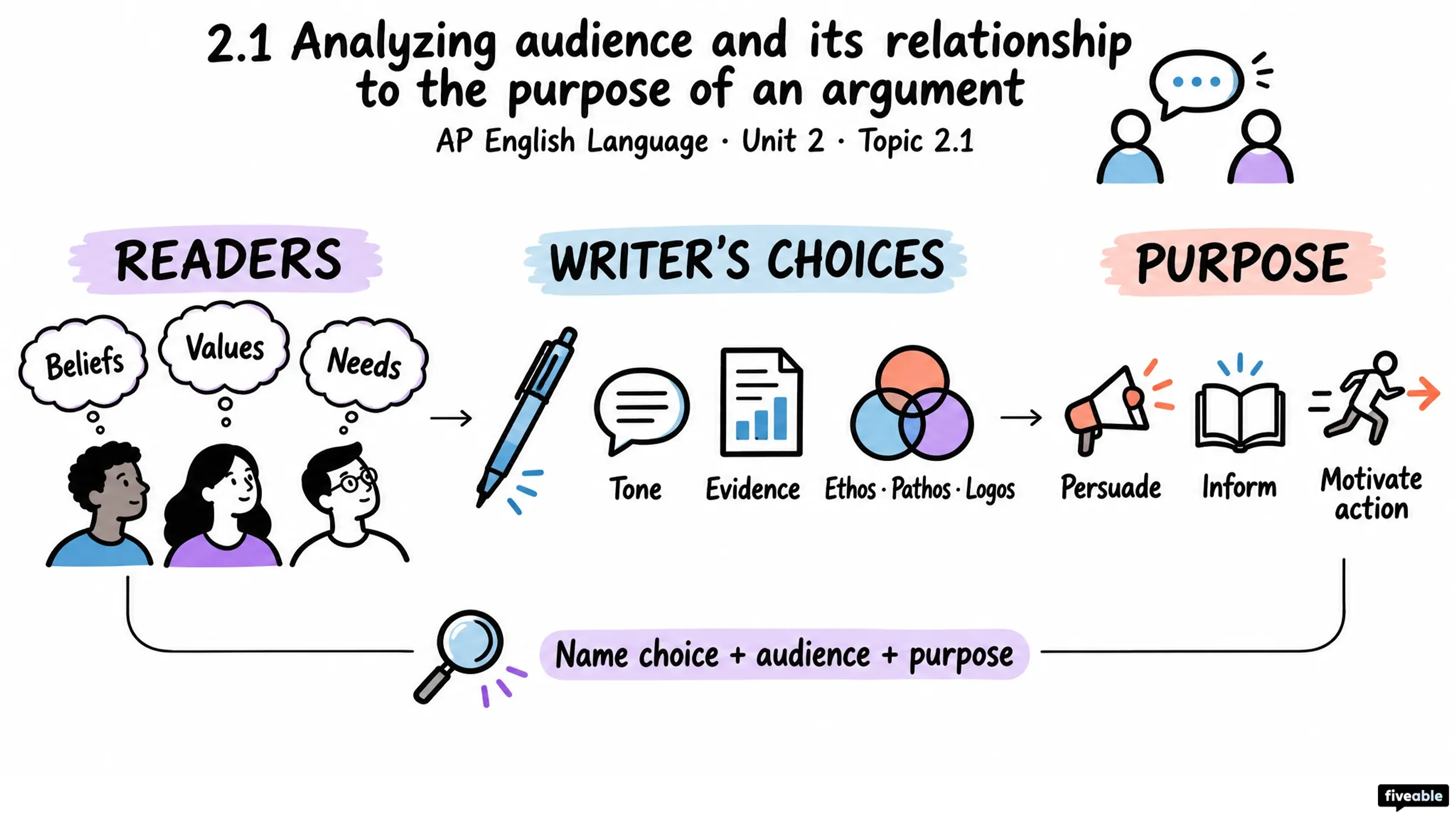
2.1 Analyzing audience and its relationship to the purpose of an argument
Quick glance
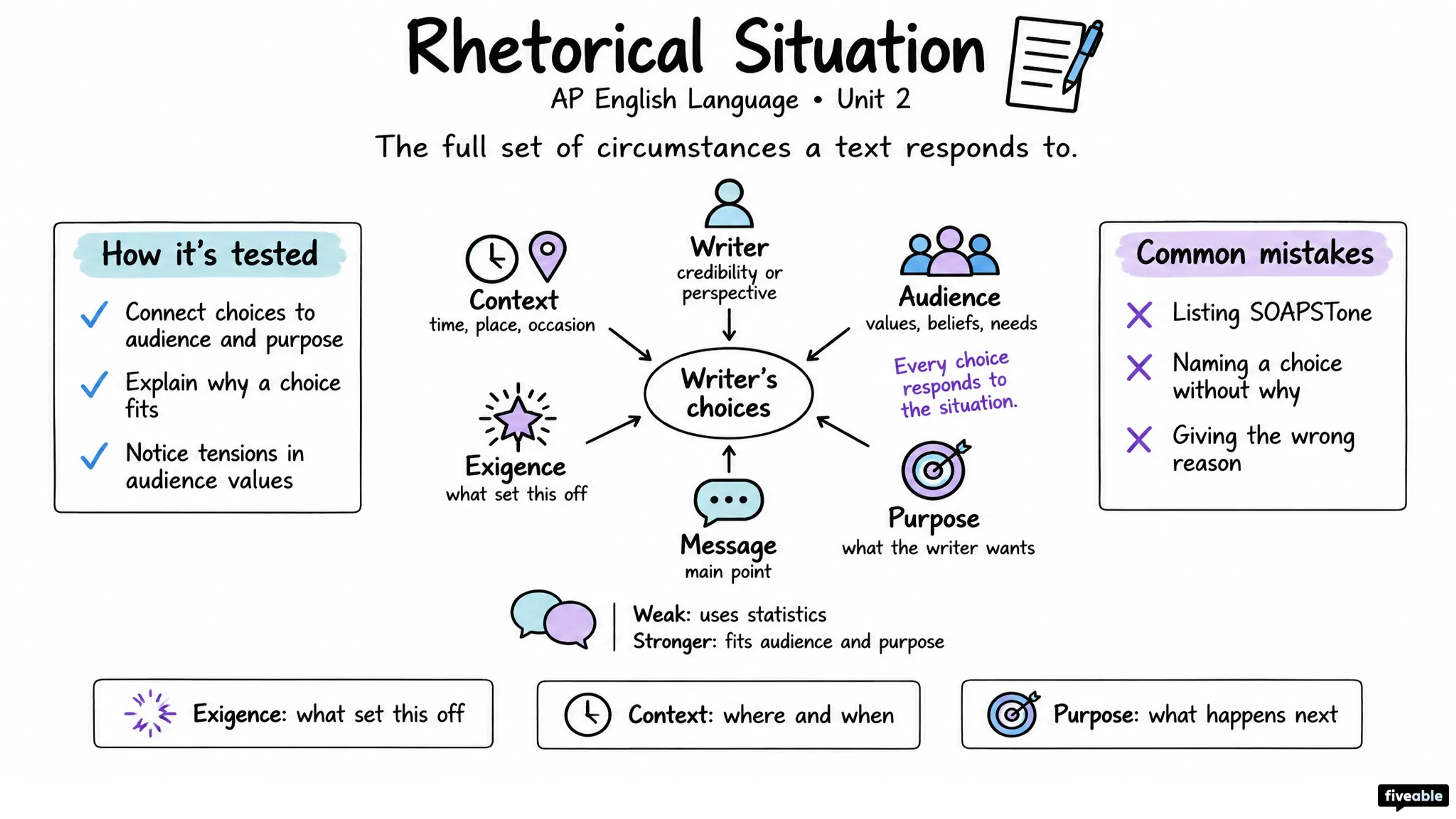
Rhetorical Situation
Key term explainer
A cheatsheet condenses a whole course into the facts you actually need on exam day. The AP English Language cheatsheets on this page summarize the key formulas, concepts, and definitions from each unit so you can review the entire course at a glance.
They work best as a final review: skim the one-page summary, spot the units you want to strengthen, then go deeper with the AP English Language study guides. The visual cheatsheets in the gallery are organized by unit, and you can generate your own for any topic you want a quick refresher on.