AP exam review verified for 2027

AP Euro Thematic Guides Review

AP European History is organized around seven official themes that connect events across all nine units and roughly 600 years of history. Learning to argue through these themes is the skill that separates strong DBQ and LEQ responses from ones that just list facts.

Use these guides to trace each theme period by period, build vocabulary, and practice framing arguments for the exam.

What are the AP Euro thematic guides?

AP European History is not just a chronological survey. The College Board structures the course around seven recurring themes that show up in every unit and on every section of the exam. A theme is a lens: it tells you what kind of change or continuity to look for in any given event, document, or era.

The seven themes are INT (Interaction of Europe and the World), ECD (Economic and Commercial Developments), CID (Cultural and Intellectual Developments), SOP (States and Other Institutions of Power), SCD (Social Organization and Development), NEI (National and European Identity), and TSI (Technological and Scientific Innovation). SCD is the only theme that runs through all nine units.

Why themes matter on the exam

DBQ and LEQ rubrics reward a historically defensible thesis that makes a claim about change, continuity, causation, or comparison. Themes give you the framework to build that claim. A prompt about the French Revolution is also a prompt about SOP (state power), SCD (social hierarchy), and ECD (economic crisis). Recognizing all three lets you write a more sophisticated argument.
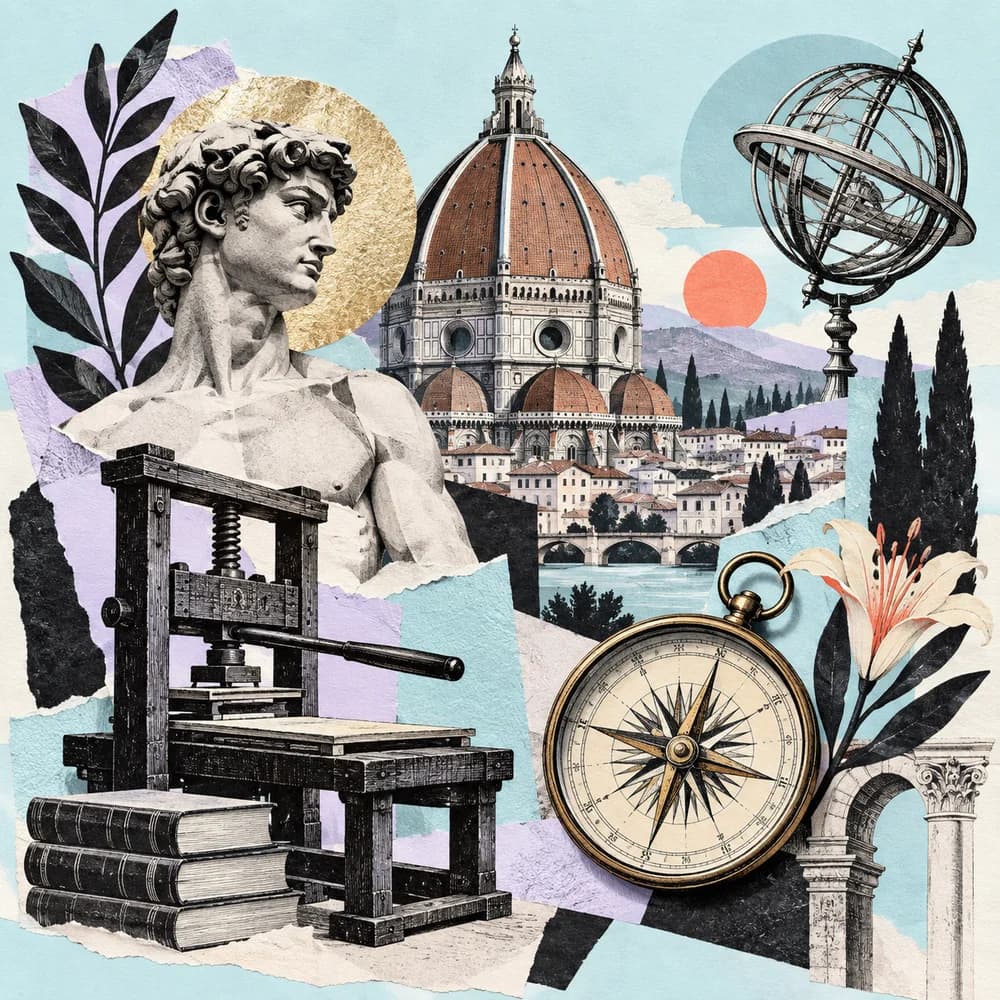
How themes connect across units

Each theme has a through-line. ECD runs from the Commercial Revolution and joint-stock companies in Unit 1 through industrial capitalism in Units 5 and 6 to the EU's single market in Unit 9. CID runs from Renaissance humanism through the Scientific Revolution, Enlightenment, Romanticism, and modernism. Knowing the arc of each theme means you can place any event in a larger story.

Using themes to organize evidence

When you read a DBQ document or brainstorm LEQ evidence, ask which theme the content belongs to. A document about factory conditions is SCD and ECD. A document about Bismarck's wars is SOP and NEI. Sorting evidence by theme before you write helps you group body paragraphs and avoid a list-of-facts structure.

The single most useful habit

Every time you encounter an event, policy, or figure in AP Euro, ask: which theme does this belong to, and is it an example of change or continuity within that theme? That two-part question is the engine behind every strong thesis on the exam.

Thematic study guides

1

Interaction of Europe and the World

Covers the Columbian Exchange, Atlantic slave trade, New Imperialism, and decolonization. Most heavily tested in Units 1, 4, 7, and 9. Key for DBQ prompts involving trade, colonialism, or global exchange.

open guide
2

Economic and Commercial Developments

Traces capitalism from the Commercial Revolution through industrialization to the EU. Appears in eight of nine units. Essential for any prompt about trade, labor, living standards, or economic ideology.

open guide
3

Cultural and Intellectual Developments

Tracks new worldviews from Renaissance humanism through modernism. Appears in eight of nine units. Central to prompts about the Reformation, Scientific Revolution, Enlightenment, and 20th-century ideology.

open guide
4

States and Other Institutions of Power

Traces state formation from new monarchies through absolutism, nationalism, fascism, and the EU. Appears in eight of nine units. Dominant theme in prompts about political authority, war, and diplomacy.

open guide
5

Social Organization and Development

The only theme in all nine units. Covers class, gender, family, and marginalized groups. Any prompt mentioning women, peasants, workers, or minorities connects here. Highly useful for building DBQ complexity.

open guide
6

National and European Identity

Traces identity from Christendom through nationalism, fascism, and EU integration. Formally spotlighted in Units 2, 5, 7, 8, and 9. Key for prompts about unification, imperialism, and 20th-century political movements.

open guide
7

Technological and Scientific Innovation

Tracks science and technology from the printing press to the Internet. The College Board emphasizes intended and unintended consequences. Most heavily tested in Units 1, 2, 5, 6, 7, and 9.

open guide

Thematic guides review notes

Theme INT

Interaction of Europe and the World

INT tracks how Europe's contact with other continents reshaped politics, economies, societies, and cultures on both sides of every exchange. It is most heavily tested in Units 1, 4, 7, and 9, covering the Columbian Exchange, Atlantic slave trade, imperialism, and decolonization.

  • Columbian Exchange: The transfer of plants, animals, diseases, and people between the Americas and Europe after 1492, with transformative effects on both hemispheres.
  • Atlantic slave trade: The forced migration of millions of Africans to the Americas, central to European commercial expansion and deeply connected to ECD and SCD.
  • New Imperialism: The late 19th-century wave of European territorial expansion into Africa and Asia, driven by industrial capitalism, nationalism, and Social Darwinism.
  • Decolonization: The post-World War II process by which European empires dissolved, reshaping European identity and global power structures.
Can you trace one specific exchange (biological, economic, or cultural) from the 15th century to the 20th century and explain how it changed both Europe and the region it contacted?
PeriodKey INT Event or ProcessDirection of Impact
1450-1648Columbian Exchange, Spanish EmpireEurope reshapes Americas; Americas reshape European diet and economy
1648-1815Atlantic slave trade, plantation systemAfrica depopulated; European wealth concentrated
1815-1914New Imperialism, Berlin ConferenceEurope partitions Africa and Asia
1914-presentWorld Wars, decolonizationEuropean empires collapse; global order restructured
Theme ECD

Economic and Commercial Developments

ECD traces the development of capitalism from the Commercial Revolution through industrialization to the 20th-century contest between capitalism and communism. It appears in eight of nine units and is almost always present in DBQ prompts about trade, labor, or living standards.

  • Commercial Revolution: The expansion of European trade and banking from the 15th to 17th centuries, including joint-stock companies, mercantilism, and the putting-out system.
  • Mercantilism: The economic doctrine that national wealth depends on accumulating bullion and maintaining a favorable balance of trade, dominant in Units 1-3.
  • Industrial Revolution: The shift from agrarian to factory-based production beginning in Britain in the late 18th century, central to Units 5 and 6.
  • Welfare state: Post-World War II government programs providing social insurance, healthcare, and unemployment benefits, representing a managed-capitalism response to the failures of the interwar economy.
Can you explain how the economic system of Europe changed between 1450 and 1900, naming at least three distinct stages and the forces that drove each transition?
StageApproximate PeriodDefining Feature
Commercial capitalism1450-1750Long-distance trade, joint-stock companies, mercantilism
Agricultural capitalism1700-1800Enclosure movement, proto-industrialization, putting-out system
Industrial capitalism1780-1914Factory system, urbanization, class conflict
Managed capitalism vs. communism1917-1991Soviet command economy vs. Western mixed economies
Theme CID

Cultural and Intellectual Developments

CID tracks how new worldviews collided with traditional authority from Renaissance humanism through modernism. It appears in eight of nine units and is the dominant theme in prompts about the Reformation, Scientific Revolution, Enlightenment, and 20th-century art and ideology.

  • Humanism: The Renaissance intellectual movement that centered human potential and classical Greco-Roman texts, challenging medieval scholasticism.
  • Scientific Revolution: The 16th-17th century transformation in European understanding of the natural world, replacing Aristotelian and Ptolemaic models with empirical observation and mathematics.
  • Enlightenment: The 18th-century intellectual movement applying reason and natural law to politics, religion, and society, producing critiques of absolutism and the Church.
  • Romanticism: The early 19th-century reaction against Enlightenment rationalism, emphasizing emotion, nature, nationalism, and the individual, often connected to NEI.
Can you identify one specific way each major intellectual movement (humanism, Scientific Revolution, Enlightenment, Romanticism) challenged an existing source of authority?
MovementPeriodAuthority Challenged
Humanism1400s-1500sMedieval Church and scholasticism
Protestant Reformation1517-1648Papal authority and Catholic doctrine
Scientific Revolution1543-1687Aristotle, Galen, and Church cosmology
Enlightenment1680s-1789Absolute monarchy and revealed religion
Romanticism1800-1850Enlightenment rationalism and industrialization
Theme SOP

States and Other Institutions of Power

SOP traces how European states built, consolidated, and lost power from the new monarchies of the 15th century through the EU. It is the dominant theme in prompts about absolutism, the French Revolution, nationalism, fascism, and Cold War politics.

  • New monarchies: 15th-16th century rulers such as Ferdinand and Isabella and Henry VII who centralized power by reducing noble and Church authority.
  • Absolutism: The political system in which the monarch claimed supreme authority, exemplified by Louis XIV's France and theorized by Bossuet and Hobbes.
  • Balance of power: The diplomatic principle that no single state should handle Europe, institutionalized at Westphalia (1648) and the Congress of Vienna (1815).
  • Totalitarianism: The 20th-century system in which the state seeks total control over public and private life, exemplified by Stalinist USSR, Nazi Germany, and Fascist Italy.
Can you trace the shift in the primary source of political legitimacy in Europe from 1450 to 1945, identifying at least three distinct bases of authority?
EraDominant State FormBasis of Legitimacy
1450-1648New monarchies, dynastic statesDivine right, dynastic inheritance
1648-1815Absolute monarchiesDivine right, Hobbesian social contract
1815-1914Nation-states, constitutional monarchiesPopular sovereignty, nationalism
1914-1945Democracies, fascist states, communist statesMass politics, ideology, race
Theme SCD

Social Organization and Development

SCD is the only theme that runs through all nine units. It covers how economic, political, and cultural forces shaped family structure, social class, gender roles, and the status of marginalized groups. Any prompt mentioning women, peasants, workers, or minorities is an SCD prompt.

  • Estate system: The pre-revolutionary social hierarchy dividing European society into clergy (First Estate), nobility (Second Estate), and commoners (Third Estate).
  • Proletariat: The industrial working class created by the factory system, whose conditions and political mobilization are central to Units 5, 6, and 7.
  • Separate spheres ideology: The 19th-century bourgeois doctrine assigning women to the domestic private sphere and men to the public sphere of work and politics.
  • Welfare state: Post-World War II social programs that redistributed income and provided a safety net, fundamentally altering the relationship between citizens and the state.
Can you identify one specific way the position of women in European society changed between 1450 and 1950, and explain what drove that change?
GroupEarly Modern Status (1450-1750)Modern Status (1850-1950)
WomenSubordinate in household, limited legal rightsEntered workforce, suffrage movements, still legally restricted
Peasants/rural poorMajority of population, bound by feudal obligationsUrbanized as industrial workers, organized in labor movements
Jewish EuropeansConfined to ghettos, restricted occupationsEmancipated in 19th century, then targeted by antisemitic nationalism
BourgeoisieEmerging merchant classDominant social and political class by 1850
Theme NEI

National and European Identity

NEI traces how definitions of regional, cultural, national, and European identity developed and were contested from 1450 to the present. It is formally spotlighted in Units 2, 5, 7, 8, and 9, but identity questions surface in every unit. The key insight is that national identity is constructed, not natural.

  • Christendom: The pre-Reformation concept of a unified European Christian community under papal authority, which fragmented after 1517.
  • Nationalism: The belief that people sharing a common language, culture, or ethnicity should form a sovereign state, the dominant political force of the 19th century.
  • Pan-nationalism: Movements seeking to unite people across existing state borders on the basis of shared ethnicity or culture, including Pan-Slavism and Pan-Germanism.
  • European integration: The post-World War II project of building supranational institutions (ECSC, EEC, EU) to prevent war and promote economic cooperation, creating a new layer of European identity.
Can you explain how the Peace of Westphalia (1648) changed the basis of political identity in Europe, and connect that change to 19th-century nationalism?
PeriodDominant Identity FrameworkKey Challenge or Disruption
1450-1517Christendom, dynastic loyaltyRenaissance vernacular culture, printing press
1517-1648Religious identity (Catholic vs. Protestant)Wars of Religion, Westphalian sovereignty
1789-1848Revolutionary nationalism, liberal nationalismCongress of Vienna conservatism
1848-1914Ethnic nationalism, imperialismMinority rights, Pan-nationalism
1945-presentNation-state plus European identityEU integration, immigration, Brexit
Theme TSI

Technological and Scientific Innovation

TSI tracks how science and technology reshaped European life from the printing press to the Internet. The College Board emphasizes intended and unintended consequences, which is the key analytical frame for every TSI argument. It appears most heavily in Units 1, 2, 5, 6, 7, and 9.

  • Printing press: Gutenberg's movable-type press (c. 1450) that enabled mass production of texts, accelerating the Reformation, Scientific Revolution, and spread of Enlightenment ideas.
  • Steam engine: The coal-powered engine perfected by James Watt in the 1760s-1780s that drove industrialization, urbanization, and the transformation of transportation.
  • Germ theory: Pasteur's and Koch's 19th-century discovery that microorganisms cause disease, enabling public health reforms that dramatically reduced mortality.
  • Nuclear technology: Fission-based weapons and power generation developed in the mid-20th century, reshaping Cold War strategy, environmental policy, and the meaning of total war.
For any major technology in AP Euro, can you identify one intended consequence and one unintended consequence, and connect both to at least one other theme?
InnovationPeriodIntended EffectUnintended Consequence
Printing press1450sReproduce texts efficientlySpread of Protestant Reformation, popular literacy
Steam engine1760s-1780sPump water from minesIndustrial Revolution, urbanization, class conflict
Railroads1820s-1850sMove goods fasterUnified national markets, mass mobilization of armies
Machine gun1880s-1914Military advantage in colonial warsStalemate and mass death in World War I

Common mistakes

Treating themes as separate silos

Students often write a DBQ or LEQ that addresses only one theme when the prompt rewards complexity from multiple themes. The Reformation is CID, but it is also SOP (princes vs. pope), NEI (religious identity), and ECD (Church wealth). Always ask which other themes are present.

Confusing SCD with NEI

Social organization (SCD) is about class, gender, and family structure. National and European identity (NEI) is about how people define collective belonging. Antisemitism in 19th-century Europe is NEI (exclusion from national identity) and SCD (social marginalization), but they are not the same argument.

Using TSI as a list of inventions instead of an argument

Naming the steam engine, railroads, and electricity is not a TSI argument. The argument is about how those innovations changed European society, who benefited, who was harmed, and what consequences were unintended. Always push past the invention to its effects.

Forgetting that ECD includes ideology, not just economics

ECD covers mercantilism, laissez-faire liberalism, Marxism, and Keynesianism as economic ideas, not just trade data and factory output. When a prompt asks about responses to industrialization or the Great Depression, the ideological debate is part of the ECD argument.

Treating national identity as natural or inevitable

NEI requires you to analyze how national identity was constructed through literature, education, war, and state policy. Saying 'Germans naturally wanted unification' misses the point. Bismarck, Romantic nationalism, and the Wars of Unification were deliberate processes of identity construction.

How this theme shows up on the AP exam

How themes appear in DBQ prompts

Every DBQ prompt is anchored in one or two themes, and the documents are selected to represent multiple perspectives within that theme. Before you read the documents, identify the theme or themes in the prompt. A prompt about 'responses to industrialization' is primarily ECD and SCD. Knowing that tells you to look for evidence about class, labor, and economic ideology across the documents, and to use documents that represent different social groups as your complexity argument.

How themes structure LEQ arguments

The LEQ asks you to make an argument about change, continuity, causation, or comparison across a time period. Themes give you the analytical category for that argument. If the prompt asks about political change from 1648 to 1815, your argument is about SOP. Your body paragraphs should each address a different mechanism of change within that theme, such as absolutism, the French Revolution, and Napoleonic reforms, rather than just narrating events chronologically.

How themes appear in SAQ and MCQ stimulus questions

SAQ and MCQ stimulus questions often present a document, image, map, or graph and ask you to explain its historical significance. Identifying the theme the stimulus belongs to helps you frame your explanation. A graph showing urbanization rates connects to ECD (industrial capitalism) and SCD (working-class formation). A political cartoon about Bismarck connects to SOP and NEI. Naming the theme in your SAQ response and connecting it to a broader historical development earns full credit for contextualization.

Review checklist

  • Know all seven theme abbreviations and their full namesYou should be able to write INT, ECD, CID, SOP, SCD, NEI, and TSI and explain each in one sentence. Exam prompts do not always name the theme, so you need to recognize which theme a prompt is invoking from its content.
  • Trace each theme across at least three time periodsFor each theme, practice writing a one-paragraph arc that covers early modern (1450-1648), modern (1648-1914), and contemporary (1914-present) examples. This is the backbone of a strong LEQ argument.
  • Identify which themes overlap in major eventsThe French Revolution connects SOP (state power), SCD (social hierarchy), ECD (economic crisis), and NEI (national identity). The Industrial Revolution connects ECD, SCD, TSI, and SOP. Practice mapping two or three themes onto each major event.
  • Practice the intended and unintended consequences frame for TSIEvery TSI prompt rewards analysis of consequences beyond the obvious. For the printing press, steam engine, railroads, and nuclear technology, write out one intended and one unintended consequence before the exam.
  • Use SCD as your complexity layerBecause SCD runs through all nine units, it is the easiest theme to add as a second or third analytical lens in a DBQ or LEQ. If your argument is primarily about SOP or ECD, ask how the change affected social groups differently to add complexity.
  • Review the seven topic guides available on FiveableEach of the seven theme topic guides covers the full unit-by-unit arc, key vocabulary, and DBQ and LEQ strategy for that theme. Work through the guides for the themes most likely to appear on your exam based on your practice.
  • Connect NEI to both CID and SOPNational identity is almost never just about identity. Nationalism connects to CID (Romantic literature and art), SOP (state-building and war), and ECD (economic nationalism and tariffs). Practice writing NEI arguments that bring in at least one other theme.

How to study thematic guides

Start with the two themes you find hardestMost students find NEI and TSI harder to apply than SOP or ECD because they require more analytical framing. Read the topic guides for those two themes first, focusing on the period-by-period examples and the DBQ strategy sections.
Build a theme-event matrixDraw a grid with the seven themes as columns and the nine units as rows. For each cell, write one specific example. This forces you to find evidence for every theme in every period and reveals gaps in your knowledge before the exam.
Practice writing one-sentence theme argumentsFor each theme, write a sentence in the form: 'From [period] to [period], [theme] changed from [X] to [Y] because of [cause].' This is the skeleton of a thesis. Do this for all seven themes before you write any full practice essays.
Use the AP score calculator to set a targetFiveable has a score calculator for AP Euro. Use it to understand how many points you need on the FRQ section to hit your target score, then prioritize the themes most likely to appear in DBQ and LEQ prompts based on your practice.
Review one theme topic guide per study sessionEach of the seven topic guides covers one theme's full arc with unit-by-unit examples and exam strategy. Spreading them across seven sessions gives you complete thematic coverage without overloading any single review day.

More ways to review

Topic study guides

Open the individual guides for Thematic Guides when you want a closer review of one topic.

browse guides

FRQ practice

Practice free-response reasoning and compare your answer with scoring guidance.

practice FRQs

Cheatsheets

Use unit cheatsheets for a quick visual review after you work through the notes.

open cheatsheets

Score calculator

Estimate your broader AP score goal after you review the course and exam format.

open calculator

Frequently Asked Questions

What are the seven themes in AP European History?

AP European History has seven official themes: INT (Interaction of Europe and the World), ECD (Economic and Commercial Developments), CID (Cultural and Intellectual Developments), SOP (States and Other Institutions of Power), SCD (Social Organization and Development), NEI (National and European Identity), and TSI (Technological and Scientific Innovation). Each theme runs across multiple units and appears on the exam.

Which AP Euro theme appears in all nine units?

Theme 5, SCD (Social Organization and Development), is the only AP Euro theme that runs through all nine units. It covers family structure, social class, gender roles, and the status of marginalized groups. Because it spans the entire course, SCD is one of the most useful threads for building DBQ and LEQ arguments.

How do AP Euro themes connect to the DBQ and LEQ?

DBQ and LEQ prompts are almost always framed around one or more course themes. Recognizing the theme in a prompt tells you which historical patterns, vocabulary, and examples to reach for. For instance, a prompt about industrialization likely draws on ECD and SCD, while a prompt about nationalism pulls from NEI and SOP. Studying themes gives your essays a built-in analytical structure.

What is the difference between AP Euro themes and units?

Units organize content chronologically, from the Renaissance in Unit 1 to Contemporary Europe in Unit 9. Themes cut across all those time periods and track one big idea, like economic change or state power, from 1450 to the present. Knowing both lets you answer period-specific multiple choice questions and write comparative or continuity-and-change essays with equal confidence.

Which AP Euro themes are most heavily tested on the exam?

SCD and CID each appear in eight of the nine units, making them the most widely spiraled themes and frequent anchors for free-response prompts. SOP is also heavily tested, appearing in eight units with a focus on state power and political institutions. ECD shows up consistently in stimulus-based multiple choice questions involving trade, capitalism, and economic policy.

Where can I find theme-by-theme review guides for AP Euro?

Fiveable has a dedicated guide for each of the seven AP Euro themes. Each guide includes a unit-by-unit breakdown of how the theme develops, key vocabulary, and DBQ and LEQ strategy. You can find them all at /ap-euro/thematic-guides, with individual pages for INT, ECD, CID, SOP, SCD, NEI, and TSI.

Ready to review Thematic Guides?Start with the notes, check the topic cards, and use the practice or resource links when they are available for this course.