AP exam review verified for 2027

AP Art History Unit 10 Review: Global Contemporary Art, 1980 CE to Present

Review AP Art History Unit 10 to understand how global contemporary art since 1980 challenges traditional definitions of art through new materials, digital technology, cross-cultural exchange, and critical theories. This unit covers works from artists across Africa, Asia, Oceania, the Americas, and Europe in a fully globalized art world.

Use the topic guides, key terms, and practice questions available for this unit to build your analysis and comparison skills before the exam.

What is AP Art History unit 10?

Global contemporary art since 1980 is defined by its refusal to stay within traditional boundaries. Artists use everything from porcelain seeds and flattened corned beef tins to video installations and computer-aided architecture to make arguments about identity, power, colonialism, and belonging.

Unit 10 asks you to explain how materials, purpose, cultural interaction, and critical theory shape art made from 1980 to the present. You need to connect specific works to the global forces that produced them and apply multiple interpretive frameworks to support open-ended claims about meaning.

Materials and technology redefine art

Contemporary artists use ephemeral digital works, video-captured performance, graffiti, found objects, recycled materials, and 3D fabrication. These choices challenge hierarchies of fine art training, materials, and presentation, and raise questions about how art is defined, preserved, and accessed across the digital divide.

Purpose ranges from memorials to iconic architecture

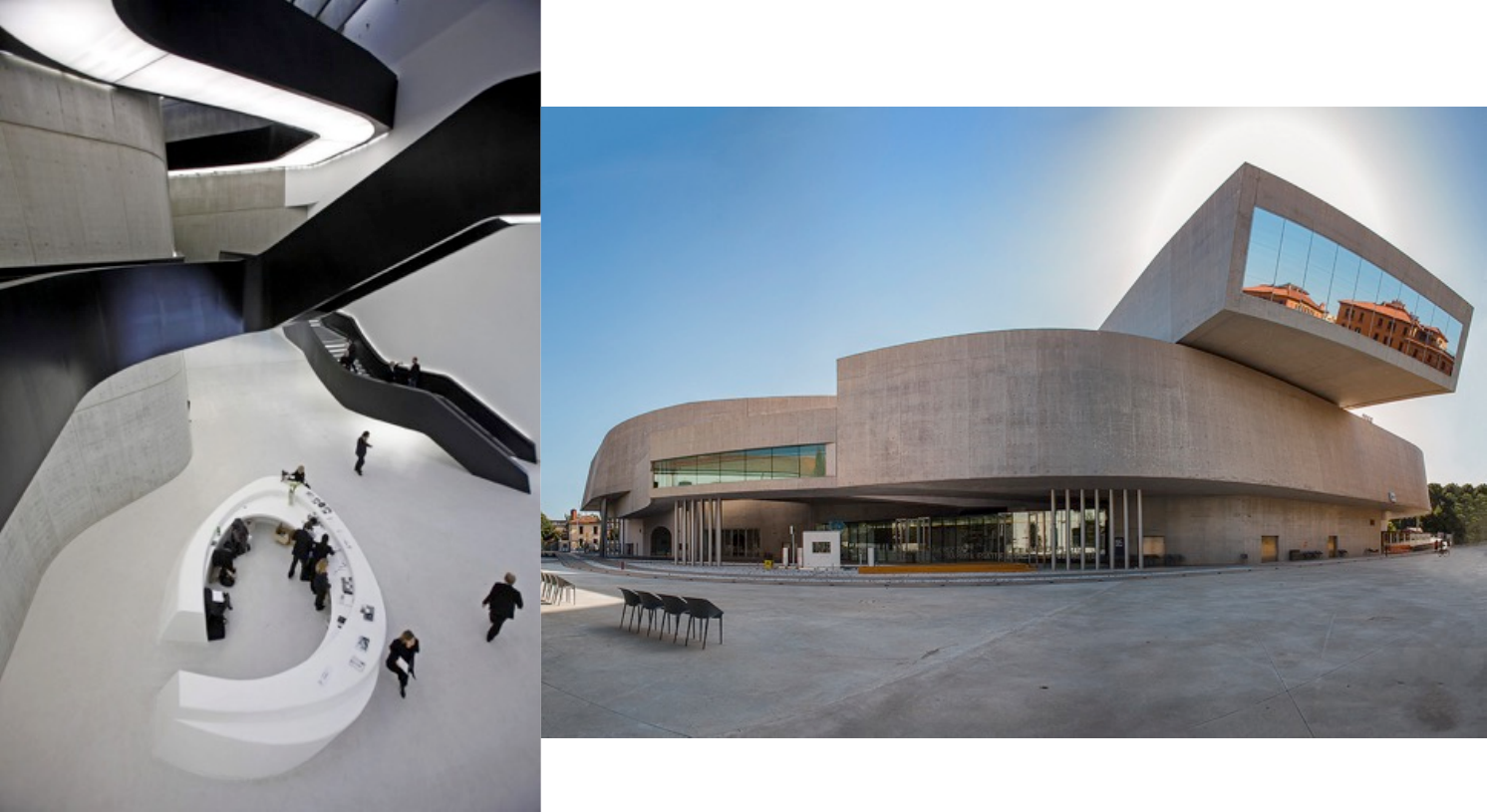
Works serve sociopolitical critique, existential investigation, community engagement, and city branding. Maya Lin's Vietnam Veterans Memorial and Zaha Hadid's MAXXI show how purpose shapes form. Biennials, art fairs, and online galleries have expanded where and how art is seen globally.

Cultural interaction drives content and form

Artists like Yinka Shonibare, El Anatsui, Jaune Quick-to-See Smith, and Michel Tuffery draw on postcolonial histories, diaspora identity, and cross-cultural material choices. Works respond to colonialism, globalization, and the decentering of European and American dominance in art history.

No single correct interpretation

Topic 10.4 establishes that contemporary works are intentionally open-ended. Feminist, postcolonial, deconstructionist, and queer theories each produce different but defensible readings of the same work. On the exam, your job is to make a supported claim, not find the one right answer.

AP Art History unit 10 topics

10.1

Materials, Processes, and Techniques in Global Contemporary Art

Covers how contemporary artists use digital tools, mixed media, performance, graffiti, found objects, and recycled materials to challenge traditional art hierarchies and raise questions about definition, value, and access.

open guide
10.2

Purpose and Audience in Global Contemporary Art

Examines how purpose shapes works from commemorative memorials to iconic architecture, and how biennials, art fairs, and online platforms have expanded global venues for presenting and evaluating art.

open guide
10.3

Interactions Within and Across Cultures in Global Contemporary Art

Analyzes how globalization, decolonization, diaspora identity, and postcolonial critique shape works by artists from Africa, Asia, Oceania, and First Nations communities in a newly inclusive global art world.

open guide
10.4

Theories and Interpretations of Global Contemporary Art

Establishes that contemporary art supports multiple defensible interpretations through feminist, postcolonial, deconstructionist, and queer theories, with visual analysis as the foundation for any art historical argument.

open guide
10.5

10.5 Unit 10 Required Works

Open this guide for a closer review of the topic.

open guide
practice snapshot

Hardest AP Art unit 10 topics

This snapshot uses Fiveable practice activity to show where students tend to miss questions and which review moves are worth prioritizing first.

72%average MCQ accuracy

Across 1.5k multiple-choice practice attempts for this unit.

1.5kMCQ attempts

Practice activity included in this snapshot.

68%average FRQ score

Across 29 scored free-response attempts for this unit.

Unit 10 review notes

10.1

Materials, Processes, and Techniques in Global Contemporary Art

Since 1980, artists have dismantled the hierarchy that placed oil painting and marble sculpture above other forms. Contemporary art now includes video, performance documentation, graffiti, net art, 3D-printed objects, LED installations, found and recycled materials, and textiles. Digital technology expands access to imagery and contextual information about artists worldwide, but also creates a digital divide between those with and without access. Ephemeral works like performances and net art raise preservation challenges that traditional conservation methods cannot fully address.

  • Digital divide: The gap between those with access to digital technology and those without, which affects both art creation and art access globally.
  • Ephemeral art: Works designed to be temporary or that exist only in documentation, such as performances and time-based media, challenging traditional ideas of permanence.
  • Mixed media: Works combining multiple materials, such as fabric, found objects, video, and installation elements, in a single artwork.
  • Appropriation: Reusing existing cultural objects or images to recontextualize or challenge their original meaning, common in contemporary practice.
  • Conceptual art: Art in which the idea or concept holds more significance than the physical form, often requiring text, documentation, or viewer participation to complete the work.
Can you explain how a specific material choice, such as Ai Weiwei's porcelain sunflower seeds or El Anatsui's bottle-cap assemblage, challenges traditional art hierarchies?
Material typeExample workChallenge to tradition
Porcelain (mass-produced look)Sunflower Seeds, Ai WeiweiQuestions individual vs. collective identity and industrial production
Flattened tin cansPisupo Lua Afe, Michel TufferyCritiques colonial food dependency using discarded consumer material
Dutch wax fabricThe Swing (after Fragonard), Yinka ShonibareExposes colonial trade history embedded in supposedly African textiles
Video installationThe Crossing, Bill ViolaChallenges painting's primacy; uses time and technology as medium
Saffron-colored fabricThe Gates, Christo and Jeanne-ClaudeTreats landscape and public space as temporary artistic medium
10.2

Purpose and Audience in Global Contemporary Art

Contemporary art serves a wide range of purposes: sociopolitical critique, existential investigation, commemoration, community engagement, and city branding. The Vietnam Veterans Memorial by Maya Lin uses polished black granite and the reflective inscription of names to create a participatory, grief-centered experience. Iconic architecture like Zaha Hadid's MAXXI uses computer-aided design to produce fluid, dynamic forms that function as city landmarks. Biennials such as the Venice Biennale, art fairs like Art Basel, and online galleries have multiplied the venues where contemporary art is presented and evaluated globally. Artists also use appropriation and cultural mash-ups to challenge or revalue culturally significant objects.

  • Vietnam Veterans Memorial: Maya Lin's 1982 black granite wall in Washington, D.C., engraved with over 58,000 names; its reflective surface implicates viewers in collective mourning.
  • Computer-aided design: Digital software used in architecture to generate innovative, non-rectilinear forms, enabling buildings like the MAXXI that would be impossible to draft by hand.
  • Biennials: Major international exhibitions held every two years, such as the Venice Biennale, that serve as primary venues for presenting and evaluating global contemporary art.
  • Shibboleth: Doris Salcedo's 2007 crack running through the Tate Modern's Turbine Hall floor, a site-specific work addressing racial division and colonial exclusion.
  • Patron: An institution, government, or individual who commissions or funds a work, shaping its subject, scale, and placement.
How does the purpose of the Vietnam Veterans Memorial differ from the purpose of the MAXXI, and how does each work's form reflect that purpose?
WorkArtistPrimary purposeKey formal strategy
Vietnam Veterans MemorialMaya LinCommemoration and collective mourningReflective granite surface; inscribed names at human scale
MAXXIZaha HadidCity branding and cultural institutionFluid, intersecting forms via computer-aided design
ShibbolethDoris SalcedoSociopolitical critique of racial exclusionSite-specific crack in museum floor disrupts viewer movement
The GatesChristo and Jeanne-ClaudeTemporary public experience of landscapeSaffron fabric panels installed across Central Park paths
10.3

Interactions Within and Across Cultures in Global Contemporary Art

The decentering of European and American dominance in art history is one of the defining shifts of the contemporary period. Artists from Africa, Asia, Oceania, and First Nations communities now receive equal or greater critical attention. This shift is driven by the waning of colonialism, independence movements, the collapse of Soviet communism, the rise of China, and the spread of the internet. Artists respond to these histories through material choices, subject matter, and formal strategies that reference both local traditions and global systems. Postcolonial and decolonial perspectives challenge whose stories get told and whose objects belong in which museums.

  • Eurocentrism: The historical privileging of European art and perspectives in surveys and institutions, now actively challenged by global contemporary practice and scholarship.
  • Globalization: The increasing interconnection of economies, cultures, and communication networks that shapes how contemporary art is made, distributed, and interpreted.
  • Dutch wax fabric: Textiles with West African associations that are actually products of colonial trade, used by Yinka Shonibare to expose the hybrid and constructed nature of cultural identity.
  • Appropriation: In a cross-cultural context, the reuse of colonial-era imagery or objects to critique or revalue their original meaning, as in Jaune Quick-to-See Smith's Trade.
  • Looted cultural objects: Artworks removed from their countries of origin during colonial periods, now central to repatriation debates and institutional critique.
Choose two works from different regions, such as El Anatsui's Old Man's Cloth and Michel Tuffery's Pisupo Lua Afe, and explain how each artist uses material to comment on colonial history.
ArtistWorkRegionCross-cultural strategy
Yinka ShonibareThe Swing (after Fragonard)British-NigerianReplaces Rococo figures with mannequins in Dutch wax fabric to expose colonial hybridity
El AnatsuiOld Man's ClothGhanaianAssembles liquor bottle caps into textile-like forms referencing trade and colonial alcohol exchange
Jaune Quick-to-See SmithTrade (Gifts for Trading Land with White People)Native AmericanCombines canoe with commercial objects to critique unequal land trade histories
Michel TufferyPisupo Lua AfeSamoan/New ZealandSculpts a bull from corned beef tins to critique Pacific colonial food dependency
Wangechi MutuPreying MantraKenyanCollages female figures from magazine imagery to critique colonial and gendered representations of African women
10.4

Theories and Interpreta­tions of Global Contemporary Art

Art historical interpretation is not fixed. The same work can be read through feminist theory, postcolonial theory, deconstructionist theory, queer theory, or formalism, and each produces a different but defensible argument. Contemporary works are often intentionally open-ended, meaning the artist does not provide a single correct reading. The required works for this topic, The Gates by Christo and Jeanne-Claude and The Crossing by Bill Viola, both invite multiple interpretations. Visual analysis remains the foundation, but scholarship, cultural context, and theoretical frameworks all shape how meaning is constructed and argued.

  • Feminist theory: A critical lens examining gender and power in art history, used to recover marginalized artists and critique exclusionary canons.
  • Postcolonial theory: A framework analyzing how colonial histories shape art production, reception, and institutional power, central to understanding Unit 10 works from Africa, Asia, and Oceania.
  • Deconstructionist theory: A critical approach that challenges fixed meanings and hierarchies in texts and culture, applied to art to reveal unstated assumptions.
  • Queer theory: A critical lens examining sexuality and gender identity in culture, used to critique exclusionary art historical narratives.
  • Conceptual art: Art where the idea drives meaning more than the object, requiring viewers and scholars to engage with context and intent rather than form alone.
Apply two different critical theories to The Crossing by Bill Viola. What does each theory emphasize, and how do the interpretations differ?
TheoryWhat it emphasizesExample application in Unit 10
Feminist theoryGender, power, and exclusion in art historyRecovering women artists; analyzing Wangechi Mutu's critique of gendered imagery
Postcolonial theoryColonial histories and their legacy in artReading El Anatsui's bottle-cap works as commentary on trade and exploitation
Deconstructionist theoryUnstable meanings and challenged hierarchiesQuestioning why graffiti or performance is excluded from fine art categories
Queer theorySexuality and identity in cultural productionExamining how contemporary artists challenge heteronormative representation
FormalismVisual elements: line, color, composition, formAnalyzing Bill Viola's use of water and fire imagery in The Crossing

Practice AP Art History unit 10 questions

Try stimulus-based AP practice questions and written prompts after you review the notes.

Example stimulus-based MCQs

open all practice
artwork

Stimulus-based practice question

artwork

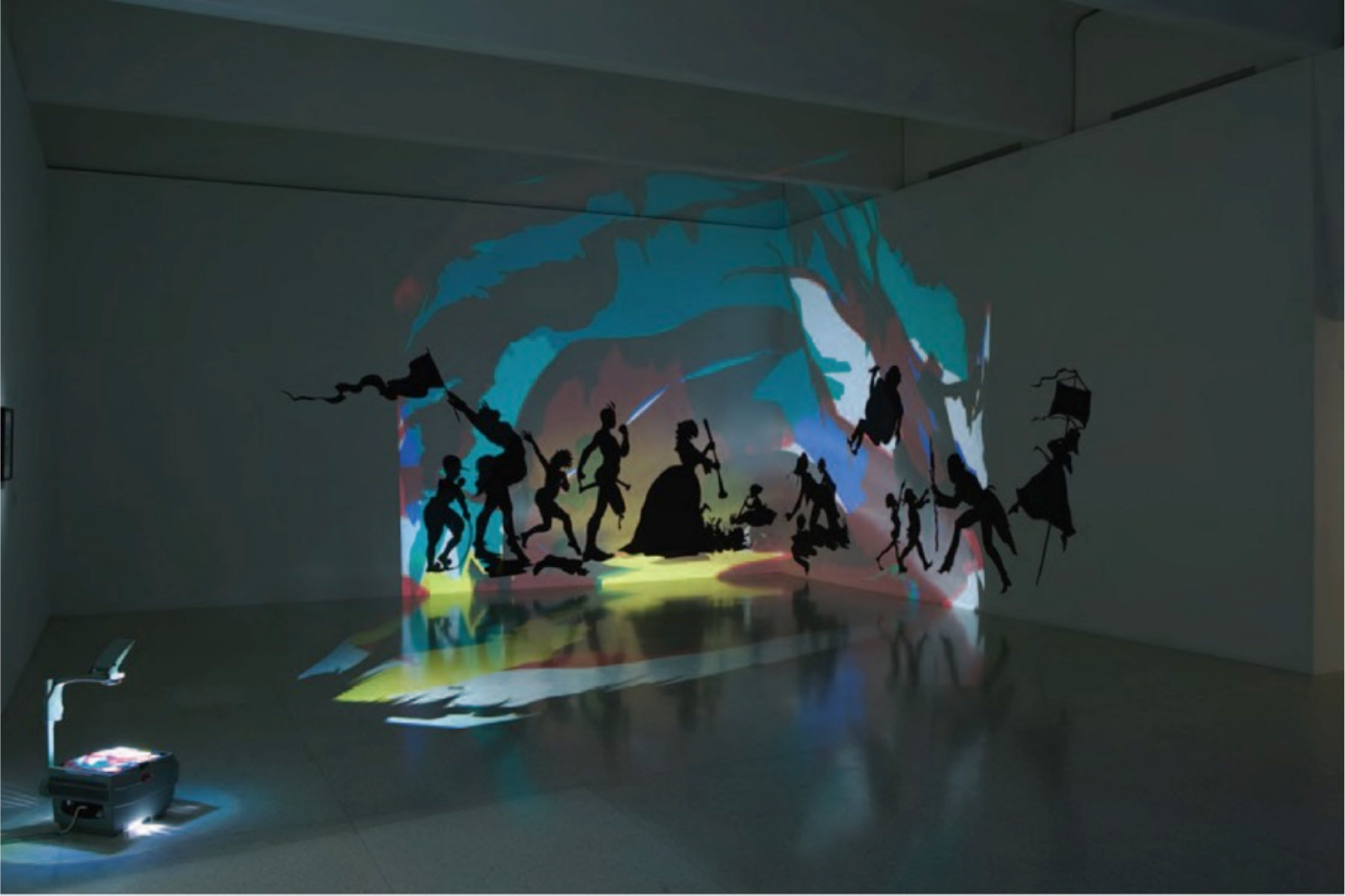
Image: Darkytown Rebellion

Question

The artist's decision to use colorful light projections in the work shown serves to

create a dreamlike atmosphere that contrasts with violent imagery

replicate the luminous appearance of traditional stained-glass windows

provide realistic modeling and depth to the flat silhouettes

highlight the specific historical identities of the depicted figures

architecture_site

Stimulus-based practice question

architecture_site

Image: MAXXI National Museum of XXI Century Arts

Question

The exterior of the work shown is characterized by its use of

asymmetrical cantilevered volumes

standardized modular grids

symmetrical stepped terraces

exposed structural trusses

Example FRQs

open all FRQs
FRQ

Female nude representation, tradition and subversion

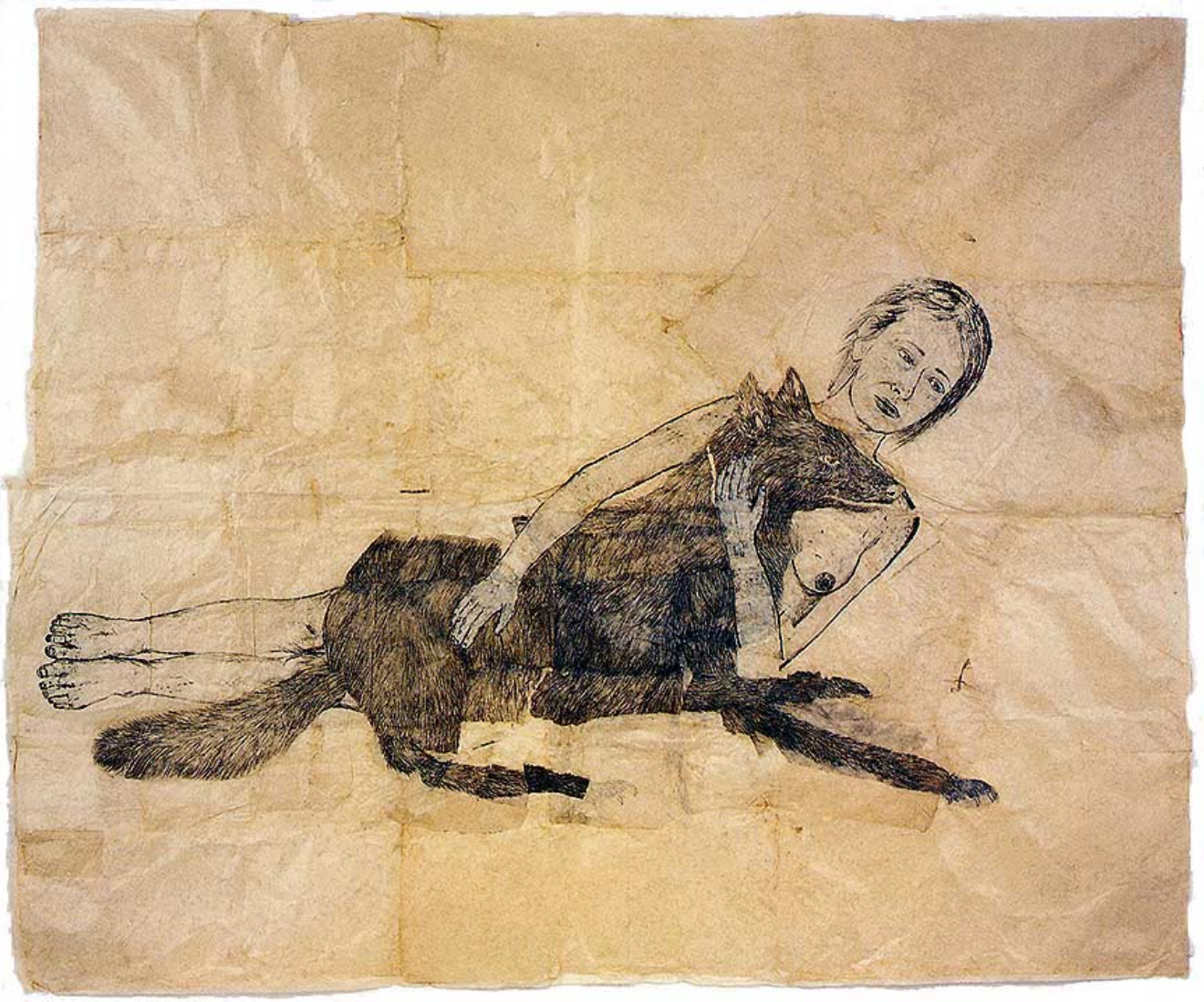
Lying with the Wolf

Lying with the Wolf. Kiki Smith. 2001 ce. Ink and pencil on paper

6. In your response you should do the following:

Describe two visual characteristics of Lying with the Wolf.

Using specific visual or contextual evidence, explain how the work shown demonstrates continuity with traditional Western depictions of the female nude.

Using specific visual or contextual evidence, explain how the work shown demonstrates change from traditional Western depictions of the female nude.

Using specific contextual evidence, explain why Kiki Smith chose to depart from traditional Western depictions of the female nude.

FRQ

Contemporary global architecture and cultural identity

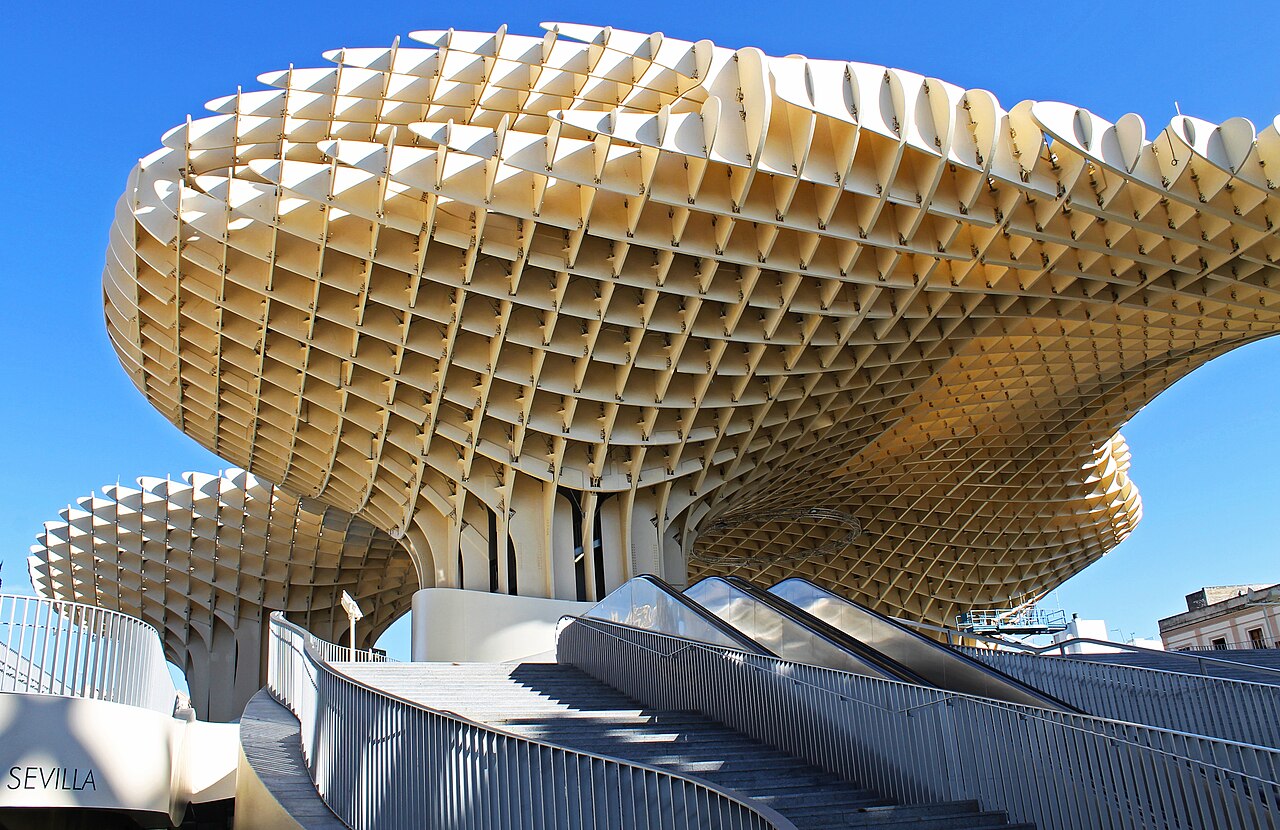
Image of Metropol Parasol, opened 2011, Wikimedia Commons / Setas de Sevilla, selected as an AP Art History beyond-set contemporary_global_architecture_museum candidate

5. The work shown is not part of the required image set.

Correctly attribute the work shown to the specific culture, style, or artistic tradition in which it was created.

Using two examples of specific visual evidence, justify the attribution by describing relevant similarities between the work shown and another work of the same type created by the same culture, style, or tradition.

Using two examples of specific visual and/or contextual evidence, explain how the work shown may have reinforced values or beliefs of the culture, style, or tradition in which it was created.

FRQ

Kara Walker's silhouette art addressing slavery and racism

Darkytown Rebellion

Darkytown Rebellion. Kara Walker. 2001 ce. Cut paper and projection on wall

4. The image shows Darkytown Rebellion, created by Kara Walker in 2001 CE.

Describe at least one visual characteristic of the work shown.

Describe the historical context addressed by the work shown.

Using two examples of specific visual and/or contextual evidence, explain how the materials or design of the work shown demonstrate the artist's response to this historical context.

Using specific visual or contextual evidence, explain why scholars have interpreted the work as a critique of the viewer's own biases or complicity in historical narratives.

Key terms

TermDefinition
GlobalizationThe increasing interconnection of economies, cultures, and communication networks since 1980 that shapes how contemporary art is made, distributed, and interpreted across borders.
appropriationAn artistic strategy in which artists reuse existing cultural objects, images, or symbols to recontextualize or challenge their original meaning, common in works by Shonibare and Quick-to-See Smith.
Conceptual ArtArt in which the idea or concept holds more significance than the physical form, often requiring context, documentation, or viewer engagement to complete the work's meaning.
Mixed-media installationAn artwork combining multiple materials, such as sculpture, video, sound, and found objects, in a three-dimensional space, a dominant form in global contemporary practice.
Dutch wax fabricBrightly patterned textiles with West African associations that are actually products of colonial trade networks, used by Yinka Shonibare to expose cultural hybridity and colonial history.
EurocentrismThe historical privileging of European art and perspectives in surveys and institutions, actively challenged by the global expansion of contemporary art since 1980.
biennialsMajor international art exhibitions held every two years, such as the Venice Biennale, that serve as primary venues for presenting and evaluating global contemporary art.
computer-aided designDigital software used in architecture to generate innovative, non-rectilinear forms, enabling buildings like Zaha Hadid's MAXXI that could not be designed by hand.
feminist theoryA critical lens examining gender and power in art history, used to recover marginalized artists and critique exclusionary canons in global contemporary art.
deconstructionist theoryA critical approach that challenges fixed meanings and hierarchies in texts and culture, applied to contemporary art to reveal unstated assumptions about value and canon.
looted cultural objectsArtworks removed from their countries of origin during colonial periods, now central to repatriation debates and institutional critique in the contemporary art world.
Vietnam Veterans MemorialMaya Lin's 1982 black granite wall in Washington, D.C., engraved with over 58,000 names; its reflective surface and human-scale design create a participatory commemorative experience.

Common unit 10 mistakes

Treating Dutch wax fabric as authentically African

Dutch wax textiles are products of colonial trade networks, not traditional African craft. When Yinka Shonibare uses them, the point is precisely their hybrid, colonial origin. Calling them simply African misses the argument.

Describing contemporary works as having one correct meaning

Topic 10.4 explicitly establishes that contemporary works are open-ended. On the exam, you need to make a supported claim, not identify the artist's single intended message.

Confusing appropriation with plagiarism

Appropriation is a deliberate artistic strategy that recontextualizes existing imagery or objects to challenge or revalue their meaning. It is not copying. Jaune Quick-to-See Smith and Yinka Shonibare both use appropriation as critique.

Ignoring material as evidence

In Unit 10, the material is often the argument. Flattened corned beef tins, bottle caps, and porcelain seeds are not neutral choices. Always explain what the material communicates, not just what the work looks like.

Limiting global contemporary art to Europe and America

A core point of Unit 10 is that the art world has expanded. Works by artists from Africa, Asia, Oceania, and First Nations communities are central, not supplementary. Do not default to European or American examples when asked about global contemporary art.

How this unit shows up on the AP exam

Visual and contextual analysis of a single work

The exam frequently asks you to identify a work and explain how its formal elements, such as material, scale, or composition, connect to its cultural context or purpose. For Unit 10, practice linking specific material choices, like Ai Weiwei's porcelain or El Anatsui's bottle caps, to the argument the work makes about identity, colonialism, or globalization.

Cross-cultural comparison across units

Comparison questions may pair a Unit 10 work with a work from an earlier unit. Be ready to compare a contemporary work addressing colonial history, such as Yinka Shonibare's The Swing (after Fragonard), with an earlier work it references or responds to, explaining similarities and differences in purpose, material, and cultural context.

Interpretive argument with multiple frameworks

Unit 10's emphasis on open-ended meaning maps directly onto the exam's expectation that you make a defensible claim and support it with evidence. Practice constructing short arguments that apply feminist, postcolonial, or deconstructionist theory to a specific work, using visual details as evidence rather than restating the theory in the abstract.

Final unit 10 review checklist

  • Final Unit 10 review checklistUse this list to confirm you can handle every major skill and content area in Unit 10 before the exam.
  • Identify required works by artist, date, and mediumKnow all Unit 10 required works (works 224-250), including Sunflower Seeds, The Gates, The Crossing, Shibboleth, Trade, The Swing (after Fragonard), Old Man's Cloth, and the Vietnam Veterans Memorial.
  • Explain material choices as argumentsFor any Unit 10 work, connect the specific material, such as bottle caps, Dutch wax fabric, or porcelain, to the cultural or political argument the artist is making.
  • Connect purpose to form and audienceExplain how the intended audience and purpose of a work, whether a public memorial, a biennial installation, or an iconic museum building, shape its formal decisions.
  • Apply at least two critical theories to a single workPractice generating two different but defensible interpretations of the same work using feminist, postcolonial, deconstructionist, or queer theory alongside visual analysis.
  • Compare works across regions and traditionsBe ready to compare a work from Africa, Asia, Oceania, or the Americas with a European or American work, explaining how each responds to globalization or colonial history differently.
  • Explain the shift away from EurocentrismArticulate why and how the art world has become more inclusive since 1980, naming specific forces such as independence movements, the internet, and postcolonial scholarship.

How to study unit 10

Step 1: Review materials and technology (Topic 10.1)Read the Topic 10.1 guide and list five works that use unconventional materials or digital tools. For each, write one sentence explaining how the material challenges a traditional art hierarchy. Focus on Sunflower Seeds, The Gates, and The Crossing as anchor examples.
Step 2: Analyze purpose and audience (Topic 10.2)Review the Topic 10.2 guide and compare the Vietnam Veterans Memorial with the MAXXI. Write out how each work's purpose shaped its form, scale, and placement. Practice explaining the role of biennials and computer-aided design in expanding contemporary art's reach.
Step 3: Map cross-cultural interactions (Topic 10.3)Use the Topic 10.3 guide to build a chart of five artists from different regions, their works, and the colonial or global history each work addresses. Practice explaining how globalization and decolonization appear in the formal and material choices of each work.
Step 4: Practice applying critical theories (Topic 10.4)Review the Topic 10.4 guide and practice writing two short interpretive paragraphs about The Crossing or Shibboleth, each using a different critical theory. Check that each paragraph starts with a defensible claim and uses visual evidence to support it.
Step 5: Review all required works and practice comparisonUse the Unit 10 Required Works guide to review works 224-250. Practice comparing two works from different regions on a shared theme such as colonial critique, identity, or material innovation. Use the AP score calculator to estimate your readiness as you complete practice questions.

More ways to review

Topic study guides

Open the individual guides for Unit 10 when you want a closer review of one topic.

browse guides

Practice questions

Use AP-style practice after you review the notes so you can check what you understand.

start practice

FRQ practice

Practice free-response reasoning and compare your answer with scoring guidance.

practice FRQs

Cheatsheets

Use unit cheatsheets for a quick visual review after you work through the notes.

open cheatsheets

Score calculator

Estimate your broader AP score goal after you review the course and exam format.

open calculator

Frequently Asked Questions

What topics are covered in APAH Unit 10?

APAH Unit 10 covers 4 topics: Materials, Processes, and Techniques in Global Contemporary Art (10.1); Purpose and Audience in Global Contemporary Art (10.2); Interactions Within and Across Cultures in Global Contemporary Art (10.3); and Theories and Interpretations of Global Contemporary Art (10.4). Together they trace how art since 1980 CE reflects globalization, new technologies, and shifting definitions of what art can be. See everything organized at AP Art History Unit 10.

What's on the APAH Unit 10 progress check (MCQ and FRQ)?

The APAH Unit 10 progress check includes both MCQ and FRQ parts drawn from all four unit topics: Materials, Processes, and Techniques; Purpose and Audience; Interactions Within and Across Cultures; and Theories and Interpretations of Global Contemporary Art. MCQ questions ask you to analyze specific works from 1980 CE to the present, while the FRQ portion typically asks you to compare works or explain how context shapes meaning. For matched practice questions aligned to these same topics, visit AP Art History Unit 10.

How do I practice APAH Unit 10 FRQs?

APAH Unit 10 FRQs most often draw from Topics 10.2, 10.3, and 10.4, asking you to analyze purpose and audience, explain cross-cultural interactions, or apply a critical theory to a contemporary work. Practice by picking a work from 1980 CE to the present, writing a timed response that names the work, identifies its context, and builds a clear argument. Then check your answer against the College Board's scoring guidelines to see where your analysis needs more specificity. You can find FRQ-style prompts and study tools at AP Art History Unit 10.

Where can I find APAH Unit 10 practice questions?

The best place to find APAH Unit 10 practice questions, including MCQ and practice test sets, is the AP Art History Unit 10 page. There you'll find multiple-choice questions covering all four topics, from identifying materials and techniques in contemporary works to analyzing cross-cultural interactions and critical theories. Mixing MCQ practice with short written responses gives you the fullest preparation for the exam.

How should I study APAH Unit 10?

Start APAH Unit 10 by building a working vocabulary around Topic 10.1: know the specific materials, processes, and technologies artists use after 1980 CE and why those choices matter. Then move to Topics 10.2 and 10.3 to practice explaining how purpose, audience, and cross-cultural exchange shape meaning in specific works. Finish with Topic 10.4 by reading short summaries of key critical theories like postcolonialism and feminism so you can apply them in FRQ responses. Flashcard the required works with artist, date, medium, and one key interpretive point each. Timed writing practice, even just 10 minutes per prompt, builds the analytical fluency the exam rewards. Find organized notes and practice sets at AP Art History Unit 10.

Ready to review Unit 10?Start with the notes, check the topic cards, and use the practice or resource links when they are available for this course.