
Understanding Student Agency and Learner-Centered Approaches
Student agency refers to a student's capacity to actively shape their own educational experience through goal-setting, decision-making, and self-directed action. Learner-centered approaches are the teaching methods and classroom structures designed to support that agency.
Together, these ideas represent a significant shift in how we think about the roles of teachers and students. Instead of treating students as passive recipients of information, learner-centered education positions them as active participants who take ownership of their learning. This matters for philosophy of education because it raises deep questions about authority, autonomy, and the purpose of schooling itself.
Definition of Student Agency
Student agency is the idea that learners can and should play an active role in directing their own education. This goes beyond simply choosing a topic for a paper. It means students set meaningful goals, make decisions about how they learn, and reflect on their progress over time.
Why does this matter? Agency connects directly to two important concepts:
- Metacognition: the ability to think about your own thinking. Students with agency learn to ask themselves, Am I understanding this? What strategy should I try next?
- Self-regulation: the ability to manage your own learning behaviors, like planning study time, monitoring comprehension, and adjusting your approach when something isn't working.
When students develop these capacities, they don't just perform better in school. They build habits that support learning throughout their lives.
Characteristics of Learner-Centered Education
Learner-centered education draws heavily from constructivist learning theory, which holds that people build knowledge through experience and reflection rather than by passively absorbing information. In practice, a learner-centered classroom tends to share several key features:
- Tailored instruction: Lessons are differentiated to meet individual student needs, interests, and learning styles rather than delivered in a one-size-fits-all format.
- Active participation: Students engage through hands-on activities, discussions, and problem-solving tasks, not just lectures and note-taking.
- Collaborative environments: Peer interaction is built into the structure through group projects, peer tutoring, and shared inquiry. Students learn from each other, not just from the teacher.
- Personalized pacing: Students can move through material at a pace that fits them. Adaptive learning software is one tool for this, but it can also be as simple as offering multiple pathways through a unit.
- Authentic assessment: Rather than relying solely on tests, learner-centered classrooms use portfolios, project presentations, and other assessments that mirror real-world challenges.
- Teacher as facilitator: The teacher guides inquiry and supports student exploration rather than acting as the sole source of knowledge. This is a fundamental role shift.
- Metacognitive development: Students are explicitly taught to monitor and evaluate their own learning processes.
- Flexible spaces and schedules: Physical environments and time structures are adapted to support diverse learning needs, whether that means modular furniture, block scheduling, or simply giving students choice about where and how they work.

Implementing Student Agency and Learner-Centered Approaches
Student Agency and Motivation
Agency and motivation are deeply connected, but they aren't the same thing. Agency is about having real control over your learning; motivation is the drive to engage with it. The relationship works like this: when students have genuine agency, their intrinsic motivation tends to increase.
Self-determination theory (Deci and Ryan) helps explain why. It identifies three psychological needs that drive intrinsic motivation:
- Autonomy: feeling that you have choice and control over your actions
- Competence: feeling that you can succeed and grow
- Relatedness: feeling connected to others in your learning community
Student agency directly supports all three. When students set their own goals, they experience autonomy. When they track their progress and see improvement, they build a sense of competence. When they collaborate with peers and share their work, they strengthen relatedness.
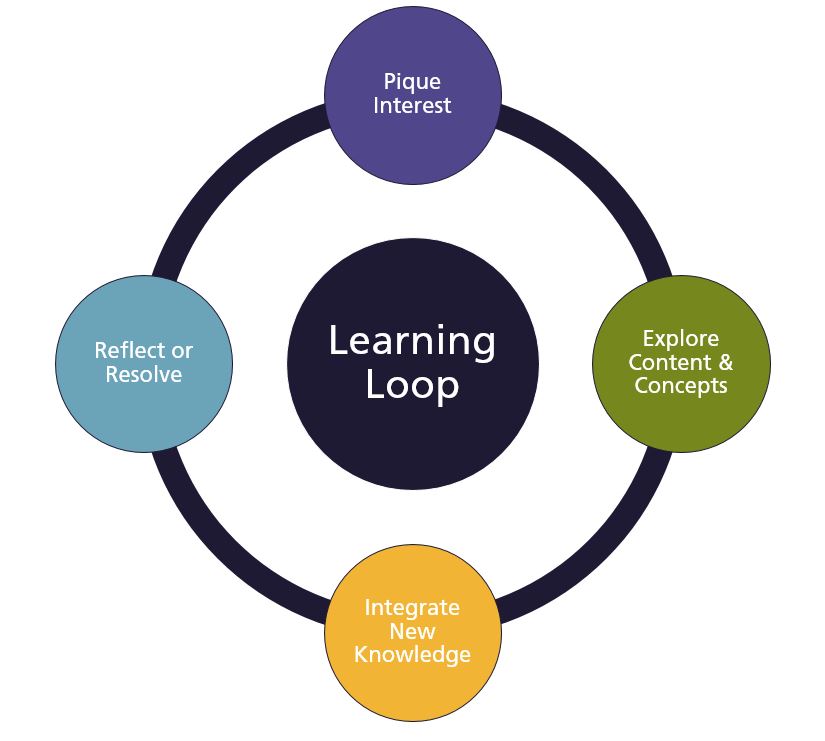
Agency also reinforces a growth mindset, the belief that ability can be developed through effort. Students who regularly set goals, receive feedback, and reflect on their learning come to see challenges as opportunities rather than threats. The cycle of goal-setting, action, feedback, and reflection becomes self-sustaining.
Methods for Fostering Student Agency
There's no single technique that creates student agency. It's better understood as a set of overlapping strategies that give students increasing control over what, how, and why they learn.
- Project-based learning: Students select topics and direct their own investigations, producing work that addresses real questions or problems.
- Inquiry-based instruction: Instead of starting with answers, the teacher poses problems or students generate their own questions, then pursue research to address them.
- Flipped classroom model: Students engage with content (videos, readings) on their own time, freeing class time for deeper discussion, application, and teacher support.
- Differentiated instruction: The teacher designs varied learning experiences matched to individual strengths and needs within the same classroom.
- Choice boards and learning menus: Students choose from a set of options for how they'll engage with material or demonstrate understanding, giving them ownership over the process.
- Peer teaching and collaborative learning: Placing students in instructional roles deepens their understanding and builds community.
- Self-assessment and goal-setting: Regular reflection activities where students evaluate their own work and set targets for improvement.
- Technology integration: Adaptive software and digital tools can create personalized learning paths, though the technology should serve the pedagogy, not replace it.
- Flexible learning environments: Giving students choice over their physical work setting (quiet corner, group table, standing desk) signals trust and supports different working styles.
- Student-led conferences and portfolios: Students curate and present their own academic work, explaining their growth and goals to teachers and families.
The common thread across all of these is a deliberate transfer of responsibility from teacher to student. That transfer doesn't happen all at once. It requires scaffolding, trust-building, and a classroom culture where mistakes are treated as part of learning.