
Enlightenment Thinkers and Their Educational Ideas
The Enlightenment brought a fundamental shift in how people thought about education. Instead of treating children as miniature adults who needed religious doctrine and rote memorization drilled into them, thinkers like Locke and Rousseau argued that education should be built around experience, reason, and the natural development of the child. These ideas form the philosophical backbone of most modern educational practices.
Key Educational Ideas of Enlightenment Thinkers
John Locke (1632–1704) is best known for his tabula rasa theory, the idea that the mind at birth is a "blank slate." For Locke, there are no innate ideas. Everything a person knows comes from experience and sensory interaction with the world. This had huge implications for education: if the mind is shaped entirely by experience, then what you teach and how you teach it matters enormously.
From this starting point, Locke built a practical educational philosophy:
- Sensory learning over abstract instruction. Children should learn by observing and handling things in the world, not by memorizing texts they don't understand.
- Habit formation. Locke believed virtues like self-discipline and curiosity aren't born into children but built through repeated practice and good habits established early.
- Civic preparation. Education should produce individuals ready to participate in society, capable of reasoning, voting, and leading.
Jean-Jacques Rousseau (1712–1778) took a different path. His major educational work, Emile, argued that children are born naturally good and that society corrupts them. Education, then, should protect and nurture a child's innate goodness rather than impose adult expectations on them.
Rousseau's key contributions include:
- Natural education. Children learn best from direct interaction with their environment: exploring forests, working with their hands, swimming, climbing. The natural world is the best classroom.
- Child-centered learning. Instruction should follow the child's interests and curiosity rather than a rigid adult-designed curriculum.
- Developmental stages. Rousseau argued that children think differently at different ages, so education must be age-appropriate. You don't teach abstract philosophy to a seven-year-old.
- Minimal adult intervention. Rather than lecturing and correcting constantly, adults should set up environments where children discover things for themselves.
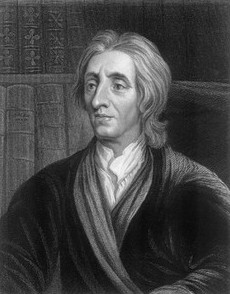
Locke vs. Rousseau in Education
These two thinkers agreed on more than you might expect, but their disagreements reveal a tension that still runs through educational philosophy today.
Where they agreed:
- Both rejected authoritarian methods like rote memorization and physical punishment.
- Both prioritized individual development over forcing children into social conformity.
- Both valued practical knowledge and real-world skills over purely academic learning.
Where they diverged:
- Locke saw the child's mind as empty and needing to be filled through structured, guided experience. Rousseau saw the child as already whole, needing freedom to develop naturally.
- Locke favored discipline and carefully formed habits. Rousseau wanted to minimize adult control and let the child lead.
- Locke's goal was a rational, socially responsible citizen. Rousseau's goal was an authentic, free individual uncorrupted by society.
This tension between structure and freedom, between social preparation and individual flourishing, shows up again and again in later educational debates.

Impact and Influence of Enlightenment Ideas on Education
Impact of Enlightenment on Education
Enlightenment thinking didn't just produce interesting theories. It reshaped the actual institutions and practices of education across Europe and eventually the world.
- Secularization. Education gradually separated from church control. Curricula shifted from theology toward science, modern languages, and practical subjects.
- The scientific method became central to how knowledge was taught and validated. Empirical observation replaced appeals to authority.
- Universal education emerged as a political ideal. If citizens needed reason and knowledge to participate in democracy, then education couldn't be reserved for the elite.
- Child psychology and pedagogy developed as distinct fields. Rousseau's emphasis on developmental stages helped inspire the systematic study of how children actually learn.
- Critical thinking began to replace memorization as the primary educational goal. Students were increasingly expected to question, analyze, and reason rather than simply repeat.
Enlightenment Influence on Modern Education
Many educational approaches you'll encounter in this course trace directly back to Enlightenment principles, even when they don't name Locke or Rousseau explicitly.
Child-centered learning approaches are the most obvious legacy:
- The Montessori method gives children significant control over what they learn and when, using carefully designed materials in a prepared environment. This reflects both Locke's emphasis on sensory learning and Rousseau's trust in the child's natural curiosity.
- The Reggio Emilia approach treats children as capable, creative agents in their own learning, with teachers acting as collaborators rather than authorities.
Experiential learning theories built directly on the Enlightenment foundation:
- John Dewey's pragmatism (early 20th century) argued that learning happens through doing and reflecting, not through passive absorption. Dewey saw education as inseparable from democratic life.
- David Kolb's experiential learning cycle formalized this into a four-stage process: concrete experience, reflective observation, abstract conceptualization, and active experimentation.
Other modern practices with Enlightenment roots include:
- Inquiry-based learning, where students investigate questions rather than receive pre-packaged answers
- Recognition of individual differences in how students learn, leading to differentiated instruction
- Holistic education that addresses cognitive, emotional, and social development together
- Democratic classroom practices that give students a voice in decisions about their learning
- Inclusive education that extends the Enlightenment ideal of universal access to students with disabilities and diverse backgrounds
- Lifelong learning as a concept, reflecting the idea that education doesn't end when formal schooling does