
Overview of AI in Law
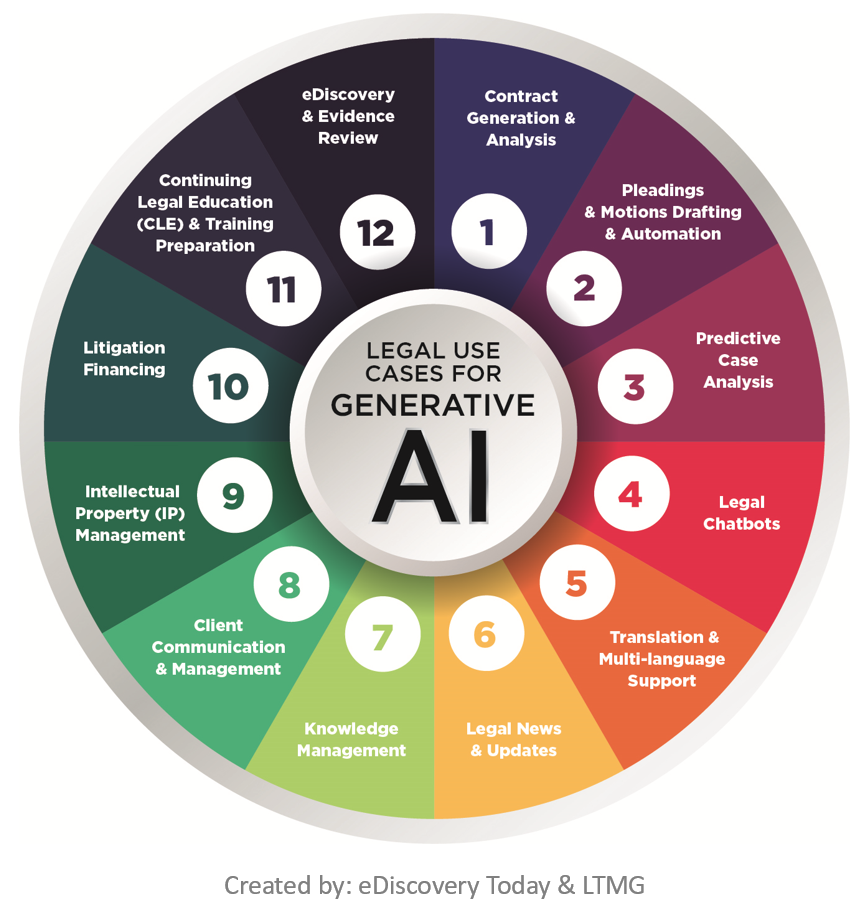
Artificial intelligence is reshaping how lawyers conduct research, review documents, and build case strategies. For legal writing and method, the practical question isn't whether AI matters, but how to use it competently and ethically. This guide covers the main types of legal AI tools, how they fit into the research process, their benefits and limitations, and the professional responsibilities that come with using them.
Types of Legal AI Tools
Legal Research Platforms
These platforms go beyond traditional keyword searching. Instead of requiring you to construct precise Boolean queries (negligence AND "duty of care" NOT criminal), they use Natural Language Processing (NLP) to let you type questions in plain English. The system interprets what you're actually looking for and finds relevant results.
- Machine learning improves results over time. The more users interact with the platform, the better it gets at surfacing relevant cases and statutes.
- Most platforms also include citation checking, case law analysis, and tools for generating portions of legal briefs.
- Examples include Westlaw Edge, Lexis+ AI, and CoCounsel (formerly CaseText).
Document Analysis Software
Document analysis tools handle the heavy lifting of sorting through large volumes of text. They use optical character recognition (OCR) to make scanned documents searchable, then apply text analytics to flag key clauses, risks, or relevant information.
- Particularly valuable in e-discovery, where teams might need to review thousands or millions of documents for relevance and privilege.
- These tools classify and organize documents by content and metadata, replacing what used to require armies of junior associates.
Contract Review Systems
AI-powered contract review tools compare contract language against templates and best practices to spot anomalies, missing clauses, or unusual risk provisions.
- They automate redlining and version tracking during negotiations.
- Many integrate with broader contract management platforms, covering the full lifecycle from drafting through execution and renewal.
Predictive Analytics Tools
Predictive analytics tools analyze historical case data to forecast outcomes. They look at patterns in judicial decisions, settlement amounts, and case timelines.
- They can estimate settlement likelihood, potential damages ranges, and how effective certain legal strategies have been in similar cases.
- Some tools assist with jury selection by analyzing demographic data and past verdict patterns.
- These predictions are probabilistic, not definitive. They inform strategy but don't replace legal judgment.
AI-Powered Legal Research Process
Here's how a typical AI-assisted research workflow unfolds:
Step 1: Query Formulation
You type a research question in conversational language. The NLP engine interprets your intent, identifies related concepts and synonyms, and expands the search scope beyond your exact words. As initial results come in, the system may suggest refinements to narrow or redirect your query.
Step 2: Relevant Case Identification
The AI analyzes case law databases to find precedents most on point. It weighs factors like jurisdiction, court level, date, and how frequently a case has been cited. Crucially, machine learning models identify conceptual similarities between cases, not just keyword overlap. Many platforms also generate visual maps of citation networks showing how cases relate to each other.
Step 3: Statute and Regulation Analysis
AI tools parse legal codes to identify applicable statutes and regulations. NLP extracts key provisions and flags cross-references to related cases and secondary sources. Automated updating helps ensure you're working with current law, though you should always verify currency independently.
Step 4: Secondary Source Integration
The system pulls in treatises, law review articles, and other secondary sources relevant to your issue. Machine learning identifies which sources are most authoritative based on citation frequency and expert recognition. Automated summarization can extract key points from lengthy articles, saving significant reading time.
Benefits of AI in Legal Research
Time Efficiency
AI processes vast quantities of legal information in seconds. Tasks that once took days of manual reading and note-taking can be completed in minutes. This frees lawyers to spend more time on higher-level analysis, strategy, and client communication.
Comprehensive Coverage
AI tools can scan a broader range of sources than any human could in a reasonable timeframe. They surface obscure or rarely cited cases that might be critical to your argument. Multi-jurisdictional searching becomes practical rather than overwhelming.

Improved Accuracy
AI reduces human error in citation checking and document review. Algorithms apply search criteria consistently without fatigue or distraction. Automated cross-referencing helps ensure you're relying on current, good law.
Cost Reduction
Faster research means fewer billable hours for routine tasks. Firms can handle larger caseloads without proportionally increasing staff. Clients benefit from lower costs on work that previously required extensive manual effort.
Limitations and Challenges
Data Quality Issues
AI is only as good as its training data. If legal databases contain errors, gaps, or inconsistencies, the AI's output will reflect those problems. Historical data may not account for recent statutory changes or evolving social norms, and standardizing data across jurisdictions remains difficult.
Algorithmic Bias
AI systems can perpetuate biases embedded in historical legal data. If certain demographics are underrepresented in training data, results may be skewed. Because many AI decision-making processes lack transparency (the "black box" problem), identifying and correcting these biases is challenging. There's a real risk of reinforcing systemic inequalities.
Ethical Considerations
- How much should AI influence legal decision-making?
- Does using third-party AI tools risk compromising attorney-client privilege?
- Is it appropriate to use predictive analytics in criminal sentencing?
- How do you ensure fairness and due process when AI shapes legal outcomes?
These questions don't have settled answers yet, but you need to be aware of them.
Overreliance Risks
The biggest practical danger is lawyers trusting AI output without verification. AI can miss nuanced arguments, misinterpret context, or generate plausible-sounding but incorrect citations (a phenomenon sometimes called "hallucination" in generative AI). Human oversight isn't optional; it's an ethical requirement.
AI vs. Traditional Research Methods
| Factor | AI-Assisted Research | Traditional Research |
|---|---|---|
| Speed | Minutes for comprehensive searches | Hours or days for equivalent coverage |
| Accuracy | Consistent application of criteria; risk of algorithmic errors | Relies on human expertise; risk of fatigue-related errors |
| Nuance | May miss subtle interpretations | Experienced lawyers catch context AI misses |
| Cost | High upfront investment; long-term savings | Lower startup cost; higher ongoing labor costs |
| Best for | Large-scale review, initial research sweeps | Complex legal reasoning, novel arguments |
The most effective approach typically combines both. Use AI for the initial sweep and heavy lifting, then apply human judgment for analysis, strategy, and quality control.
Integration of AI in Law Firms
Adoption Strategies
Most firms adopt AI gradually rather than all at once. A common approach:
- Identify a specific practice area or task (e.g., contract review or e-discovery) as a pilot.
- Test multiple AI solutions and evaluate them against current workflows.
- Collaborate with legal tech vendors to customize tools for the firm's needs.
- Establish an innovation team or committee to oversee rollout and develop best practices.
Training Requirements
Effective AI adoption requires training at every level. Lawyers and staff need to understand not just how to use the tools, but their capabilities, limitations, and ethical implications. Some firms are creating new roles like legal technologist or AI specialist. Law schools are increasingly expected to prepare graduates for AI-enhanced practice.
Workflow Adjustments
Integrating AI means rethinking existing processes:
- Research and document review workflows need redesign to incorporate AI at appropriate stages.
- Billing practices may need modification to reflect increased efficiency.
- Quality control protocols must be established to validate AI-generated results before they're relied upon.
Ethical and Professional Responsibilities
Duty of Competence
The ABA Model Rules (specifically Comment 8 to Rule 1.1) require lawyers to stay current with the "benefits and risks associated with relevant technology." This means you have an obligation to understand AI tools you use, including their limitations. You must verify that AI-generated results are accurate and relevant, and you should be prepared to disclose AI use to clients and courts when appropriate.
Supervision of AI Tools
AI output is a starting point, not a finished product. Lawyers remain responsible for all work product, whether AI-assisted or not.
- Develop internal protocols for selecting and vetting AI tools.
- Understand, at least at a general level, how the algorithms and data sources work.
- Recognize that liability for errors in AI-assisted work falls on the lawyer, not the software.
Client Confidentiality Concerns
Using cloud-based AI tools means client data may be transmitted to and stored on third-party servers. You need to:
- Verify that AI platforms comply with attorney-client privilege and confidentiality requirements.
- Scrutinize data sharing, storage, and retention practices.
- Obtain informed client consent when AI use involves sharing confidential information.
- Prefer platforms specifically designed for legal use with appropriate security measures.
Future Trends in Legal AI
Natural Language Processing Advancements
NLP is improving rapidly. Expect AI systems that understand and generate increasingly sophisticated legal language, enhanced translation for multi-jurisdictional research, and voice-enabled research and drafting tools.
Predictive Justice Applications
More advanced analytics will forecast judicial decisions with greater precision. This raises significant ethical questions, particularly around using AI in criminal sentencing and risk assessment. The legal profession is still working through where to draw the line.
AI-Assisted Brief Writing
Generative AI tools can already produce initial draft briefs, suggest arguments, recommend citations, and provide feedback on structure and clarity. Some tools analyze judicial writing styles to help tailor briefs to specific judges. These capabilities are evolving quickly, but the need for careful human review remains constant.
Impact on Legal Education
Curriculum Changes
Law schools are integrating AI and legal technology into their curricula. This includes standalone courses on legal tech, incorporation of AI tools into traditional research and writing classes, and specialized certificates in legal innovation.
Skill Development Needs
The lawyers who thrive alongside AI will be those with strong critical thinking, the ability to evaluate AI output skeptically, basic data literacy, and the interpersonal skills that AI can't replicate. Legal education is shifting to emphasize these complementary capabilities.
AI Literacy for Lawyers
Every practicing lawyer needs a working understanding of how machine learning and NLP function, how to evaluate and select AI tools for specific tasks, and how to identify potential biases and limitations. Continuing legal education on AI topics is becoming standard rather than optional.
Case Studies of AI in Legal Research
Landmark Cases Using AI
Several high-profile cases have involved AI-assisted research, with courts increasingly encountering AI-generated analysis and citations. Notably, courts have sanctioned lawyers who submitted AI-generated briefs containing fabricated case citations without verification (as in Mata v. Avianca, 2023, where a federal judge sanctioned attorneys for citing nonexistent cases generated by ChatGPT). These cases underscore why human verification of AI output is non-negotiable.
AI-Assisted Legal Victories
AI tools have helped uncover evidence and patterns that manual review would likely have missed, particularly in large-scale document review for class actions and mass tort litigation. Predictive analytics have also informed successful settlement strategies by providing data-driven assessments of likely outcomes.
Lessons from Implementation Failures
Common pitfalls include poor data quality, insufficient training, and unrealistic expectations about what AI can do. Ethical breaches have occurred when firms relied on AI output without adequate oversight. The consistent lesson: AI is a powerful tool, but it requires competent, engaged human supervision to be used responsibly.