
Types of Primary Sources
Primary sources are the actual law itself. They directly state legal rules and are binding on courts, which sets them apart from secondary sources like law review articles or treatises. The four main types are constitutions, statutes, regulations, and case law.
Constitutions
The U.S. Constitution is the supreme law of the land. It establishes the structure of the federal government, divides power among its branches, and protects individual rights. State constitutions do the same at the state level and often grant additional rights beyond what the federal Constitution provides. Both can be changed through formal amendment processes, though state constitutions tend to be amended more frequently and are generally more detailed.
Statutes and Codes
Statutes are laws enacted by legislative bodies (Congress, state legislatures, city councils). Once passed, they're organized into codes for easy reference. At the federal level, this is the United States Code (U.S.C.), which arranges statutes by subject matter into titles. Each state has its own code as well (e.g., California Codes, New York Consolidated Laws). Statutes tend to be more specific than constitutional provisions, and courts often need to interpret their meaning when disputes arise.
Regulations
Administrative agencies (like the EPA or SEC) create regulations under authority that legislatures delegate to them. Think of it this way: a statute might say "protect clean water," and the agency writes the detailed rules for how that actually happens. At the federal level, proposed regulations are published in the Federal Register, and final versions are compiled in the Code of Federal Regulations (C.F.R.). States have similar systems for their agency regulations.
Case Law
Case law consists of written court decisions that interpret and apply constitutions, statutes, and regulations. Through the principle of stare decisis (following precedent), these decisions become binding authority within their jurisdiction. Case law also fills gaps where no statute or regulation directly addresses an issue. Decisions are published in case reporters, organized by jurisdiction and court level, in both official and unofficial publications.
Hierarchy of Primary Sources
When two legal authorities conflict, you need to know which one wins. The hierarchy of primary sources answers that question and keeps the legal system consistent and predictable.
Federal vs. State Authority
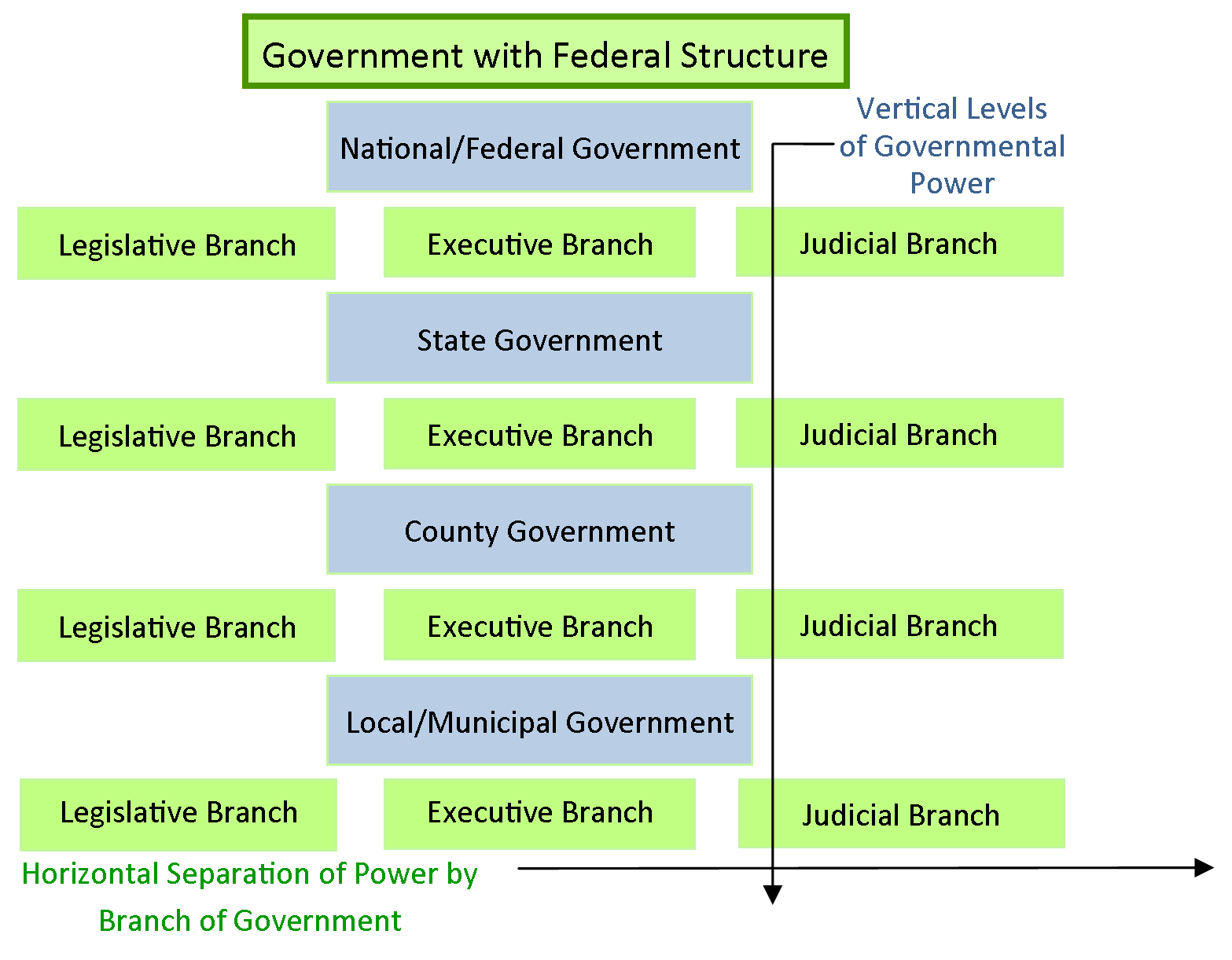
The U.S. Constitution delegates certain powers to the federal government (regulating interstate commerce, immigration, etc.) and reserves the rest to the states under the Tenth Amendment. In areas of federal jurisdiction, federal law generally preempts state law, meaning the federal rule controls. States retain authority over areas not specifically delegated to the federal government, such as property law and most contract law. Some areas involve concurrent jurisdiction, where both federal and state governments can regulate.
Supremacy Clause Implications
Article VI, Clause 2 of the U.S. Constitution, known as the Supremacy Clause, establishes federal law as the "supreme law of the land." This means:
- Federal statutes and treaties override conflicting state laws
- State courts must apply federal law when it's relevant to a case
- However, the Supremacy Clause doesn't wipe out all state law in a given area. It only invalidates state laws that directly conflict with federal law
Constitutional Law
Constitutional law deals with interpreting and applying constitutional provisions. It shapes the structure of government, defines the limits of governmental power, and protects individual rights. Every other source of law must conform to constitutional requirements.
U.S. Constitution Structure
- Preamble: States the document's purpose and goals
- Seven Articles establish the framework for the federal government:
- Article I: Legislative branch (Congress)
- Article II: Executive branch (President)
- Article III: Judicial branch (federal courts)
- Articles IV–VII address federalism, the amendment process, federal supremacy, and ratification
- Bill of Rights (first ten amendments): Protects fundamental individual liberties such as free speech, due process, and protection against unreasonable searches
- Subsequent amendments address issues like the abolition of slavery (13th), equal protection (14th), voting rights (15th, 19th, 26th), and presidential succession (25th)
State Constitutions
State constitutions provide rights and protections that can go beyond the federal Constitution but can never fall below it. They outline the structure and powers of state government and often cover topics the federal Constitution doesn't address directly, such as education, natural resources, and local government organization. Most state constitutions are significantly longer and more detailed than the federal Constitution, and their amendment processes tend to be less demanding.
Statutory Law
Statutes are the primary way legislatures create new legal rules. They address specific areas of law and provide more detailed guidance than broad constitutional provisions.
Legislative Process
A federal statute moves through these steps:
- A bill is introduced in one chamber of Congress (House or Senate)
- The bill is referred to a committee, which holds hearings and may amend it
- The full chamber debates and votes on the bill
- The bill passes to the other chamber, which repeats the process
- If both chambers pass the bill (differences resolved through conference if needed), it goes to the President
- The President signs the bill into law or vetoes it. Congress can override a veto with a two-thirds vote in both chambers
State legislatures and local councils follow similar processes, with the governor or mayor serving as the executive.

Codification of Statutes
Once enacted, statutes are organized into codes by subject matter. The United States Code compiles all federal statutes, arranged into 54 titles covering topics from agriculture to war. State codes work similarly (e.g., Texas Penal Code, New York Consolidated Laws). Codification makes it far easier to find all the law on a given topic in one place rather than searching through individual session laws passed over decades.
Uniform and Model Laws
Organizations like the Uniform Law Commission draft model legislation to promote consistency across states. Two major examples:
- Uniform Commercial Code (UCC): Adopted in some form by all 50 states to standardize rules for commercial transactions like sales of goods and secured transactions
- Model Penal Code: Developed by the American Law Institute, it has influenced criminal law reform in many states
States can adopt these laws in whole or in part, and they often make modifications to fit local needs.
Administrative Law
Administrative law governs how executive branch agencies create and enforce regulations. Agencies bridge the gap between broad statutes and the specific, detailed rules needed to implement them. This area of law is enormous in practice, covering everything from environmental protection to workplace safety to financial regulation.
Agency Rulemaking Process
Federal agencies typically follow these steps when creating new regulations:
- Notice: The agency publishes a Notice of Proposed Rulemaking (NPRM) in the Federal Register
- Comment: The public (individuals, businesses, interest groups) submits written comments during a set comment period
- Review: The agency reviews all comments and may revise the proposed rule
- Final Rule: The agency publishes the final rule with an explanatory preamble addressing major comments
- Congressional Review: Congress has a review period before the rule takes effect
This process, often called "notice-and-comment rulemaking," is required by the Administrative Procedure Act (APA).
Types of Regulations
Not all agency pronouncements carry the same legal weight:
- Legislative rules have the force of law and bind the public. These go through the formal rulemaking process
- Interpretive rules explain how the agency understands existing statutes or regulations. They don't create new legal obligations
- Policy statements announce how the agency plans to approach enforcement or decision-making
- Procedural rules govern the agency's internal operations and how it interacts with the public
Executive Orders
Executive orders are directives issued by the President to manage executive branch operations. They carry the force of law but are limited to authority the President already has under the Constitution or existing statutes. A subsequent president can revoke or modify them, and courts can invalidate them if they exceed presidential authority. Presidents often use executive orders to set policy priorities or respond to emergencies.
Common Law and Precedent
The common law is a body of law developed through judicial decisions rather than through legislation. Courts build on prior rulings over time, creating a framework of legal principles that evolves as new cases arise.
Stare Decisis Principle
Stare decisis (Latin for "to stand by things decided") is the principle that courts should follow precedent. It works in two directions:
- Vertical stare decisis: Lower courts must follow the decisions of higher courts within the same jurisdiction. A federal district court, for example, is bound by its circuit court of appeals and the U.S. Supreme Court.
- Horizontal stare decisis: Courts generally follow their own prior decisions, though they have more flexibility to depart from them than from higher court rulings.
This system promotes stability and predictability so that similar cases produce similar outcomes.
Binding vs. Persuasive Authority
Binding authority must be followed by the court deciding the case:
- Decisions from higher courts in the same jurisdiction
- The court's own prior decisions (with some flexibility)
Persuasive authority may influence a court but doesn't compel a particular result:
- Decisions from courts in other jurisdictions
- Dissenting opinions
- Secondary sources like law review articles and treatises
Knowing the difference is critical when building a legal argument. You always want binding authority if it supports your position.
Overturning Precedent
Courts can overturn their own precedents, but they don't do so lightly. Factors courts consider include:
- Whether the existing rule has proven unworkable in practice
- Whether people and institutions have relied on the rule
- Whether legal doctrine has evolved since the original decision
- Whether the original reasoning has been undermined by later developments
The most famous example is Brown v. Board of Education (1954), where the Supreme Court overturned Plessy v. Ferguson (1896) and rejected the "separate but equal" doctrine. Lower courts generally cannot overturn binding precedents from higher courts; only the higher court itself (or a legislative change) can do that.
Interpreting Primary Sources
Figuring out what a statute, regulation, or constitutional provision actually means is one of the core tasks in legal practice. Courts use several interpretive approaches, and different judges may favor different methods.
Textualism vs. Purposivism
These are the two dominant approaches to statutory interpretation:
Textualism focuses on the ordinary meaning of the words as written. Textualist judges look at dictionary definitions, grammatical structure, and how terms are used elsewhere in the statute. They generally avoid relying on legislative history or broad policy goals. Justice Scalia was the most prominent modern advocate of this approach.
Purposivism looks beyond the text to the statute's underlying purpose. Purposivist judges consider legislative history, the problem the statute was designed to solve, and broader policy objectives. This approach allows for more flexible interpretation, especially when applying older statutes to new situations.
Canons of Construction
Canons of construction are interpretive rules courts use to resolve ambiguities. They fall into two categories:
Textual canons focus on language and structure:
- Expressio unius est exclusio alterius: Listing specific items implies the exclusion of items not listed
- Noscitur a sociis: A word's meaning is understood from the words around it (e.g., "vehicles, boats, and aircraft" suggests "vehicles" means land vehicles)
Substantive canons reflect policy preferences or constitutional values:
- Rule of lenity: Ambiguities in criminal statutes are resolved in favor of the defendant
- Constitutional avoidance: Courts prefer interpretations that avoid raising constitutional problems
Legislative History Use
Legislative history includes materials generated during the lawmaking process: committee reports, floor debates, hearing transcripts, and sponsor statements. Courts sometimes use these materials to understand what legislators intended when the statutory text is ambiguous.
This practice is controversial. Critics (particularly textualists) argue that legislative history is unreliable because individual legislators may have different reasons for supporting a bill, and strategic statements can be inserted into the record specifically to influence future interpretation. Supporters argue it provides valuable context that the bare text alone can't supply.
Researching Primary Sources
Effective legal research means knowing where to find primary sources and how to verify they're still good law. You'll use a combination of print and electronic tools.
Official vs. Unofficial Sources
Official sources are government-published and considered the authoritative version of the law:
- United States Reports (U.S.) for Supreme Court decisions
- Statutes at Large for federal session laws as enacted
Unofficial sources are published by private companies and often include helpful editorial additions:
- West's Supreme Court Reporter (S. Ct.) includes headnotes and West's Key Number System for finding related cases
- United States Code Annotated (U.S.C.A.) includes references to relevant cases, regulations, and secondary sources
Both versions contain the same legal text. The difference is the added research features in unofficial sources.
Print vs. Electronic Formats
Print sources are useful for browsing the structure of a code or reporter and understanding how legal materials are organized. They're also not subject to internet outages or access restrictions.
Electronic sources offer powerful full-text searching and are updated more frequently:
- Westlaw, Lexis, and Bloomberg Law are the major commercial legal databases
- Free government websites like Congress.gov and supremecourt.gov provide access to many primary sources
Most legal research today happens electronically, but understanding how print sources are organized helps you search more effectively online.
Citators and Updating
Before you rely on any case or statute in a legal argument, you must verify it's still valid. Citators are the tools for this:
- Shepard's Citations (on Lexis) and KeyCite (on Westlaw) track how cases and statutes have been treated by later authorities
- They indicate whether a case has been overruled, distinguished, criticized, or followed
- They also provide links to every source that has cited your authority, which is useful for finding additional relevant cases
Failing to check whether your authority is still good law is one of the most serious research errors you can make.
Citing Primary Sources
Proper citation lets readers locate and verify every source you rely on. In American legal writing, citation format follows specific conventions that you need to learn early and practice consistently.
Bluebook Citation Format
The Bluebook (The Bluebook: A Uniform System of Citation) is the most widely used citation manual in American legal writing. A basic case citation includes four components:
- Case name (italicized)
- Volume number of the reporter
- Reporter abbreviation and first page of the opinion
- Parenthetical with the court and year of decision
For example: Marbury v. Madison, 5 U.S. (1 Cranch) 137 (1803).
Statute citations follow a similar pattern: title number, code abbreviation, and section number. For example: 42 U.S.C. § 1983.
Parallel Citations
A parallel citation provides references to the same source in multiple reporters. This is common for cases published in both official and unofficial reporters.
Example: Brown v. Board of Education, 347 U.S. 483, 74 S. Ct. 686, 98 L. Ed. 873 (1954)
Here, 347 U.S. 483 is the official citation, and the other two are unofficial parallel citations. Some jurisdictions require parallel citations; others don't. Always check local court rules.
Short Form Citations
After you've given the full citation for a source, subsequent references use a shortened form to save space and improve readability:
- Cases: Brown, 347 U.S. at 495
- Statutes: 42 U.S.C. § 1983 (no short form needed if already concise)
- Id.: Used when citing the same source as the immediately preceding citation
Primary Sources in Legal Writing
Knowing the law is only half the job. You also need to use primary sources effectively in your written arguments. This means selecting the right authorities, integrating them smoothly, and using them to build a persuasive analysis.
Incorporating Statutory Language
When a statute's exact wording matters to your argument, quote the relevant language directly. When the full text is long or complex, paraphrase to focus on the key elements while still citing the specific provision. After presenting the statutory language, explain how it applies to the facts of your case. If the language is ambiguous, address the competing interpretations and argue for the one that supports your position.
Analogizing Case Law
Analogizing means showing that a prior case is similar enough to your case that the court should reach the same result. The process works like this:
- Identify a precedent with facts or legal issues similar to your case
- Highlight the specific factual similarities between the two cases
- Explain how the court's reasoning in the precedent applies to your situation
- Argue that the same outcome should follow
The stronger the factual parallels, the more persuasive the analogy.
Distinguishing Unfavorable Precedent
When opposing counsel cites a case that seems to go against your position, you need to distinguish it. This means showing why that case doesn't control the outcome here:
- Identify key factual or legal differences between the precedent and your case
- Explain why those differences matter to the legal analysis
- Argue that the policy reasons behind the unfavorable precedent don't apply in your situation
- Point the court toward alternative precedents that better fit your facts
Distinguishing cases is just as important as finding favorable ones. Courts expect you to address unfavorable authority rather than ignore it.