10.1 Computer-mediated communication

✌🏾Intro to Sociolinguistics Unit 10 Review
10.1 Computer-mediated communication
✌🏾 Intro to Sociolinguistics
Defining computer-mediated communication
Computer-mediated communication (CMC) refers to any form of communication that occurs through electronic devices like computers, smartphones, or tablets. It covers a wide range of platforms: email, instant messaging, social media, online forums, video conferencing, and more.
From a sociolinguistic perspective, CMC matters because digital environments don't just carry language from one person to another. They actively shape how people use language, which varieties they draw on, and how social relationships form and shift online.
Synchronous vs asynchronous communication
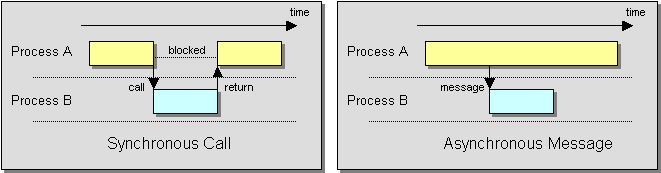
The most fundamental distinction in CMC is whether communication happens in real time or with a delay. This distinction affects everything from word choice to relationship dynamics.
Real-time interaction in synchronous communication
Synchronous communication means participants are engaged at the same time, exchanging messages back and forth without significant delay. Video calls (Zoom, FaceTime), instant messaging (WhatsApp, iMessage), and live chat rooms all fall into this category.
Because feedback is immediate, synchronous CMC mimics face-to-face conversation more closely than other digital formats. Turn-taking patterns resemble in-person talk, though they're not identical. Without nonverbal cues like eye contact or body language, participants sometimes type simultaneously or "interrupt" each other, since there's no way to see that someone else is about to respond.
Delayed responses of asynchronous communication
Asynchronous communication involves a time gap between sending and receiving messages. Email, online forums, and social media posts (like a Facebook status or a Reddit thread) are typical examples.
This delay gives participants flexibility. You can respond when it's convenient, and you have time to compose longer, more carefully worded messages. The tradeoff is that the lack of immediate feedback can slow relationship-building and increase the chance of misinterpretation, since you can't quickly clarify what you meant.
Linguistic features of computer-mediated communication
CMC has developed its own set of distinctive linguistic features. These aren't random or lazy; they serve real communicative functions.
Abbreviations and acronyms
To save time and effort while typing, CMC users frequently rely on abbreviations and acronyms. Common examples include "LOL" (laugh out loud), "IMO" (in my opinion), and "TBH" (to be honest).
Usage patterns vary by age group. Younger users who grew up with digital communication tend to use these forms more frequently, though many abbreviations like "LOL" have become so widespread they cross generational lines.
Emoticons and emojis
Emoticons (text-based, like :) for a smile or :( for a frown) and emojis (graphic symbols like 🌞 or 🍕) are visual tools for conveying emotion and adding context to messages.
Their core function is compensating for the absence of nonverbal cues. In face-to-face conversation, your tone of voice and facial expression signal whether you're joking, being sarcastic, or genuinely upset. In text, a well-placed emoji can do similar work. A message like "sure" reads very differently from "sure 😊."
Unconventional grammar and spelling
CMC frequently features nonstandard grammar and spelling: all lowercase letters, dropped punctuation, creative respellings like "u" for "you" or "gonna" for "going to."
These choices aren't mistakes. They can serve several purposes:
- Saving time in rapid exchanges
- Signaling a casual tone, distinguishing informal chat from a formal email
- Expressing individuality or in-group membership
Context matters here. The same person might text "u coming?" to a friend and write "Will you be attending?" in a work email. CMC users are often skilled at code-switching between registers depending on the platform and audience.
Social aspects of computer-mediated communication
Identity construction in online environments
CMC gives people unusual control over how they present themselves. Unlike face-to-face interaction, where your appearance and voice are immediately visible, online spaces let you curate what others see.
Online anonymity can enable people to explore alternative identities or express aspects of themselves they might not share in person. At the same time, the ability to selectively share information and images can lead to idealized or fragmented self-presentations. Think of how carefully people choose which photos to post on Instagram versus how they look on an average Tuesday.
Formation of online communities
Digital platforms make it possible for people to form communities around shared interests, experiences, or identities, regardless of geographic location. These range from casual interest groups (fan forums for a TV show) to close-knit support networks (mental health forums, diaspora communities).
For people who feel isolated or marginalized offline, these communities can provide a genuine sense of belonging. The shared linguistic practices within these groups (inside jokes, specialized vocabulary, particular emoji use) help reinforce group cohesion.
Netspeak and internet slang
Netspeak is the umbrella term for the distinctive language varieties that emerge in online contexts. It includes abbreviations, acronyms, emoticons, and the unconventional grammar discussed above.
Internet slang refers more specifically to informal or playful expressions common in online communication. Words like "troll" (someone who deliberately provokes others), "meme" (a widely shared cultural unit, often humorous), and "ship" (to support a romantic pairing, real or fictional) all originated or gained new meanings online.
Using netspeak and internet slang functions as a marker of group identity. Knowing the right terms and using them correctly signals that you belong to a particular online community.
Technological influences on language use
The design of platforms doesn't just host communication; it actively shapes it.
Impact of character limits
Some platforms impose character limits on messages. Twitter (now X) famously started with a 140-character limit (later expanded to 280). These constraints push users toward abbreviations, acronyms, and concise phrasing.
Character limits can also lead to creative workarounds: dropping articles ("going store" instead of "going to the store"), using symbols in place of words ("&" for "and"), or splitting a single thought across multiple posts (a "thread").
Role of hyperlinks and multimedia
CMC rarely consists of text alone. Hyperlinks connect messages to external sources, providing context or evidence. Images, videos, and GIFs can convey emotions, add humor, or illustrate points in ways that text alone cannot.
A GIF reaction, for instance, communicates a specific emotional response with a speed and nuance that might take several sentences to express in words. This blending of text and multimedia is a defining characteristic of contemporary CMC.
Evolution of platforms and interfaces
As platforms introduce new features, language practices shift in response. The addition of reaction buttons (👍, ❤️, 😂) on Facebook changed how people respond to posts. Threaded conversations on platforms like Slack or Reddit organize discourse differently than a linear chat.
Interface design also matters. If a platform makes it easy to share images but cumbersome to type long messages, users will lean toward visual communication. The tools shape the language.
Comparison to face-to-face communication
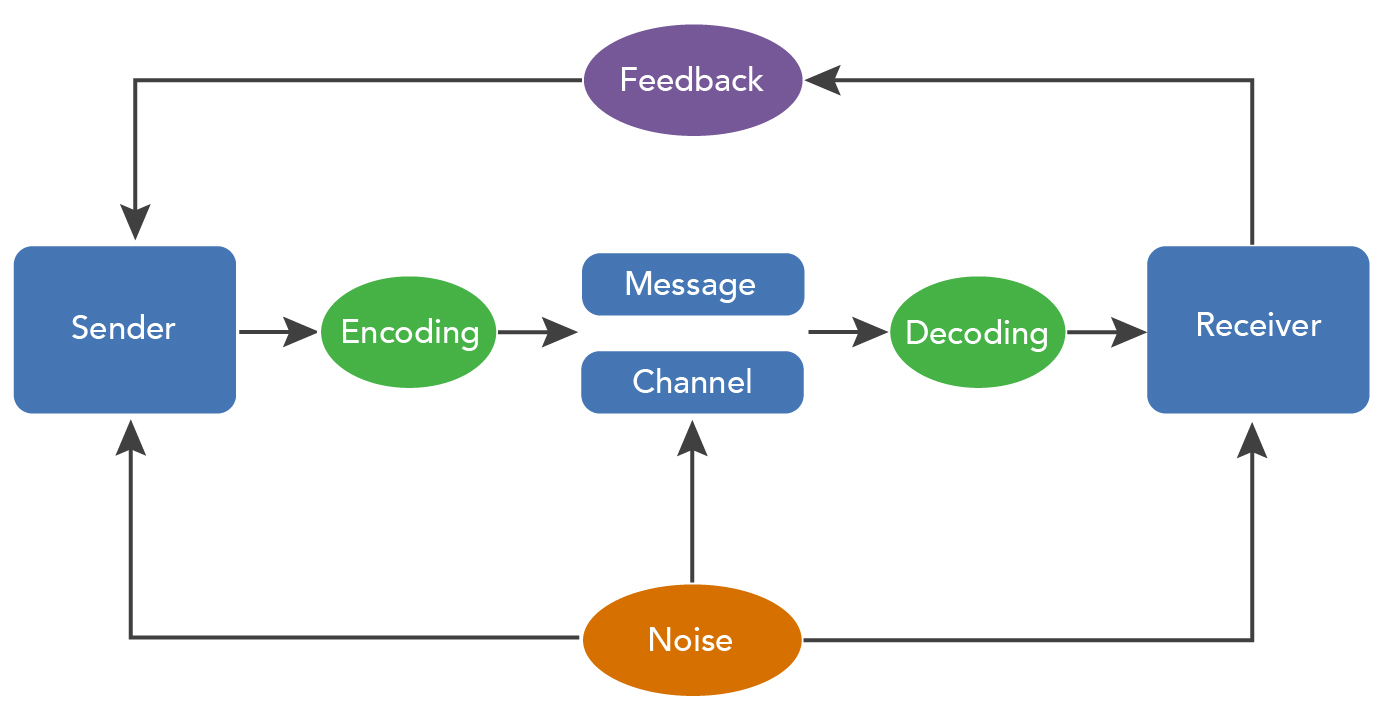
Absence of nonverbal cues
Face-to-face communication relies heavily on nonverbal signals: facial expressions, gestures, posture, tone of voice. CMC strips most of these away, which is why misunderstandings are more common in text-based exchanges.
To compensate, users develop workarounds. Emojis and emoticons substitute for facial expressions. Typing in ALL CAPS signals shouting. Explicit statements of intent ("just kidding," "no offense") do the work that tone of voice would handle in person. These strategies are imperfect but remarkably effective.
Differences in turn-taking and conversation flow
Turn-taking in CMC works differently from face-to-face talk:
- In synchronous CMC (like instant messaging), participants can't see each other preparing to speak. This leads to overlapping messages, where two people send responses at the same time, sometimes to different parts of the conversation.
- In asynchronous CMC (like email or forums), the delay between messages creates more fragmented conversations. A reply might address only part of the original message, or a new topic might be introduced before the previous one is resolved.
Asynchronicity and its effects on interaction
The asynchronous nature of many CMC formats has both advantages and drawbacks. On the positive side, it gives users time to think carefully and compose more detailed, reflective responses. On the negative side, long gaps between messages can create feelings of disconnection or uncertainty. You've probably experienced the anxiety of waiting for a reply to a text and wondering what the silence means.
Sociolinguistic variation in computer-mediated communication
Just as language varies by social factors offline, it varies online too. Age, gender, region, and culture all influence how people communicate digitally.
Age-related differences in language use
Different age groups show distinct CMC patterns. Younger users who grew up with digital communication ("digital natives") tend to use more abbreviations, emoticons, and nonstandard grammar. Older users often stick closer to standard written conventions.
These differences reflect not just familiarity with technology but broader generational communication styles. A teenager's texting norms are shaped by their peer group, just as their spoken language is.
Gender and language in online contexts
Research has found some gender-linked patterns in CMC. Some studies suggest women tend to use more emoticons, hedging language ("I think," "maybe"), and politeness strategies, while men tend toward more direct and assertive styles.
However, these are tendencies, not rules, and they vary significantly across platforms and communities. The flexibility of online environments can also allow people to challenge or move beyond traditional gender norms in their language use.
Regional and cultural influences on online language
Regional and cultural backgrounds shape online communication just as they shape offline speech. Users from different regions bring their own dialects, slang, and idiomatic expressions into digital spaces.
Cultural norms around directness, formality, and social hierarchy also play a role. For example, communication styles that are considered polite in one culture (indirect requests, extensive greetings) may seem overly formal or inefficient in another. These differences can lead to cross-cultural misunderstandings in global online spaces.
Future directions and emerging trends
Artificial intelligence and natural language processing
Advances in artificial intelligence (AI) and natural language processing (NLP) are reshaping CMC. AI-powered chatbots and virtual assistants can now generate remarkably human-like language, creating new forms of human-computer interaction that blur the line between talking to a person and talking to a machine.
NLP techniques also allow researchers to analyze massive datasets of online communication, revealing patterns in language use, sentiment, and social dynamics that would be impossible to study manually.
Integration of virtual and augmented reality
Virtual reality (VR) and augmented reality (AR) technologies are opening new possibilities for CMC. These platforms allow users to communicate in shared virtual environments using avatars, spatial audio, and gesture tracking.
By reintroducing some of the nonverbal cues that text-based CMC lacks, VR and AR could help bridge the gap between online and face-to-face interaction. This is still an emerging area, but it has significant implications for how digital communication develops.
Potential for language change and evolution
CMC is not just a mirror of existing language; it's an engine of language change. Practices that start online (emoji use, new slang, nonstandard spellings) can migrate into offline speech and writing over time.
The global reach of online communication also facilitates contact between language varieties, potentially leading to new hybrid forms. When speakers of dozens of languages interact daily on the same platform, borrowing and mixing are inevitable. Sociolinguists are watching these developments closely, since CMC may be accelerating processes of language change that previously took generations.
See Fiveable more often in Google
Mark Fiveable as a preferred source and Google is more likely to show you our guides in Top Stories, with a "preferred" badge in AI Mode and AI Overviews.