13.3 Machine learning in language analysis

🤌🏽Intro to Linguistics Unit 13 Review
13.3 Machine learning in language analysis
🤌🏽 Intro to Linguistics
Machine Learning Fundamentals in Linguistics
Machine learning gives computers the ability to learn patterns from data without being explicitly programmed for every rule. In linguistics, this matters because language is far too complex and variable to capture with hand-written rules alone. ML automates tasks like classifying text, recognizing speech, and translating between languages by learning from massive amounts of language data.
Three main learning approaches tackle different kinds of linguistic problems:
- Supervised learning trains on labeled data (where humans have already marked the correct answers). It's used for tasks like classifying emails as spam or not-spam, or tagging parts of speech in a sentence.
- Unsupervised learning works with unlabeled data and finds hidden structure on its own. For example, it can cluster documents by topic without being told what the topics are.
- Semi-supervised learning combines a small amount of labeled data with a large amount of unlabeled data. This is practical because labeling language data by hand is expensive and slow. Techniques include self-training (the model labels new data based on its own predictions, then learns from those) and co-training (multiple models teach each other using different features of the data).
Applications of ML in Language Analysis
Machine learning powers a wide range of language tasks:
- Text classification categorizes documents by topic, genre, or purpose
- Sentiment analysis determines the emotional tone of text (positive, negative, neutral)
- Named entity recognition (NER) identifies proper nouns and classifies them as people, organizations, locations, etc. For instance, recognizing that "Apple" refers to a company and "New York" refers to a place
- Predictive text suggests word completions as you type
- Machine translation converts text between languages (e.g., English to Spanish)
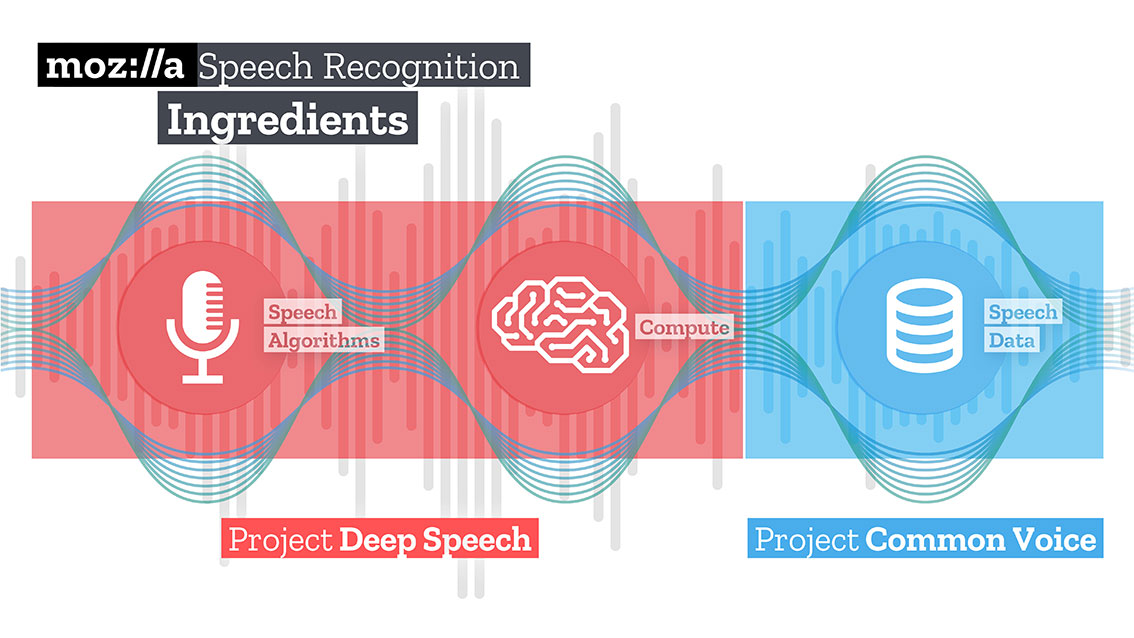
- Speech recognition converts spoken language to text; speech synthesis generates human-like speech from text
- Information extraction pulls structured data (dates, names, relationships) from unstructured text
- Text summarization condenses long documents into shorter overviews
- Conversational AI powers chatbots and virtual assistants like Siri and Alexa
Neural Networks and Model Evaluation

Neural Networks for Language Processing
Neural networks are the backbone of most modern NLP systems. They're loosely inspired by how biological neurons work, but the key idea is simpler than it sounds: data flows through layers of connected nodes, and each connection has a weight that determines how much influence one node has on the next. The network learns by adjusting these weights.
A basic neural network has three parts:
- Input layer receives the raw data (for example, numerical representations of words)
- Hidden layers process the data through weighted connections and activation functions (which decide whether a node "fires" or not)
- Output layer produces the result (like a category label or a predicted next word)
Training works through backpropagation: the network makes a prediction, compares it to the correct answer, calculates the error, and then adjusts weights backward through the network to reduce that error. Repeat this thousands of times, and the network gradually improves.
Deep learning just means using networks with many hidden layers, which allows the model to learn increasingly abstract patterns. Several architectures are especially important for language:
- Recurrent Neural Networks (RNNs) process data sequentially, one word at a time, making them natural for language. The LSTM (Long Short-Term Memory) variant solves a key problem with basic RNNs: it can remember information across long stretches of text instead of "forgetting" earlier words.
- Convolutional Neural Networks (CNNs), originally designed for images, can also detect local patterns in text (like common word combinations).
- Transformer models are the current standard in NLP. They use a self-attention mechanism that lets the model weigh the importance of every word relative to every other word in a sentence, all at once rather than sequentially. This is the architecture behind models like BERT and GPT.
- Word embeddings represent words as dense numerical vectors where similar words end up close together in vector space. Methods like Word2Vec and GloVe learn these representations from large text corpora. For example, the vectors for "king" and "queen" would be closer to each other than "king" and "bicycle."
Performance Evaluation of Language Models
Building a model is only half the work. You also need to measure how well it performs. Several metrics capture different aspects of performance:
- Accuracy measures overall correctness (what percentage of predictions were right)
- Precision asks: of everything the model labeled as positive, how many actually were? (Useful when false positives are costly)
- Recall asks: of all the actual positives, how many did the model catch? (Useful when missing a positive is costly)
- F1 score is the harmonic mean of precision and recall, giving a single balanced number
A confusion matrix is a table that shows exactly where the model gets things right and wrong, breaking predictions into true positives, true negatives, false positives, and false negatives.
Two common problems to watch for:
- Overfitting happens when a model memorizes the training data too closely and performs poorly on new, unseen data. Think of a student who memorizes practice test answers but can't handle new questions.
- Underfitting happens when a model is too simple to capture the real patterns in the data.
The bias-variance tradeoff is the balancing act between these two extremes. A more complex model reduces bias (underfitting) but risks higher variance (overfitting).
Other evaluation practices include:
- Cross-validation tests the model on multiple different subsets of the data to get a more reliable performance estimate
- Hyperparameter tuning adjusts model settings (like learning rate or number of layers) to optimize performance
- Error analysis involves manually examining the model's mistakes to find systematic patterns
- Benchmark datasets like GLUE (for general language understanding) and SQuAD (for question answering) provide standardized tests so different models can be compared fairly
- Human evaluation is still necessary for subjective tasks like text generation and summarization, where metrics alone can't capture quality
See Fiveable more often in Google
Mark Fiveable as a preferred source and Google is more likely to show you our guides in Top Stories, with a "preferred" badge in AI Mode and AI Overviews.