12.1 Three-Phase Voltage Generation

⚡Electrical Circuits and Systems I Unit 12 Review
12.1 Three-Phase Voltage Generation
⚡ Electrical Circuits and Systems I
Three-phase voltage generation is a key concept in power systems. It involves producing three AC voltages with equal magnitude, shifted 120 degrees apart. This method offers advantages over single-phase systems, including smoother power delivery and more efficient transmission.
Understanding three-phase voltage generation is crucial for grasping the broader principles of three-phase circuits. It forms the foundation for analyzing power distribution, motor operation, and transformer connections in electrical engineering applications.
Three-phase voltage generation
Principles of generation
- Three-phase voltage generation produces three alternating voltages with equal magnitude phase-shifted by 120 degrees
- Synchronous generators with three stator windings spaced 120 electrical degrees apart typically achieve this generation
- Each phase voltage follows a sinusoidal equation , where θ represents the phase angle
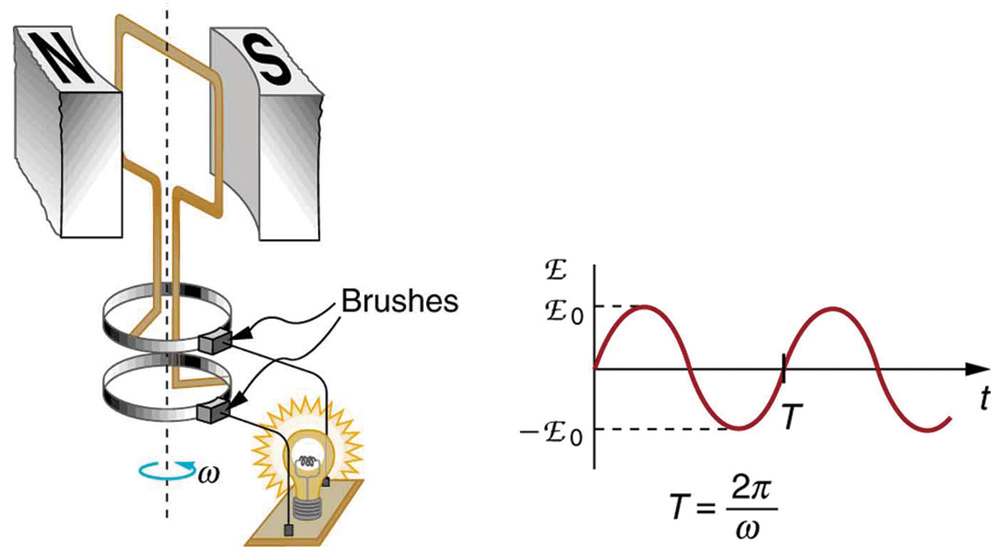
- Generator rotor (usually an electromagnet) rotates inside stator to induce voltages in all three windings simultaneously
- Generated voltage frequency directly relates to generator rotational speed and rotor pole pair count
- Three-phase systems connect in wye (Y) or delta (Δ) configurations, affecting phase/line voltage and current relationships
Voltage characteristics
- Sinusoidal waveform for each phase voltage
- 120 degree phase shift between voltages
- Equal magnitude for balanced three-phase systems
- Frequency determined by generator speed (50 Hz or 60 Hz common in power systems)
- RMS and peak voltage values related by
- Line-to-line and phase voltages differ based on connection type (wye vs delta)
Three-phase vs single-phase advantages

Improved power quality and efficiency
- Three-phase systems deliver more constant power resulting in smoother electrical machine operation
- Reduced vibration in motors and generators
- More efficient long-distance power transmission due to lower conductor material requirements
- Decreased transmission losses compared to single-phase
- Rotating magnetic fields occur naturally enabling simpler, more efficient motor designs
- Greater power capacity at a given voltage level versus single-phase systems
Enhanced flexibility and stability
- Better voltage stability and regulation in power distribution networks
- Easy creation of different voltage levels using transformer configurations (delta-wye, wye-delta)
- Accommodate both three-phase and single-phase loads on same power system
- Greater flexibility in electrical installations
- Improved load balancing capabilities across phases
- Reduced neutral current in balanced systems
Phase relationships in three-phase systems
Voltage phasor characteristics
- Balanced three-phase system voltages spaced 120 electrical degrees apart
- Phase sequence (ABC or RYB) indicates order of voltage peak occurrences
- Phasor diagrams visually represent magnitude and phase relationships between voltages
- Sum of instantaneous values of three phase voltages always equals zero in balanced systems
- Constant phase relationships regardless of chosen reference point (neutral in wye or any phase in delta)
- Phase relationships crucial for three-phase equipment connections and power system troubleshooting
Impact on circuit behavior
- Phase relationships determine three-phase circuit behavior including power calculations
- Influence analysis of unbalanced systems and fault conditions
- Affect harmonic propagation and mitigation strategies in power systems
- Determine transformer connections and their impact on system performance
- Influence motor starting characteristics and torque production
- Critical for proper operation of power electronic converters and drives
Calculating three-phase voltage values
Instantaneous voltage equations
- Each phase voltage follows , where is peak voltage, ω is angular frequency, t is time, θ is phase angle
- Balanced three-phase system instantaneous voltages expressed as:
- Sum of instantaneous voltages always equals zero:
- Instantaneous power calculated using voltage and current values for each phase
RMS and peak value relationships
- Peak value () relates to RMS value by
- RMS values commonly used in power calculations
- Line-to-line voltage in wye-connected systems equals times phase voltage
- Delta-connected systems have equal line and phase voltages:
- Three-phase power calculation uses RMS values: (for balanced systems)
- Voltage divider effect in unbalanced loads affects individual phase voltages
See Fiveable more often in Google
Mark Fiveable as a preferred source and Google is more likely to show you our guides in Top Stories, with a "preferred" badge in AI Mode and AI Overviews.