2.1 Darwinian evolution and natural selection

🦍Biological Anthropology Unit 2 Review
2.1 Darwinian evolution and natural selection
🦍 Biological Anthropology
Darwinian Evolution and Biodiversity
Darwin's theory of evolution explains how species change over time through natural selection acting on inherited variation. For biological anthropology, this theory is foundational: it provides the framework for understanding human origins, our relationships to other primates, and why human populations vary the way they do.

Top images from around the web for Core Principles of Darwinian Evolution
Topic 5.2 Natural Selection - AMAZING WORLD OF SCIENCE WITH MR. GREEN View original
Is this image relevant?
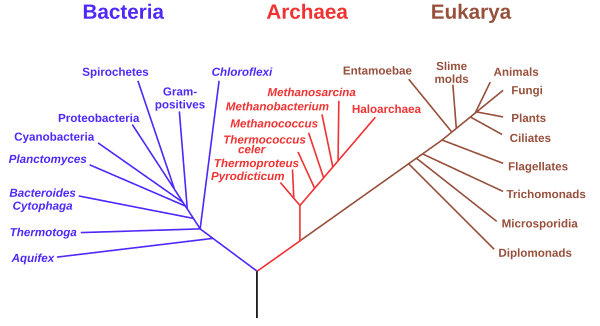
Common descent - Wikipedia View original
Is this image relevant?
Darwin and The Theory of Evolution ‹ OpenCurriculum View original
Is this image relevant?
Topic 5.2 Natural Selection - AMAZING WORLD OF SCIENCE WITH MR. GREEN View original
Is this image relevant?
Common descent - Wikipedia View original
Is this image relevant?
Core Principles of Darwinian Evolution
Descent with modification is the central idea. All species share common ancestors, and populations change over generations, producing the biodiversity we observe today. Several principles support this:
- Variation exists within every population. No two individuals are exactly alike, and these differences provide the raw material for natural selection to act on.
- Differential reproduction means that organisms with traits better suited to their environment tend to survive longer and produce more offspring, passing those advantageous genes to the next generation.
- Gradualism holds that evolutionary changes typically accumulate slowly over long stretches of time, not in sudden leaps.
- Common descent proposes that all living organisms are connected through evolutionary history. This explains why distantly related species still share genetic and developmental similarities.
Mechanisms of Evolution
Natural selection is the primary mechanism Darwin identified. Organisms with traits that improve survival or reproduction in a given environment are more likely to pass those traits on. Over many generations, this leads to adaptation, where populations become increasingly well-suited to their environments.
Natural selection requires four conditions:
- Variation: Individuals in a population differ from one another in measurable ways.
- Inheritance: Those differences are at least partly heritable, passed from parents to offspring through genetic material.
- Selection: Some trait variants give their bearers a survival or reproductive advantage in a particular environment.
- Time: Beneficial traits accumulate in the population gradually across many generations.
Speciation occurs when new species arise, often because populations become reproductively isolated and adapt to different environmental pressures.
- Allopatric speciation happens when a physical barrier (a mountain range, a river) geographically separates populations so they evolve independently.
- Sympatric speciation happens when a new species evolves from an ancestral species without geographic separation, often through mechanisms like polyploidy in plants or ecological niche specialization.
Natural Selection and Adaptation

Types of Adaptations
Natural selection produces different kinds of adaptations, each enhancing an organism's fitness (its ability to survive and reproduce) in its environment:
- Physiological adaptations involve internal body processes. Desert-dwelling kangaroo rats, for example, have kidneys that produce highly concentrated urine to conserve water.
- Morphological adaptations are changes to physical structures. Stick insects resemble twigs, making them nearly invisible to predators.
- Behavioral adaptations modify actions or responses. Many bird species migrate seasonally to exploit food resources in different regions.
Examples of Natural Selection
- Peppered moths during the Industrial Revolution: As soot darkened tree bark in England, darker-colored moths had better camouflage and survived at higher rates than lighter moths. When pollution decreased, the lighter form rebounded.
- Antibiotic resistance in bacteria: When exposed to antibiotics, bacteria with mutations conferring resistance survive and reproduce, making the population increasingly resistant over time.
- Galápagos finches: Darwin observed that finch beak shapes varied across islands, each adapted to different food sources. Finches eating hard seeds had thick, strong beaks; those eating insects had thin, pointed ones.
- Lactase persistence in humans: Most mammals lose the ability to digest lactose after weaning. In human populations with a long history of dairy farming (parts of Europe, East Africa), natural selection favored a mutation that keeps lactase production active into adulthood.
Evidence for Evolution

Fossil Records and Comparative Anatomy
Fossil records provide direct evidence of past life forms and how they changed over time.
- Transitional fossils show intermediate forms between major groups. Archaeopteryx, for instance, had both dinosaur-like features (teeth, a bony tail) and bird-like features (feathers, wings).
- Stratigraphic sequences show that fossils in deeper (older) rock layers are more different from living species than fossils in shallower (younger) layers, demonstrating change over time.
Comparative anatomy reveals structural similarities across species that point to shared ancestry.
- Homologous structures are anatomically similar structures in different species that share a common evolutionary origin. The forelimbs of humans, whales, bats, and dogs all contain the same basic bone arrangement despite serving very different functions.
- Vestigial structures are reduced or nonfunctional remnants of structures that were fully developed in ancestral species. The human coccyx (tailbone) and wisdom teeth are classic examples.
Embryology adds further support. Vertebrate embryos look remarkably similar in early developmental stages, reflecting shared genetic programming inherited from common ancestors.
Biogeography and Molecular Evidence
Biogeography examines how species are distributed across geographic regions, and those patterns make sense in light of evolution.
- Endemic species are unique to specific areas. Lemurs are found only in Madagascar because the island's long isolation allowed them to diversify without competition from monkeys and apes.
- Continental drift explains why similar fossil species appear on continents that are now separated by oceans but were once connected.
Molecular biology provides some of the strongest evidence for evolution at the cellular level.
- DNA sequence comparisons reveal degrees of relatedness. Humans and chimpanzees share approximately 98.7% of their DNA, reflecting a recent common ancestor.
- Conserved protein structures across distantly related organisms (like cytochrome c appearing in both yeast and humans) point to deep common ancestry.
Convergent evolution is worth distinguishing from common descent. Unrelated species sometimes develop similar traits independently because they face similar environmental pressures. Bats and birds both evolved wings, but their wing structures are fundamentally different, showing these traits arose separately rather than from a shared winged ancestor.
Darwin's Impact on Science
Influence on Scientific Disciplines
Darwin's theory provided a unifying explanation for biodiversity that reshaped not just biology but several related fields:
- Geology: Understanding Earth's deep history and the fossil record became intertwined with evolutionary thinking.
- Psychology: Evolutionary psychology examines how cognitive traits may have been shaped by natural selection in ancestral environments.
- Anthropology: The study of human origins, primate behavior, and even cultural change draws heavily on evolutionary principles. This is why Darwinian evolution is the starting point for biological anthropology.
Applications and Implications
Evolutionary theory has practical applications, especially in medicine:
- Understanding how bacteria evolve antibiotic resistance helps guide treatment protocols and drug development.
- Vaccine development relies on tracking how pathogens evolve, which is why flu vaccines are updated annually.
- The study of genetic diseases and inherited traits depends on understanding how alleles are passed through populations over time.
Darwin's ideas also raised broader questions about human origins that sparked debates between science and religion, particularly challenges to creationist accounts of life's diversity. These discussions continue to shape public understanding of science.
In applied fields, evolutionary principles inform conservation biology (protecting genetic diversity in endangered species) and ongoing ethical debates around genetic engineering and gene editing technologies.
See Fiveable more often in Google
Mark Fiveable as a preferred source and Google is more likely to show you our guides in Top Stories, with a "preferred" badge in AI Mode and AI Overviews.