| la ofrenda | An altar assembled to honor the dead during el Día de Muertos, featuring photographs, food, and marigolds; a central symbol of Mexican cultural and religious syncretism. |
| la cofradía | A religious or community brotherhood that organizes celebrations, processions, or collective works, especially during Semana Santa in Spain and Latin America. |
| el voseo | The use of the pronoun vos and its corresponding verb forms instead of tú, common in Argentina, Uruguay, and parts of Central America. |
| el espanglish | A linguistic practice that mixes Spanish and English, common in bilingual communities in the United States; reflects language contact and cultural identity. |
| la interferencia lingüística | The influence of one language on another in the speech or writing of bilingual speakers, such as applying English syntax or vocabulary within Spanish. |
| la lengua de herencia | A language learned at home that does not always match the dominant language of the surrounding social environment, relevant to Spanish speakers in diaspora communities. |
| Language Policies | Government or institutional decisions about which languages are used in education, media, and public life; these shape the vitality and prestige of Spanish in multilingual contexts. |
| Cultural Identity | The sense of belonging to a particular culture shaped by shared values, traditions, language, and customs; a recurring theme in Unit 2 texts about celebrations and language use. |
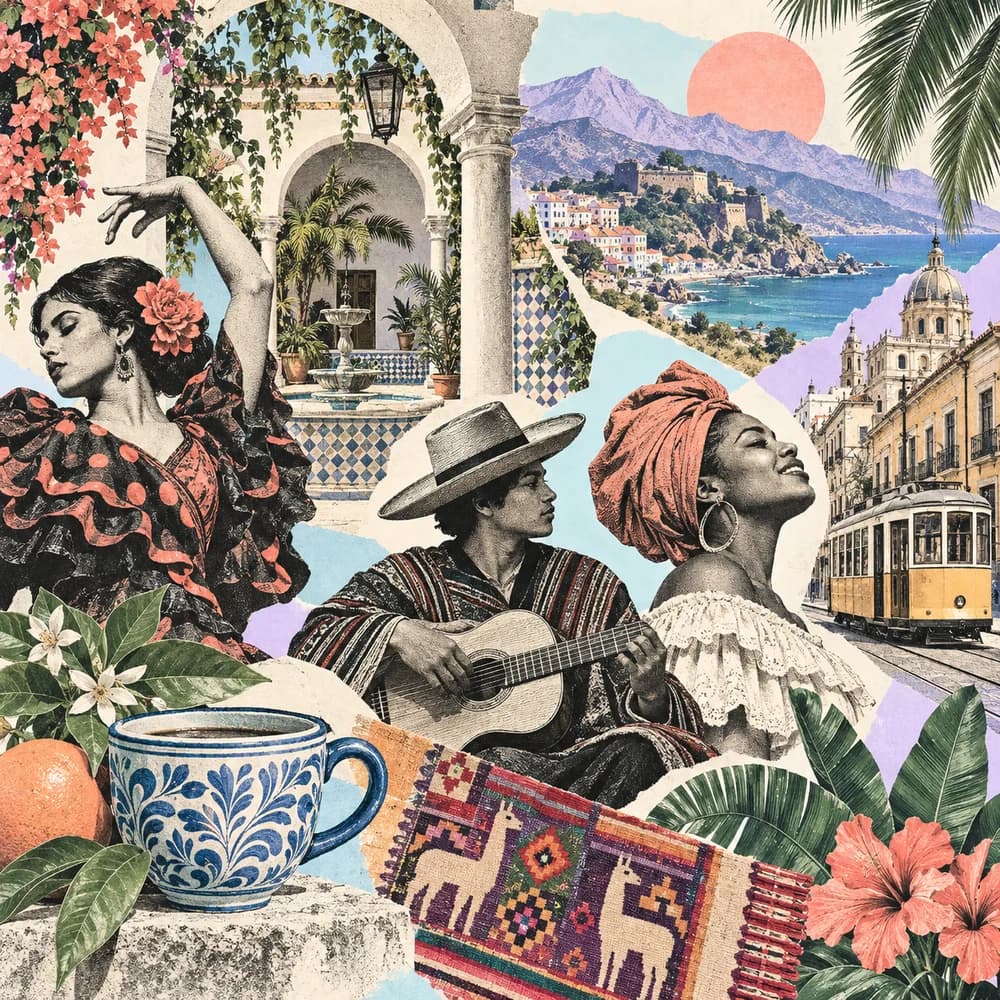
| Cultural Heritage | The traditions, values, practices, and artifacts inherited from past generations that define a community's identity, visible in celebrations and linguistic practices across the Spanish-speaking world. |
| Spanish-speaking countries | The 21 nations where Spanish is an official language, spanning Latin America, Spain, and Equatorial Guinea, each with distinct regional varieties and cultural contexts. |
| Cultural Exchange | The sharing and blending of ideas, traditions, and practices between cultures, visible in the syncretic celebrations and linguistic borrowings that characterize the Spanish-speaking world. |
| Santería | A syncretic religion originating in Cuba that combines African Yoruba beliefs with Roman Catholicism; an example of cultural and religious blending relevant to Topic 2.1. |
| International Mother Language Day | Observed on February 21, this day promotes linguistic and cultural diversity and multilingualism, connecting to the Unit 2 theme of language as a marker of identity and heritage. |