← back to ap spanish language

ap spanish language unit 2 study guides

language and culture in spanish–speaking countries

unit 2 review

Spanish-speaking countries share a rich tapestry of language, culture, and history. From Spain to Latin America, these nations have been shaped by colonization, independence movements, and diverse ethnic influences. The result is a vibrant blend of traditions, customs, and dialects. This cultural mosaic is reflected in the arts, literature, and cuisine of Spanish-speaking countries. While united by a common language, each nation has its unique identity, shaped by indigenous roots, European heritage, and African influences. Understanding these complexities is key to appreciating the Hispanic world.

Key Concepts and Terminology

  • Hispanidad encompasses the shared cultural, historical, and linguistic heritage of Spanish-speaking countries
  • Mestizaje refers to the mixing of European, Indigenous, and African ancestries in Latin America
  • Indigenismo is a cultural and political movement that emphasizes the importance of Indigenous cultures and identities
  • Syncretism is the blending of different cultural and religious elements to create new traditions (Día de los Muertos)
  • Hispanophone describes countries or regions where Spanish is the primary language spoken
    • Includes Spain, Mexico, Central America, and most of South America (except Brazil)
  • Latinidad refers to the shared cultural identity and experiences of Latin American people
  • Hispanicization is the process of spreading Spanish language and culture to other regions through colonization and migration

Historical Context of Spanish-Speaking Countries

  • Spanish colonization of the Americas began in the late 15th century, following Christopher Columbus' voyages
  • The Spanish Empire established viceroyalties in Mexico, Peru, and other regions to govern their colonies
  • The Columbian Exchange involved the transfer of goods, people, and diseases between the Old World and the New World
    • Introduced new crops to the Americas (sugarcane, coffee) and to Europe (potatoes, tomatoes)
  • Independence movements in the early 19th century led to the formation of new nations in Latin America
    • Simón Bolívar and José de San Martín were key figures in the independence wars
  • The Mexican Revolution (1910-1920) was a significant event that shaped modern Mexico
  • The Cuban Revolution (1953-1959) led to the establishment of a communist government under Fidel Castro
  • Many Spanish-speaking countries experienced military dictatorships and civil wars in the 20th century (Spanish Civil War, Dirty War in Argentina)

Cultural Diversity in the Spanish-Speaking World

  • Spanish-speaking countries have diverse ethnic and racial compositions, including Indigenous, European, African, and mixed ancestries
  • Indigenous cultures, such as the Maya, Inca, and Aztec, have left lasting influences on language, art, and traditions
  • African influences are prominent in the Caribbean and coastal regions of Latin America, particularly in music and dance (salsa, merengue)
  • European immigration in the 19th and 20th centuries brought new cultural elements to Spanish-speaking countries (Italian influence in Argentina)
  • Religious diversity exists within the Spanish-speaking world, with Catholicism being the predominant faith
    • Syncretism has led to the incorporation of Indigenous and African religious elements into Catholic practices
  • Regional differences in cuisine, music, and art showcase the cultural diversity within the Spanish-speaking world
    • Peruvian cuisine blends Indigenous, Spanish, and Asian influences
    • Mexican muralism is a distinctive art movement that emerged in the early 20th century

Language Variations and Dialects

  • Spanish has numerous regional variations and dialects across Spanish-speaking countries
  • Castilian Spanish, spoken in central and northern Spain, is considered the standard form of the language
  • Latin American Spanish has distinct characteristics, such as the use of "ustedes" instead of "vosotros" for the second-person plural pronoun
  • Andalusian Spanish, spoken in southern Spain, has unique phonological features (ceceo, seseo)
  • Caribbean Spanish is known for its rapid speech and the aspiration or deletion of certain consonants
  • Indigenous languages have influenced Spanish in various regions, leading to the incorporation of loanwords (Nahuatl in Mexican Spanish)
  • Code-switching, the practice of alternating between Spanish and another language (English), is common in bilingual communities

Customs and Traditions

  • Spanish-speaking countries have a rich tapestry of customs and traditions that reflect their cultural heritage
  • Religious festivals, such as Semana Santa (Holy Week) and Día de los Muertos, are widely celebrated
    • Semana Santa processions feature elaborate floats and penitents in Spain and Latin America
    • Día de los Muertos honors deceased loved ones with altars, offerings, and colorful decorations
  • Traditional music and dance forms are an integral part of Spanish-speaking cultures
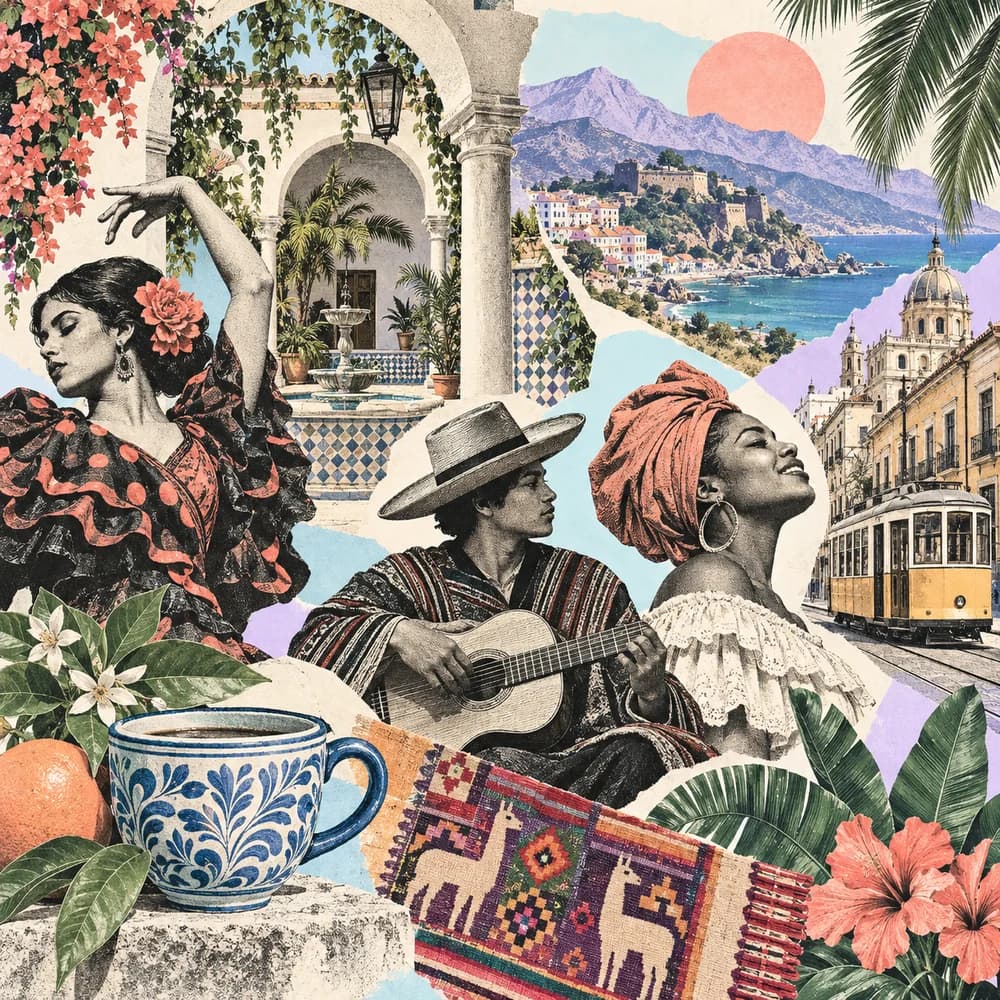
    • Flamenco is a passionate and expressive art form from Andalusia, Spain
    • Tango, originating in Argentina and Uruguay, is a sensual dance known for its close embrace and intricate footwork
  • Gastronomy plays a significant role in Spanish-speaking cultures, with each region having its distinctive dishes and flavors
    • Paella, a rice dish with seafood or meat, is a famous Spanish delicacy
    • Tacos, a staple of Mexican cuisine, come in various styles and fillings
  • Family values and strong social connections are highly regarded in Spanish-speaking societies
    • Extended family gatherings and celebrations (quinceañeras, weddings) are common
  • Spanish-speaking countries face various social, economic, and political challenges in the modern era
  • Income inequality and poverty remain significant issues in many Latin American countries
    • The Gini coefficient, a measure of income inequality, is high in countries like Brazil and Colombia
  • Political instability, corruption, and human rights concerns affect several Spanish-speaking nations
    • Venezuela has experienced a severe economic and political crisis in recent years
    • The Colombian conflict, lasting over five decades, has had far-reaching consequences
  • Migration, both within and outside Spanish-speaking countries, has shaped contemporary demographics
    • The United States has a large Hispanic population, with significant communities from Mexico, Puerto Rico, and other Latin American countries
  • Environmental issues, such as deforestation and climate change, pose threats to biodiversity and livelihoods in Spanish-speaking regions
    • The Amazon rainforest, shared by several Latin American countries, is facing rapid deforestation
  • Gender equality and women's rights have gained increasing attention in Spanish-speaking societies
    • The #NiUnaMenos movement has raised awareness about gender-based violence in Latin America

Cultural Products and Practices

  • Spanish-speaking countries have made significant contributions to literature, art, and film
  • The Spanish Golden Age (Siglo de Oro) produced renowned writers such as Miguel de Cervantes and Lope de Vega
  • Latin American literature has gained international recognition, with authors like Gabriel García Márquez and Pablo Neruda receiving Nobel Prizes
  • Spanish-language cinema has a rich history and has produced influential filmmakers (Pedro Almodóvar, Guillermo del Toro)
  • Music is an essential part of Spanish-speaking cultures, with genres ranging from classical to popular
    • Spanish Baroque music, exemplified by composers like Tomás Luis de Victoria, has a distinct style
    • Reggaeton, originating in Puerto Rico, has become a global phenomenon in recent decades
  • Architecture in Spanish-speaking countries reflects a blend of European, Indigenous, and colonial influences
    • The Alhambra in Granada, Spain, is a stunning example of Islamic architecture
    • The Baroque style is prominent in colonial-era buildings in Latin America (Mexico City Metropolitan Cathedral)

Language and Identity

  • Language is a crucial aspect of identity in Spanish-speaking communities
  • The Spanish language serves as a unifying force among Spanish-speaking countries, fostering a sense of shared cultural heritage
  • Regional dialects and accents are markers of local identity and pride
    • The Rioplatense dialect, spoken in the River Plate region of Argentina and Uruguay, is known for its distinct intonation and vocabulary
  • Indigenous languages coexist with Spanish in many regions, reflecting the multicultural identities of Spanish-speaking countries
    • Guaraní is an official language in Paraguay, alongside Spanish
    • Quechua and Aymara are widely spoken in the Andean regions of South America
  • Spanglish, a blend of Spanish and English, has emerged as a linguistic phenomenon in bilingual communities
    • Spanglish reflects the bicultural identities of many Hispanics in the United States
  • Language policies and education play a role in shaping language use and identity in Spanish-speaking countries
    • The Real Academia Española (RAE) is the institution responsible for overseeing the Spanish language and its norms

Frequently Asked Questions

What topics are covered in AP Spanish Unit 2 (La influencia del lenguaje y la cultura)?

You’ll dig into topics 2.1–2.4: Spanish language varieties; indigenous languages and cultural preservation; bilingual identity; and Spanish language policy and cultural assimilation. Unit 2 looks at how language shapes identity across Spanish-speaking societies. Expect regional dialects and regional pride (2.1). Learn about major indigenous languages, revitalization, and bilingual education (2.2). Study code-switching, heritage Spanish, and bilingual identity issues (2.3). And cover national language policies, language rights, and assimilation versus plurilingual approaches (2.4). The unit includes vocabulary lists, suggested contexts (personal/public identities, beauty, tech), interpretive practice with articles and audio, and scaffolded writing and speaking tasks like a one-minute cultural comparison. For a concise outline, vocab, and practice resources, check the Fiveable unit page (https://library.fiveable.me/ap-spanish-lang/unit-2).

How much of the AP Spanish exam is Unit 2 (Identity: language and culture)?

There isn’t a fixed percent for Unit 2—the College Board’s CED doesn’t break down exact percentages by unit. Themes from Unit 2 (language, culture, identity) can appear across multiple-choice and free-response tasks. In practice, Unit 2 skills and topics—language varieties, indigenous languages, bilingual identity, and language policy—show up in interpretive and presentational modes throughout the exam. So expect multiple-choice passages and some writing/speaking prompts to draw on these ideas. Use the CED unit to see specific topic lists and common task formats. For focused review, see Fiveable’s Unit 2 study guide (https://library.fiveable.me/ap-spanish-lang/unit-2) and practice related questions at (https://library.fiveable.me/practice/spanish-lang).

What's the hardest part of AP Spanish Unit 2 and how can I improve?

The trickiest part is analyzing how language varieties and cultural identity shape tone, register, and implied meaning. This unit asks you to recognize regional vocabulary, subtle cultural references, and how speakers’ identities influence meaning, which can make listening and free-response tasks harder. Improve by exposing yourself to diverse Spanish accents and regional texts—news clips, podcasts, and op-eds. Practice short analytical and comparative written responses that mention register and identity. Do timed speaking prompts where you explain cultural influence. And build targeted vocab lists of regionalisms and cultural terms. Start with Fiveable’s Unit 2 study guide (https://library.fiveable.me/ap-spanish-lang/unit-2) and use their cheatsheets, cram videos, and extra practice questions at (https://library.fiveable.me/practice/spanish-lang) for focused drills and examples.

How long should I study Unit 2 before the AP Spanish exam?

Aim for about 2–3 weeks of focused study on Unit 2. Do daily sessions of 20–45 minutes and plan at least two full practice tasks (presentational speaking/writing and interpersonal modes) the week before the exam. Start by reviewing unit themes and vocabulary, then practice speaking and writing about regional identity, language varieties, and indigenous languages. Build one comparative country profile you can reuse on culture prompts. Mix active review (timed responses, flashcard-style self-quizzing) with passive exposure (short articles or videos). In the final 3–5 days, do timed practice under exam-like conditions and review recurring grammar errors. For guided unit content and practice, see the Unit 2 study guide (https://library.fiveable.me/ap-spanish-lang/unit-2) and Fiveable’s practice questions and cram videos.

Where can I find AP Spanish Unit 2 review materials or PDFs?

You can find Unit 2 review materials and PDFs on Fiveable’s unit page (https://library.fiveable.me/ap-spanish-lang/unit-2). That page includes a focused study guide for Unit 2 (The Influence of Language and Culture on Identity), plus cheatsheets and cram videos for topics 2.1–2.4. For extra practice, Fiveable hosts 1,000+ practice questions at (https://library.fiveable.me/practice/spanish-lang). Official College Board resources—like the Course and Exam Description, past free-response questions, scoring guidelines, and sample responses—are available from the College Board (see the CED PDF at https://apcentral.collegeboard.org/media/pdf/ap-spanish-language-and-culture-course-and-exam-description.pdf). Use Fiveable for compact reviews and practice, and the College Board PDFs for official prompts and rubrics.

Are there good AP Spanish Unit 2 flashcard sets or Quizlet decks?

Yes, there are community-made Quizlet decks for Unit 2, but there aren’t any official Quizlet decks tied to AP Spanish Unit 2, and Fiveable doesn’t offer flashcards. Because student-created sets vary in quality, double-check any deck you use against the CED topics (Unit 2: The Influence of Language and Culture on Identity). For reliable unit content and targeted review, use Fiveable’s Unit 2 study guide at https://library.fiveable.me/ap-spanish-lang/unit-2 and extra practice questions at https://library.fiveable.me/practice/spanish-lang. If you try Quizlet decks, cross-check vocabulary and example phrases with the Fiveable guide or your class notes before relying on them for test prep.

How should I study for Unit 2 speaking and writing tasks specifically?

Start with the Unit 2 study guide (https://library.fiveable.me/ap-spanish-lang/unit-2) and focus on the theme: language and culture → identity. Learn 10–15 topical phrases or idioms. Practice describing cultural examples aloud for 10–15 minutes daily. Write two short (150–200 word) responses each week that compare Spanish varieties or discuss cultural preservation. Use timed speaking prompts: 1–2 minutes prep, 2 minutes response, and record yourself to catch pronunciation, cadence, and organization issues. For writing, outline a clear thesis, two supporting paragraphs, and a cultural example, then revise for grammar and register. For extra practice, try Fiveable’s practice questions and cram videos (https://library.fiveable.me/practice/spanish-lang).

What types of exam questions does Unit 2 usually appear in on the AP Spanish test?

Unit 2 (The Influence of Language and Culture on Identity) shows up across both multiple-choice and free-response sections. Multiple-choice items use single or paired sources — articles, literary excerpts, charts/infographics, and audio reports — and ask about main idea, vocabulary in context, perspective, and inference. Free-response prompts often draw on Unit 2 for integrated presentational writing (an argumentative essay based on sources) and the spoken cultural comparison (brief presentational tasks). Interpersonal speaking and writing prompts can also use Unit 2 scenarios for conversations or email replies. You'll find targeted practice and sample tasks in the Unit 2 study guide at https://library.fiveable.me/ap-spanish-lang/unit-2.

Where can I find answer keys or practice answers for AP Spanish Unit 2?

You can find answer keys and practice materials on Fiveable’s Unit 2 page (https://library.fiveable.me/ap-spanish-lang/unit-2). For scored example responses and official scoring guidelines, consult past free-response questions and scoring rubrics released by the College Board — they publish FRQ prompts, sample student responses, and scoring guidelines, though multiple-choice answer keys aren’t publicly released. Fiveable also offers practice questions with explanations plus quick cheatsheets and cram videos to help you practice Unit 2 topics. Use the practice bank (https://library.fiveable.me/practice/spanish-lang) to compare your answers to official criteria and improve speaking, writing, and interpretive skills.