AP exam review verified for 2027

AP Spanish Language and Culture Unit 1 Review: Families and Communities

View page in Spanish

Review AP Spanish Language and Culture Unit 1 to build your understanding of how families and communities function across the Spanish-speaking world. This unit develops all three modes of communication through the lens of family structures, social relationships, community life, and urban versus rural contexts.

Use the topic guides, key terms, and practice questions available for this unit to prepare for interpretive, interpersonal, and presentational tasks on the AP exam.

What is AP Spanish Language and Culture unit 1?

What is AP Spanish Language and Culture Unit 1? Unit 1 introduces the thematic framework that runs through the entire course: how language, culture, and communication intersect in real contexts. The anchor theme is Families and Communities, which gives students a meaningful and personally relevant entry point for developing interpretive, interpersonal, and presentational skills in Spanish.

Unit 1 covers community activities, family relationships, social interactions, and urban versus rural communities in Spanish-speaking contexts. Students practice reading, listening, speaking, and writing about these themes while building vocabulary and grammatical structures needed for the AP exam tasks.

Three modes of communication

Every topic in Unit 1 is a vehicle for practicing interpretive communication (reading and listening), interpersonal communication (conversation and exchange), and presentational communication (writing and speaking to an audience). These three modes are the core skill structure of the entire AP course.
Cultural diversity within the Spanish-speaking world

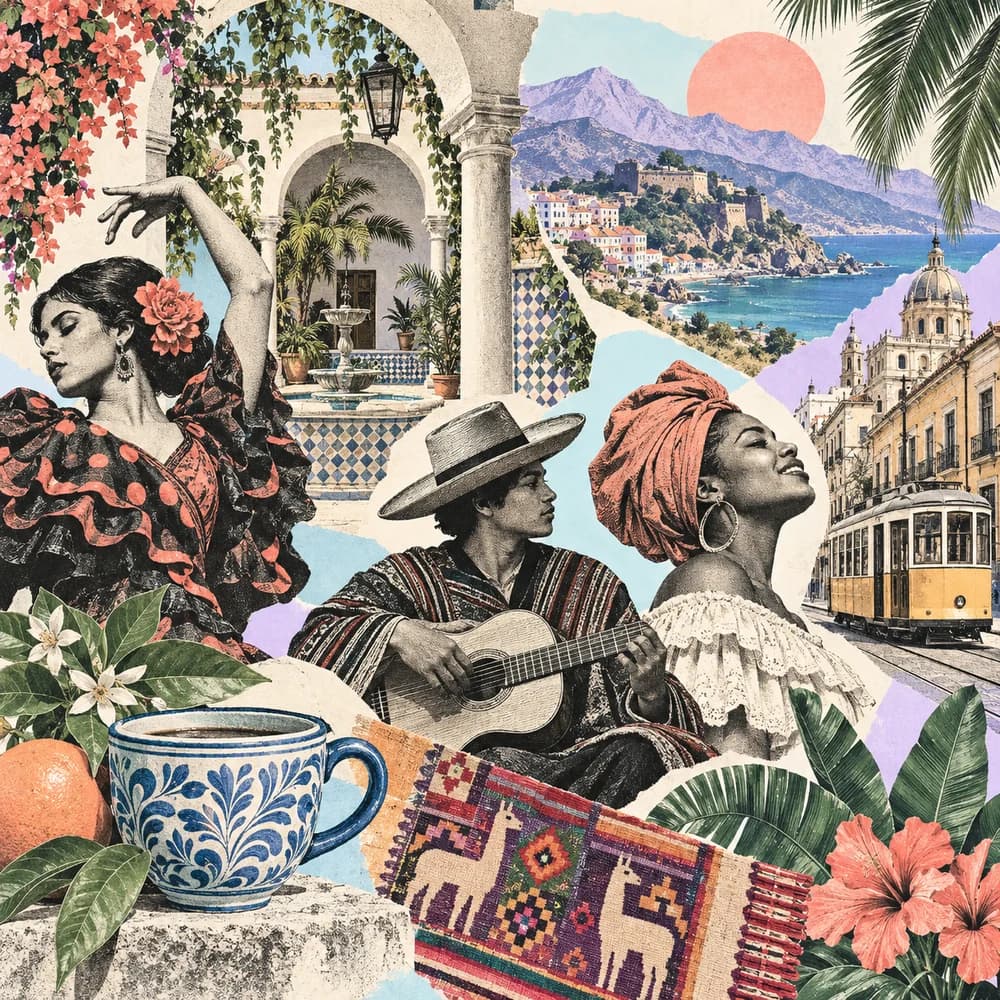
Unit 1 emphasizes that families and communities are not uniform across Spanish-speaking countries. Practices like el sistema de cargos in indigenous Mexican communities, Semana Santa processions in Spain, or multigenerational households in urban Latin America all reflect distinct cultural logics that students must be able to describe and compare.

Language in context

Students are expected to use varied vocabulary and grammatical structures, apply circumlocution and paraphrasing when needed, and self-monitor spoken production. The family and community theme provides concrete, recurring vocabulary that supports accuracy and fluency across all four language skills.

Families and communities as cultural structures

The central insight of Unit 1 is that families and communities are not just personal or private spaces. They are cultural institutions that transmit values, assign roles, organize collective action, and respond to social change. Understanding how these structures work in Spanish-speaking societies is both a language goal and a cultural competency goal for the AP exam.

AP Spanish Language and Culture unit 1 topics

1.1

Community Activities

Explore how Spanish-speaking communities organize collective life through festivals, civic structures, and shared traditions. Key examples include Carnaval, Semana Santa, la faena, and el sistema de cargos.

open guide
1.2

Family Relationships

Examine how familismo, extended family networks, multigenerational households, and traditional gender roles shape family life across Spanish-speaking societies.

open guide
1.3

Social Interactions and Relationships

Analyze the cultural norms, social hierarchies, and communication patterns that govern relationships within families and communities, including the role of respeto, machismo, and digital social networks.

open guide
1.4

Urban and Rural Communities

Compare urban and rural life in Spanish-speaking countries, focusing on access to resources, the exodo rural, urbanization, and how place shapes family structure and cultural identity.

open guide

Unit 1 review notes

1.1

Community Activities

Community activities in Spanish-speaking societies are the organized and informal ways that individuals participate in collective life. These range from religious festivals like Carnaval and Semana Santa to civic structures like la faena and el sistema de cargos. Understanding these activities means recognizing what values they express, who participates, and how they connect families to broader community identity.

  • La faena: Collective community labor organized for a shared purpose, common in indigenous and rural communities across Latin America.
  • El sistema de cargos: A community governance structure that distributes civic and religious responsibilities among members, particularly in indigenous Mexican communities.
  • Carnaval: A pre-Lenten festival marked by parades, music, and costumes that brings families and communities together to celebrate cultural heritage.
  • Semana Santa: Holy Week observances that vary by region but typically involve public processions, family gatherings, and religious rituals.
  • Patron saint festivals: Local celebrations honoring a community's patron saint, often combining religious observance with music, food, and communal participation.
Can you describe two specific community activities from different Spanish-speaking regions and explain what cultural values each one reflects?
ActivityTypePrimary functionExample region
La faenaCivic/laborCollective work for community benefitRural Mexico, Andes
El sistema de cargosGovernanceDistribute civic and religious dutiesIndigenous communities, Oaxaca
CarnavalReligious/festiveCelebrate cultural identity before LentColombia, Bolivia, Spain
Semana SantaReligiousCommemorate Holy Week with family and communitySpain, Guatemala, Peru
Mercados localesEconomic/socialCommunity exchange and social gatheringThroughout Latin America
1.2

Family Relationships

Family relationships in Spanish-speaking societies are shaped by cultural values like familismo, which prioritizes collective family well-being over individual interests. Extended and multigenerational households are common, and roles within the family are often defined by generation, gender, and tradition. Students should be able to discuss how these structures are both maintained and challenged in contemporary society.

  • Familismo: A cultural value emphasizing loyalty, mutual support, and the primacy of family bonds over individual goals, especially prevalent in Hispanic cultures.
  • Estructura familiar: The composition and organization of a family unit, including nuclear, extended, and multigenerational arrangements.
  • Extended families: Family networks that include grandparents, aunts, uncles, and cousins, often living together or in close proximity and sharing responsibilities.
  • Multigenerational families: Households with three or more generations living together, common in Latin America and Spain due to economic and cultural factors.
  • Traditional roles: Culturally established expectations for family members based on gender and generation, including machismo as a framework for male identity and authority.
How does familismo shape decision-making and daily life in a typical Hispanic family? What tensions arise when traditional family roles meet modern expectations?
Family structureCharacteristicsCultural context
Nuclear familyParents and children onlyMore common in urban, higher-income settings
Extended familyIncludes grandparents, aunts, uncles, cousinsWidespread across Latin America and Spain
Multigenerational householdThree or more generations under one roofCommon due to economic necessity and cultural tradition
Familia rehechaBlended or reconstituted familyGrowing in urban areas with higher divorce rates
1.3

Social Interactions and Relationships

Social interactions in Spanish-speaking communities are governed by cultural norms around respect, hierarchy, and collective identity. These norms show up in how people address one another (tu vs. usted), how decisions are made within families, and how generational conflicts are navigated. Students should be able to interpret and produce language that reflects these social dynamics accurately.

  • Ciudadanía familiar: The concept that families carry civic responsibilities and shape social cohesion, not just private relationships.
  • Redes sociales: Social networks, both in-person and digital, that shape how people communicate, share information, and maintain relationships across distances.
  • Estereotipos: Oversimplified generalizations about groups that students must recognize and critically evaluate when analyzing cultural texts and interactions.
  • Machismo: A cultural attitude emphasizing male dominance and strength that influences gender roles and social expectations within families and communities.
  • Respeto: A core social value in many Hispanic cultures that governs how people interact across generations and social hierarchies, expressed through language register and behavior.
How do social norms around respeto and hierarchy shape the way family members communicate with one another? How might these norms differ between generations?
Social normHow it appears in interactionPotential source of tension
RespetoUse of usted with elders, deference in decisionsYounger generations may prefer more egalitarian norms
FamilismoGroup decisions, shared finances, collective supportIndividual autonomy vs. family obligation
MachismoMale authority in household decisionsChanging gender roles and feminist movements
Redes socialesMaintaining family ties across borders digitallyGenerational gaps in technology use
1.4

Urban and Rural Communities

The distinction between urban and rural life is a major axis of difference within Spanish-speaking societies. Cities like Ciudad de Mexico, Buenos Aires, and Madrid offer access to education, healthcare, and employment that rural areas often lack. The exodo rural, or mass migration from countryside to city, has reshaped family structures and community life across Latin America. Students should be able to compare these contexts and discuss the social consequences of urbanization.

  • Exodo rural: The large-scale migration of people from rural areas to cities in search of economic opportunity, which has transformed family and community structures across Latin America.
  • El urbanismo social: A model of urban transformation that combines infrastructure investment, cultural programming, and community participation to reduce inequality in cities.
  • Infraestructura: The physical and organizational systems, including transportation, healthcare, and education, that determine quality of life and differ sharply between urban and rural areas.
  • Desigualdad: The uneven distribution of resources and opportunities that is often most visible in the gap between urban centers and rural communities in Spanish-speaking countries.
  • Geografía humana: The study of how geography shapes human activity, culture, and social organization, relevant to understanding why urban and rural communities develop differently.
What are three specific ways that living in a rural versus urban community in a Spanish-speaking country affects a family's daily life, access to resources, and cultural practices?
FactorUrban communitiesRural communities
Access to educationUniversities, public schools, private optionsLimited schools, often underfunded
HealthcareHospitals, specialists, clinicsBasic health posts, long travel to care
EmploymentFormal sector, services, industryAgriculture, informal economy
Family structureMore nuclear, smaller householdsMore extended, multigenerational
Cultural practicesBlended, globalized influencesStronger indigenous and traditional practices

Key terms

TermDefinition
FamilismoA cultural value prioritizing family loyalty, collective well-being, and mutual support over individual interests, central to understanding Hispanic family dynamics.
Estructura FamiliarThe composition and organization of a family unit, ranging from nuclear to extended to multigenerational arrangements, which varies across Spanish-speaking societies.
Extended familiesFamily networks including grandparents, aunts, uncles, and cousins who often live together or nearby and share responsibilities, common across Latin America and Spain.
Multigenerational familiesHouseholds with three or more generations living together, sustained by economic necessity and cultural tradition in many Spanish-speaking communities.
MachismoA cultural attitude emphasizing male dominance and strength that shapes gender roles and social expectations within families and communities.
el sistema de cargosA community governance structure that distributes civic and religious responsibilities among members, particularly in indigenous communities in Mexico.
la faenaCollective community labor organized for a shared purpose, a form of civic participation common in rural and indigenous communities.
Semana SantaHoly Week observances involving public processions and family gatherings that vary by region but are central to community and religious identity across the Spanish-speaking world.
el urbanismo socialA model of urban transformation combining infrastructure, cultural programming, and community participation to address inequality in cities.
Redes socialesSocial networks, both in-person and digital, that shape communication and help families maintain relationships across distances.
EstereotiposOversimplified generalizations about cultural groups that students must recognize and critically evaluate when analyzing texts and interactions.
Geografía HumanaThe study of how geography shapes human activity and social organization, relevant to understanding differences between urban and rural communities.

Common unit 1 mistakes

Treating Hispanic families as a single uniform group

Family structures and values vary significantly across Spanish-speaking countries and within them. A rural Andean family and an urban Argentine family may have very different norms. Always specify the cultural context rather than generalizing across all Hispanic cultures.

Describing community activities without explaining their cultural meaning

Naming Carnaval or Semana Santa is not enough. The AP exam rewards explanations of what these activities mean culturally, what values they reinforce, and how they connect individuals to community identity.

Confusing interpersonal and presentational communication tasks

Interpersonal tasks involve real-time exchange and require spontaneous response strategies like circumlocution. Presentational tasks are prepared and delivered to an audience. Mixing up the register or format for each mode costs points.

Overgeneralizing the urban-rural divide

Not all rural communities lack resources, and not all urban communities are prosperous. The contrast is about patterns and tendencies, not absolutes. Use hedging language like 'en muchos casos' or 'tiende a' when making comparisons.

Ignoring how social change affects traditional roles

The AP exam often presents texts that show tension between traditional values and contemporary change. Students who only describe traditional roles without acknowledging how they are evolving miss the analytical depth the exam rewards.

How this unit shows up on the AP exam

Cultural comparison task

The AP exam includes a spoken cultural comparison task in which students compare a practice, product, or perspective from a Spanish-speaking community with their own community. Unit 1 themes, such as family structures, community festivals, or urban versus rural life, are frequent frames for this task. Practice stating specific similarities and differences with evidence rather than broad generalizations.

Interpretive communication with authentic texts

The exam uses authentic audio and print sources on themes like family roles, community events, and social change. For Unit 1, students should practice identifying main ideas, supporting details, and implied cultural perspectives in texts about familismo, exodo rural, or community traditions. Recognizing the author's purpose and audience is a key interpretive skill.

Interpersonal and presentational speaking tasks

The simulated conversation and the presentational speaking tasks require students to express opinions, describe cultural practices, and respond spontaneously in Spanish. Unit 1 vocabulary around family relationships, social norms, and community life provides the foundation for these tasks. Self-correction, circumlocution, and varied grammatical structures are all evaluated in spoken production.

Final unit 1 review checklist

  • Describe community activities with cultural specificityGo beyond naming a festival. Explain what values it reflects, who participates, and how it connects families to community identity. Use examples from at least two different Spanish-speaking regions.
  • Explain familismo and family structuresDefine familismo and connect it to concrete family behaviors: shared decision-making, multigenerational living, financial support networks. Distinguish nuclear, extended, and multigenerational structures.
  • Analyze social norms in interactionsIdentify how respeto, machismo, and generational hierarchy shape communication. Be able to explain how these norms are both maintained and challenged in contemporary Spanish-speaking societies.
  • Compare urban and rural communitiesUse specific contrasts: access to education, healthcare, employment, and cultural practices. Explain the exodo rural and its consequences for family structure and community cohesion.
  • Use all three modes of communicationPractice interpretive tasks (reading and listening to authentic texts about families and communities), interpersonal tasks (simulated conversations), and presentational tasks (cultural comparison essays and spoken presentations).
  • Apply vocabulary and grammar accuratelyUse unit vocabulary including familismo, estructura familiar, exodo rural, and desigualdad in context. Practice varied grammatical structures and use circumlocution when precise vocabulary is unavailable.
  • Make cross-cultural comparisonsThe AP exam requires you to compare practices in Spanish-speaking communities with your own community. Practice stating similarities and differences with specific evidence, not generalizations.

How to study unit 1

Step 1: Review community activities (Topic 1.1)Read the Topic 1.1 guide and review key examples like Carnaval, Semana Santa, la faena, and el sistema de cargos. For each, write one sentence explaining what cultural value it reflects. Practice describing a community activity in Spanish using presentational language.
Step 2: Study family structures and familismo (Topic 1.2)Review the Topic 1.2 guide and the key terms for familismo, estructura familiar, extended families, and multigenerational families. Practice explaining in Spanish how familismo shapes a specific family behavior, such as caring for elderly relatives or collective financial decisions.
Step 3: Analyze social norms and interactions (Topic 1.3)Review the Topic 1.3 guide and focus on how respeto, machismo, and generational hierarchy appear in real interactions. Practice an interpersonal task: simulate a conversation about family roles or social expectations, using circumlocution when needed.
Step 4: Compare urban and rural communities (Topic 1.4)Review the Topic 1.4 guide and the comparison table for urban versus rural life. Write a short paragraph in Spanish comparing access to education or healthcare in a specific urban and rural context. Use the exodo rural as a connecting concept.
Step 5: Practice with authentic materials and exam tasksUse the available practice questions to work through interpretive reading and listening tasks on Unit 1 themes. Practice the cultural comparison task by drafting a response that compares a Spanish-speaking community practice with a practice from your own community, using specific evidence.

More ways to review

Topic study guides

Open the individual guides for Unit 1 when you want a closer review of one topic.

browse guides

Practice questions

Use AP-style practice after you review the notes so you can check what you understand.

start practice

FRQ practice

Practice free-response reasoning and compare your answer with scoring guidance.

practice FRQs

Cram archive videos

Watch past review streams filtered to Unit 1 when you want a video walkthrough.

open videos

Official unit cheatsheet

Open the Fiveable one-page unit review, then explore visual cheatsheets for a quick refresher.

open unit cheatsheet

Score calculator

Estimate your broader AP score goal after you review the course and exam format.

open calculator

Frequently Asked Questions

What topics are covered in AP Spanish Lang Unit 1?

AP Spanish Lang Unit 1 covers 4 topics built around family structures and community life: **1.1 Community Activities (Actividades comunitarias)**, **1.2 Family Relationships (Relaciones familiares)**, **1.3 Social Interactions and Relationships (Interacciones y relaciones sociales)**, and **1.4 Urban and Rural Communities (Comunidades urbanas y rurales)**. Together they build skills across all three communication modes: Interpretive, Interpersonal, and Presentational. See everything organized at AP Spanish Lang Unit 1.

What's on the AP Spanish Lang Unit 1 progress check (MCQ and FRQ)?

The AP Spanish Lang Unit 1 progress check includes both MCQ and FRQ parts drawn from the unit's 4 topics: Community Activities, Family Relationships, Social Interactions and Relationships, and Urban and Rural Communities. The MCQ section tests interpretive reading and listening comprehension tied to those themes, while the FRQ section asks you to demonstrate interpersonal and presentational communication in the context of family structures and community life. College Board designs the progress check to mirror real exam conditions, so treating it seriously is worth your time. For matched practice on these same topics, head to AP Spanish Lang Unit 1.

How do I practice AP Spanish Lang Unit 1 FRQs?

To practice AP Spanish Lang Unit 1 FRQs, focus on the topics that generate the most free-response tasks: Family Relationships (1.2) and Social Interactions and Relationships (1.3) are especially common sources for interpersonal writing and speaking prompts, while Community Activities (1.1) and Urban and Rural Communities (1.4) often appear in presentational tasks. FRQ types in this unit include email replies, simulated conversations, and presentational speaking or writing on themes like family structures and community roles. For each practice attempt, write or record your response, then check it against the scoring guidelines College Board publishes. Consistent timed practice on these question types is the fastest way to improve. Find organized practice at AP Spanish Lang Unit 1.

Where can I find AP Spanish Lang Unit 1 practice questions?

The best place to find AP Spanish Lang Unit 1 practice questions, including multiple-choice and practice test sets, is AP Spanish Lang Unit 1. That page organizes MCQ and FRQ practice around all 4 unit topics: Community Activities, Family Relationships, Social Interactions and Relationships, and Urban and Rural Communities. For MCQ prep, look for interpretive reading and listening sets that use authentic Spanish-language sources on family structures and community themes. For a full practice test experience, work through timed sets that mix all four topics the way the real exam does.

How should I study AP Spanish Lang Unit 1?

Start AP Spanish Lang Unit 1 by building vocabulary around family structures and community life, since those themes run through all 4 topics and show up in every communication mode. Here's a concrete plan: 1. **Topic by topic:** Work through 1.1 Community Activities, 1.2 Family Relationships, 1.3 Social Interactions and Relationships, and 1.4 Urban and Rural Communities in order. Each one adds vocabulary and cultural context you'll need for the next. 2. **All three modes:** For every topic, practice interpretive skills (read and listen to authentic Spanish sources), interpersonal skills (email replies, simulated conversations), and presentational skills (spoken and written responses). 3. **Cultural connections:** Explore how family structures and community roles vary across Spanish-speaking regions. Examiners reward specific cultural comparisons, not generic statements. 4. **Progress check as a benchmark:** Use the Unit 1 progress check to find gaps before moving on. Find study materials organized by topic at AP Spanish Lang Unit 1.

Ready to review Unit 1?Start with the notes, check the topic cards, and use the practice or resource links when they are available for this course.