AP Psychology Unit 1 Cheatsheet: Biological Bases of Behavior

AP Psychology Unit 1 Cheatsheet: Biological Bases of Behavior

Start with the first 3 sections of the Unit 1 one-page cheatsheet below. The full sheet is a PDF you can print.

1.1 Heredity × Environment

  • Behavior and mental processes result from interaction between heredity (genetic predispositions) and environment (family, culture, education, experience).
  • Evolutionary perspective: natural selection favors traits that increase survival/reproductive success; beware deterministic or discriminatory misuse such as eugenics.
  • Twin, family, and adoption studies compare biological relatedness and shared environments; they show influence, not that one factor acts alone.

Outside scope: genotype/phenotype, DNA/chromosome mechanics, dominant/recessive expression.
1.2 Nervous-System Map

Nervous system → CNS (brain + spinal cord) and PNS

PNS divisionJob
SomaticVoluntary skeletal movement; sensory/motor messages.
AutonomicInvoluntary organs and glands.
SympatheticArouses: fight-or-flight; mobilizes energy.
ParasympatheticCalms: rest-and-digest; conserves energy.

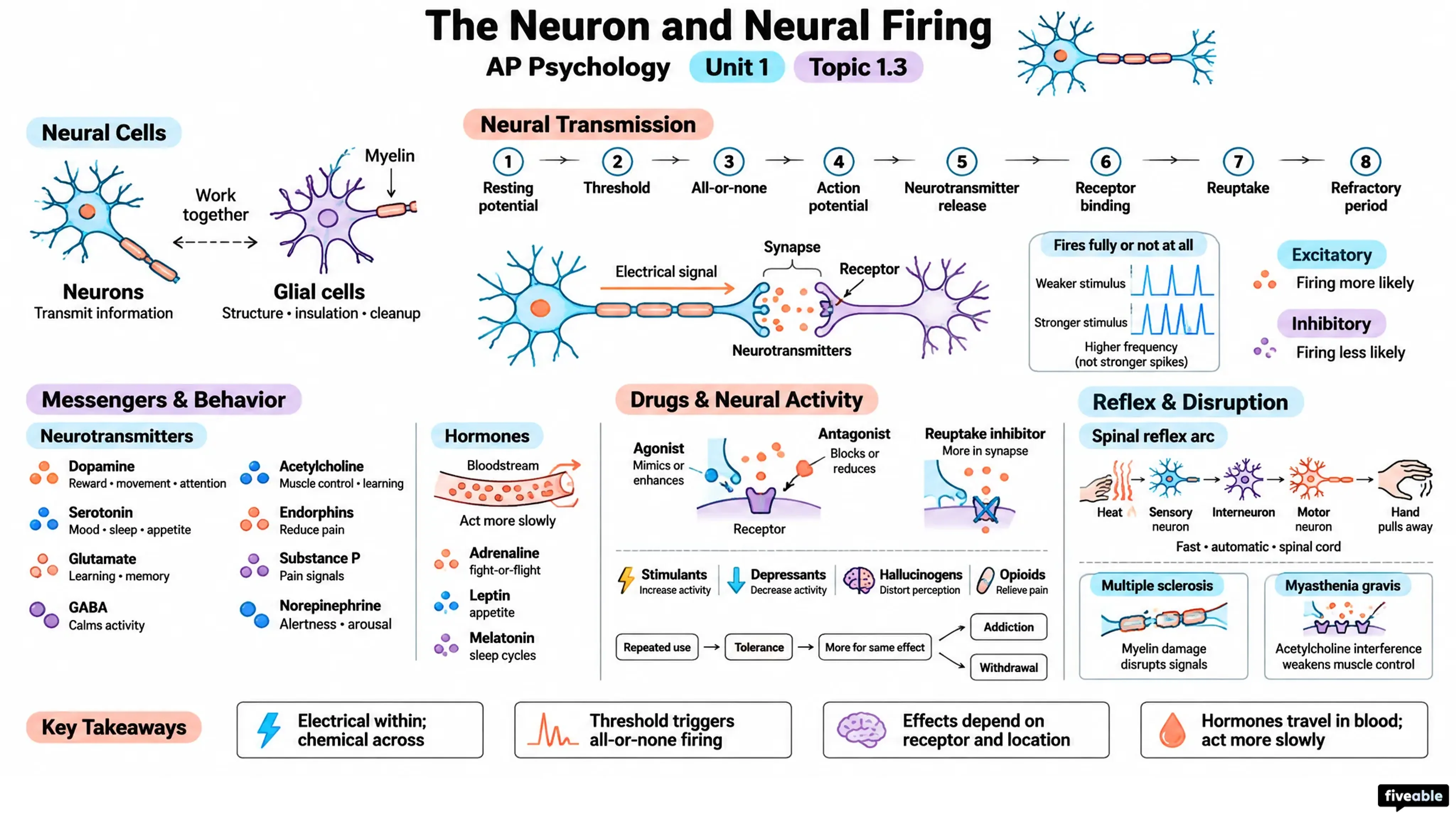
1.3 Neurons, Signaling + Drugs

  • Neurons transmit information; glia provide structure, insulation, communication, and waste transport.
  • Reflex arc: sensory neuron → spinal interneuron → motor neuron; response can occur before brain processing.

resting potential → threshold → all-or-none depolarization → refractory period → neurotransmitter release → receptor binding → reuptake/breakdown

  • Excitatory messages make firing more likely; inhibitory messages make it less likely.
  • Agonist increases/mimics action; antagonist blocks/reduces; reuptake inhibitor leaves more transmitter in synapse.
NeurotransmitterHigh-value association
Dopaminereward, movement, learning
Serotoninmood, sleep
Norepinephrinealertness, arousal
Glutamate / GABAmajor excitatory / inhibitory
Endorphins / substance Ppain relief / pain signaling
Acetylcholinemuscle action, learning, memory

Hormones: adrenaline—arousal; leptin—satiety; ghrelin—hunger; melatonin—sleep timing; oxytocin—bonding. Drug classes: stimulants ↑ activity; depressants ↓; hallucinogens distort perception/cognition; opioids relieve pain. Repeated use can produce tolerance, addiction, and withdrawal.

The rest of the Unit 1 sheet

6 more sections are on the one-page PDF:

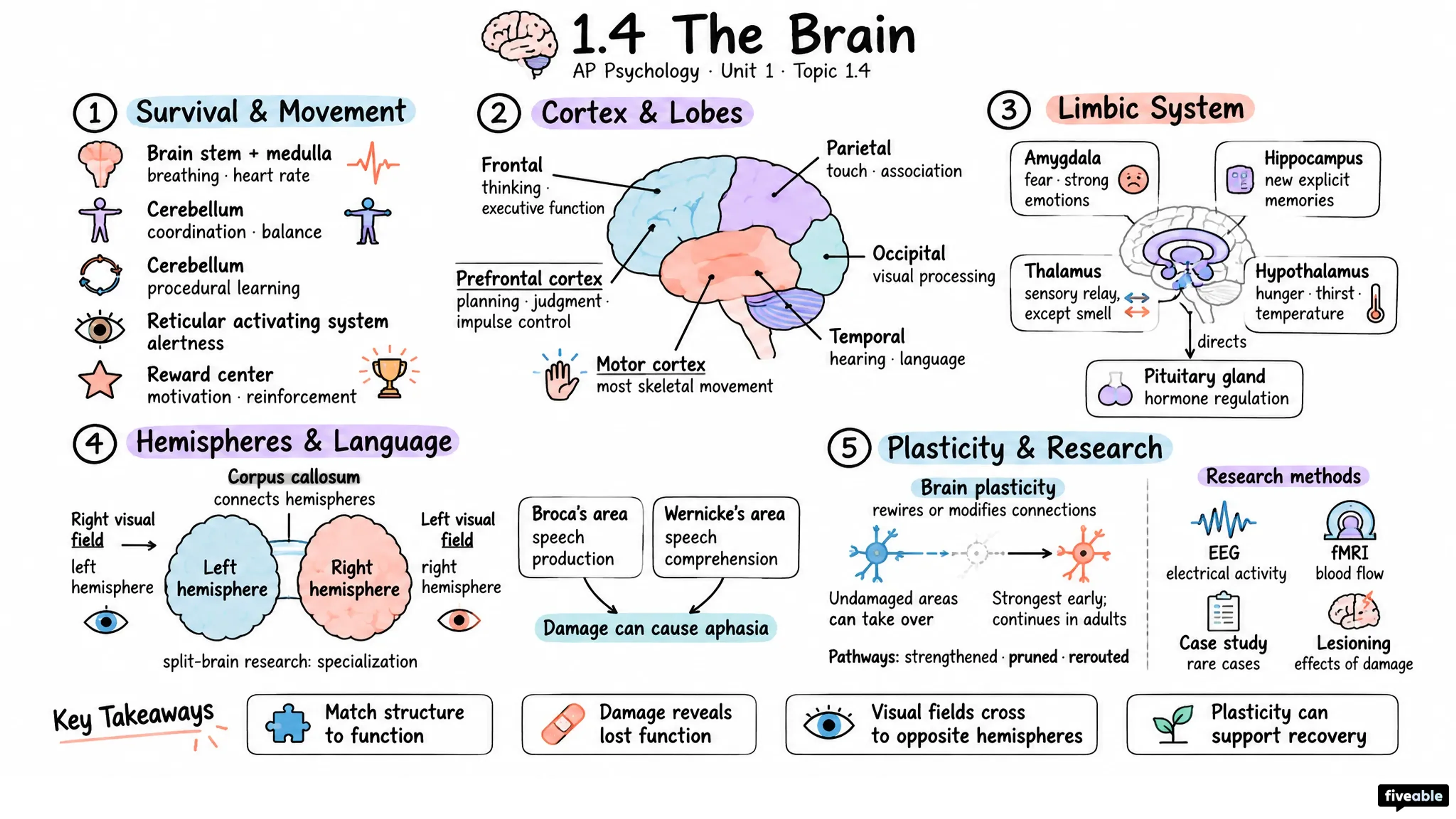
  • 1.4 Brain Structures + Methods

  • 1.5 Sleep

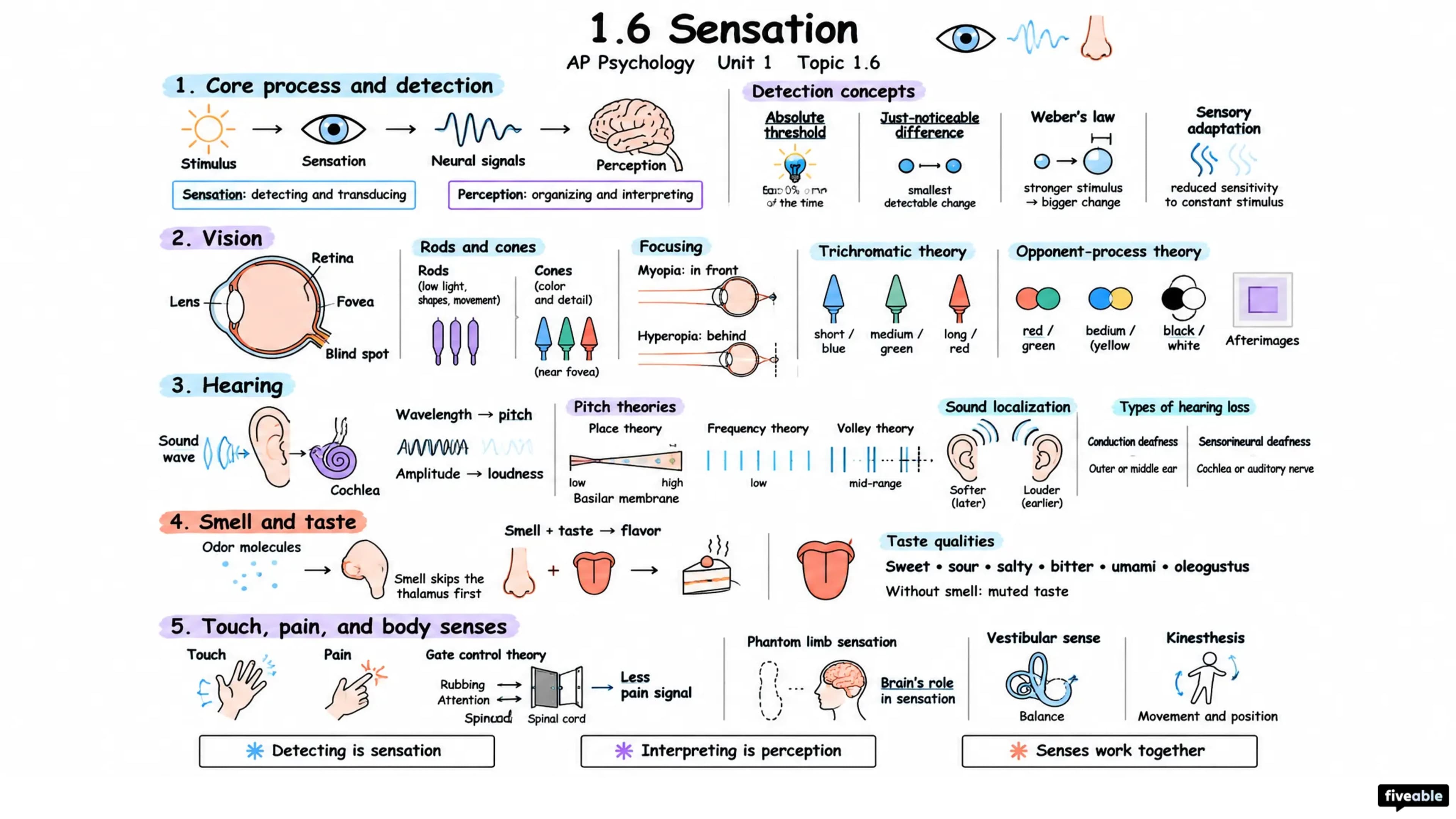
  • 1.6 Sensation Basics

  • Vision + Hearing

  • Chemical + Body Senses

  • High-Frequency Confusions

Made by you

Visual Cheatsheets

Pick a Unit 1 topic and a format: flowchart, comparison chart, vocab sheet, Cornell notes and more. Ready in about a minute.

Printable PDF · from the Fiveable shop

AP Psychology Unit 1 Cheatsheet

1 page · Biological Bases of Behavior · PDF

Visual Cheatsheets

One topic, the format you pick, ready in about a minute

Format

Topic

Takes 30–60 seconds

Preview: Standard

Unit 1: Biological Bases of Behavior, topic by topic

Each topic has a full study guide. See the whole unit.