generate your own visual cheatsheets
⚙️ AP Physics C: Mechanics Cheatsheets
Download the one-page AP Physics C: Mechanics cheatsheet PDF or browse AI-generated visual study aids with key formulas, concepts, and definitions for your exam review.
Text cheatsheets made by Fiveable, in print-ready PDF.

Compiled by students and teachers, then reviewed and updated every year.
1 page · PDF · updated every year
Same format, one unit at a time, aligned to the 2026-2027 course.
Unit 1
Unit 2
Unit 3
Unit 4
Unit 5
Unit 6
Unit 7


Printable PDF · from the Fiveable shop
8 pages · Subject + 7 unit cheatsheets · PDF
AI-generated one-pagers for a single topic. Make your own, or browse what other students have made.
choose a topic in AP Physics C: Mechanics
add custom requests (optional)

Unit 1 - 1.1 Scalars and Vectors

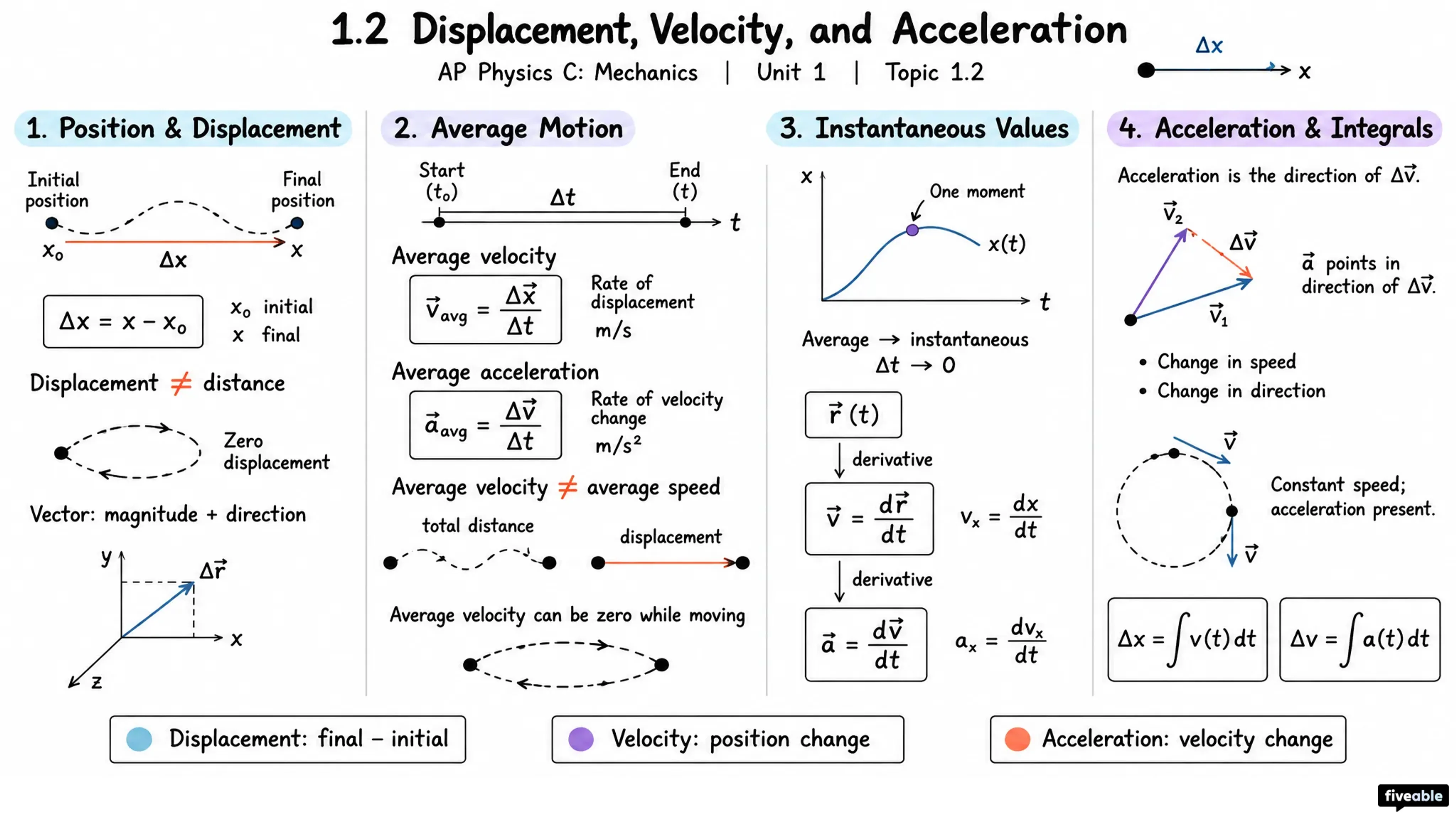
Unit 1 - 1.2 Displacement, Velocity, and Acceleration

Unit 1 - 1.2 Displacement, Velocity, and Acceleration

Unit 1 - 1.3 Representing Motion

Unit 1 - 1.4 Reference Frames and Relative Motion

Unit 1 - 1.5 Motion in Two or Three Dimensions

Unit 2 - 2.1 Properties and Interactions of a System

Unit 2 - 2.1 Properties and Interactions of a System

Unit 2 - 2.1 Properties and Interactions of a System

Unit 2 - 2.1 Properties and Interactions of a System

Unit 2 - 2.1 Properties and Interactions of a System

Unit 2 - 2.2 Forces and Free-Body Diagrams

Unit 2 - 2.3 Newton's Third Law

Unit 2 - 2.4 Newton's First Law

Unit 2 - 2.5 Newton's Second Law

Unit 2 - 2.6 Gravitational Force

Unit 2 - 2.7 Kinetic and Static Friction

Unit 2 - 2.8 Spring Forces

Unit 2 - 2.9 Resistive Forces

Unit 2 - 2.9 Resistive Forces

Unit 2 - 2.10 Circular Motion

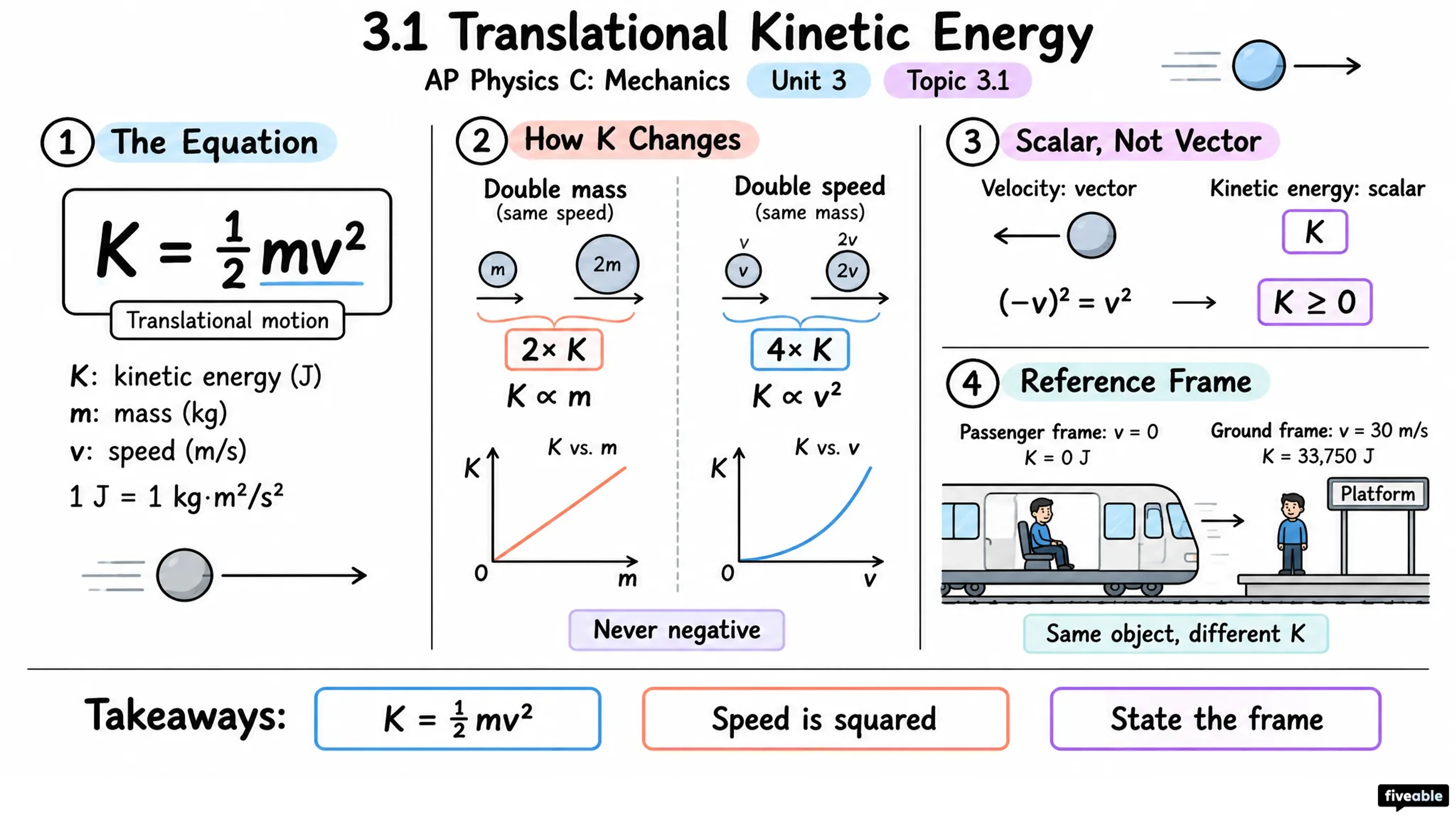
Unit 3 - 3.1 Translational Kinetic Energy

Unit 3 - 3.1 Translational Kinetic Energy

Unit 3 - 3.1 Translational Kinetic Energy

Unit 3 - 3.1 Translational Kinetic Energy

Unit 3 - 3.2 Work

Unit 3 - 3.2 Work

Unit 3 - 3.2 Work

Unit 3 - 3.3 Potential Energy

Unit 3 - 3.4 Conservation of Energy

Unit 3 - 3.5 Power

Unit 4 - 4.1 Linear Momentum

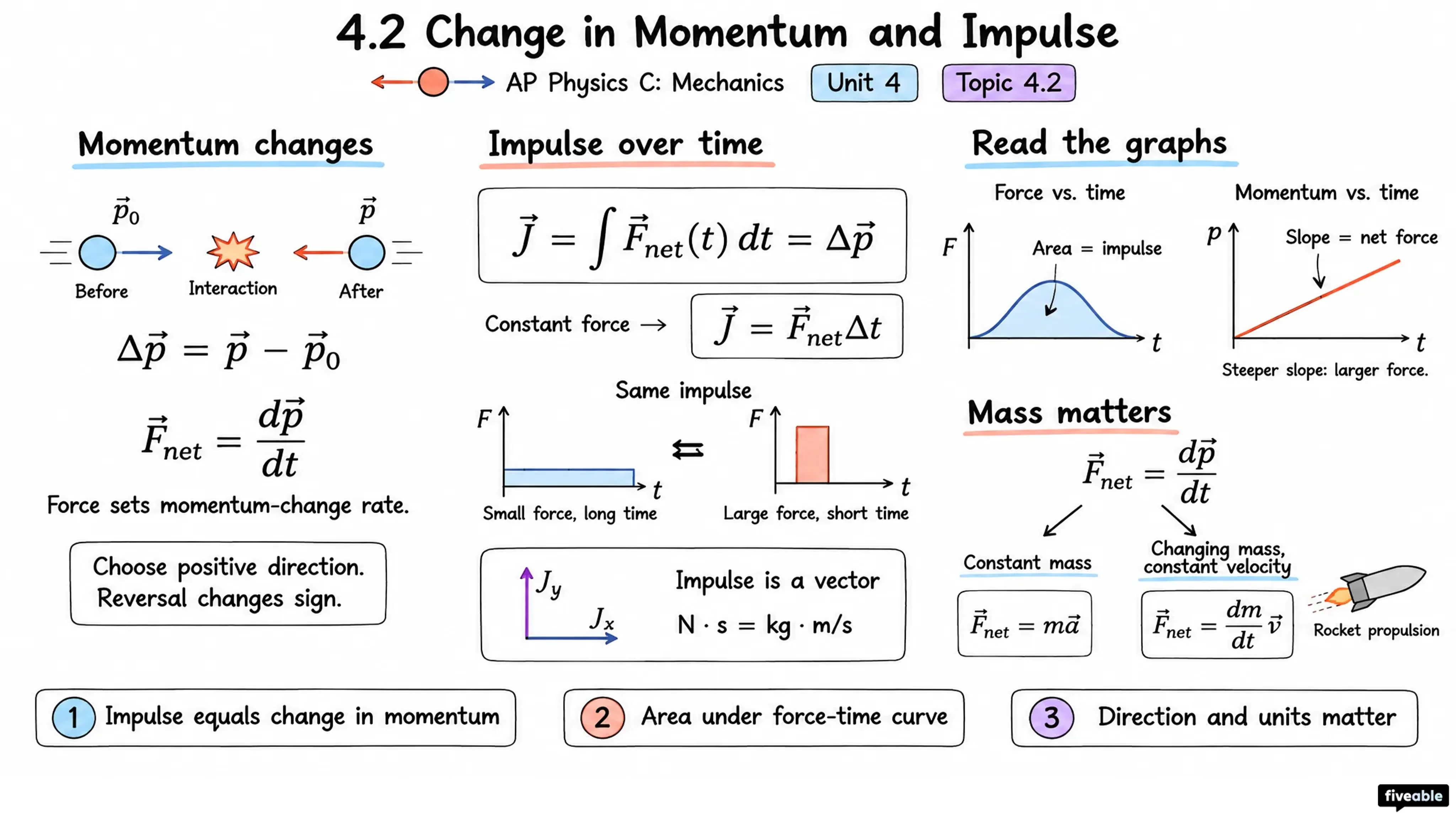
Unit 4 - 4.2 Change in Momentum and Impulse

Unit 4 - 4.3 Conservation of Linear Momentum

Unit 4 - 4.4 Elastic and Inelastic Collisions

Unit 5 - 5.1 Rotation

Unit 5 - 5.1 Rotation

Unit 5 - 5.2 Connecting Linear and Rotational Motion

Unit 5 - 5.3 Torque

Unit 5 - 5.4 Rotational Inertia

Unit 5 - 5.4 Rotational Inertia

Unit 5 - 5.5 Rotational Equilibrium and Newton's First Law in Rotational Form

Unit 5 - 5.6 Newton's Second Law in Rotational Form

Unit 6 - 6.1 Rotational Kinetic Energy

Unit 6 - 6.1 Rotational Kinetic Energy

Unit 6 - 6.2 Torque and Work

Unit 6 - 6.3 Angular Momentum and Angular Impulse

Unit 6 - 6.4 Conservation of Angular Momentum

Unit 6 - 6.5 Kinetic Energy of a System with Translational and Rotational Motion

Unit 6 - 6.6 Motion of Orbiting Satellites

Unit 7 - 7.1 Defining Simple Harmonic Motion (SHM)

Unit 7 - 7.1 Defining Simple Harmonic Motion (SHM)

Unit 7 - 7.1 Defining Simple Harmonic Motion (SHM)

Unit 7 - 7.1 Defining Simple Harmonic Motion (SHM)

Unit 7 - 7.1 Defining Simple Harmonic Motion (SHM)

Unit 7 - 7.2 Frequency and Period of SHM

Unit 7 - 7.3 Representing and Analyzing SHM

Unit 7 - 7.4 Energy of Simple Harmonic Oscillators

Unit 7 - 7.4 Energy of Simple Harmonic Oscillators

Unit 7 - 7.4 Energy of Simple Harmonic Oscillators

Unit 7 - 7.4 Energy of Simple Harmonic Oscillators

Unit 7 - 7.4 Energy of Simple Harmonic Oscillators

Unit 7 - 7.4 Energy of Simple Harmonic Oscillators

Unit 7 - 7.4 Energy of Simple Harmonic Oscillators

Unit 7 - 7.4 Energy of Simple Harmonic Oscillators

Unit 7 - 7.4 Energy of Simple Harmonic Oscillators

Unit 7 - 7.5 Simple and Physical Pendulums

AP Physics C Mechanics Exam - FRQ 4 – Qualitative/Quantitative Translation

AP Physics C Mechanics Exam - FRQ 3 – Experimental Design

AP Physics C Mechanics Exam - Multiple-Choice Questions (MCQ)
A cheatsheet condenses a whole course into the facts you actually need on exam day. The AP Physics C: Mechanics cheatsheets on this page summarize the key formulas, concepts, and definitions from each unit so you can review the entire course at a glance.
They work best as a final review: skim the one-page summary, spot the units you want to strengthen, then go deeper with the AP Physics C: Mechanics study guides. The visual cheatsheets in the gallery are organized by unit, and you can generate your own for any topic you want a quick refresher on.