AP Microeconomics Unit 1 Cheatsheet: Basic Economic Concepts

AP Microeconomics Unit 1 Cheatsheet: Basic Economic Concepts

Start with the first 4 sections of the Unit 1 one-page cheatsheet below. The full sheet is a PDF you can print.

Scarcity & Resource Allocation

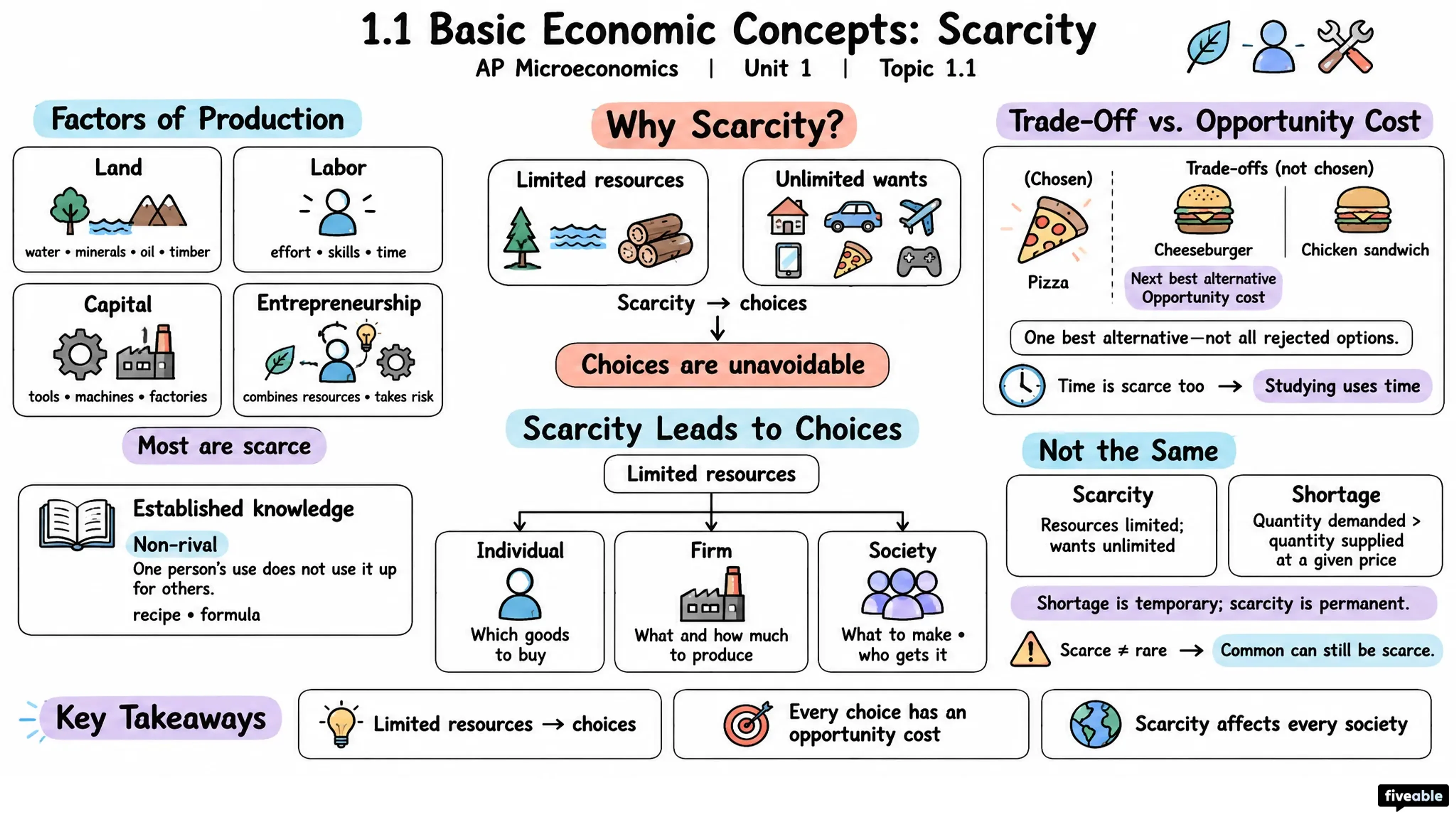
Scarcity: Most resources are limited relative to wants and needs, forcing individuals and societies to make choices.

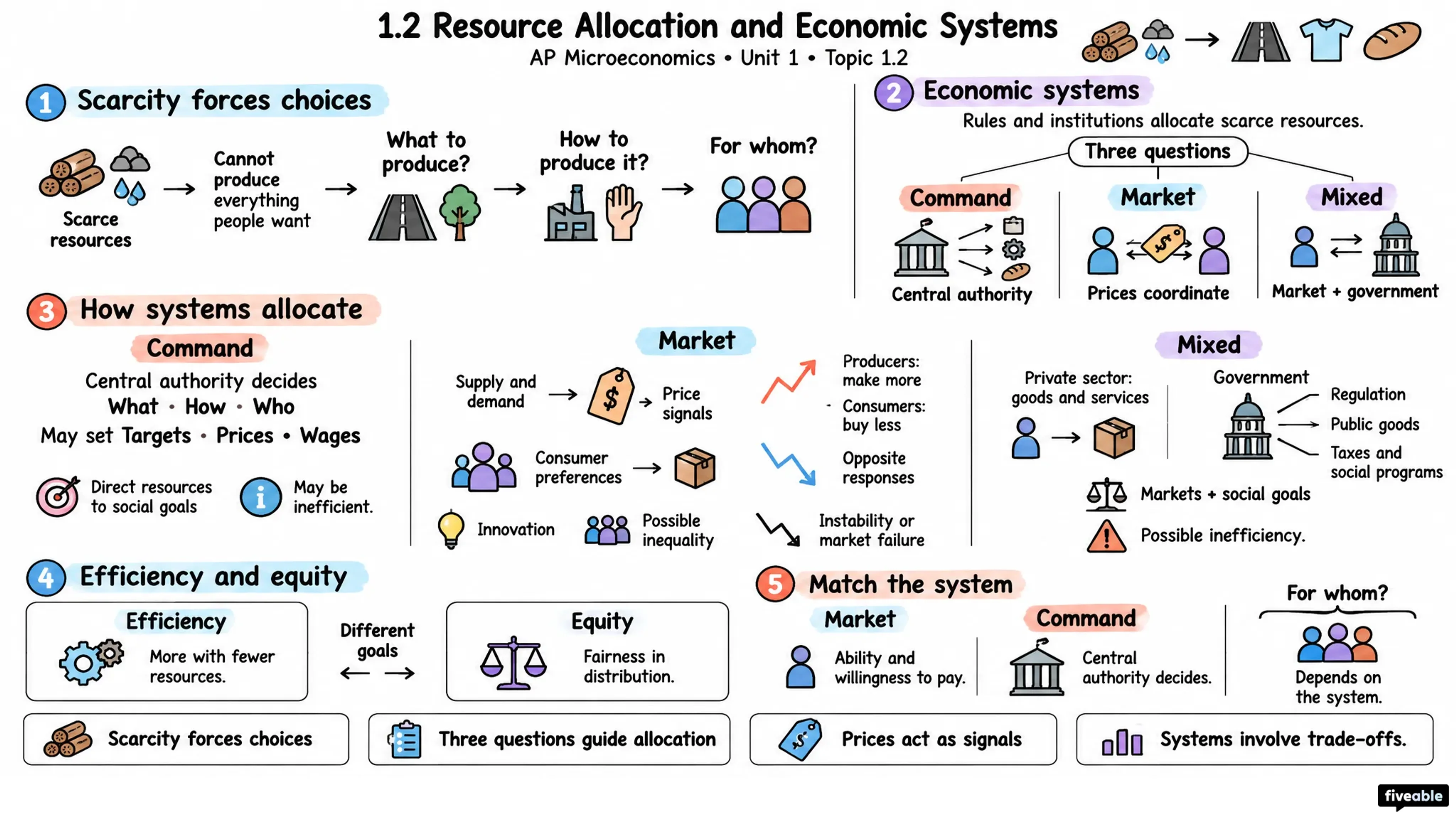
Three Basic Questions:

  • What goods/services to produce?
  • How to produce them?
  • Who consumes them?

Economic Systems: Command, market, and mixed economies answer these questions through different institutional arrangements and coordinating mechanisms.

Key distinction: Scarcity is universal; the economic system determines how allocation happens.
Production Possibilities Curve (PPC)

What it shows: Trade-offs between producing two goods at full employment and resource utilization.

Key concepts illustrated:

  • Scarcity (cannot produce unlimited amounts)
  • Opportunity cost (slope of PPC)
  • Efficiency (points on the curve)
  • Underutilized resources (points inside curve)
  • Economic growth (outward shift)

Shape depends on: Whether opportunity costs are constant (straight line), increasing (bowed out), or decreasing (bowed in).

Opportunity Cost & Comparative Advantage

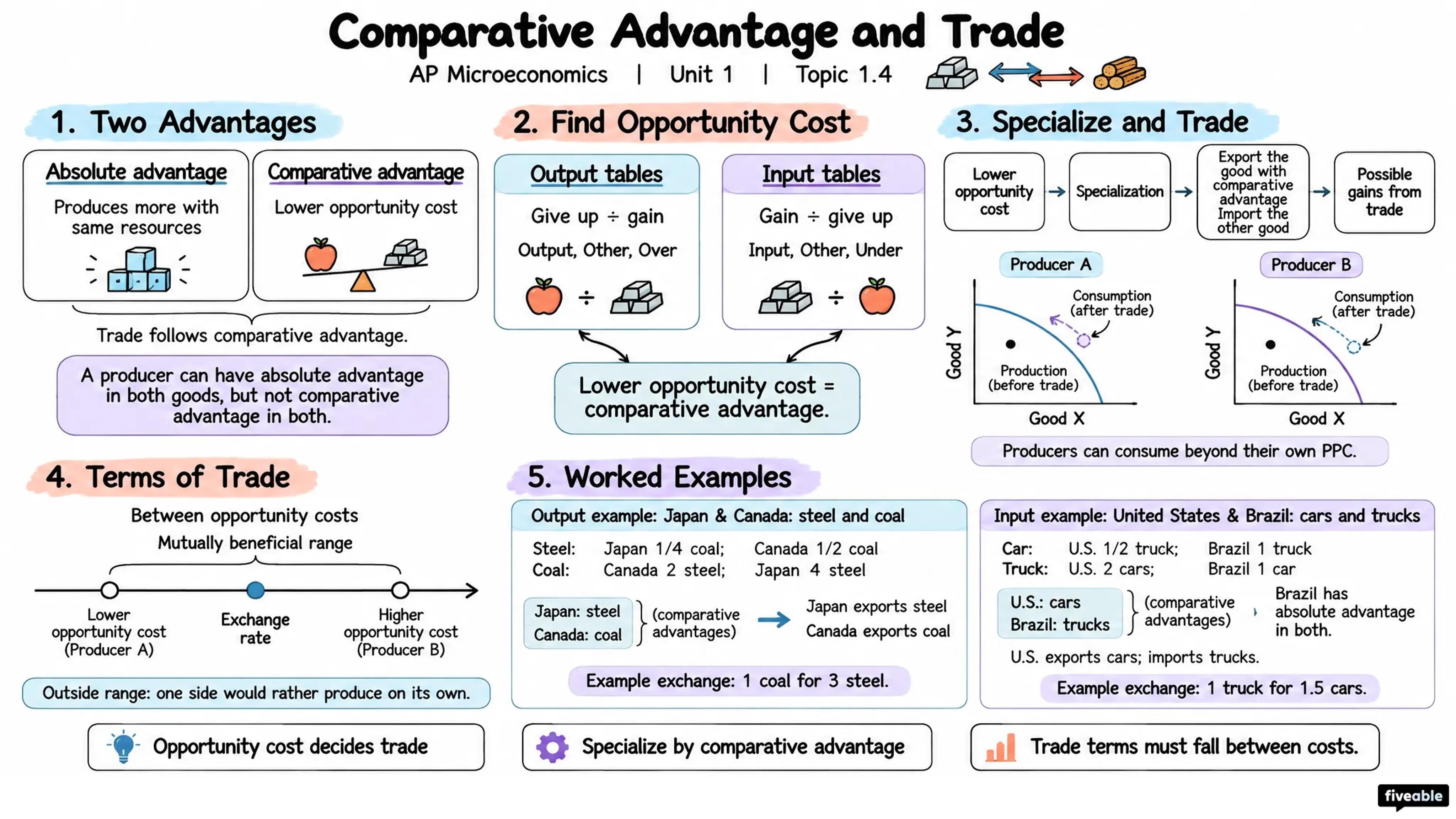
Opportunity cost: The value of the next-best alternative foregone when making a choice.

Absolute advantage: Ability to produce more of a good with the same resources than another producer.

Comparative advantage: Ability to produce a good at a lower opportunity cost than another producer.

Critical insight: Specialization and trade are based on comparative advantage, not absolute advantage. This allows both parties to consume beyond their individual PPCs.

Terms of trade: The exchange rate at which mutually beneficial trade occurs—must fall between each party's opportunity costs.

PPC Shifts & Growth

Causes of shifts:

  • Changes in factors of production (labor, capital, land, entrepreneurship)
  • Changes in productivity/technology

Outward shift: Economic growth—more output possible at full employment.

Inward shift: Economic contraction—fewer resources or lower productivity.

A point moving along the PPC is not growth; it's a trade-off. Growth requires the curve itself to shift outward.

The rest of the Unit 1 sheet

5 more sections are on the one-page PDF:

  • Cost-Benefit Analysis: Total vs. Marginal

  • Calculating Opportunity Cost

  • Consumer Choice & Marginal Utility

  • Gains from Trade & Specialization

  • Marginal Analysis Decision Framework

Made by you

Visual Cheatsheets

Pick a Unit 1 topic and a format: flowchart, comparison chart, vocab sheet, Cornell notes and more. Ready in about a minute.

Printable PDF · from the Fiveable shop

AP Microeconomics Unit 1 Cheatsheet

1 page · Basic Economic Concepts · PDF

Visual Cheatsheets

One topic, the format you pick, ready in about a minute

Format

Topic

Takes 30–60 seconds

Preview: Standard

Unit 1: Basic Economic Concepts, topic by topic

Each topic has a full study guide. See the whole unit.