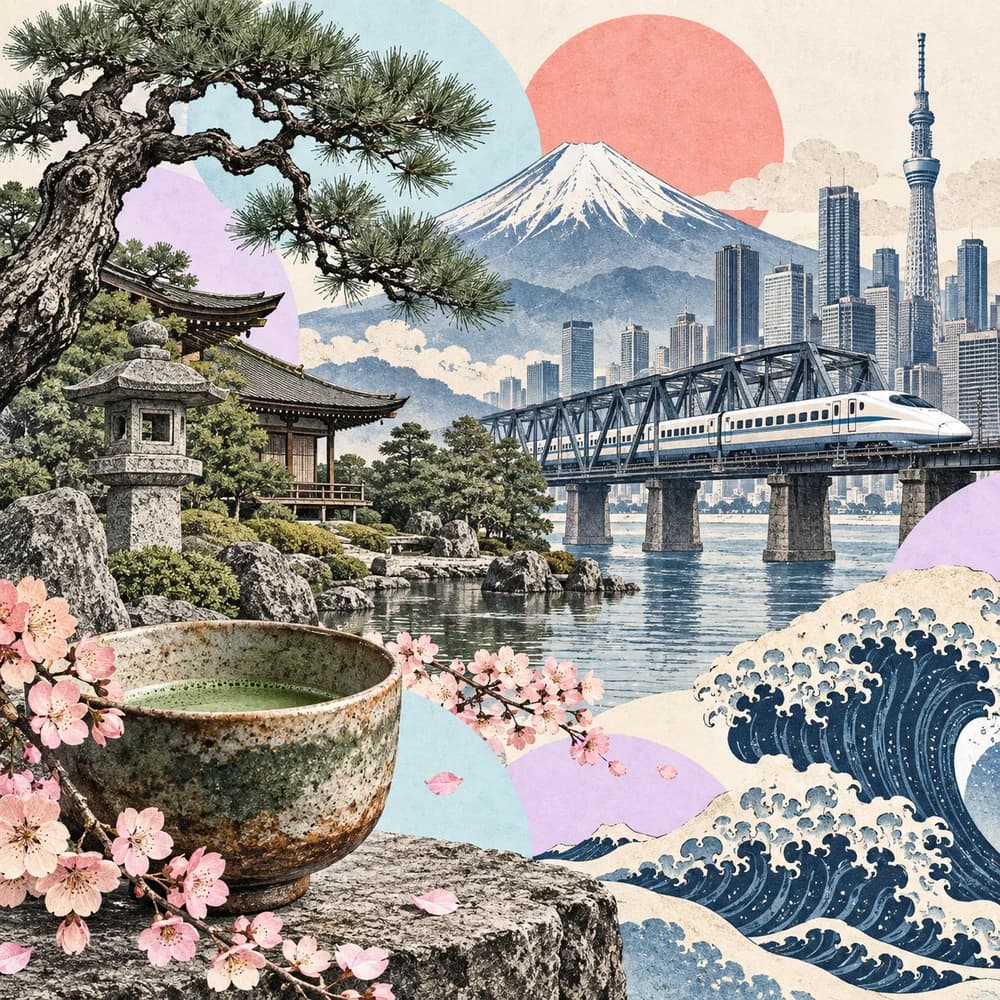
Unit 3 asks you to engage with Japanese art and creativity as both a language learner and a cultural analyst. Each topic gives you a content domain to discuss in Japanese and a set of cultural concepts to understand deeply enough to explain, compare, and evaluate.
Unit 3 covers six creative domains in Japanese culture: architecture (including concepts like 間 ma and 借景 shakkei), artistic heritage and preservation (文化財), beauty and aesthetics (わびさび, もののあわれ), fashion and design (kimono, avant-garde designers), literature (俳句, 和歌, 源氏物語), and visual and performing arts (歌舞伎, 能, 浮世絵). For each domain, you need vocabulary to describe, compare, and give opinions in Japanese.
The big idea: art as cultural expressionAcross all six topics, Unit 3 treats art not as decoration but as a window into Japanese values. Architecture reflects the concept of 間 (negative space). Aesthetics like わびさび find beauty in imperfection. Literature forms like 俳句 compress nature and impermanence into 17 syllables. Performing arts like 歌舞伎 preserve historical and moral narratives. Understanding why each art form exists and what it communicates is as important as knowing vocabulary about it.