280 questions
sorted by unit
French absolutism versus English constitutional development, 1600-1715
European monarchical centralization methods, 1648-1815
Industrialization's impact on European society and politics
Protestant Reformation causes in early modern Europe, 1500–1555
First Industrial Revolution causes in Britain, 1750–1850
European decolonization causes, 1945-1975
Commercial Revolution's societal effects, 1500-1700
Absolute monarchy consolidation and European aristocratic power, 1648–1789
Global economic crisis, European political transformation, 1929–1939
Monarchical centralization methods in Spain and France, 1450–1648
Enlightenment versus conservative political thought, 1700-1850
European revolutions: 1848 versus 1989 causes
European artistic expression: Renaissance through Baroque transformation, 1450–1700
European political reform movements, goals and methods, 1648–1914
European diplomatic methods and international cooperation, 1815-2001
Dutch Republic versus Spanish economic development, 1500-1700
French Revolution versus 1848 Revolutions: causes
British and French decolonization processes, 1945-1975
Atlantic trade shift, European economic and political transformation, 1450–1648
French Revolution's effects on European politics and society, 1789–1815
European economic and political integration post-1945
Dutch Republic versus Spanish economic development, 1550-1700
Mercantilism versus classical liberalism economic policies, 1650–1900
Russian Revolution versus Eastern European revolutions
European natural philosophy and scientific understanding, 1450-1700
European working-class daily life transformations, 1648-1914
European global power and influence, 1815-2001
European warfare and societal impact, 1648-1914
Working class conditions in Europe, 1815-2001
Catholic Reformation's impact on European society and politics, 1545–1648
Global trade expansion and European economic transformation, 1648–1789
Fascist and totalitarian regime rise in interwar Europe, 1919–1939
Italian Renaissance humanism versus Scientific Revolution empiricism, 1450–1700
Westphalia and Congress of Vienna diplomatic settlements, 1648–1815
European women's rights movement goals: 1850-1914 versus 1945-2000
Commercial and merchant class influence in Europe, 1450-1700
Science and reason's influence on European intellectual culture, 1648–1914
Nationalism's evolving influence on European politics, 1815-2001
Humanist thought and European intellectual cultural transformation, 1450–1648
European imperial expansion causes, 1870-1914
Welfare state development and European social transformation, 1945–2001
Protestant Reformation's political impact: Holy Roman Empire versus France, 1500–1648
French Revolution versus 1848 Revolutions goals
British and French decolonization processes, 1945-1975
European overseas expansion motivations, 1450-1700
European balance of power methods, 1648-1914
European citizen political participation, 1815-2001
Printing press impact on European intellectual and cultural development, 1450–1648
Absolutism's impact on European political and social structures, 1648–1789
Communist regime collapse in Eastern Europe, Soviet Union, 1970–1991
Italian city-states versus western European monarchies, 1450-1550
French versus Russian absolutism development, 1648–1750
German and Italian national unification processes, 1850-1871
European monarchical consolidation methods, 1450-1700
Religion's role in European society, 1648-1914
European colonialism and decolonization, 1815-2001
Spanish and Portuguese overseas empires, 1450-1648
Industrial Revolution economic and social transformation differences, 1750–1914
World War origins: nationalism versus fascism and imperialism, 1914–1939
European economic practices, 1450-1700
State-individual relationship transformation in Europe, 1648–1914
Women's social and political roles in Europe, 1815-2001
Italian and Northern Renaissance differences, 1450-1648
French absolutism versus English constitutional development, 1648–1789
Congress of Vienna versus Treaty of Versailles settlements
Religion and political authority in early modern Europe, 1450–1700
European aristocracy's political and social power transformation, 1648–1914
Columbian Exchange effects on European economy and society, 1450–1700
Scientific Revolution's impact on European intellectual culture, 1648–1815
Nationalism's impact on European political structures, 1815-1914
Protestant Reformation's impact on European politics and society, 1500–1648
French Revolution causes and contributing factors, 1750–1789
Cold War's impact on European politics and society, 1945–1991
European overseas exploration and expansion causes, 1450–1648
Enlightenment influence on European political structures, 1648–1815
Industrialization's social effects on nineteenth-century Europe
Religious divisions and European artistic expression transformation, 1520–1648
Scientific and intellectual challenges to European worldviews, 1850–1914
European cultural and intellectual transformation through global conflict, 1914–1950
European overseas expansion and economic transformation, 1492–1648
Global market economy and European social transformation, 1648–1815
Economic instability and European authoritarianism, 1919-1939
European overseas expansion and Western European economic transformation, 1492–1648
Liberalism, nationalism, conservative order in Europe, 1815–1848
European integration: economic versus political motivations, 1945–2000
New Monarchies and Western European political transformation, 1450–1550
Economic and demographic change in eighteenth-century Europe
European cultural and intellectual responses to global conflict, 1914–1945
Catholic and Protestant Reformation approaches to religious authority, 1517–1648
Industrial development: Britain versus continental Europe, 1815–1914
Nazi and Soviet authoritarian control methods, 1917–1945
Political ambitions versus religious conflict, 1550-1648
European commercial rivalries, diplomacy, warfare, 1648–1815
Renaissance humanism and social gender norms, 1450–1550
European economic practices, 1650-1750
European cultural and intellectual transformation, 1914-1950
Italian and Northern Renaissance religious reform approaches, 1450–1550
English and French political development, 1648-1715
Nazi and Soviet power maintenance methods, 1919-1939
Northern and Italian Renaissance artistic intellectual values, 1450–1550
British versus continental European industrialization factors, 1815–1914
Western and Eastern European postwar economic recovery strategies, 1945–1970
Economic and demographic change in eighteenth-century Europe
European cultural and intellectual transformation, 1900-1950
English and French Reformation: political and religious differences, 1530–1648
Continental European versus British industrialization patterns, 1815–1914
Western and Eastern European economic development divergence, 1945-1989
European overseas expansion and economic transformation, 1450-1648
European commercial rivalries, diplomacy, and warfare, 1648–1815
Political and religious conflicts, English constitutional monarchy, 1603–1689
Economic stagnation and communism's collapse, 1970–1991
European overseas expansion motives, 1450-1648
Industrialization and socialist ideology development in Europe, 1815–1914
Cold War influence on Western European political and economic development, 1945–1991
Western and Eastern European economic development divergence, 1945–1989
Economic and social transformation during European Reformation, 1500–1648
Scientific and intellectual theories challenging European social values, 1850–1914
European cultural and intellectual transformation post-World War One, 1914–1939
Scientific and intellectual developments challenging European worldviews, 1850–1914
European imperialism: economic versus political motivations, 1880–1914
Global commerce and European power dynamics, 1648-1815
Napoleon's domestic reforms and Revolutionary ideals, 1799–1815
Scientific Revolution's challenge to traditional authority, 1543–1700
Enlightenment ideas and European monarchical reform policies, 1740–1789
Protestant Reformation and European state centralization, 1517–1648
French absolutism versus English constitutional development, 1648–1715
Mercantilism and European state consolidation, 1648-1789
Political motivations in Protestant Reformation spread, 1517–1648
Protestant Reformation: England versus Holy Roman Empire, 1500–1648
Scientific Revolution's transformation of European natural world understanding, 1543–1700
Commercial rivalries and European diplomatic relations, 1648-1815
Napoleon's domestic policies and Revolutionary ideals, 1799–1815
Economic motivations in New Imperialism, 1880-1914
Scientific and intellectual developments challenging European traditions, 1850–1914
Scientific Revolution's transformation of natural world understanding, 1543–1700
Enlightenment ideas and European monarchical policy, 1740–1789
British versus French decolonization processes, 1945-1975
Protestant Reformation and political centralization in Europe, 1517–1648
Lutheran and Calvinist movements: societal and political impacts, 1517–1648
Women's roles in postwar Europe, 1945-2000
Scientific Revolution's challenge to traditional European authority, 1543–1700
Absolute versus enlightened monarchy political practices
Dutch Republic and French political structures, 1648-1715
Mercantilist policies and European economic transformation, 1650-1750
European economic competition and state conflict, 1648-1763
French Revolution's transformation of social hierarchy, 1789–1815
Political factors in Protestant Reformation spread, 1500–1648
European intellectual and cultural transformation, 1914-1950
Liberalism, nationalism, conservative order in Europe, 1815–1914
State intervention in British versus continental European industrialization, 1815–1914
Scientific and intellectual developments challenging European traditions, 1850–1914
European imperialism in Africa and Asia, 1880-1914
European integration and Western state relations, 1945-2000
Industrialization's impact on working-class families and gender roles, 1815–1914
Political consequences of World Wars One and Two
Economic competition and European diplomatic relations, 1648-1815
French Revolution's transformation of political and social order, 1789–1815
French absolutism versus English constitutional development, 1648–1715
World War I's impact on European culture and thought, 1914–1939
British parliamentary monarchy versus French absolutism, 1648–1789
French Revolution's transformation of social and political order, 1789–1815
Western and Eastern European political systems, 1945-1989
European liberalism and conservatism, 1815-1848
European state economic intervention, 1815-1914
Wars of Religion and European state sovereignty, 1560–1648
English parliamentary sovereignty versus French absolute monarchy, 1648–1715
Mercantilist policies and European economic development, 1648–1815
Scientific Revolution's challenge to traditional European worldviews, 1543–1700
Women's social status and economic roles, 1914-1950
Italian and Northern Renaissance distinctions, 1450–1550
Scientific Revolution's challenge to traditional European worldviews, 1543–1700
Enlightenment ideas and European political transformation, 1715–1815
Women's status in postwar Europe, 1945-2000
Government responses to industrialization's social consequences, Europe 1815-1914
Political motivations versus religious convictions in Protestantism, 1517–1648
Global economy expansion and European diplomatic strategies, 1648–1815
French Revolution's transformation of social and political structures, 1789–1815
European integration's impact on state relationships, 1950-2000
World War I's impact on European culture and thought, 1914–1950
World War I's impact on European culture and thought, 1914–1939
Scientific Revolution's transformation of European natural philosophy, 1543–1700
Enlightenment ideas and European state policies, 1740-1815
Italian and Northern Renaissance values, 1450-1550
Women's status transformation in postwar Europe, 1945–2000
Mercantilism's impact on European economic development, 1648–1815
Economic motivations in New Imperialism, 1880-1914
Scientific and intellectual developments challenging European traditions, 1850–1914
Scientific Revolution's impact on nature and authority, 1543–1789
Enlightenment philosophies and European monarchical reform policies, 1740–1815
Women's roles in European society, 1914-1950
English and French Reformation trajectories, 1517-1648
Ideologies of change versus conservative order, 1815-1848
Industrial Revolution's impact on working-class families, 1815–1914
Economic instability and European authoritarianism, 1919-1939
Immigration from former colonies, Western European cultural identity, 1950–2000
Protestant Reformation's impact on political-religious authority, 1517–1648
Italian and Northern Renaissance secularism, individualism differences, 1450–1550
European economic transformation through transatlantic contact, 1492–1648
Global market economy and European social transformation, 1648–1750
British versus continental European industrialization patterns, 1815–1914
State economic intervention in nineteenth-century Europe
European art, industrialization, scientific advancement, 1850–1914
Protestant Reformation spread and political motivations, 1517–1648
Nazi and Soviet authoritarian control methods, 1919–1945
Socialist ideologies and European political transformation, 1848-1914
Women's social status and economic roles, 1815-1914 Europe
Economic competition and European power balance, 1648-1815
Absolutism versus constitutional monarchy development, 1648–1715
Global economy expansion and Western European transformation, 1648–1750
Western and Eastern European political systems, 1945-1989
Conservative political order, 1815-1914 transformations
Mercantilist policies and European economic development, 1648–1815
Political factors in Protestant Reformation spread, 1517–1648
French Revolution's transformation of political and social order, 1789–1815
European integration and national sovereignty transformation, 1950–2000
Nazi and Soviet political ideologies, 1933-1945
Political revolutions and European conservative order, 1815-1848
British versus continental European industrialization patterns, 1815–1914
Protestant Reformation's impact on state-religion relations, 1517–1648
Soviet collapse and European geopolitical transformation, 1985–2005
Women's social status in nineteenth-century Europe
Mercantilist policies and European economic development, 1648–1815
Classical text revival and European cultural transformation, 1450–1550
Enlightenment ideas and European political policies, 1740-1789
Napoleon's preservation and betrayal of Revolutionary ideals, 1799–1815
British versus French decolonization processes, 1945-1975
Protestant Reformation and European state power growth, 1517–1648
Italian and Northern Renaissance artistic approaches, 1450–1550
French Revolution, Napoleon, Enlightenment ideals continuity, 1789–1815
Protestant Reformation success in Holy Roman Empire, 1517–1555
World War I's impact on European society and gender, 1914–1939
Industrialization and European socialist political movements, 1815–1914
Global economy expansion and European social transformation, 1648-1789
Scientific Revolution's challenge to traditional authority, 1543–1700
Enlightenment ideas and European monarchical policies, 1740-1789
Working class life during European industrialization, 1815-1914
Protestant Reformation's impact on church-state relations, 1517–1648
Columbian Exchange's economic and social impacts on Europe, 1492–1648
Enlightened absolutism and traditional monarchical rule, 1740–1790
French Revolution and Napoleonic transformation of European political order, 1789–1815
Feminist movement's impact on women's status, Western Europe 1945-2000
World War I's impact on European intellectual and cultural life, 1914–1950
Bismarck's alliance systems versus post-1890 European diplomacy
Modernism's transformation of European artistic expression, 1850–1914
Absolute versus enlightened monarchy power exercise
Welfare state expansion and Western European social structure, 1945–1980
Dutch Republic versus French absolutism, 1648-1715
Italian and Northern Renaissance values, 1450-1550
Columbian Exchange economic impacts on Europe, 1492–1648
Global market economy's impact on European society, 1648–1815
Scientific and intellectual developments, European society and nature, 1850–1914
Industrialization and European social class transformation, 1815–1914
Long-term social grievances, French Revolution outbreak, 1750–1789
Napoleon's domestic reforms and Revolutionary principles, 1799–1815
Scientific Revolution's challenge to traditional cosmology, 1543–1700
Enlightenment ideas influencing European rulers' policies, 1740–1789
British versus continental European industrialization patterns, 1815–1914
Political ideologies challenging European conservative order, 1815-1914
World War I's impact on European culture and thought, 1914–1939
Commercial rivalries and European power balance, 1648-1815
French Revolution's transformation of social hierarchy, 1789–1815
Protestant Reformation's impact on church-state relations, 1517–1648
Scientific Revolution's challenge to traditional cosmology, 1543–1700
Enlightenment philosophies and absolute monarchy in Europe, 1740–1815
Industrial Revolution's impact on European working class, 1815–1914
European political order, industrialization, continuity and change, 1815–1914
European imperialism: economic motivations in Africa, Asia, 1880–1914
Scientific revolution's impact on European intellectual culture, 1850–1914
European integration's impact on political and economic structures, 1945–2000
Scientific Revolution's challenge to authority and worldview, 1543–1700
Enlightened Absolutism versus seventeenth-century absolute monarchy
Industrialization's impact on European working-class society, 1815–1914
New political ideologies challenging European order, 1815-1914
Protestant Reformation's impact on social hierarchies and women, 1500–1648
French absolutism versus English constitutional development, 1648-1715
World War I's impact on European culture and thought, 1914–1939
Protestant Reformation and European political centralization, 1517–1648
Italian and Northern Renaissance artistic approaches, 1450–1550
Industrialization's impact on European social hierarchies
Unit 6
In your response you should do the following:
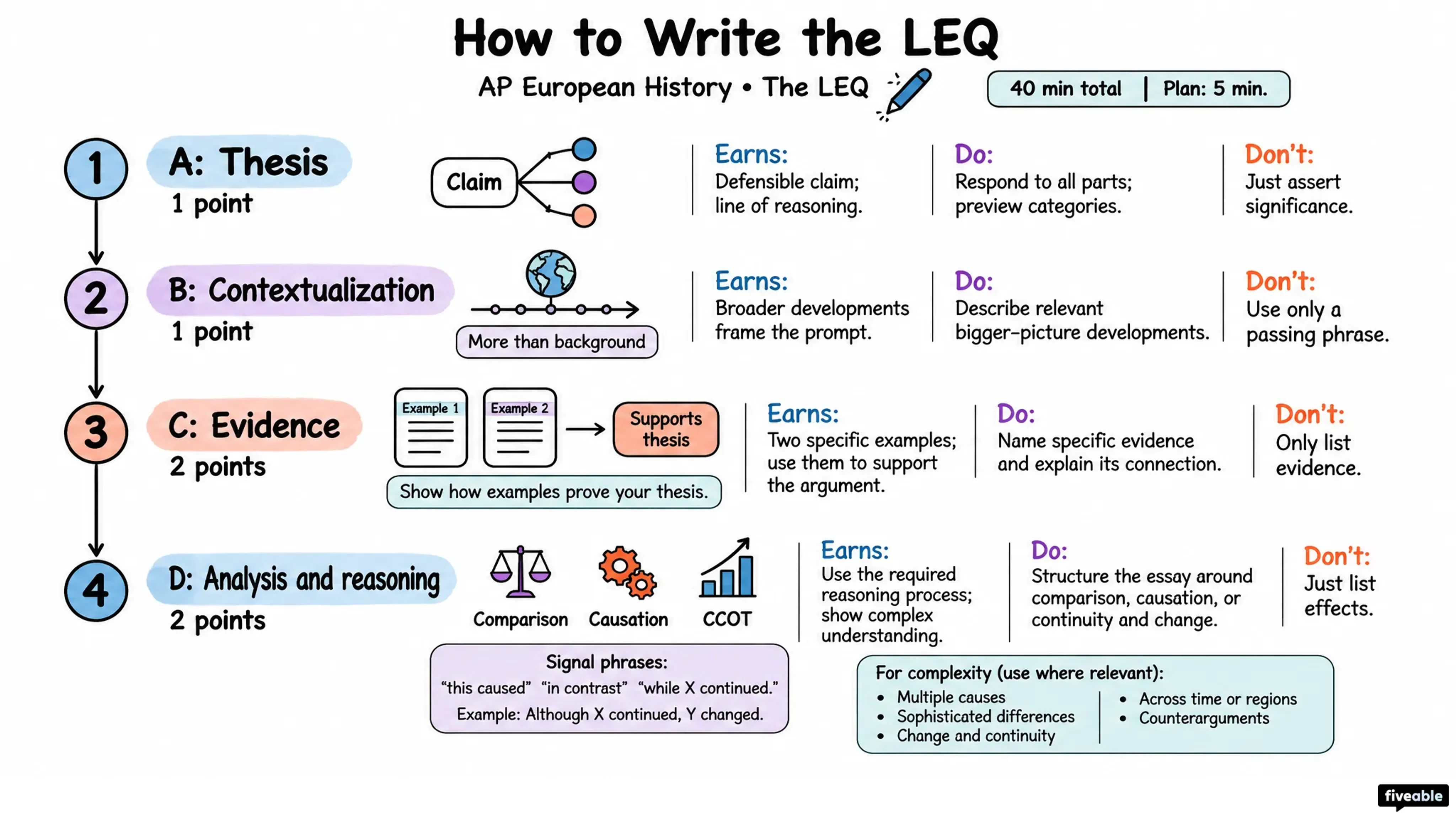
Respond to the prompt with a historically defensible thesis or claim that establishes a line of reasoning.
Describe a broader historical context relevant to the prompt.
Support an argument in response to the prompt using at least two pieces of specific and relevant evidence.
Use historical reasoning (e.g., comparison, causation, continuity or change over time) to frame or structure an argument that addresses the prompt.
Demonstrate a complex understanding of a historical development related to the prompt through sophisticated argumentation and/or effective use of evidence.
1. Evaluate the most significant difference between the political development of France and the political development of England in the period from 1600 to 1715.
What the LEQ asks The Long Essay Question is one required broad prompt in Section II of the AP European History exam. There are no documents, so you build a historical argument with evidence from your own knowledge.
40 min to plan and write
6 points across rows A to D
15% of your exam score A
Part A: Thesis A defensible claim that sets up a line of reasoning
1 pt
B
Part B: Contextualization Broader developments that frame the prompt
1 pt
C
Part C: Evidence Two specific examples, used to support the argument
2 pts
D
Part D: Analysis and reasoning Comparison, causation, or continuity and change, plus a complex understanding
2 pts
How LEQ practice works Each question follows the exam’s format, from the full prompt to a score on every part.
1
Read the full prompt One broad prompt with its time period, laid out the way the exam shows it.
2
Write on a 40-minute timer The time to plan for on exam day. Pause it or turn it off, and your response saves as you go.
3
Submit for a score out of 6 Your response is scored against the scoring guidelines written for that question. Your first score is included.
Feedback on every part A summary at the top tells you what to work on next. Below it, each part shows whether you earned the point and what the scoring guidelines were looking for.
Earned the point. You provided a historically defensible claim that the state became less involved in the economy due to the shift from mercantilism to capitalism.
Earned the point. You successfully established the broader historical context by describing the pre-industrial reliance on subsistence agriculture and mercantilist policies.
Did not earn the point. While you discussed broad economic theories like capitalism, socialism, and communism, you did not provide specific historical examples of state actions or policies (such as the repeal of the Corn Laws, Bismarck's welfare state, or the Factory Acts).
Detailed feedback on a practice LEQ Questions about the LEQ How many responses can I get scored? You can read every question without a plan. Your first scored response is included. A plan unlocks unlimited scoring.
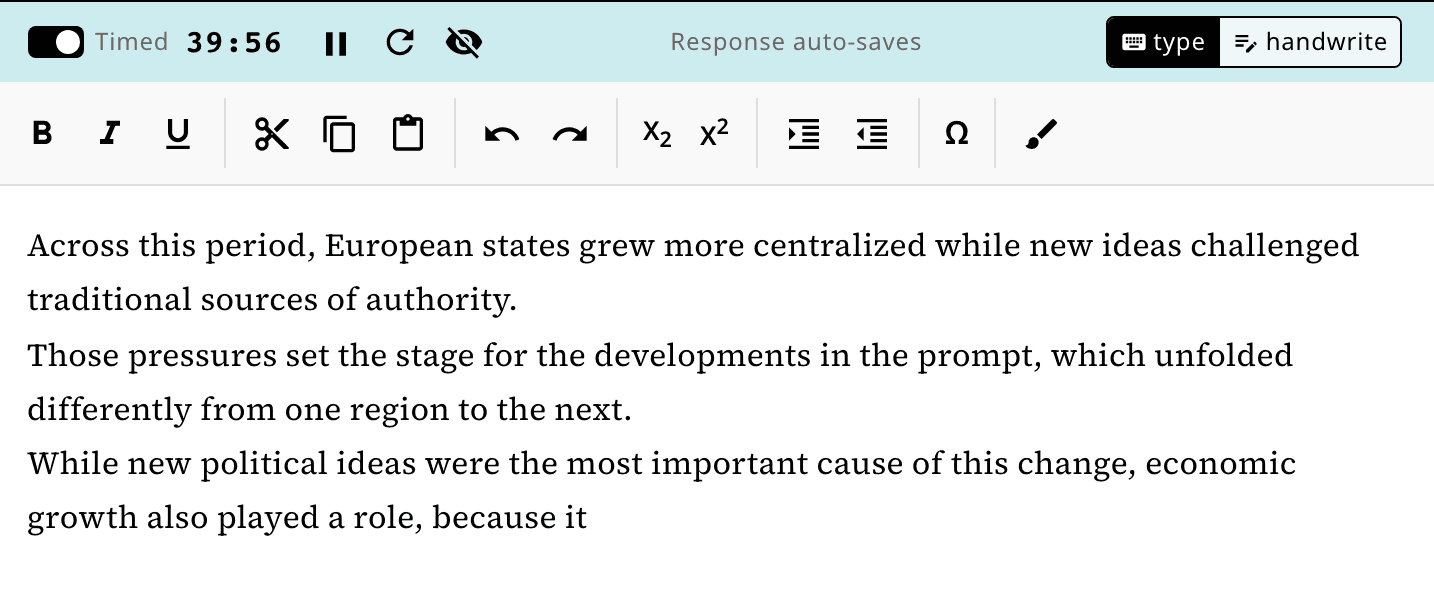
Do I still choose between three prompts? No. Beginning with the May 2027 exam, the LEQ is one required broad prompt, and each question here gives you one prompt. Your choice is which developments and evidence to use.
How is the LEQ different from the DBQ? The LEQ has no documents, so every piece of evidence comes from what you know. The DBQ gives you seven documents and 60 minutes, including a reading period.
What reasoning will the prompt ask for? Comparison, causation, or continuity and change over time. Row D checks that you use that reasoning to structure your argument.
Can I write my answer by hand? Yes. Switch the editor to handwrite, write on paper, and add a photo of your page.
More AP European History practice DBQ practice Document-Based Questions with the full prompt and all seven documents.
AP European History FRQs Every FRQ type for AP European History, with practice for each.
AP European History study guides Unit-by-unit review for the whole course.