
Sitcoms are built on a foundation of structural elements and comedic techniques that create laughter and keep viewers hooked. From the three-act structure to the use of cold opens and subplots, these shows follow a tried-and-true formula for storytelling and humor.
Verbal and physical comedy, irony, and breaking the fourth wall are just a few of the tools sitcoms use to tickle our funny bones. Recurring elements like catchphrases and running gags help build a show's identity, while different comedic styles cater to diverse audiences and changing tastes.
Sitcom episode structure
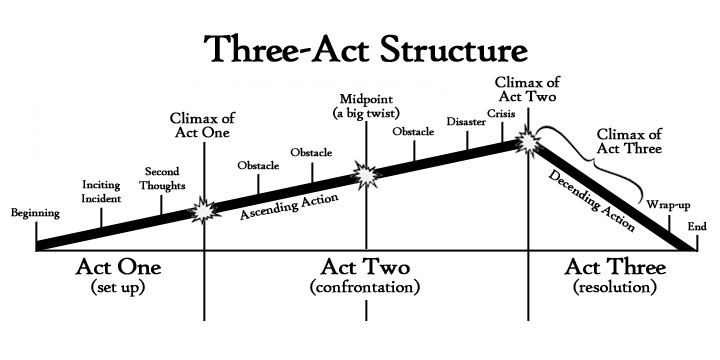
Three-act structure and episode length
- A typical sitcom episode is usually 22-30 minutes long, including commercial breaks
- Follows a three-act structure: setup, confrontation, and resolution
- Setup introduces the main conflict or problem
- Confrontation escalates the conflict and raises the stakes
- Resolution provides a satisfying conclusion and often restores the status quo
Cold open and main plot
- The cold open, or teaser, is a short, often humorous scene that precedes the opening credits
- Sets the tone for the episode and may or may not be directly related to the main plot
- Examples: a standalone joke in "Friends" or a flash-forward in "How I Met Your Mother"
- The main plot, or A-story, is the primary storyline that drives the episode
- Involves the main characters facing a conflict or problem
- Occupies the majority of the episode's runtime
- Examples: Jerry's girlfriend's "man hands" in "Seinfeld" or Leslie's efforts to fill in a pit in "Parks and Recreation"
Subplots and climax
- Subplots, or B-stories and C-stories, are secondary storylines that run parallel to the main plot
- Often focus on supporting characters or provide comedic relief
- May or may not intersect with the main plot
- Examples: Dwight's beet farm in "The Office" or Frasier's radio show in "Frasier"
- The climax is the turning point of the episode, where the main conflict reaches its peak
- Characters must confront the problem head-on
- Often occurs near the end of the second act or the beginning of the third act
- Examples: Rachel revealing her feelings for Ross in "Friends" or Michael realizing he hit Meredith with his car in "The Office"
Resolution and tag
- The resolution is the final act of the episode, where the conflicts are resolved
- Lessons are learned, and the status quo is often restored
- May include a moral or a heartfelt moment
- Examples: The Pritchett-Dunphy-Tucker clan coming together in "Modern Family" or the study group resolving their differences in "Community"
- The tag, or button, is a short scene after the resolution that provides one final joke or ties up any loose ends
- Often serves as a comedic punctuation mark to the episode
- May callback to an earlier joke or introduce a new humorous element
- Examples: The Bluth family's "Next time on Arrested Development" segments or the post-credits scenes in "The Big Bang Theory"
Comedic techniques in sitcoms

Verbal and physical humor
- Verbal humor, such as jokes, puns, witty banter, and sarcasm, relies on clever wordplay and delivery to elicit laughter
- Often showcases the writers' comedic skills and the actors' timing
- Examples: Chandler's sarcastic quips in "Friends" or the rapid-fire dialogue in "Gilmore Girls"
- Physical comedy, or slapstick, involves exaggerated movements, pratfalls, and sight gags
- Often relies on the actor's timing and physicality
- Can be used to punctuate verbal humor or stand on its own
- Examples: Kramer's entrances in "Seinfeld" or Lucy's antics in "I Love Lucy"
Irony, misunderstandings, and juxtaposition
- Situational irony occurs when the outcome of a situation is the opposite of what is expected
- Creates a humorous contrast between expectation and reality
- Examples: The Bluth family's "Arrested Development" or the town of Pawnee in "Parks and Recreation"
- Misunderstandings and miscommunication between characters can lead to comedic situations and conflicts
- Often stems from characters' differing perspectives or lack of information
- Examples: The "Three's Company" premise or the "who's on first" routine in "Abbott and Costello"
- Juxtaposition of contrasting elements, such as pairing an uptight character with a free-spirited one, can create humorous dynamics
- Highlights the differences between characters and their approaches to life
- Examples: Felix and Oscar in "The Odd Couple" or Sheldon and Penny in "The Big Bang Theory"
Breaking the fourth wall and parody
- Breaking the fourth wall, where characters acknowledge the audience or the fictional nature of the show, can add a meta-comedic layer
- Draws attention to the artifice of the sitcom format and can provide commentary on the genre
- Examples: "Saved by the Bell" characters addressing the audience or "30 Rock" poking fun at NBC
- Parody and satire involve mocking or exaggerating familiar tropes, stereotypes, or real-world events for comedic effect
- Can serve as social commentary or simply a playful nod to pop culture
- Examples: "The Simpsons" satirizing American life or "Community" parodying film and television genres
Recurring elements in sitcoms
Themes and character development
- Recurring themes, such as friendship, family, love, or personal growth, provide a foundation for character development and storylines throughout a series
- Allow for a deeper exploration of characters' motivations, relationships, and struggles
- Examples: The importance of family in "Full House" or the pursuit of dreams in "New Girl"
- Character development arcs often span multiple episodes or seasons, showcasing the characters' growth and change over time
- Provides a sense of continuity and investment for the audience
- Examples: Sam and Diane's romance in "Cheers" or Michael's journey in "The Good Place"
Running gags, catchphrases, and callbacks
- Running gags are humorous situations, lines, or visual elements that are repeatedly used throughout a series
- Often become associated with specific characters or relationships
- Examples: The pineapple in "Psych" or the chicken dance in "Arrested Development"
- Catchphrases are memorable, often quirky phrases that characters repeatedly use
- Become iconic and synonymous with the show and its characters
- Examples: "How you doin'?" from "Friends" or "Bazinga!" from "The Big Bang Theory"
- Callbacks refer to the reuse of jokes, lines, or situations from earlier episodes
- Reward long-time viewers and create a sense of continuity
- Examples: "Slapsgiving" in "How I Met Your Mother" or "The Dunder Code" in "The Office"
Inside jokes and show mythology
- Inside jokes develop over time as the show builds its own unique mythology and references
- Loyal viewers can appreciate these jokes, which may go unnoticed by casual viewers
- Examples: The Bluth family's chicken dances in "Arrested Development" or the "Beetlejuice" gag in "Community"
- Show mythology refers to the overarching storylines, recurring characters, and world-building elements that span the entire series
- Creates a rich, interconnected universe that rewards dedicated viewers
- Examples: The "Frasier" universe expanding from "Cheers" or the intricate timelines in "Arrested Development"
Comedic styles in sitcoms
Multi-camera vs. single-camera
- Multi-camera sitcoms are often filmed in front of a live studio audience
- Rely on broad, theatrical performances and audience reactions to enhance the comedic experience
- Examples: "Friends," "Seinfeld," and "The Big Bang Theory"
- Single-camera sitcoms are filmed without a live audience
- Employ more subtle, nuanced humor and can experiment with more cinematic techniques and complex storytelling
- Examples: "The Office," "Modern Family," and "Brooklyn Nine-Nine"
Traditional vs. modern approaches
- Traditional sitcoms often adhere to a more formulaic structure and rely on established comedic tropes
- Typically feature a laugh track, studio audiences, and multi-camera setups
- Examples: "I Love Lucy," "All in the Family," and "Cheers"
- Modern sitcoms may subvert or deconstruct traditional conventions
- Often feature more diverse characters, serialized storytelling, and experimental formats
- Examples: "30 Rock," "Louie," and "Master of None"
Cultural and societal influences
- Cultural and societal shifts influence the topics, themes, and comedic approaches in sitcoms
- Sitcoms reflect the values and concerns of their respective eras
- Examples: "All in the Family" addressing social issues in the 1970s or "Black-ish" exploring race and identity in the 2010s
- Diverse representation in sitcoms, both in terms of characters and creative talent behind the scenes, can lead to fresh perspectives and a wider range of comedic voices
- Examples: "The Cosby Show" featuring an affluent African American family or "Fresh Off the Boat" showcasing an Asian American family's experiences
Resonance and relevance
- The effectiveness of a sitcom's comedic style and approach can be gauged by its ability to resonate with its target audience, generate laughter, and maintain relevance over time
- Successful sitcoms often capture the zeitgeist and tap into universal themes and experiences
- Examples: "Friends" embodying the 1990s young adult experience or "The Office" satirizing the modern workplace
- Comparing and contrasting sitcoms from different eras and cultural contexts can provide insights into the evolution of comedic sensibilities
- Analyzing the impact of social, political, and technological changes on the genre
- Examples: The shift from rural-themed sitcoms like "The Beverly Hillbillies" to urban-centric shows like "Seinfeld" or the influence of streaming platforms on sitcom production and distribution