
X-ray diffraction is a powerful tool for analyzing polymer structures. It uses X-rays to reveal details about molecular arrangements, crystallinity, and long-range order in polymers. This technique is crucial for understanding how structure impacts material properties.
Various X-ray diffraction methods probe different aspects of polymer structure. Wide-angle scattering examines atomic-scale features, while small-angle scattering reveals larger structures. These techniques help researchers study crystallinity, orientation, and phase behavior in polymer systems.
Principles of X-ray diffraction
- X-ray diffraction serves as a powerful analytical tool in polymer chemistry for elucidating molecular structures and crystalline arrangements
- Utilizes the interaction between X-rays and electrons in atoms to provide detailed information about the spatial organization of polymer chains
X-ray properties
- Electromagnetic radiation with wavelengths ranging from 0.01 to 10 nanometers
- Generated by accelerating electrons towards a metal target (copper, molybdenum)
- Penetrate materials and scatter upon interaction with electron clouds
- Coherent scattering produces interference patterns used in diffraction analysis
- Incoherent scattering (Compton scattering) contributes to background noise
Bragg's law
- Fundamental principle governing X-ray diffraction in crystalline materials
- Describes the conditions for constructive interference of scattered X-rays
- Expressed mathematically as
- n: integer representing the order of diffraction
- λ: wavelength of incident X-rays
- d: interplanar spacing in the crystal lattice
- θ: angle between incident X-rays and the lattice plane
- Predicts the angles at which intense reflected X-rays will be observed
- Allows determination of crystal structure and lattice parameters in polymers
Diffraction patterns
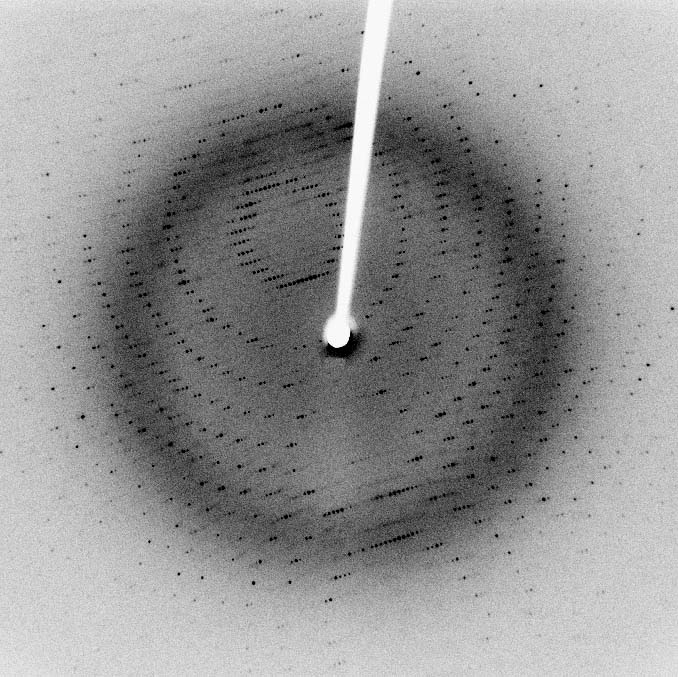
- Result from the interference of scattered X-rays from periodic structures
- Consist of distinct peaks corresponding to specific lattice planes
- Intensity of peaks relates to electron density distribution in the unit cell
- Pattern symmetry reflects the symmetry of the crystal structure
- Amorphous materials produce broad, diffuse patterns due to lack of long-range order
- Analysis of peak positions, intensities, and shapes reveals structural information
X-ray diffraction techniques
- Various X-ray diffraction methods employed in polymer science to probe different aspects of material structure
- Selection of technique depends on the specific information required and the nature of the polymer sample
Wide-angle X-ray scattering
- Probes atomic and molecular scale structures (0.1-10 nm)
- Utilizes scattering angles typically greater than 5°
- Provides information on crystal structure, unit cell parameters, and crystallinity
- Reveals long-range order in crystalline polymers
- Useful for identifying different crystalline phases and polymorphs
Small-angle X-ray scattering
- Investigates larger-scale structures (1-100 nm)
- Employs scattering angles less than 5°
- Reveals information about particle size, shape, and distribution in polymer systems
- Useful for studying nanostructures, phase separation, and hierarchical organizations
- Enables analysis of lamellar structures in semi-crystalline polymers
Grazing-incidence X-ray diffraction
- Specialized technique for studying thin films and surfaces
- Utilizes X-rays incident at very small angles relative to the sample surface
- Enhances surface sensitivity by minimizing penetration depth
- Provides information on in-plane and out-of-plane structures
- Useful for investigating orientation and texture in polymer thin films
Polymer crystallinity analysis
- X-ray diffraction plays a crucial role in quantifying and characterizing crystalline regions in semi-crystalline polymers
- Enables understanding of structure-property relationships in polymer materials
Degree of crystallinity
- Represents the fraction of crystalline material in a semi-crystalline polymer
- Calculated by comparing the integrated intensities of crystalline peaks and amorphous halo
- Influences mechanical, thermal, and optical properties of polymers
- Can be affected by processing conditions and thermal history
- Methods for determination include peak deconvolution and amorphous subtraction
Crystallite size determination
- Estimates the average size of crystalline domains in polymers
- Utilizes peak broadening analysis based on the Scherrer equation
- Scherrer equation:
- L: mean crystallite size
- K: shape factor (typically 0.9)
- λ: X-ray wavelength
- β: full width at half maximum (FWHM) of the diffraction peak
- θ: Bragg angle
- Smaller crystallites result in broader diffraction peaks
- Provides insights into polymer crystallization and processing effects
Orientation of crystallites
- Assesses the preferential alignment of crystalline domains in polymers
- Analyzed using pole figures or orientation distribution functions
- Important for understanding anisotropic properties in polymer materials
- Influenced by processing techniques (extrusion, drawing)
- Quantified using orientation factors or Herman's orientation function
Amorphous polymer characterization
- X-ray diffraction techniques provide valuable insights into the structure of non-crystalline polymers
- Enables understanding of local order and free volume in amorphous materials
Short-range order
- Refers to local structural arrangements in amorphous polymers
- Manifests as broad halos in X-ray diffraction patterns
- Analysis of halo position and shape reveals information about interchain spacing
- Radial distribution function analysis provides details on nearest-neighbor distances
- Influenced by polymer chain conformation and intermolecular interactions
Free volume estimation
- Assesses the unoccupied space between polymer chains in amorphous regions
- Calculated using positron annihilation lifetime spectroscopy (PALS) in conjunction with XRD
- XRD provides information on average interchain spacing
- Free volume influences properties such as gas permeability and glass transition temperature
- Can be affected by thermal history, aging, and plasticization
X-ray diffraction in polymer blends
- X-ray diffraction techniques offer valuable insights into the structure and compatibility of polymer blend systems
- Enables understanding of phase behavior and morphology in multi-component polymer materials
Phase separation detection
- Identifies the presence of distinct phases in polymer blends
- Manifests as separate diffraction patterns for each component
- Peak shifts or broadening can indicate interactions between blend components
- Quantitative analysis possible through peak deconvolution and fitting
- Useful for studying immiscible or partially miscible polymer systems
Miscibility assessment
- Evaluates the degree of mixing between different polymer components
- Fully miscible blends show a single, intermediate diffraction pattern
- Partial miscibility results in peak shifts or changes in crystallinity
- Can be used to construct phase diagrams for polymer blend systems
- Complemented by thermal analysis techniques (DSC) for comprehensive characterization
Time-resolved X-ray diffraction
- Enables real-time monitoring of structural changes in polymer systems
- Provides insights into dynamic processes and non-equilibrium states
Crystallization kinetics
- Studies the time-dependent formation of crystalline structures in polymers
- Monitors changes in peak intensities and positions during crystallization
- Allows determination of crystallization rates and mechanisms
- Useful for understanding the effects of cooling rates and nucleating agents
- Can be combined with small-angle X-ray scattering for multi-scale analysis
Polymer phase transitions
- Investigates structural changes during heating, cooling, or deformation
- Enables observation of transitions between different crystalline forms
- Useful for studying order-disorder transitions in block copolymers
- Can reveal intermediate structures during melting or recrystallization
- Provides insights into the kinetics of phase transformations in polymers
Advanced X-ray techniques
- Cutting-edge X-ray methods that offer enhanced capabilities for polymer characterization
- Provide higher resolution, faster data acquisition, or specialized information
Synchrotron radiation
- Utilizes high-intensity X-rays produced by electron acceleration in storage rings
- Offers tunable X-ray energy and high brilliance
- Enables rapid data collection for time-resolved experiments
- Provides higher resolution and signal-to-noise ratio compared to lab sources
- Useful for studying weakly scattering samples or trace components in polymers

X-ray microtomography
- Non-destructive 3D imaging technique for polymer materials
- Combines X-ray radiography with computed tomography reconstruction
- Reveals internal structure and defects in polymer components
- Useful for studying porosity, fiber orientation, and filler distribution
- Can be performed at different length scales (nano to macro)
Data analysis and interpretation
- Critical step in extracting meaningful information from X-ray diffraction experiments
- Requires understanding of both experimental techniques and polymer science principles
Peak identification
- Assigns diffraction peaks to specific crystallographic planes or structural features
- Utilizes databases of known crystal structures (Cambridge Structural Database)
- Considers peak positions, intensities, and systematic absences
- Accounts for potential peak overlap in complex polymer systems
- May require peak fitting and deconvolution for accurate analysis
Structural refinement methods
- Techniques for improving and validating structural models based on diffraction data
- Includes Rietveld refinement for crystalline materials
- Involves iterative adjustment of structural parameters to match experimental data
- Considers factors such as preferred orientation and crystallite size
- Provides detailed information on unit cell parameters and atomic positions
Applications in polymer science
- X-ray diffraction techniques find widespread use in various areas of polymer research and development
- Enable structure-property correlations and inform material design strategies
Fiber structure analysis
- Investigates the molecular orientation and crystallinity in polymer fibers
- Utilizes fiber diffraction patterns to determine chain alignment
- Reveals information on crystal structure and lamellar organization
- Important for understanding mechanical properties of high-performance fibers
- Useful in textile and composite materials research
Thin film characterization
- Studies the structure and morphology of polymer thin films
- Employs grazing-incidence techniques for surface-sensitive measurements
- Reveals information on molecular orientation and crystallinity gradients
- Important for applications in coatings, electronics, and membranes
- Can be combined with in-situ measurements during film formation or annealing
Nanocomposite investigation
- Examines the dispersion and orientation of nanofillers in polymer matrices
- Utilizes contrast between polymer and filler scattering to detect agglomeration
- Reveals information on interfacial interactions and nanostructure formation
- Important for optimizing mechanical and functional properties of nanocomposites
- Can be combined with small-angle scattering for multi-scale characterization
Limitations and complementary techniques
- Understanding the limitations of X-ray diffraction is crucial for proper interpretation of results
- Complementary techniques provide additional information for comprehensive characterization
Resolution constraints
- Diffraction peak broadening limits the ability to resolve closely spaced features
- Crystallite size determination becomes challenging for very large or small domains
- Weak scattering from light elements (H, C, O) can make structure determination difficult
- Amorphous materials produce broad, diffuse patterns with limited structural information
- Sample preparation and instrumental factors can affect data quality and resolution
Combination with other methods
- Integrates X-ray diffraction with complementary analytical techniques
- Thermal analysis (DSC, TGA) provides information on phase transitions and composition
- Spectroscopic methods (FTIR, Raman) offer insights into chemical bonding and conformation
- Microscopy techniques (SEM, TEM) reveal morphological features at different length scales
- Mechanical testing correlates structural information with macroscopic properties
- Computational modeling aids in interpretation and prediction of diffraction patterns