
Action research empowers educators to investigate and improve their own practice. Teachers systematically gather data about their teaching and students' learning, then use those insights to make positive changes in their classrooms.
This approach differs from traditional research by focusing on specific, local problems rather than generating broad knowledge. It's a powerful tool for professional development, allowing teachers to become reflective practitioners who continuously refine their methods.
Action Research in Education
Definition and Purpose
Action research is a systematic inquiry conducted by teachers, administrators, or other stakeholders within a teaching and learning environment. The goal is to study how a particular school operates, how teachers teach, and how well students learn, and then use that information to make improvements.
Most often, a single teacher conducts action research in their own classroom to improve their own practice. But it can also be collaborative. A team of teachers might study school-wide behavior management strategies together, or a department might investigate a new approach to curriculum design across multiple classrooms.
The core purposes of action research are to:
- Gain insight into a specific teaching or learning problem
- Develop habits of reflective practice
- Effect positive, concrete changes in the classroom or school
- Improve student outcomes based on evidence rather than guesswork
Process and Characteristics
The action research process follows a cyclical pattern:
- Identify a problem or question
- Collect and analyze data related to that problem
- Implement a plan of action based on what the data reveals
- Reflect on the results, then cycle back to refine the question or try a new approach
What makes action research different from traditional educational research? Traditional research is usually conducted by outside researchers, aims to produce findings that generalize to many settings, and gets published in academic journals. Action research, by contrast, is conducted by practitioners in their own settings and is focused on solving a specific, local problem.
For example, a teacher might research the impact of a new reading intervention on their students' literacy skills. Or a school administrator might investigate strategies to improve parent engagement at their school. The findings don't need to apply everywhere; they need to work here.
Planning Action Research Projects

Identifying a Focus
Start by identifying a genuine problem or question related to your teaching and learning context. This could involve student engagement, assessment practices, classroom management, or any other aspect of education. Good action research questions are specific and grounded in something you've actually observed.
A few examples of focused questions:
- How does implementing cooperative learning strategies affect student participation in my 4th-grade science class?
- What differentiation approaches help my diverse learners succeed on writing assignments?
Once you have a question, develop a research plan that outlines:
- Your specific research question
- What data you'll collect (and why that data will help answer the question)
- How you'll collect it
- How you'll analyze it
- A realistic timeline given your available time and resources
Feasibility matters. A plan that requires you to interview 200 parents while teaching full-time isn't going to work. Keep the scope manageable.
Conducting the Research
Data collection can draw on multiple methods, and using more than one strengthens your findings:
- Surveys of students or parents
- Interviews with students, colleagues, or families
- Classroom observations (your own notes or a colleague observing you)
- Student work samples and portfolios
- Test scores and grade data
Before collecting data, obtain any necessary permissions (especially when working with minors) and maintain confidentiality throughout.
Data analysis means looking for patterns, trends, or insights that help answer your research question. The method depends on your data type. For qualitative data like interview transcripts, you might code responses into themes. For quantitative data like test scores, you might calculate averages or compare pre- and post-intervention results using descriptive statistics.
From there, the remaining steps are:
- Develop an action plan based on your findings. This could involve changes to your instruction, new student support strategies, or recommendations for your team.
- Implement the plan and keep collecting data to monitor whether it's working.
- Adjust as needed based on ongoing feedback and reflection.
- Share your findings with colleagues and stakeholders to contribute to a culture of continuous improvement in your school or district.
Collaborative Reflective Practice
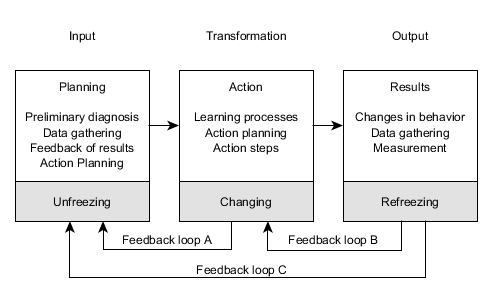
Establishing Collaborative Inquiry
Action research doesn't have to be a solo endeavor. Collaborative inquiry involves finding colleagues who share an interest in a particular teaching and learning problem. These might be teachers in your grade level, department, or building.
For collaboration to work well, the group needs clear norms and protocols:
- Regular meeting times that everyone can commit to
- Defined roles and responsibilities (Who facilitates? Who takes notes?)
- Expectations for participation and confidentiality, so people feel safe sharing honest reflections
Reflective discussions are the heart of collaborative inquiry. Group members share successes, challenges, and ideas for improvement. Structured conversation protocols, such as consultancy protocols or tuning protocols, help keep these discussions focused and productive rather than turning into venting sessions.
Engaging in Collaborative Analysis
Once the group is established, collaborative analysis can take several forms:
- Analyzing student work or assessment data together to identify patterns and areas for growth. Protocols like "Looking at Student Work" provide a structured way to do this without jumping to conclusions.
- Conducting peer observations or lesson study, where colleagues observe each other's teaching and provide constructive feedback. Lesson study, a practice originating in Japan, involves a team co-planning a lesson, observing one member teach it, and then debriefing together.
- Reading and discussing research literature to deepen understanding of evidence-based strategies. Text-based protocols like jigsaw (where each member reads a different section and teaches it to the group) or Four A's (where readers identify Assumptions, Agreements, Aspirations, and Arguments) keep these discussions structured.
The group then develops and implements action plans based on their shared inquiry, monitoring progress and adjusting based on ongoing data.
Action Research for Improved Learning
Analyzing and Reflecting on Findings
Once you've collected your data, analysis means looking for the key findings that relate to your original research question. Search for patterns, trends, or notable differences that emerge.
Reflection is where the real learning happens. Consider:
- What does the data suggest about your teaching practice and student learning?
- How do the findings align with, or challenge, your assumptions about what works?
- What specific areas of your practice could improve based on this evidence?
These areas for improvement might involve instructional strategies, assessment practices, classroom management, or how you support individual students. The point is to let the data guide your next steps rather than relying on intuition alone.
Implementing and Evaluating Changes
Turning findings into action involves a clear sequence:
- Develop an implementation plan with specific action steps, timelines, and any resources you'll need.
- Put the changes into practice while continuing to collect data. Formative assessments are especially useful here because they give you ongoing, real-time feedback from students.
- Evaluate the impact on student learning using summative assessments, student work samples, or other data sources. Did the changes produce the improvement you expected? Where do gaps remain?
- Share what you learned with colleagues and stakeholders. This might mean presenting at a faculty meeting, a professional development session, or even a conference.
The most important thing about action research is that it's cyclical, not linear. Each round of inquiry generates new questions. You finish one cycle and start the next, continuously refining your practice based on evidence. Over time, this habit of systematic reflection becomes a natural part of how you teach.