8.3 Gender Inequality and Feminist Anthropology

🗿Intro to Cultural Anthropology Unit 8 Review
8.3 Gender Inequality and Feminist Anthropology
🗿 Intro to Cultural Anthropology
Gender inequality and feminist anthropology help explain how societies distribute power, resources, and opportunities based on gender. Understanding these topics is central to cultural anthropology because gender shapes nearly every aspect of social life, from who inherits property to who gets a voice in political decisions.
Gender Inequality
Systemic Patterns of Gender-Based Discrimination
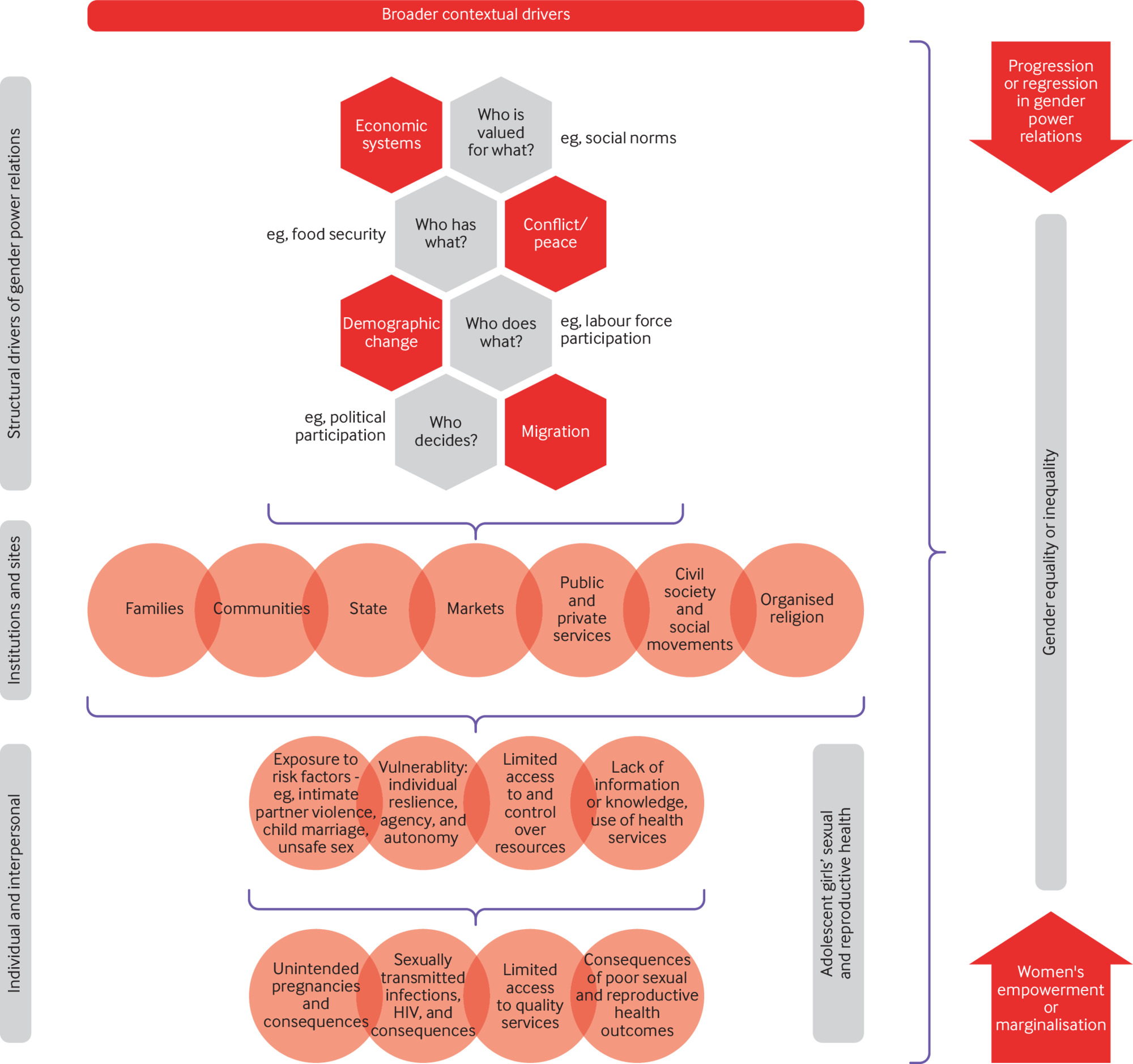
Gender stratification is the unequal distribution of power, prestige, and property based on gender. It shows up in virtually every society, though the specific forms vary widely.
Patriarchal societies organize social structures around male dominance and female subordination. This isn't just about individual attitudes. It's built into cultural, economic, and political systems. Think inheritance laws that favor sons, property rights that exclude women, or household decision-making that defaults to men.
Gender discrimination is unfair treatment based on a person's gender. It occurs across education, employment, healthcare, and legal systems. Sometimes it's overt, like explicit policies barring women from certain jobs. Other times it's covert, operating through unconscious biases that shape hiring decisions or classroom interactions without anyone realizing it.
Intersectionality examines how multiple social categories like gender, race, class, and sexuality overlap to create unique experiences of oppression and privilege. Kimberlé Crenshaw coined the term in 1989 to describe how Black women in the U.S. faced discrimination that couldn't be explained by looking at race or gender alone. For anthropologists, this concept is a reminder that gender inequality never operates in isolation. A wealthy white woman and a poor Indigenous woman experience gender very differently, even within the same society.
Consequences and Manifestations of Gender Inequality
- Economic disparities: Wage gaps persist across industries and countries. Women often face barriers to owning property or accessing financial resources, particularly in societies where inheritance passes through male lines.
- Political underrepresentation: Women remain underrepresented in government roles and corporate leadership worldwide, which limits their influence on the policies that affect their lives.
- Social and cultural norms: Gender roles and expectations restrict opportunities for both men and women. Media representation frequently reinforces stereotypes, normalizing narrow ideas about what each gender should do or be.
- Health disparities: Women in many societies have limited access to healthcare, especially reproductive health services. Societal pressures and discrimination also contribute to mental health challenges.
Feminist Anthropology
Theoretical Foundations and Approaches
Feminist anthropology emerged in the 1970s as a direct response to androcentric bias (male-centered perspectives) in traditional anthropological research. Early anthropologists often interviewed only men, studied only male activities, and then presented their findings as representing an entire culture. Feminist anthropologists pushed back by centering women's experiences and asking how gender shapes cultural life.
Several theoretical frameworks guide this work:
- Standpoint theory holds that knowledge is shaped by a person's social position. A woman farmer in rural Guatemala and a male professor in London will understand the world differently, and both perspectives have value for building knowledge.
- Postcolonial feminism examines how gender intersects with race and the legacy of colonialism. It challenges Western feminist frameworks that assume all women's experiences are the same.
- Queer theory questions binary categories of gender and sexuality, pushing anthropologists to recognize identities and expressions that don't fit neatly into "male" or "female."
Feminist anthropologists also introduced important methodological innovations:
- Reflexivity: Researchers critically examine their own biases and social position, asking how their identity shapes what they observe and conclude.
- Collaborative research: Working with communities rather than just studying them, sharing authority over how stories get told.
- Ethical attention to power dynamics: Being deliberate about how the researcher-subject relationship can reproduce inequalities.

Goals and Impact of Feminist Anthropology
A central goal of feminist anthropology is empowerment: giving voice to marginalized groups and challenging structures that maintain inequality. This means not just documenting women's lives but actively supporting their agency and self-determination.
Feminist anthropologists advocate for gender equality by working to dismantle patriarchal systems. Their research addresses gender-based violence, reproductive rights, and economic parity across cultures.
The field has also shaped broader anthropological theory and practice in significant ways:
- It raised tough questions about cultural relativism. Should anthropologists remain neutral observers when cultural practices cause harm based on gender? Feminist anthropologists argue that respecting cultural difference doesn't require accepting oppression.
- It brought intersectional perspectives into cross-cultural research, making analyses richer and more accurate.
- It influenced real-world policy and development initiatives focused on gender issues, connecting academic research to practical change.
Emerging Fields
Masculinity Studies
Masculinity studies emerged as a subfield of gender studies in the 1980s and 1990s. Rather than treating masculinity as natural or fixed, it examines how cultures construct ideas about what it means to "be a man," and how those ideas vary across time and place.
Key concepts include:
- Hegemonic masculinity: The dominant form of masculinity in a given society that helps maintain patriarchal power. In many Western contexts, this involves expectations of toughness, emotional restraint, and economic dominance.
- Multiple masculinities: The recognition that masculinity isn't one thing. A man in rural Kenya, an urban Japanese salaryman, and a Two-Spirit person in a Native American community all navigate different versions of masculinity.
- Toxic masculinity: Harmful behaviors and attitudes tied to rigid traditional masculine norms, such as the suppression of emotions or the use of violence to assert dominance.
Masculinity studies intersects with queer theory (exploring non-normative masculinities), critical race theory (examining how race shapes masculine identities), and disability studies (investigating assumptions that link masculinity to able-bodiedness).
For anthropology, this subfield broadens the understanding of gender as relational and dynamic. Studying masculinity alongside femininity produces more complete pictures of how power works in any given culture, and it informs efforts to promote gender equality by addressing harmful norms that affect everyone.
See Fiveable more often in Google
Mark Fiveable as a preferred source and Google is more likely to show you our guides in Top Stories, with a "preferred" badge in AI Mode and AI Overviews.