
The presidency has evolved significantly since its constitutional foundation. From Washington's precedent-setting leadership to Lincoln's wartime expansion and FDR's New Deal, each president has shaped the office's power and scope.
Today's presidency is characterized by a larger executive branch, increased media scrutiny, and a more prominent role in policy-making. The growth of federal government and complex global issues have contributed to the modern presidency's expanded influence and responsibilities.
Presidency's Historical Evolution
Constitutional Foundation and Early Development
- Article II of the Constitution established the presidency, outlining the powers and responsibilities of the executive branch
- George Washington set important precedents for the presidency (use of executive orders, power to negotiate treaties)
- The role of the president evolved over time with significant expansions of power occurring during times of crisis (Civil War, World Wars I and II, Great Depression)
Shaping the Presidency through Individual Leadership
- The presidency has been shaped by the personalities and leadership styles of individual presidents
- Abraham Lincoln expanded presidential power during the Civil War (suspending habeas corpus, issuing Emancipation Proclamation)
- Theodore Roosevelt's "stewardship theory" asserted that the president could take any action not explicitly prohibited by the Constitution
- Franklin D. Roosevelt's New Deal programs and World War II leadership greatly expanded the scope and power of the federal government and the presidency
- Lyndon B. Johnson's Great Society programs further expanded the role of the federal government in domestic policy
Characteristics of the Modern Presidency
- The modern presidency is characterized by a larger executive branch, increased media scrutiny, and a more prominent role in domestic and foreign policy
- The growth of the federal government and the expansion of the executive branch have contributed to the increased power of the presidency
- The rise of mass media and the 24-hour news cycle have made the presidency more visible and subject to constant scrutiny
- The increasing complexity of domestic and foreign policy issues has required a more active and engaged presidency
Key Presidents' Impact on Power
George Washington's Precedent-Setting Leadership
- Set important precedents for the presidency (use of executive orders, power to negotiate treaties)
- Established the cabinet system and the tradition of delivering an annual State of the Union address
- Demonstrated the importance of a strong executive branch while respecting the separation of powers

Abraham Lincoln's Wartime Expansion of Power
- Expanded presidential power during the Civil War by suspending habeas corpus and issuing the Emancipation Proclamation
- Asserted the president's role as commander-in-chief and the importance of preserving the Union
- Set a precedent for the use of executive power during times of national crisis
Theodore Roosevelt's Stewardship Theory
- Asserted that the president could take any action not explicitly prohibited by the Constitution
- Used executive orders and the bully pulpit to shape policy and influence public opinion
- Expanded the president's role in foreign policy and conservation efforts
Franklin D. Roosevelt's New Deal and Wartime Leadership
- New Deal programs and World War II leadership greatly expanded the scope and power of the federal government and the presidency
- Used executive orders and fireside chats to communicate directly with the American people
- Established the modern presidency as a powerful force in shaping domestic and foreign policy
President's Role vs Congress and Judiciary
Evolving Relationship with Congress
- The president's role in relation to Congress has evolved over time, with periods of cooperation and conflict between the two branches
- The president's power to veto legislation and issue executive orders has been used to shape policy and challenge Congress
- The use of signing statements and other unilateral actions has allowed presidents to bypass Congress and shape policy on their own
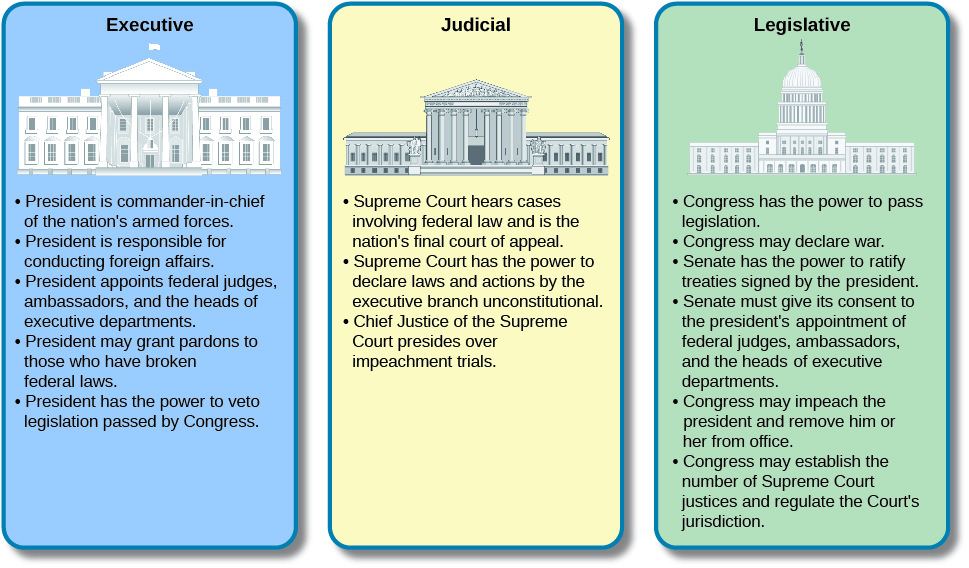
Appointment Power and the Judiciary
- The president's role in appointing federal judges, including Supreme Court justices, has become increasingly politicized and contentious
- The judiciary has played a role in checking presidential power (cases involving executive privilege, separation of powers)
- Landmark Supreme Court cases have shaped the boundaries of presidential power (Youngstown Sheet & Tube Co. v. Sawyer, United States v. Nixon)
Factors Contributing to Modern Presidency
Expansion of Federal Government and Executive Branch
- The growth of the federal government and the expansion of the executive branch have contributed to the increased power of the presidency
- The creation of new executive agencies and departments has expanded the president's influence over domestic policy
- The president's role as the head of the executive branch has become more complex and demanding
Media Scrutiny and the 24-Hour News Cycle
- The rise of mass media and the 24-hour news cycle have made the presidency more visible and subject to constant scrutiny
- Presidents must navigate a complex media landscape and use various communication strategies to shape public opinion
- The increased focus on the president's personal life and character has added to the challenges of the modern presidency
Complexity of Domestic and Foreign Policy Issues
- The increasing complexity of domestic and foreign policy issues has required a more active and engaged presidency
- Presidents must balance competing interests and navigate a globalized world with multiple challenges (terrorism, climate change, economic instability)
- The president's role as commander-in-chief of the military has become increasingly important in an era of global conflict and terrorism