generate your own visual cheatsheets
🧩 Intro to Algorithms Cheatsheets
Browse AI-generated Intro to Algorithms cheatsheets with one-page visual study aids for the key formulas, concepts, and definitions you need for your exam review.
AI-generated one-pagers for a single topic. Make your own, or browse what other students have made.
choose a topic in Intro to Algorithms
add custom requests (optional)

Unit 1 - 1.1 Definition and characteristics of algorithms

Unit 1 - 1.2 Asymptotic notation and time complexity analysis

Unit 1 - 1.3 Space complexity and algorithm efficiency

Unit 1 - 1.4 Problem-solving strategies and algorithm design paradigms

Unit 2 - 2.1 Arrays and dynamic arrays

Unit 2 - 2.2 Singly and doubly linked lists

Unit 2 - 2.3 Stacks and their applications

Unit 2 - 2.4 Queues and priority queues

Unit 3 - 3.1 Bubble Sort and its variations

Unit 3 - 3.2 Selection Sort algorithm

Unit 3 - 3.3 Insertion Sort and its applications

Unit 3 - 3.4 Comparison of elementary sorting algorithms

Unit 4 - 4.1 Divide-and-conquer paradigm

Unit 4 - 4.2 Merge Sort algorithm and analysis

Unit 4 - 4.3 Quick Sort algorithm and analysis

Unit 4 - 4.4 Comparison of Merge Sort and Quick Sort

Unit 5 - 5.1 Binary heap data structure

Unit 5 - 5.2 Heap operations: insertion and deletion

Unit 5 - 5.3 Heap Sort algorithm and analysis

Unit 5 - 5.4 Priority queue implementations using heaps

Unit 6 - 6.1 Hash table concept and basic operations

Unit 6 - 6.2 Hash functions and collision resolution techniques

Unit 6 - 6.3 Open addressing and chaining

Unit 7 - 7.1 Binary search tree properties and operations

Unit 7 - 7.2 Self-balancing trees: AVL trees

Unit 7 - 7.3 Red-Black trees

Unit 7 - 7.4 B-trees and their applications

Unit 8 - 8.1 Graph terminology and representations

Unit 8 - 8.2 Breadth-First Search (BFS) algorithm and applications

Unit 8 - 8.3 Depth-First Search (DFS) algorithm and applications

Unit 8 - 8.4 Comparison of BFS and DFS

Unit 9 - 9.1 Minimum spanning tree concept

Unit 9 - 9.2 Kruskal's algorithm and implementation

Unit 9 - 9.3 Prim's algorithm and implementation

Unit 9 - 9.4 Comparison and analysis of Kruskal's and Prim's algorithms

Unit 10 - 10.1 Single-source shortest path problem

Unit 10 - 10.2 Dijkstra's algorithm and implementation

Unit 10 - 10.3 Bellman-Ford algorithm and negative edge weights

Unit 10 - 10.4 Applications of shortest path algorithms

Unit 11 - 11.1 Dynamic programming principles and methodology

Unit 11 - 11.2 Fibonacci sequence and matrix chain multiplication

Unit 11 - 11.3 Longest common subsequence and edit distance

Unit 11 - 11.4 Knapsack problem and its variations

Unit 12 - 12.1 Greedy algorithm paradigm and properties

Unit 12 - 12.2 Interval scheduling problem and solutions

Unit 12 - 12.3 Huffman coding algorithm and data compression

Unit 13 - 13.1 Amortized analysis techniques

Unit 13 - 13.2 Disjoint set data structure and union-find algorithms

Unit 13 - 13.4 Splay trees and their amortized analysis

Unit 14 - 14.1 P, NP, and NP-complete problem classes

Unit 14 - 14.2 Cook's theorem and the SAT problem

Unit 14 - 14.3 Reduction techniques and examples

Unit 14 - 14.4 Approximation algorithms for NP-complete problems

Unit 15 - 15.1 Approximation ratio and performance guarantees

Unit 15 - 15.2 Vertex cover and set cover approximations

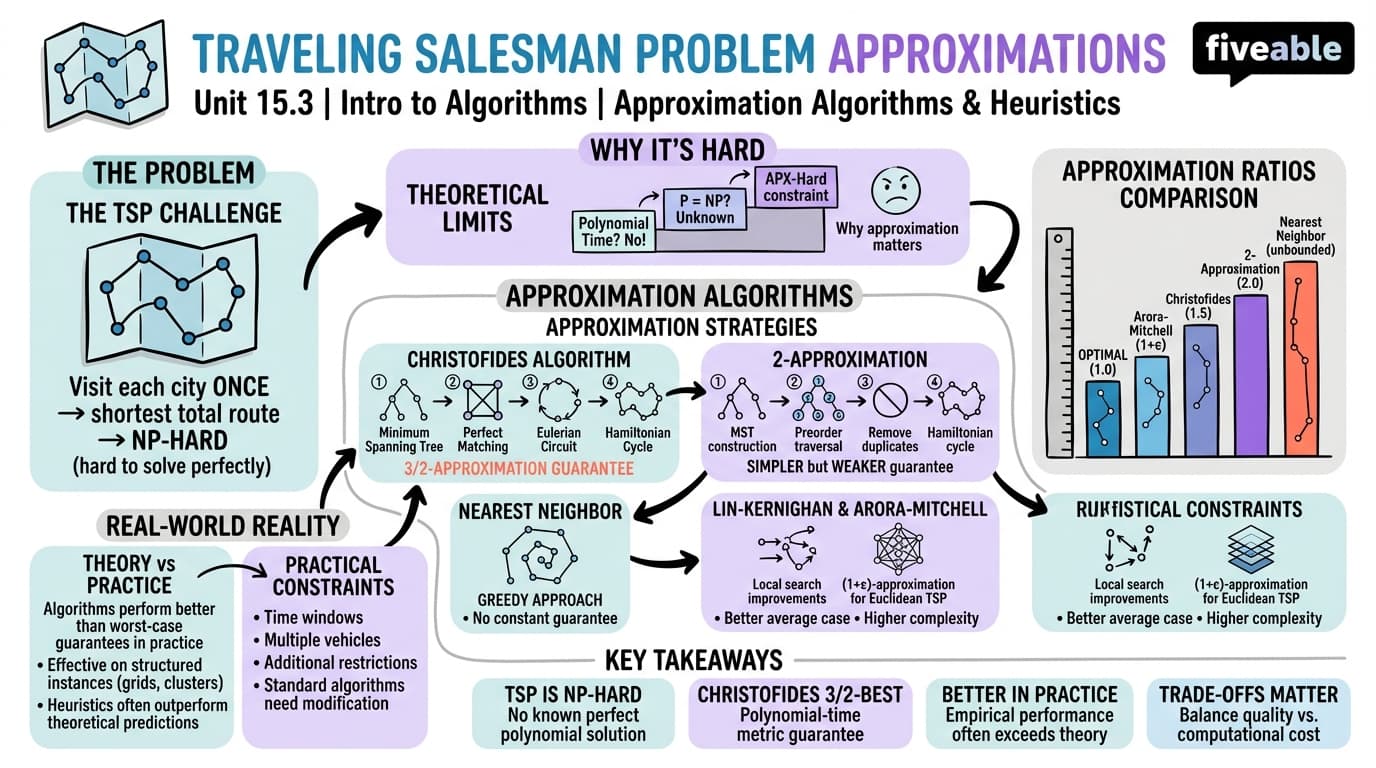
Unit 15 - 15.3 Traveling salesman problem approximations

Unit 15 - 15.4 Local search heuristics and metaheuristics

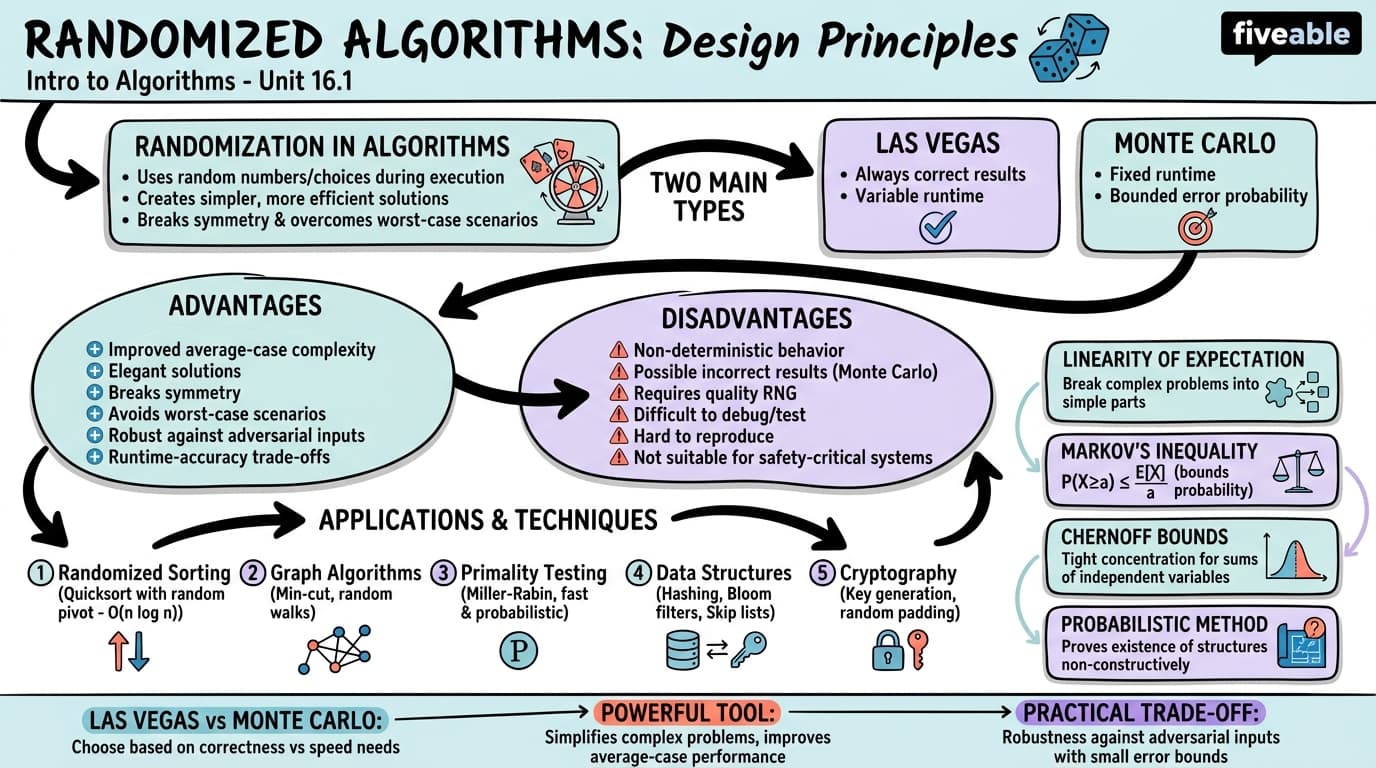
Unit 16 - 16.1 Randomized algorithm design principles

Unit 16 - 16.2 Las Vegas and Monte Carlo algorithms

Unit 16 - 16.3 Randomized quicksort and selection algorithms

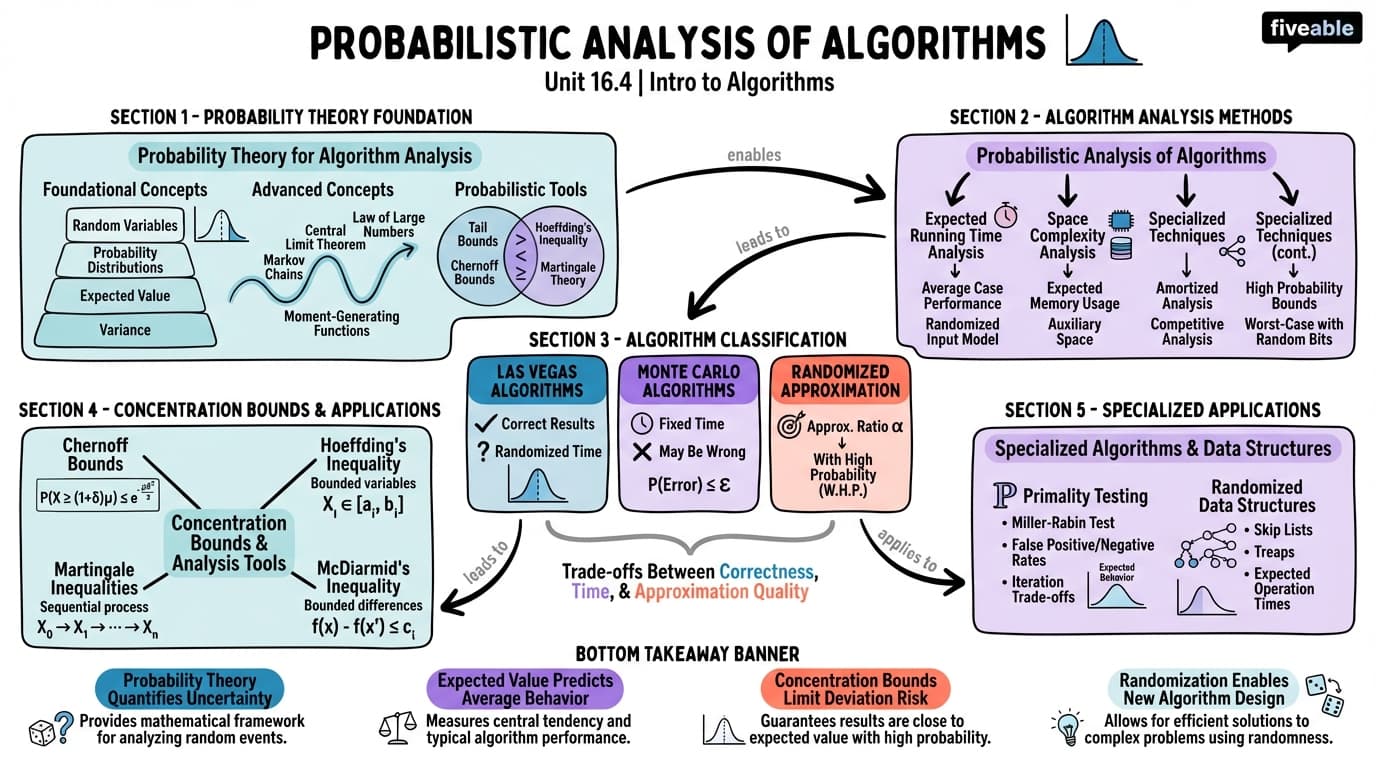
Unit 16 - 16.4 Probabilistic analysis of algorithms
A cheatsheet condenses a whole course into the facts you actually need on exam day. The Intro to Algorithms cheatsheets on this page summarize the key formulas, concepts, and definitions from each unit so you can review the entire course at a glance.
They work best as a final review: skim the one-page summary, spot the units you want to strengthen, then go deeper with the Intro to Algorithms study guides. The visual cheatsheets in the gallery are organized by unit, and you can generate your own for any topic you want a quick refresher on.